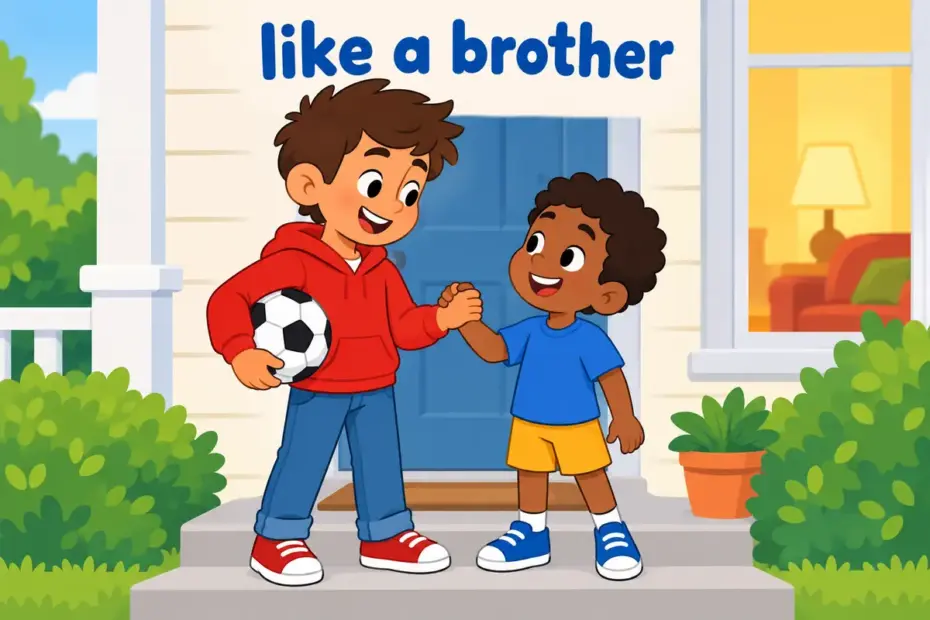
Fraternal means of or like a brother, and it describes the warm, loyal bond between siblings or the non-identical twins born from two eggs. To use fraternal in a sentence, place it before the noun it describes: “The two men shared a fraternal bond.”
Fraternal at a glance
- Fraternal is an adjective meaning of or like a brother; its adverb is fraternally.
- It describes relationships, feelings, organisations and, in biology, one kind of twin.
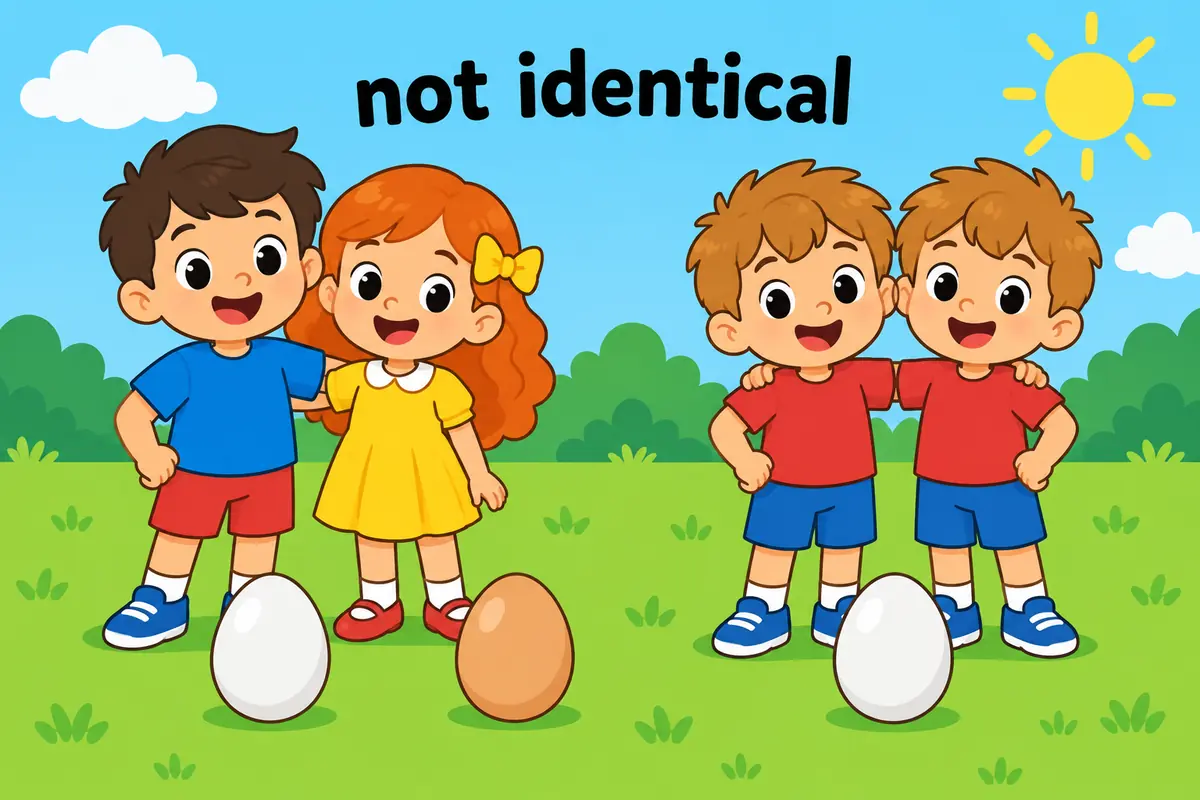
- Fraternal twins develop from two separate eggs and are no more alike than ordinary siblings.
- It collocates with bond, love, twins, order, society, relations and loyalty.
- The commonest error is confusing fraternal with fraternize, which is a verb meaning to socialise.
What does fraternal mean?
Fraternal is an adjective meaning of, relating to or like a brother. The Cambridge entry for fraternal separates the family sense from the organisational one, and biology adds a third: twins who share a womb but not an identical set of genes. The three senses rarely overlap, so the noun that follows the adjective tells you which one is meant.
| Sense | Plain meaning | Example sentence |
|---|---|---|
| brotherly, of family | The warmth and loyalty of brothers | He gave his younger sister a fraternal hug. |
| of a brotherhood | Belonging to a men’s or mutual society | The fraternal order raised money for the town. |
| twins, in biology | Two siblings from separate eggs | The clinic confirmed that the twins were fraternal. |
One limitation is worth setting down. Fraternal is not a general word for friendship, and it is not neutral about gender. It carries the idea of brothers, so a group of women who feel like sisters is better described as sisterly; using fraternal for them sounds borrowed or organisational. Where the warmth is plain affection rather than a formal bond, brotherly is the lighter word.
How do you use fraternal in a sentence?
Place fraternal directly before a noun, or use it after be when you name a quality. Five patterns cover almost every real sentence, and the sort of noun that follows decides whether you mean family warmth, a society, or a pair of twins.
| Pattern | Example | What it signals |
|---|---|---|
| fraternal + bond / love | Their fraternal bond survived every argument. | Family warmth between brothers. |
| fraternal + twins | She gave birth to fraternal twins. | The biological sense, two eggs. |
| of a fraternal + group | He joined a fraternal society in his twenties. | Formal brotherhood or mutual aid. |
| fraternal + relations | The two unions kept fraternal relations. | Friendly institutional ties. |
| fraternally + verb | The delegates greeted each other fraternally. | The adverb, used for a warm gesture. |
Only one pattern is biological, and it is fixed: the twins sense appears in the set phrase fraternal twins and almost nowhere else, so a sentence that applies fraternal to a single person is nearly always about brotherhood rather than biology. That is why the noun after the adjective is the surest guide to meaning.

Fraternal in a sentence: examples across contexts
Fraternal changes its setting more than its meaning. The ten sentences below move from a family kitchen to a biology lecture, and each one keeps the word anchored to brothers, a brotherhood, or twins.
| Context | Example sentence | Why this works |
|---|---|---|
| Family conversation | He spoke about his brother with real fraternal pride. | Names the feeling without sentimentality. |
| News report | The two leaders described their talks as fraternal. | Signals warmth between equals, not family. |
| Biology lesson | Fraternal twins share a womb but not a genome. | Correct use of the biological sense. |
| Workplace email | We exchanged fraternal greetings with the visiting delegation. | A formal, slightly old-fashioned courtesy. |
| History essay | Fraternal societies offered workers a safety net before unions grew. | Ties the adjective to mutual aid. |
| Wedding speech | He raised a glass to his fraternal loyalty over thirty years. | Personal but measured. |
| Medical notes | The scan showed dizygotic, or fraternal, twins. | Uses the clinical synonym beside it. |
| Sports writing | The squad played with a fraternal spirit all season. | Borrows the word for team loyalty. |
| Literary prose | A fraternal quiet settled between the two brothers. | Keeps the noun concrete and the tone restrained. |
| Diplomacy | The envoys hoped for fraternal cooperation between the states. | Adds a formal, goodwill flavour. |
Only the biology and medical sentences use the word literally, and only the family sentences use it of actual brothers. Everything else borrows the warmth of the family sense and lends it to a group or a pair of equals. That borrowing is why the word can sound old-fashioned in casual speech: it reaches for a dignity that a team or a union has not always earned. A sense of brotherhood can grow among people who are not related at all, and fraternal is the adjective writers borrow to name it.
Fraternal vs brotherly and fraternize
Fraternal is confused with brotherly because the two words overlap almost completely at the edges of feeling. brotherly affection names the emotion plainly and suits everyday speech, while fraternal adds a formal or institutional tone and stretches to societies and twins. The third neighbour is a verb, not an adjective: to fraternize with the other team is to mix with them socially, often against orders.
| Attribute | fraternal | brotherly | fraternize |
|---|---|---|---|
| Word class | adjective | adjective | verb |
| Core meaning | Of or like a brother | Like a good brother | To socialise with others |
| Typical noun or object | bond, twins, order | love, kiss, advice | with the enemy, with troops |
| Register | Formal to literary | Neutral and warm | Neutral, often disapproving |
| What it implies | Brotherhood, literal or borrowed | Affection between siblings | Mixing where you should not |
Verdict: choose brotherly for plain warmth between siblings, fraternal for formal bonds, societies or twins, and fraternize when people are mixing socially rather than describing a relationship. A useful test is to ask whether a woman could take the other side of the sentence: if she could, sisterly or communal usually fits better than fraternal, which keeps its hold on brothers.
Word forms and grammar of fraternal
Fraternal keeps the same form for every gender and number, and its family branches into a noun, a verb and an adverb. The table sets out the forms learners most often mix up, including two words that share the root but belong to different word classes.
| Form | Part of speech | Example |
|---|---|---|
| fraternal | adjective | They kept a fraternal friendship for life. |
| fraternally | adverb | The neighbours greeted us fraternally. |
| fraternity | noun | He pledged a fraternity in his first year. |
| fraternities | noun, plural | Several fraternities shared the hall. |
| fraternize | verb | Soldiers were told not to fraternize with the locals. |
| fraternization | noun | The rules banned fraternization between ranks. |
| brotherly | adjective — different word | He offered brotherly advice. |
The noun names a group: a college fraternity is a brotherhood built on shared membership, and the same word can mean the general feeling of brotherliness. By contrast, an identical twin comes from one fertilised egg that splits, so the biology contrast between identical and fraternal is the one to keep straight in writing.
Common mistakes with fraternal
- Incorrect:
The two companies share a fraternal relationship like sisters.Correct: The two companies share a sisterly relationship. Rule: Fraternal carries the idea of brothers, so a female pair takes sisterly. - Incorrect:
The soldiers were ordered not to fraternal with the villagers.Correct: The soldiers were ordered not to fraternize with the villagers. Rule: The action of mixing is the verb fraternize, not the adjective. - Incorrect:
Fraternal twins always look exactly alike.Correct: Identical twins always look exactly alike. Rule: Fraternal twins come from two eggs and differ; identical twins come from one. - Incorrect:
They had a fraternal friendship of two office colleagues.Correct: They had a brotherly friendship of two office colleagues. Rule: Fraternal suits formal bonds or twins, while brotherly covers plain affection. - Incorrect:
He acts fraternal toward everyone.Correct: He acts brotherly toward everyone. Rule: The adjective rarely follows acts; brotherly is the natural choice for behaviour.
Practice using fraternal
Work through the seven items, then read the reasoning rather than only the answer.
- Fill the gap: The report described the meeting between the two presidents as ______.
- Choose the better word: The two-year-olds come from separate eggs, so they are (fraternal / identical) twins.
- Correct the error: He greeted his old classmate fraternal.
- Build a sentence: use fraternal bond about two brothers who run a shop together.
- Spot the register: which belongs in a history essay — a fraternal society, or a club of mates?
- Change the word class: The men behaved with fraternal warmth. Rewrite it with the adverb fraternally.
- Choose the better word: The officer was punished for (fraternal / fraternizing) with the prisoners.
Answers
- fraternal — the adjective after be names the quality of the talks.
- fraternal — separate eggs make non-identical, or fraternal, twins.
- He greeted his old classmate fraternally — the adverb describes the verb greeted.
- Model answer: The brothers kept a fraternal bond through every season of the shop.
- A fraternal society — a history essay keeps the formal term with its institutional meaning.
- They behaved fraternally toward the visitors — the adverb fits the manner of behaving.
- fraternizing — mixing socially is the verb, and the gerund follows the preposition.
The bottom line
Use fraternal in a sentence for a brotherly bond, a formal brotherhood, or twins that come from two eggs, and let the noun that follows identify which. Two nuances decide most cases: the word carries the idea of brothers rather than siblings in general, and its verb family, fraternize, means mixing socially rather than describing a relationship. Where the warmth is simply affection, brotherly is the plainer choice, and a kinship of purpose can feel fraternal without any family tie at all.
Frequently asked questions about fraternal
What are fraternal twins?
Fraternal twins develop from two separate eggs fertilised at the same time, so they share a birthday but not an identical set of genes. They can be a boy and a girl, and they often look no more alike than any other siblings. The clinical term for them is dizygotic.
Is fraternal the same as brotherly?
They overlap but differ in tone. Brotherly is the plain, warm adjective for affection between brothers and suits everyday speech. Fraternal is more formal or literary, and it stretches beyond the family to societies, organisations and biological twins, so the two are not always interchangeable.
What is a fraternal organization?
A fraternal organization is a society built on brotherhood and mutual support, such as a lodge, a union or a college fraternity. Members call one another brothers and often share rituals, dues and welfare funds. The word fraternal contributes the idea of loyalty and equality among members.
Can fraternal describe women?
Only loosely, because the word literally means of brothers. A group of women who feel like sisters is better described as sisterly, and a mixed group may prefer the neutral word communal. Fraternal organizations have traditionally been male, so using the word for women can sound borrowed.