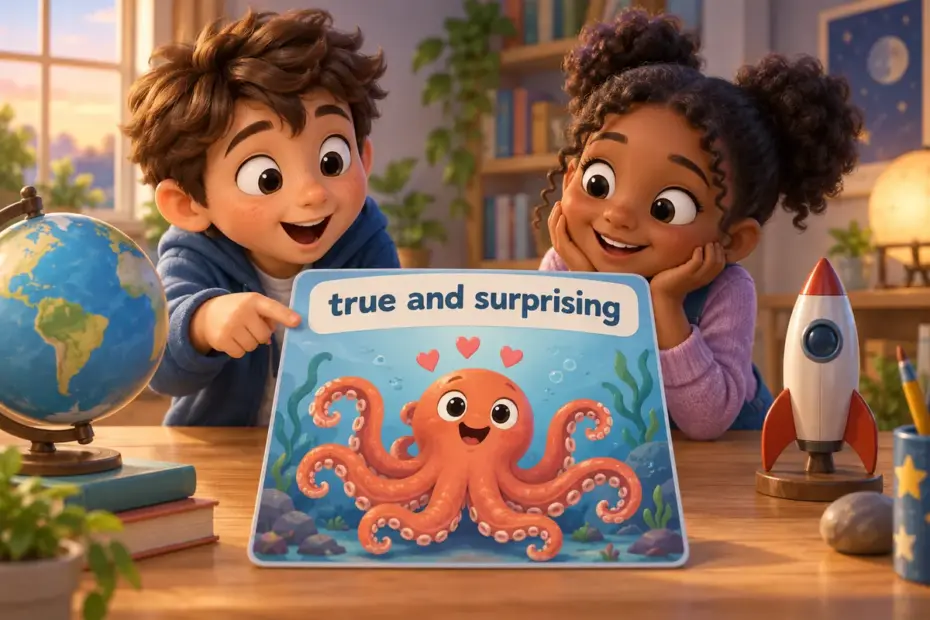
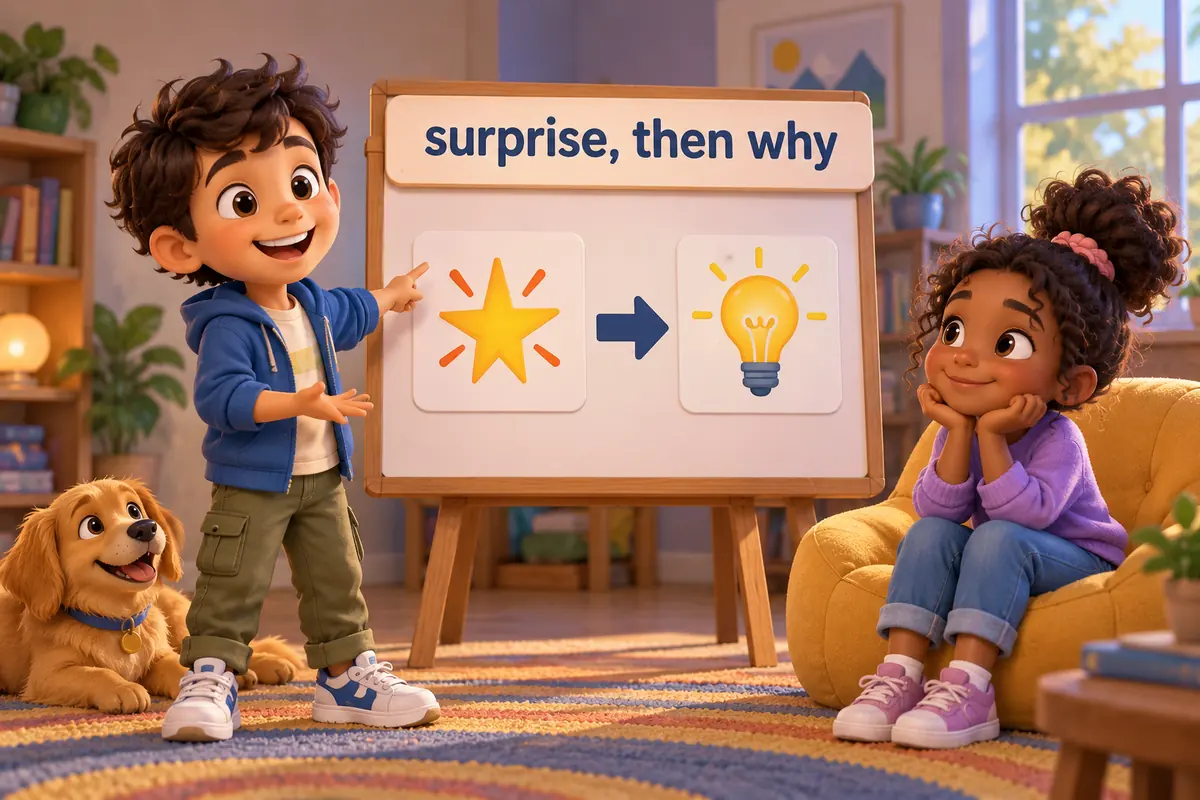
Fun facts for kids turn a surprising detail into a small lesson that is easy to remember. A good fun fact surprises first and explains second, so children want to hear the reason behind it. A fact such as the octopus having three hearts starts a talk about how animals live.
Fun facts for kids at a glance
- A fun fact is true, surprising and short.
- Good facts come with a simple reason that explains the surprise.
- They work as quiz questions, table talk or lesson starters.
- Facts about animals, space and the human body are favourites.
- Sharing a fact teaches children to check what they hear.
What makes a fact fun?
A fact becomes fun when it breaks an expectation, so the listener reacts before thinking. The surprise works best when a simple explanation follows, turning a curious detail into real learning. The table below shows what each kind of fun fact teaches.
| Fact type | Example | What it teaches |
|---|---|---|
| Animal | An octopus has three hearts. | Animal bodies can differ from our own. |
| Space | A day on Venus is longer than its year. | Planets move in surprising ways. |
| Human body | Blood is red because of iron in it. | Everyday science sits in our bodies. |
| Plant | Bananas grow facing up toward the sun. | Plants grow toward light. |
| Everyday | Honey does not spoil. | Some foods keep for a very long time. |
How do you use fun facts for kids?
Fun facts work best as a hook at the start of a lesson or as a reward at the end. Share the fact, let children guess why it might be true, then explain the reason. A list of adjectives for fun helps children describe just how surprising each fact is.
| Step | What to do | Example |
|---|---|---|
| Share | Say the fact clearly | An octopus has three hearts. |
| Guess | Let children suggest why | Maybe it needs extra pumps |
| Explain | Give the simple reason | Two hearts pump to the gills. |
| Extend | Add one linked fact | Its blood is blue too. |
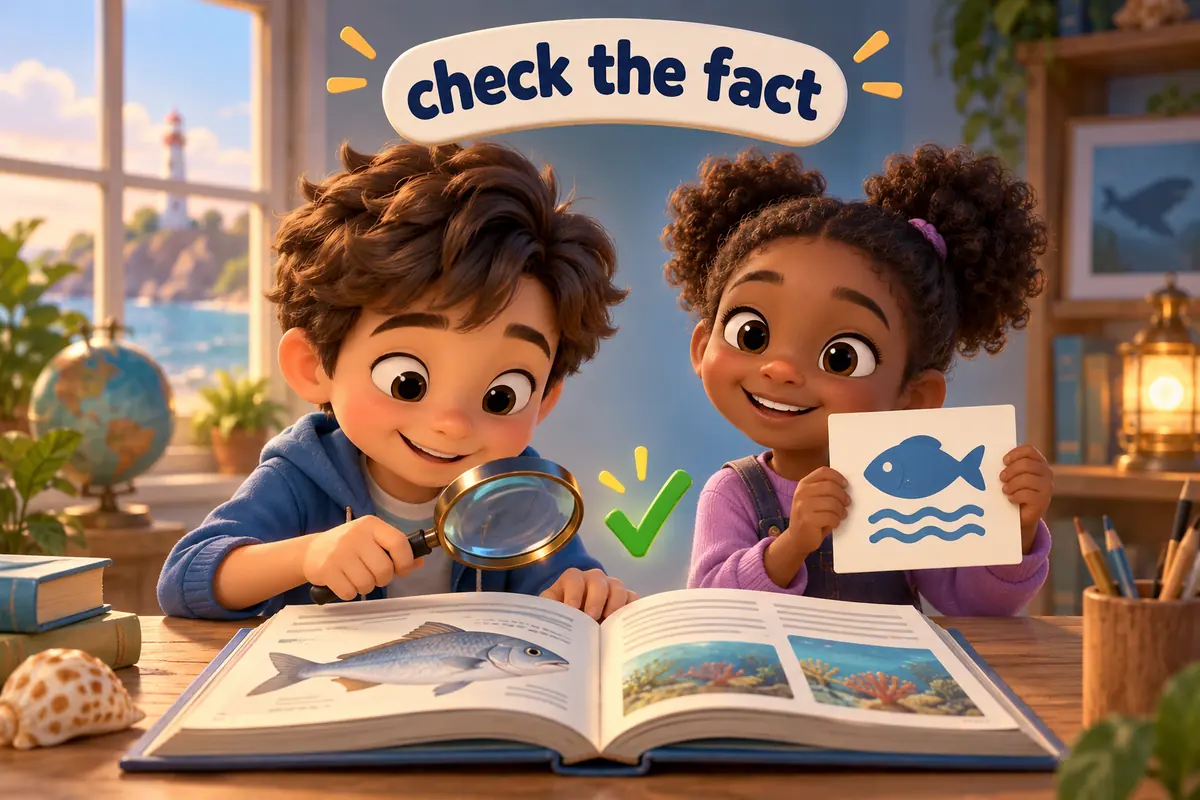
| Check | Ask how we could confirm it | We could read a science book. |
Fun facts for kids across topics
Fun facts come from many subjects, so they fit almost any lesson. The examples below pair a fact with why it is true and where it fits. A themed a words for kids list can add a vocabulary task around the same facts.
| Topic | Fact | Why it is true | Where it fits |
|---|---|---|---|
| Animals | An octopus has three hearts. | Two pump blood to the gills and one to the body. | A talk about animal bodies. |
| Space | A day on Venus is longer than its year. | Venus turns very slowly as it orbits. | A lesson on the planets. |
| Human body | Blood is red because of iron in it. | Iron in haemoglobin gives the colour. | A health or science starter. |
| Plants | Bananas grow facing up toward the sun. | The fruit bends upward as it grows. | A lesson on how plants grow. |
| Everyday | Honey does not spoil. | Its low water and acid keep microbes out. | A food or history chat. |
| Animals | A group of flamingos is a flamboyance. | The birds gather in large flocks. | A lesson on collective nouns. |
| Space | Sharks appeared before trees did. | Sharks are far older than forests. | A talk about deep time. |
| Human body | A heart beats about 100,000 times a day. | It pumps without stopping. | A lesson on the body. |
A fun fact or a tall tale
| Point | Fun fact | Tall tale |
|---|---|---|
| Is it true? | Yes, and it can be checked | No, it is made up |
| Purpose | To surprise and teach | To entertain or tease |
| Can it be proved? | Often, with a simple test or source | Not at all |
| Effect on listeners | They learn something | They laugh at the joke |
| Where it belongs | A lesson or quiz | A story or joke time |
A fun fact and a tall tale can both delight a child, but only the fact survives a quick check, so keeping the two apart teaches children to ask where a claim came from.
Words in these fun facts
These words appear in the facts above and give children a way to talk about what they learn. A set of compound words for kids fits well, since words such as heartbeat and sunlight build from two smaller words.
| Word | Meaning | Example |
|---|---|---|
| fact | Something that is true | It is a fact that sharks are old. |
| surprising | Unexpected and interesting | The three hearts are surprising. |
| explain | Show why something is so | The reason explains the surprise. |
| orbit | The path of a planet | Venus orbits the sun. |
| microbes | Living things too small to see | Microbes rarely grow in honey. |
| collective noun | A name for a group | Flamboyance names a group of flamingos. |
More fun facts for kids
A longer set keeps a quiz or a bedtime chat going. Each fact below is short enough to remember and surprising enough to spark a question. Add the simple reason after the surprise to turn it into learning.
| Fact | Why it is true | Where it fits |
|---|---|---|
| Butterflies taste with their feet. | They have taste sensors on their legs. | A lesson on insects. |
| A group of flamingos is a flamboyance. | The birds gather in large flocks. | A lesson on collective nouns. |
| Sharks appeared before trees did. | Sharks are far older than forests. | A talk about deep time. |
| An ostrich eye is bigger than its brain. | Its large eye helps it watch for danger. | A lesson on birds. |
| Honey does not spoil. | Its low water and acid keep microbes out. | A food or history chat. |
| A blue whale is the largest animal. | No known animal grows heavier. | A talk about ocean life. |
Every one of these facts can be checked, which is the difference between a fun fact and a tall tale.
Mistakes children make when sharing fun facts
All surprising sayings are true.Correct: Check a surprising claim before sharing it. Rule: A claim that sounds amazing still needs proof.Facts only come from animals.Correct: Facts come from space, plants and the body too. Rule: Many subjects offer surprising details.A fact needs no explanation.Correct: Add a simple reason to a fact. Rule: The reason turns a wow moment into learning.A tall tale is the same as a fact.Correct: A tall tale is made up on purpose. Rule: Only a fact can be checked and shown true.One source is always enough.Correct: Compare two sources when you can. Rule: Checking twice catches mistakes.
Practice using fun facts
Try each item before reading the answers below. The tasks mix fill in the blank, choosing the true fact and explaining a surprise.
- Fill in the blank: An octopus has ________ hearts.
- Fill in the blank: A group of flamingos is called a ________.
- Choose the true fact: (A day on Venus is longer than its year / Honey spoils within a week).
- Correct the error: “Sharks are younger than the first trees.”
- Explain in one line why honey does not spoil.
- Spot the register: Which line fits a science lesson? A) Trust me, it is magic. B) The reason is that honey has little water.
Answers
- Three, because an octopus has two hearts for the gills and one for the body.
- Flamboyance, because that is the collective noun for a group of flamingos.
- A day on Venus is longer than its year, because Venus turns very slowly as it orbits the sun.
- Sharks appeared before trees did, because sharks are far older than forests.
- Honey has little water and is acidic, because those conditions stop microbes from growing.
- Line B, because it gives a scientific reason instead of asking for blind trust.
The bottom line
Fun facts for kids work when they surprise first and explain second, so each one becomes a small lesson. Sharing facts about animals, space and the body also teaches children to ask how a surprising claim can be checked.
Frequently asked questions about fun facts
What is a fun fact?
A fun fact is a short, true and surprising piece of information. It catches attention because it breaks an expectation, such as a fact about an animal with three hearts. The surprise is what makes the fact memorable and easy to repeat.
Why are fun facts good for children?
Fun facts spark curiosity and give children a reason to ask why. They also widen knowledge across animals, space and the body. Sharing them teaches children to check a claim rather than accept it just because it sounds amazing, and a curious child asks better questions.
Are fun facts always true?
Not every line shared online as a fun fact is true, so it should be checked. A real fact can be confirmed with a reliable book or site. Teaching children to check claims is as valuable as the fact itself.
How can I use fun facts at home?
Share one fact at a meal or at bedtime, then ask the child to guess why it might be true. Follow with the simple reason. This turns a curious detail into a short, easy conversation that children remember, and it builds a warm daily routine.