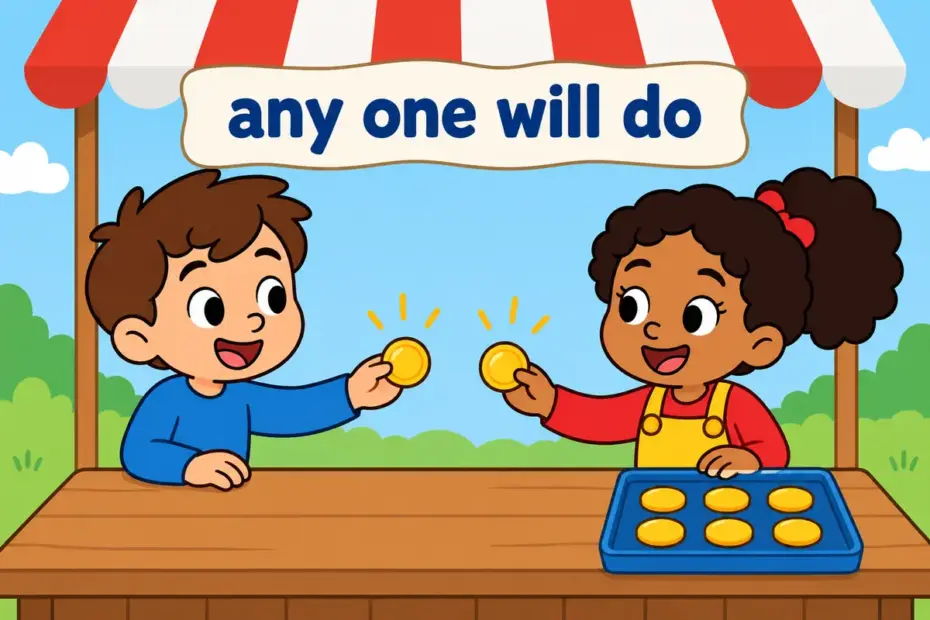
Fungible means interchangeable: one unit can stand in for another because both are identical in value and use. Use fungible in a sentence about money, grain or shares: “A dollar bill is fungible with any other dollar bill.” The adjective usually describes goods, assets or tokens, not people.
Fungible at a glance
- Fungible is an adjective meaning interchangeable in value and use.
- The usual subjects are money, commodities, shares and digital tokens.
- The opposite is non-fungible, used for unique items such as artworks.
- The noun form fungibility names the quality of being interchangeable.
- The usual patterns are be fungible and be fungible with.
- The commonest error is confusing fungible with tangible.
What does fungible mean?
Fungible is an adjective meaning interchangeable, so that one unit may be replaced by another unit of the same kind without any loss of value. The Cambridge entry for fungible records the finance and commodities sense. The everyday synonym is interchangeable, though fungible adds a precise idea: two items are not merely similar but equivalent for the purpose at hand.
| Sense | Plain meaning | Example sentence |
|---|---|---|
| Interchangeable goods | One unit equals another unit | Gold coins of equal weight are fungible. |
| Financial assets | Holdings that can be swapped freely | The fund holds fungible securities. |
| Legal property | Goods replaced by an equal quantity | Fungible property may be returned in kind. |
| Non-fungible item | Unique, so no copy is equivalent | A painting is non-fungible because no copy matches it. |
Fungible is not simply a grand word for replaceable. A mug can be replaceable but not fungible, because a substitute mug is a different object with its own history and wear. The word turns on equivalence of value, not on the mere existence of a spare, so it belongs with quantities that are counted rather than objects that are chosen. Two banknotes of the same value are fungible even though their serial numbers differ, because that difference carries no value in ordinary use.
How do you use fungible in a sentence?
The adjective usually sits before a noun or follows the verb be. The preposition with names the thing it can be swapped for, and the negative compound non-fungible does the opposite work.
| Pattern | Example | What it signals |
|---|---|---|
| fungible + noun | Fungible goods can be swapped freely. | Attributive use before a noun. |
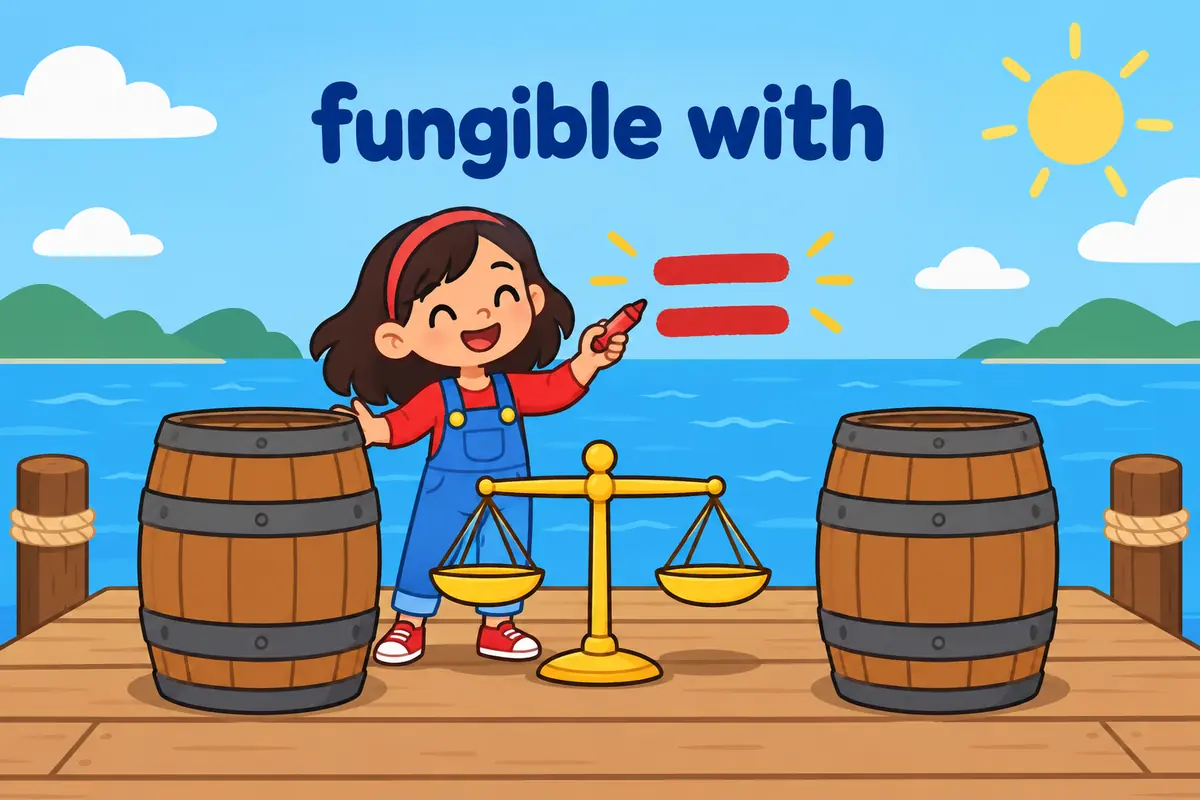
| be fungible with | One barrel of oil is fungible with another. | States the equivalence explicitly. |
| be fungible | Cash is fungible. | Predicate adjective, no comparison needed. |
| non-fungible + noun | A non-fungible token is unique. | The opposite compound, one of a kind. |
| fungible assets | Fungible assets are pooled in the account. | Fixed finance collocation. |
In accounting and law, the word usually appears in fixed phrases such as fungible goods, fungible property and fungible assets. Outside those fields it sounds technical, so a general reader may prefer interchangeable unless the exact equivalence of units is the point being made. The phrase less fungible appears once grades or conditions start to matter, as when a collectible coin is worth more than its face value.
Fungible in a sentence: examples across contexts
Each example shows the adjective doing real work in a different field. Notice that the things called fungible are always identical in the way that matters, even when they are physically distinct.
| Context | Example sentence | Why this works |
|---|---|---|
| Personal finance | Two twenty-dollar notes are fungible for the same purchase. | Equal value, so either will do. |
| Commodities | Wheat of the same grade is fungible between silos. | Grade fixes the equivalence. |
| Law | The contract covers fungible goods that may be replaced in kind. | Legal sense of equal replacement. |
| Cryptocurrency | Bitcoin is fungible because one coin equals another. | Digital units of equal value. |
| Accounting | Fungible assets are pooled rather than tracked individually. | Accounting treatment of equivalents. |
| Economics | Fungible labour lets firms move workers between tasks. | Technical, mildly controversial use. |
| Agriculture | Grain is fungible once it is mixed in the elevator. | Physical blending destroys identity. |
| Everyday talk | Gift cards are not quite fungible, because stores differ. | Shows the limit of the equivalence. |
| Art market | Each painting is non-fungible, so no two prices are equal. | Uniqueness as the opposite. |
| Banking | Deposits are fungible, which is why transfers are simple. | Money as the classic case. |
| Insurance | Fungible replacement parts keep claims straightforward. | Standard parts of equal value. |
| Trade | Fungible cargoes change hands without inspection. | Equivalence removes the need to check identity. |
The subject also fixes the register. Fungible assets and fungible goods sound formal and precise, while a sentence such as these two tickets are fungible is perfectly natural in conversation, so the word is not restricted to experts. Crypto assets show the same logic in digital form, where one unit of a coin matches another exactly, while art goes the other way because each work is unique and priced on its own.
Fungible vs tangible
The two adjectives often appear in the same accounting discussion, but they answer different questions. Fungible asks whether one unit can replace another; tangible asks whether a thing can be touched.
| Attribute | Fungible | Tangible |
|---|---|---|
| Meaning | Interchangeable in value and use | Physical and able to be touched |
| Focus | Equivalence between units | Physical existence |
| Typical subject | Money, grain, shares, tokens | Property, equipment, stock |
| Test | Can one unit replace another? | Can it be touched? |
| Opposite | Non-fungible | Intangible |
| What it implies | Substitutability | Material presence |
Choose fungible when the point is that units are equivalent, and choose tangible when the point is that something exists in physical form. Cash is both fungible and tangible, while a share is fungible but intangible, which shows that the two qualities are independent. A patent is intangible and non-fungible, a barrel of oil is tangible and fungible, and a dollar bill is both tangible and fungible.
Word forms and grammar of fungible
Fungible is an adjective, and its noun names the quality itself. There is no common everyday verb, so writers keep to the adjective and its noun.
| Form | Part of speech | Example |
|---|---|---|
| fungible | adjective | The units are fungible. |
| non-fungible | adjective, negative | Each artwork is non-fungible. |
| fungibility | noun | Fungibility makes the assets easy to trade. |
| fungibles | noun, plural, technical | The court treated the grain as fungibles. |
Standardised goods are easier to treat as fungible, which is why uniform quality matters so much in commodities markets. Once grades differ, the equivalence weakens and the units stop being interchangeable. The plural noun fungibles is confined to legal writing, where it names goods that may be replaced by quantity rather than by identity.
Common mistakes with fungible
The errors below usually come from borrowing the wrong neighbour word, especially replaceable and tangible, or from stretching the adjective onto things that are unique.
- Incorrect: These paintings are fungible. Correct: These paintings are non-fungible. Unique items cannot be swapped unit for unit.
- Incorrect: This mug is fungible with my other mug. Correct: This mug is replaceable by another mug. A substitute is a different object, so the equivalence does not hold.
- Incorrect: The interns are fungible. Correct: The interns have interchangeable skills, though the wording still sounds cold. Reserve fungible for goods and assets, not people.
- Incorrect: very fungible. Correct: fully fungible, or less fungible. The quality is not normally graded with very.
- Incorrect: fungible to another unit. Correct: fungible with another unit. The fixed preposition is with.
- Incorrect: fungable. Correct: fungible. The ending is -ible, not -able.
Practice using fungible
The exercises test the meaning, the preposition and the contrast with tangible, so read each subject carefully before you answer.
- Fill the blank: Two equal-value coins are ______ because either can pay the same price.
- Choose the better word: A hand-painted vase is ______ (fungible / non-fungible), since no copy is equivalent.
- Correct the error: The shares are fungible to cash of the same value.
- Build a sentence using be fungible with about barrels of oil.
- Spot the register: which sentence belongs in a finance report, and which in a chat? (a) The barrels are basically the same thing. (b) Oil of the same grade is fungible.
- Fill the blank with the noun: ______ allows the bank to pool the deposits.
- Choose the better word: A machine you can touch is ______ (fungible / tangible), though its value may not be interchangeable.
- Explain the difference: a replaceable part and a fungible part.
Answers
- fungible. Either coin can substitute for the other at the same value.
- non-fungible. The vase is unique, so no equivalent unit exists.
- The shares are fungible with cash of the same value. The fixed preposition is with.
- Sample: One barrel of oil is fungible with another of the same grade. The pattern be fungible with is intact.
- Sentence (b) belongs in a finance report; sentence (a) belongs in a chat. Formal writing keeps the precise term fungible.
- Fungibility. The noun names the quality that permits pooling.
- tangible. Tangible describes physical presence, not interchangeability.
- A replaceable part can be swapped because a spare exists; a fungible part is interchangeable because every unit is equivalent in value. The second is a stronger claim than the first.
The bottom line
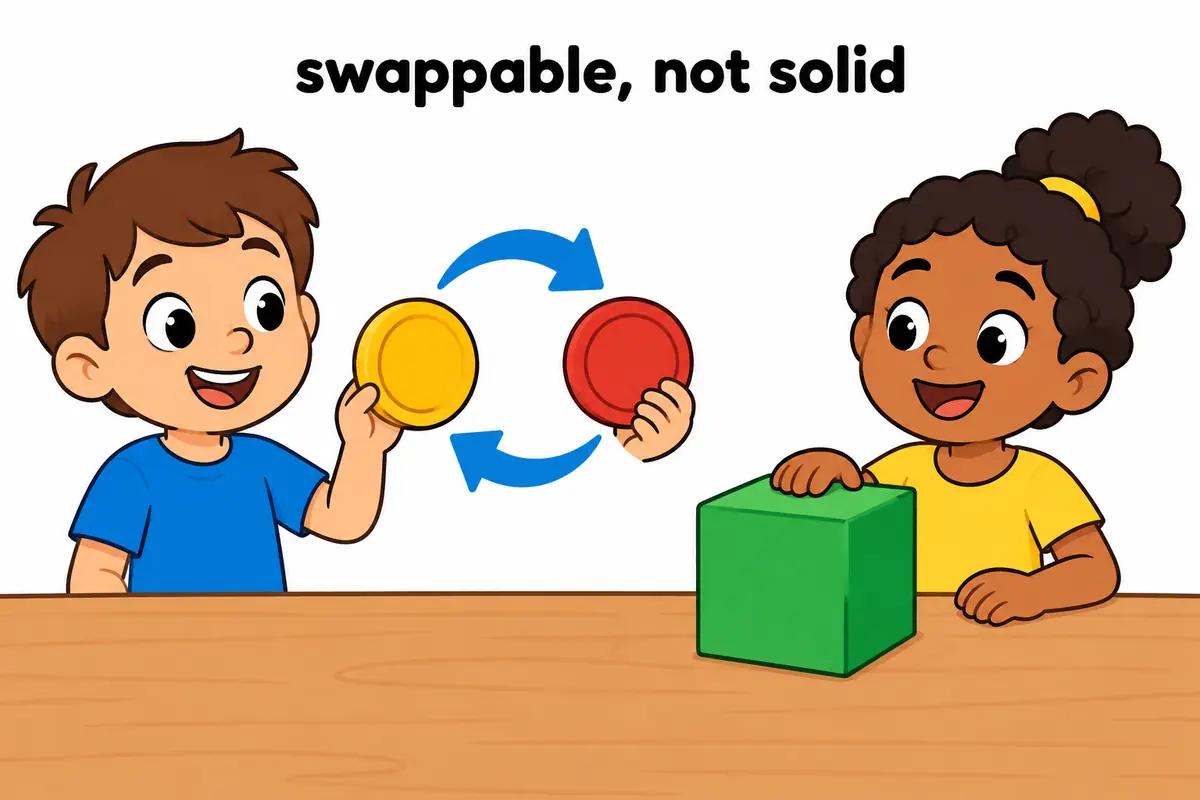
Fungible in a sentence means interchangeable in value and use, so one unit can replace another without loss. It belongs to money, commodities, shares and tokens, and it follows the patterns be fungible and be fungible with. Keep it apart from tangible, which describes physical form, and from replaceable, which only says a substitute exists. Use it only where equivalence can be shown, and the sentence will read as precise rather than merely formal.
Frequently asked questions about fungible
What does fungible mean in finance?
In finance, fungible describes assets that are interchangeable, so one unit is equivalent to another of the same kind. A dollar, a barrel of oil of a set grade and a share of the same class are all fungible. That equivalence lets the assets be pooled, traded and transferred without checking the identity of each unit.
What is a non-fungible token?
A non-fungible token is a digital record that marks an item as unique, so it cannot be swapped one for one with another token. The term borrows the finance sense of fungible and reverses it. Because each token is distinct, it can stand for a specific artwork, collectible or membership.
Is money always fungible?
Money is the classic fungible asset, because a note or a coin of the same value can always replace another. The rule bends in a few cases, such as collectible coins whose condition gives them a value beyond their face amount. In ordinary use, though, cash and bank deposits are treated as fully fungible.
What is the opposite of fungible?
The direct opposite is non-fungible. If the contrast is about physical form rather than interchangeability, the opposite of fungible is not the right frame, and intangible is the opposite of tangible instead. Fungibility and tangibility are separate qualities, so a thing can be fungible and intangible, like a share.