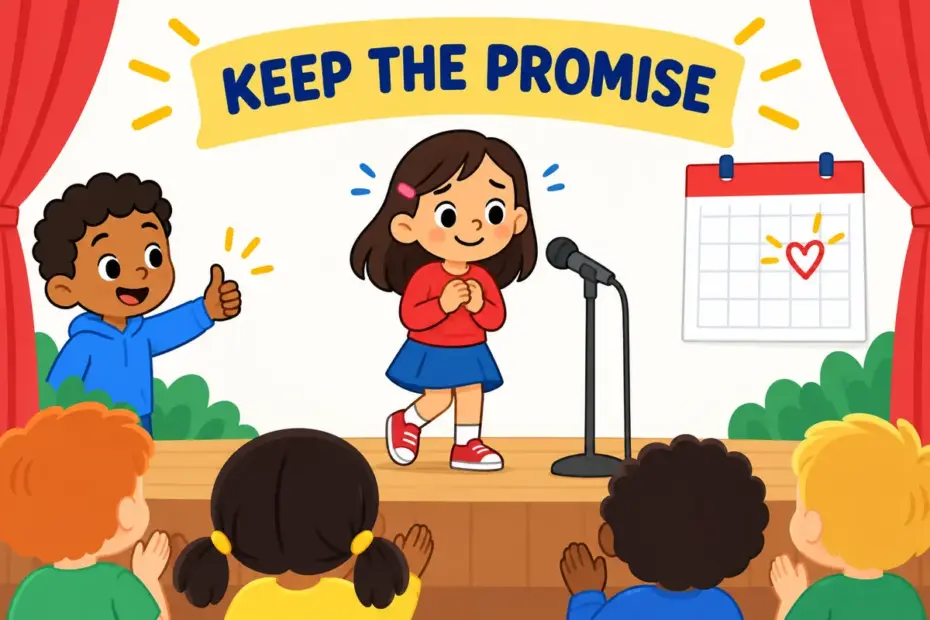
Go through with means to carry out something you had planned or promised, especially when it is difficult or unpleasant. To use go through with in a sentence, name the plan decided earlier: “She went through with the wedding.” The phrase is fixed and takes its object after with.
Go through with at a glance
- Go through with is a fixed phrasal expression meaning to carry out a plan.
- Its forms are go through with, goes through with, went through with and going through with.
- The object is a plan, promise, decision or difficult action.
- The object follows with and can never be split from the phrase.
- It usually implies reluctance or difficulty already accepted.
- Its nearest confusable is go through, which means experience or examine.
What does go through with mean?
Go through with is a fixed expression meaning to carry out something decided earlier, usually despite doubt or difficulty. The Cambridge entry for go through with records that sense. The table shows the two situations it covers: completing a formal commitment and pressing on with a hard choice.
| Sense | Plain meaning | Example sentence |
|---|---|---|
| Carry out a commitment | Do what was promised or agreed | They went through with the sale in March. |
| Complete something difficult | Finish a hard action already begun | She went through with the appeal. |
| Press on after doubt | Continue although you could stop | He went through with the resignation. |
One limitation is worth stating plainly. Go through with does not mean merely to experience something: go through means to endure or examine, while go through with means to complete a decided action, so the extra particle changes the meaning.
How do you use go through with in a sentence?
Go through with is a fixed three-word phrase, so with must stay attached and the object follows it. Nothing may sit between through and with, and there is no natural passive. Five patterns cover most sentences, and go through marks the contrast.
| Pattern | Example | What it signals |
|---|---|---|
| subject + go through with + noun | We will go through with the move. | The object is the plan decided earlier. |
| go through with + it | They decided to go through with it. | A pronoun object works after with. |
| go through with + a difficult act | She went through with the appeal. | Shows the action was hard but completed. |
| go through with + despite + noun | He went through with it despite the cost. | A despite-phrase names the doubt overcome. |
| be going to + go through with | They are going to go through with the merger. | Common in spoken plans and announcements. |
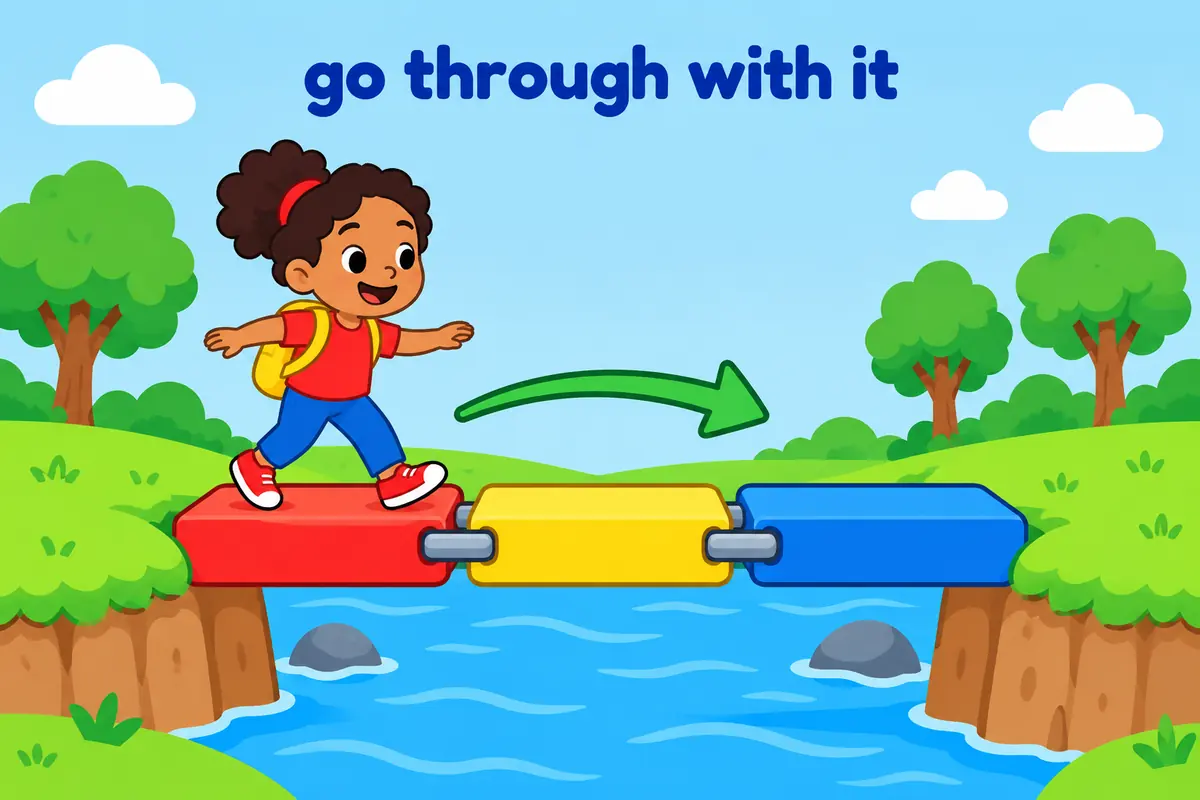
Go through with in a sentence: examples across contexts
Go through with suits promises and hard decisions, and its register stays neutral, so it fits a wedding plan as easily as a business merger. The nine sentences below move between them. In medical writing, pull through an illness means recover, and on the phone put through a caller means connect.
| Context | Example sentence | Why this works |
|---|---|---|
| Wedding plan | Despite the weather, they went through with the ceremony. | A despite-phrase shows doubt overcome. |
| Business | The board went through with the merger after long talks. | The object is a formal decision. |
| Legal writing | Either side may go through with the settlement before Friday. | Keeps the phrase fixed with a deadline. |
| Education | She went through with the exam even while unwell. | The object is a difficult undertaking. |
| Sports | The club went through with the transfer at the last minute. | A decision completed under pressure. |
| Personal | He went through with the move, though he had doubts. | The though-clause names the reluctance. |
| Workplace email | We will go through with the audit as scheduled. | Confirms a plan already agreed. |
| Politics | The minister went through with the unpopular reform. | An adjective shows the difficulty. |
| Conversation | I almost cancelled, but I went through with it. | The pronoun it follows with in speech. |
Go through with vs go through
Go through and go through with share three words, and the missing with is the difference between enduring something and completing a decision. When a plan fails instead, fall through gives the opposite result.
| Attribute | go through with | go through |
|---|---|---|
| Core meaning | Carry out a plan | Experience or examine something |
| Object type | A decision, promise or action | A hard time, a list or a process |
| Implied difficulty | Yes, usually | Not necessarily |
| Control | The doer chooses | Events often happen to the doer |
| Example | She went through with the move. | She went through a hard year. |
| Register | Neutral to formal | Neutral |
Verdict: choose go through with when a person carries out a plan despite difficulty, and go through when they experience events or examine something from start to finish.
Word forms and grammar of go through with
Go through with is fixed, so the words stay in order and with always precedes the object. The table lists the forms and the variation learners try.
| Form | Part of speech | Example |
|---|---|---|
| go through with | phrase, base | They will go through with the plan. |
| goes through with | present, third person | She goes through with every promise. |
| went through with | past simple | He went through with the deal. |
| going through with | present participle | Going through with it took courage. |
| go through with it | pronoun object | The phrase keeps it after with. |
| go with through | non-standard | The three words never change order. |
The same root appears in follow through, which means to continue an action to its end, and in the single word throughout, which means in every part.
Common mistakes with go through with
- Incorrect:
She went through the wedding.Correct: She went through with the wedding. Rule: Completing a decision needs the whole phrase go through with. - Incorrect:
They went with through the plan.Correct: They went through with the plan. Rule: The words are fixed in order and cannot be rearranged. - Incorrect:
He went through with the cold winter.Correct: He went through the cold winter. Rule: Enduring an experience uses go through, not go through with. - Incorrect:
We will go through with the list one by one.Correct: We will go through the list one by one. Rule: Examining items uses go through; go through with completes a decision. - Incorrect:
The decision was gone through with by the board.Correct: The board went through with the decision. Rule: The phrase has no natural passive, so keep the doer as the subject.
Practice using go through with
Work through the six items, then read the answers for the reasoning rather than only the key.
- Fill the gap: After months of doubt, they finally ______ the merger.
- Choose the better word: It was a hard year, and she (went through / went through with) it alone.
- Correct the error: He went with through the operation.
- Build a sentence: use go through with it about a difficult promise.
- Spot the register: which is correct for the meaning carried out — the committee went through with the purchase, or the committee went through the purchase?
- Rewrite with a pronoun: They decided to carry out the plan.
Answers
- went through with — the merger is the decided plan, so the full phrase is needed.
- went through — she endured the year; nothing was decided in advance to complete.
- He went through with the operation — the fixed phrase is go through with, in order.
- Model answer: She was nervous, but she went through with it.
- The committee went through with the purchase — only the full phrase means carried out.
- They decided to go through with it — the pronoun it follows with.
The bottom line
Use go through with in a sentence when somebody carries out a plan or promise they had already made, especially when doubt or difficulty surrounds it. Two details decide most sentences: the three words are fixed in order, so nothing may split them, and the object always follows with. For enduring events or examining items, use go through instead.
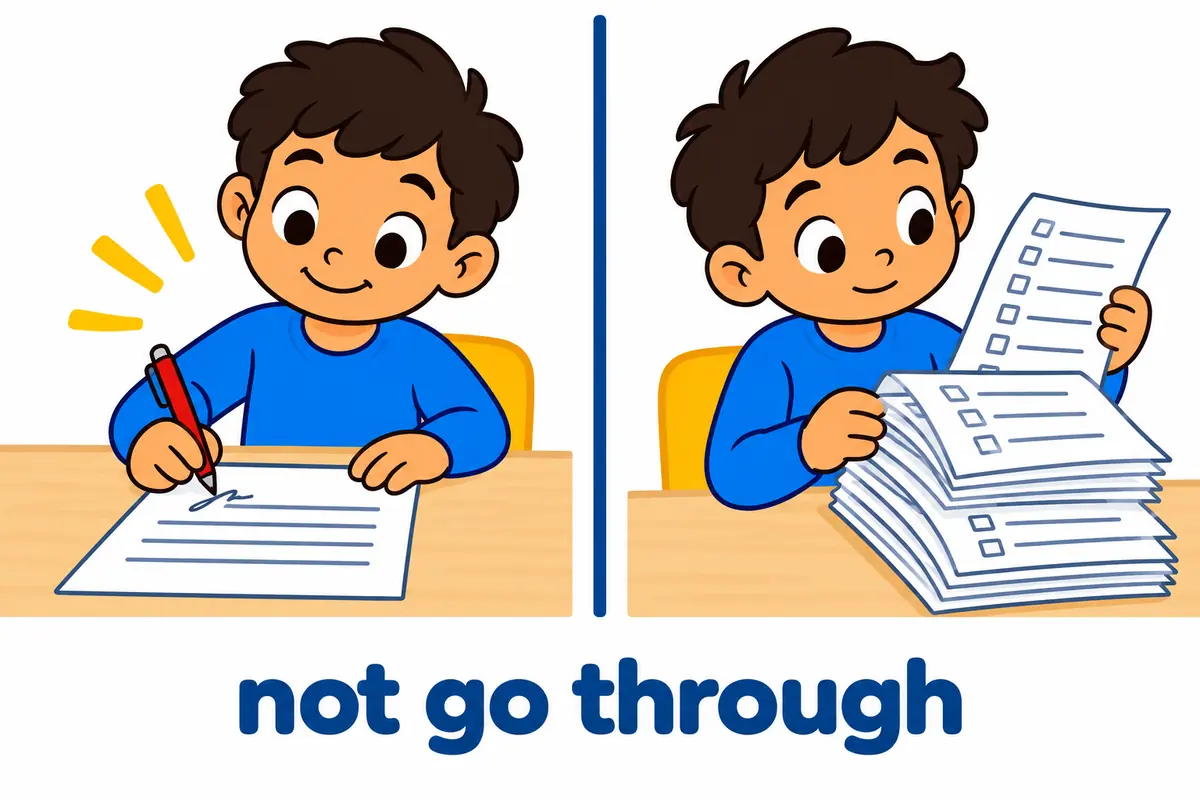
Frequently asked questions about go through with
Is go through with one phrase or three words?
Go through with is a fixed three-word expression that works as a single verb. The words never separate or change order, so through with stays together. Its object follows with, as in go through with the plan, and the phrase is never written with hyphens.
What is the difference between go through and go through with?
Go through means to experience or examine something, while go through with means to complete a plan you decided earlier. She went through a hard year reports endurance; she went through with the move reports a completed decision. The word with carries that whole difference.
Can you go through with something bad?
Yes. The phrase often implies that the action is difficult, risky or unpleasant, because it is used when doubt surrounds a decision. A person can go through with a risky appeal or an unpopular sale, provided the action was planned beforehand and is now completed.
Is go through with used in formal writing?
Go through with is neutral and fits reports and business writing as well as speech. A formal account might say the board went through with the merger, which is perfectly standard. Its plainer synonym is carry out, which replaces it without any change of meaning.
Have you ever hesitated to go through with a decision, only to regret it later? “Go through with” is a phrasal verb that means to continue or complete an action or decision, especially when faced with doubts or difficulties.
This expression is commonly used to convey the idea of pushing through uncertainty or obstacles to carry out a planned course of action. It implies a sense of determination and commitment to follow through with something, despite any reservations or challenges along the way.
7 Examples Of Go Through With Used In a Sentence For Kids
- Let’s go through with singing our favorite song.
- We will go through with coloring our pictures today.
- Shall we go through with dancing in the playground?
- We can go through with playing with our friends after class.
- It’s time to go through with sharing our toys nicely.
- Why don’t we go through with listening to a fun story?
- Let’s go through with helping each other clean up our classroom.
14 Sentences with Go Through With Examples
- Go through with your final exams despite the stress and pressure.
- Make sure to go through with your project presentation in front of the class.
- Go through with your decision to join that club and make new friends.
- Don’t back out now, just go through with your plan to start a study group with your classmates.
- Go through with your decision to attend that career fair and network with potential employers.
- Be brave and go through with your decision to ask your professor for extra help.
- Go through with your commitment to attend all your classes and be punctual.
- Don’t hesitate, just go through with your decision to participate in that student exchange program.
- Be confident and go through with your decision to apply for that internship opportunity.
- Go through with your decision to give a presentation at the academic conference.
- Even when it gets tough, remember to go through with your plan to pursue higher education.
- Go through with your decision to challenge yourself by taking advanced courses.
- It’s important to go through with your intention to seek guidance from your academic advisor.
- When it comes to your research project, make sure to go through with your planned timeline and deliverables.
How To Use Go Through With in Sentences?
To use “Go Through With” in a sentence, follow these simple steps:
-
Understand the meaning: The phrase “Go Through With” means to follow through and complete a decision, plan, or action despite difficulties or challenges.
-
Choose a subject: Start by identifying the person or thing that is going to carry out the action. This could be “I,” “you,” “he,” “she,” “they,” or any other noun.
-
Select a verb: Next, choose an action verb that describes what the subject is going to do. This could be anything from “complete” to “attend” to “finish.”
-
Include the phrase: Insert “Go Through With” after the verb to indicate that the action will be carried out despite obstacles.
-
Add the object: Finally, include the object of the sentence, which is the person or thing that the action is directed towards. This could be a task, decision, project, or any other noun.
For example: “She decided to go through with her plan to start her own business despite the challenges.”
Remember to always check that the sentence makes sense and that the use of “Go Through With” accurately conveys the idea of completing an action despite difficulties. Practice using the phrase in different sentences to become more comfortable with its usage.
Conclusion
In conclusion, the examples of sentences using “go through with” demonstrate various situations where individuals follow through on a decision or plan, despite difficulties or doubts. Whether it’s going through with a risky investment, a challenging project, or a difficult conversation, the phrase implies a sense of commitment to see something to completion.
By examining these examples, we can see that “go through with” highlights the determination and resolve required to push forward despite obstacles. It emphasizes the importance of perseverance and staying true to one’s word, ultimately leading to successful outcomes and personal growth.


