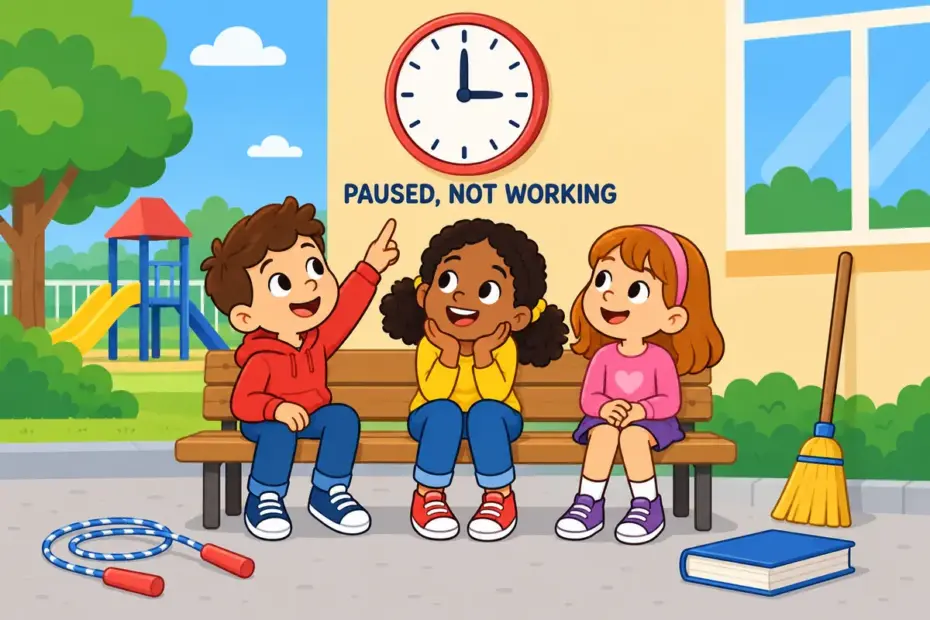
Goof off means to spend time idly instead of working, and the phrasal verb is intransitive, so it never takes an object. To use goof off in a sentence, name who is avoiding work and what they are avoiding: “The interns goofed off all afternoon.” Keep the two words together, because goof off does not split around a noun.
Goof off at a glance
- Goof off is an intransitive phrasal verb, so it never takes a direct object.
- Its forms are goof off, goofs off, goofed off and goofing off.
- The subject is almost always a person or a group of people.
- Goof off belongs to informal speech and casual writing rather than reports.
- The commonest error is adding an object, as in goof off the homework.
What does goof off mean?
Goof off is an intransitive phrasal verb meaning to waste time in a relaxed, playful way instead of doing the work at hand. The Cambridge entry for goof off treats the two words as a single unit, and that unit never carries an object: you goof off, or you goof off during a break, but you never goof off a task. The slower cousins are dawdle over a task for plodding movement and wasting an hour for empty time.
| Sense | Plain meaning | Example sentence |
|---|---|---|
| Avoid work | Spend time idly while work waits | The painters goofed off until the foreman returned. |
| Play around | Act silly for fun, with no harm intended | The cousins goofed off in the back seat all the way home. |
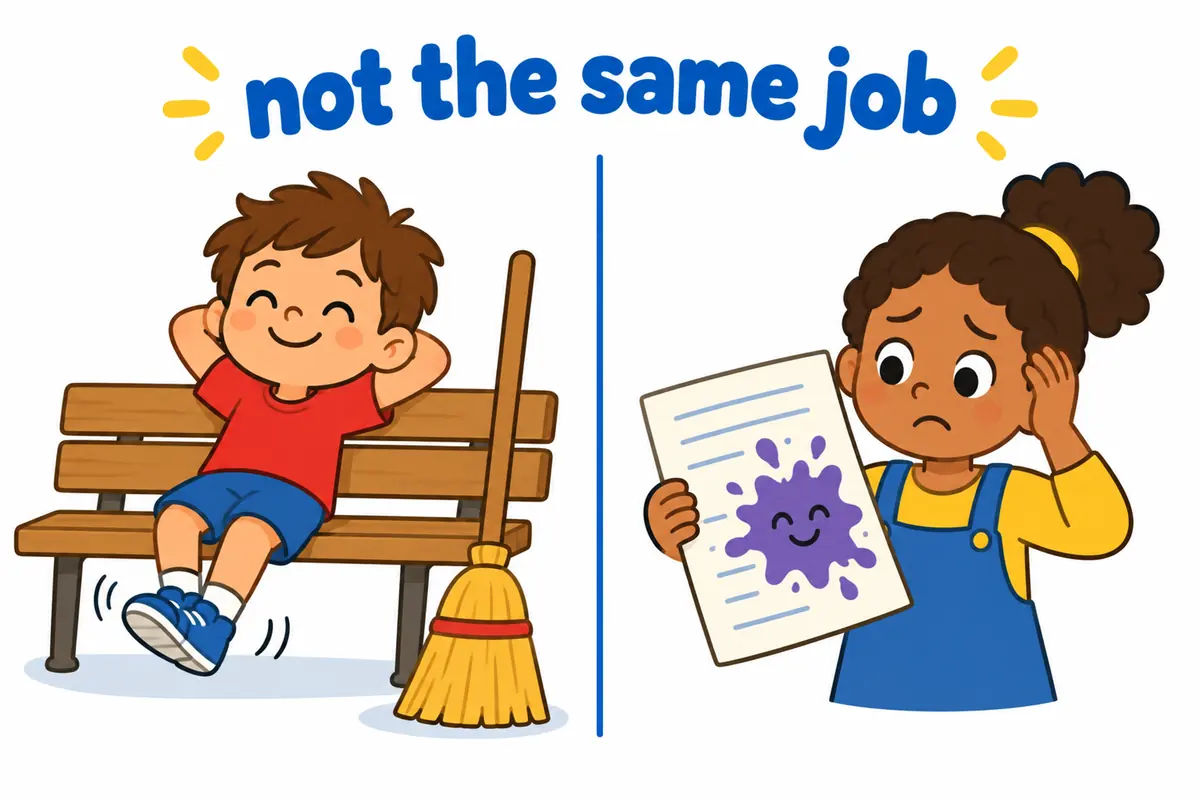
One limitation is worth stating plainly. Goof off never means to make a mistake, and it does not describe rest that has been earned. A person who goofs off is avoiding something that ought to be done, which is why the verb carries a mild note of reproach.
How do you use goof off in a sentence?
The verb is intransitive and inseparable, so the two words stay together wherever the sentence goes. Four patterns cover almost every real example, and the trick is always the same: name who is idling, then say when or where.
| Pattern | Example | What it signals |
|---|---|---|
| subject + goof off | The lifeguards goof off between swims. | Idle time, with no object needed. |
| goof off + time phrase | We goofed off all morning. | How long the idling lasted. |
| goof off + place | The crew goofed off behind the shed. | Where the work was avoided. |
| be + goofing off | She is goofing off again. | An action happening now, often with mild criticism. |
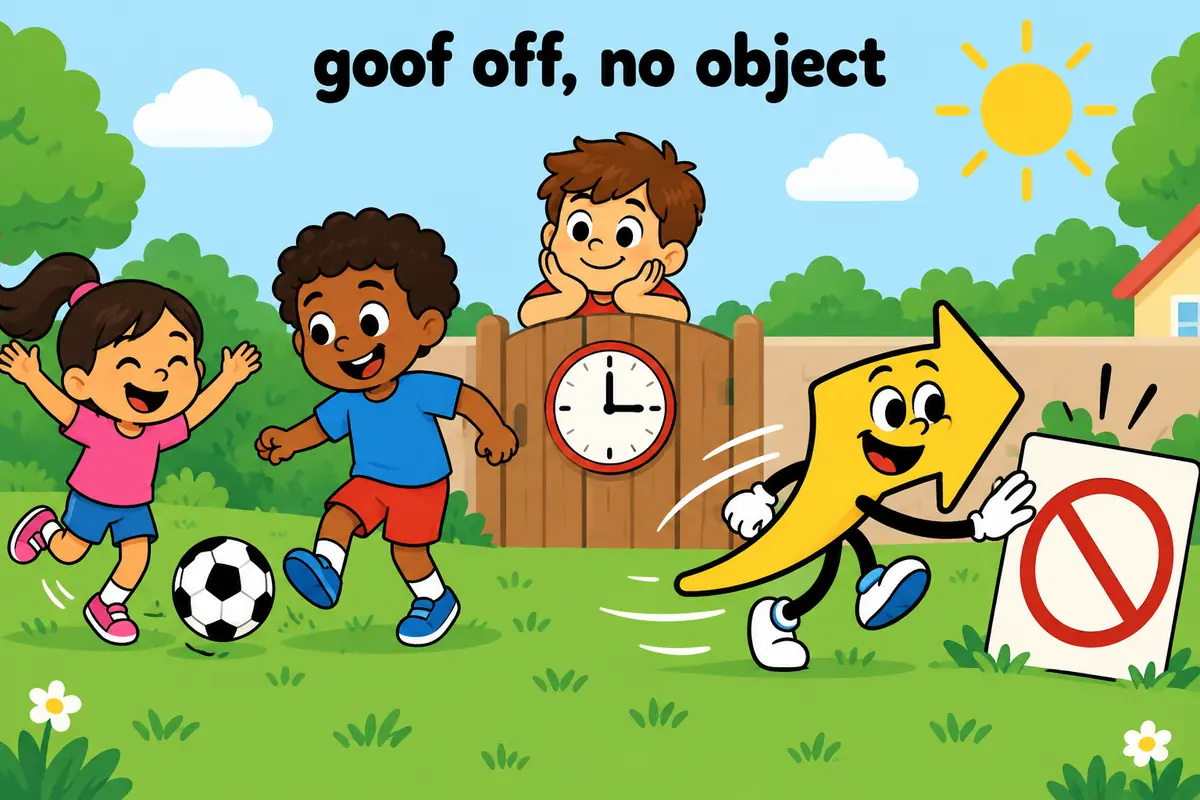
Goof off in a sentence: examples across contexts
The verb changes tone more than meaning, and each sentence below names the work that is being avoided. The setting decides how harsh the criticism sounds.
| Context | Example sentence | Why this works |
|---|---|---|
| Classroom | The class goofed off for ten minutes while the substitute read the register. | A time phrase sets the scale of the idling. |
| Workplace email | Two staff goofed off by the loading bay during the stocktake. | Naming the place and the task keeps the note factual. |
| News report | Investigators found that night-shift guards had goofed off for hours. | The past perfect places the idling before the inquiry. |
| Sports coaching | The squad goofed off at the start of training and paid for it in the final drill. | It links the idling to a consequence. |
| Family conversation | We goofed off on the sofa instead of tidying the garage. | The contrast with a real chore keeps the tone mild. |
| Customer service | Nobody wants to see staff goofing off while a queue is waiting. | The present participle fits a general complaint. |
| Academic writing | Observers noted that pupils goofed off more in unstructured lessons. | A measured reporting verb keeps the register neutral. |
| Casual note | Stop goofing off and help me carry these boxes. | An imperative turns the phrase into a direct request. |
| Retail shift | The new assistant goofed off whenever the supervisor left the floor. | Whenever marks the repeated pattern. |
Some writers reach for loaf instead of work when the idling is comfortable rather than sly, and back off a demand when the real subject is pressure rather than idleness. Neither replaces goof off in a sentence that names a person avoiding a task.
Goof off vs goof up
The two phrasal verbs share the base goof and nothing else. Goof off spends time; goof up makes a mistake.
| Attribute | goof off | goof up |
|---|---|---|
| Core meaning | Waste time idly | Make a careless error |
| Takes an object | Never | Often |
| Transitivity | Intransitive | Transitive or intransitive |
| Typical subject | A person or a group | A person |
| Result | Lost time | A spoiled result |
Verdict: choose goof off when time is being wasted, and goof up an order when something has gone wrong and needs fixing.
Word forms and grammar of goof off
Goof off inflects on the base verb only. The particle never changes, and a hyphen appears solely in the informal noun.
| Form | Part of speech | Example |
|---|---|---|
| goof off | phrasal verb, base form | They goof off on Fridays. |
| goofs off | third person singular | She goofs off whenever the manager leaves. |
| goofed off | past and past participle | We goofed off after lunch. |
| goofing off | present participle | He is goofing off in the corridor. |
| goof-off | noun, informal | The supervisor called him a goof-off. |
Because the verb is intransitive, there is no passive and no object pronoun: goof it off is not English. When a sentence needs an object, choose a plain verb such as neglect or avoid.
Common mistakes with goof off
- Incorrect:
The intern goofed off the whole task.Correct: The intern goofed off all afternoon. Rule: goof off never takes an object; if a thing must be named, use avoid or neglect. - Incorrect:
She goof offs at every break.Correct: She goofs off at every break. Rule: the third-person -s attaches to the base verb goof, not to the particle. - Incorrect:
We were goof offing by the lockers.Correct: We were goofing off by the lockers. Rule: the -ing ending attaches to goof, and the particle stays after it. - Incorrect:
He goofed off the report form.Correct: He goofed up the report form. Rule: goof off describes idle time, not an error; for a mistake use goof up. Where the idling is serious, slack off at work is the stronger verb.
Practice using goof off
Work through the six items, then check the reasoning rather than only the answer.
- Fill the gap: The apprentices ______ whenever the supervisor left the floor.
- Choose the better word: After he mixed up the invoices, we said he had (goofed off / goofed up).
- Correct the error: The clerks goof off the filing every Friday.
- Build a sentence: use goof off about a study group that wastes an hour.
- Spot the register: which belongs in a shift report, the team goofed off during the audit, or we totally goofed off, lol?
- Rewrite in the past: The guards are goofing off in the yard. Use goofed off.
Answers
- goofed off. The clause names who idled and when, and no object follows the verb.
- goofed up. An error was made, so the mistake phrasal verb is the correct choice.
- The clerks goofed off during the filing every Friday. Goof off cannot take the object filing.
- Model answer: Our study group goofed off for an hour instead of reading the chapter.
- The team goofed off during the audit. A report keeps the register neutral and drops slang.
- The guards goofed off in the yard. The past form keeps the intransitive pattern intact.
The bottom line
Use goof off in a sentence when you mean spending time idly rather than working, and keep the verb intransitive. The two facts that decide most sentences are that goof off never takes an object and that the two words stay together. For a careless mistake, goof up is the phrasal verb to choose instead, and when the idling is deliberate and lazy, idle away the morning is a plainer option.
Frequently asked questions about goof off
Is goof off one word or two?
Goof off is two words as a verb, and the two words never merge: you goof off, she goofs off, they goofed off. The only hyphenated form is the informal noun goof-off, which names a person who idles. Writers sometimes hyphenate the verb by mistake, but the dictionaries keep the verb open.
What is the difference between goof off and goof up?
Goof off means to waste time instead of working, and it never takes an object. Goof up means to make a careless mistake, and it often does take an object, as in goof up the order. One phrasal verb spends time, the other spoils a result.
Can goof off be used in formal writing?
Goof off sits in speech and casual writing, so a formal report usually replaces it with idle, waste time or neglect duties. The meaning survives the swap, but the tone changes from chatty to neutral. Keep goof off for dialogue, personal notes and relaxed articles about everyday habits.
What is the past tense of goof off?
The past tense is goofed off, and the past participle is the same form. The ending attaches to the base verb, so the particle stays in place: the crew goofed off after lunch, and the crew had goofed off before the manager arrived. Goofed up is the separate past form of goof up.
Have you ever been in a situation where you just couldn’t resist goofing off? “Goof off” is a colloquial term that refers to being playful, silly, or engaging in unproductive activities instead of focusing on more important tasks.
It’s common for people to goof off when they need a break or simply want to have some fun. In the workplace or at school, goofing off can sometimes be seen as a way to release stress or boredom. However, it’s essential to find a balance between goofing off and staying on track to ensure productivity and efficiency.
7 Examples Of Goof Off Used In a Sentence For Kids
- Goof off means playing around instead of doing work.
- It’s important to pay attention in class and not goof off.
- Let’s finish our homework first before we goof off.
- We can goof off during break time, but we must focus in class.
- It’s fun to goof off with friends, but only after completing our tasks.
- Remember, we should not goof off when studying for exams.
- Teachers don’t like it when students goof off during lessons.
14 Sentences with Goof Off Examples
- Goof off during free periods to relax and recharge.
- Use the weekends to goof off and have a break from studying.
- Sometimes it’s good to goof off and do something fun with friends.
- It’s okay to goof off occasionally as long as you catch up on your studies.
- Take short breaks to goof off while working on assignments.
- Goof off with some online games to destress after a long day of lectures.
- Don’t feel guilty about taking time to goof off and enjoy the college experience.
- Find a balance between academics and goofing off to avoid burnout.
- Goof off responsibly so it doesn’t affect your grades or attendance.
- Join clubs and societies to goof off with like-minded individuals.
- Plan study sessions with friends where you can goof off for a bit before getting back to work.
- Make time in your schedule to goof off and have some me-time.
- Goof off to clear your mind and come back to your assignments with a fresh perspective.
- Don’t be afraid to goof off every now and then to maintain your sanity.
How To Use Goof Off in Sentences?
Goof Off is a powerful cleaner that can remove stubborn stains and adhesives from various surfaces. To use Goof Off effectively, start by reading the instructions on the bottle to ensure proper usage.
First, shake the Goof Off bottle well before applying it to the stained area. Then, test a small, inconspicuous area to make sure the product does not damage or discolor the surface.
Next, apply a small amount of Goof Off directly to the stain. Let it sit for a few minutes to penetrate the stain before gently rubbing the area with a clean cloth or sponge. For tougher stains, you may need to repeat this process until the stain is fully removed.
After removing the stain, rinse the area with clean water and dry it thoroughly. Always make sure to wear gloves and work in a well-ventilated area when using Goof Off to avoid any skin irritation or fumes.
Remember to securely close the bottle after each use and store it in a safe place away from children and pets. Follow all safety precautions and disposal instructions provided on the bottle to ensure proper handling of the product.
In conclusion, Goof Off is a handy cleaner for tackling tough stains, but it is essential to follow the instructions carefully for effective and safe use.
Conclusion
In conclusion, goofing off can be a fun way to take a break and relax, but it’s important to strike a balance and not let it interfere with important tasks or responsibilities. While some people feel more productive after a short goof-off session, excessive goofing off can lead to procrastination and hinder progress. It’s essential to maintain self-discipline and prioritize work over leisure activities to achieve goals effectively.
Remember, it’s okay to occasionally goof off as a way to recharge and destress, but it’s crucial to do so in moderation. By finding a balance between goofing off and staying focused, you can maintain a healthy work-life balance and ensure that your productivity remains consistent.


