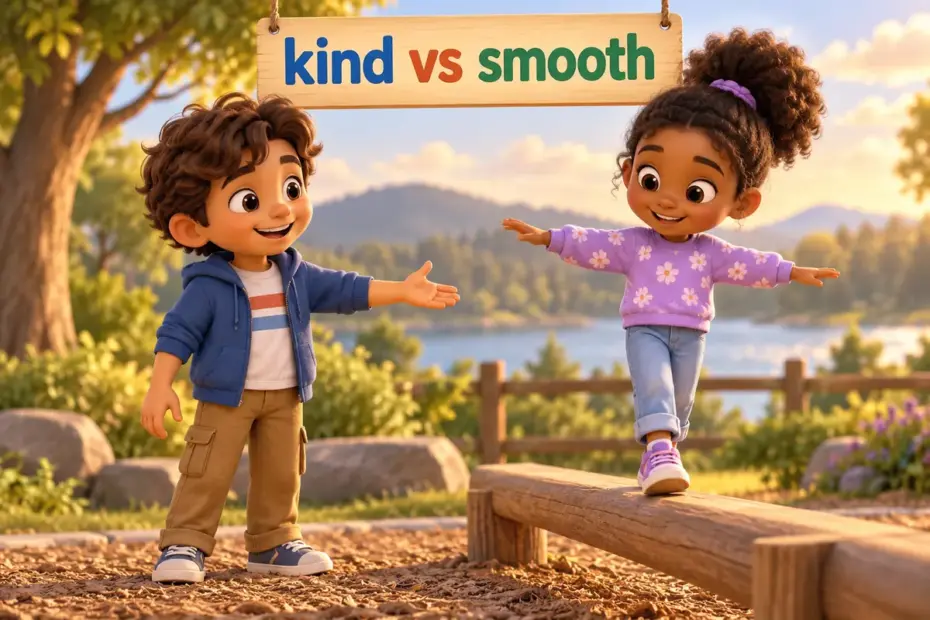
Gracious vs graceful split the idea of grace into two qualities that rarely overlap. Gracious means kind, polite, and generous in manner, especially toward guests, while graceful means moving in a smooth, elegant way. A host is gracious, but a dancer is graceful.
Gracious vs Graceful at a glance
- Gracious is an adjective about character: kind, courteous, and welcoming.
- Graceful is an adjective about movement or form: smooth, elegant, and controlled.
- Gracious fits hosts, replies, and defeats; graceful fits dancers, shapes, and gestures.
- Graceful can also describe pleasing form, such as a graceful curve.
- The commonest error is calling a kind host graceful, or a smooth movement gracious.
What do gracious and graceful mean?
Gracious is an adjective meaning kind, courteous, and generous in manner. Graceful is an adjective meaning smooth, elegant, and pleasing in movement or form. The Cambridge entry for gracious and the Cambridge entry for graceful confirm the split, and one line shows it: a gracious welcome warms the guests, while a graceful bow pleases the eye.
| Sense | Word | Plain meaning | Example |
|---|---|---|---|
| Kind and courteous | gracious | Warm and polite to others | She was gracious to every guest. |
| Generous in defeat | gracious | Fair when losing | He was gracious in defeat. |
| Elegant in movement | graceful | Smooth and controlled | a graceful dancer |
| Pleasing in form | graceful | Well shaped | a graceful curve |
| Courteous and dignified | gracious | Marked by charm | a gracious reply |
Both words carry a hint of praise, so the choice depends on what the sentence is admiring. Gracious looks at how a person treats others under social pressure, and graceful looks at how a body or a line moves through space, which keeps the two apart even when they describe the same person.
The two adjectives sit close because both grow from the idea of grace, yet one lives in the drawing room and the other on the stage. Gracious measures how a person treats others, and graceful measures how a person or a thing looks in motion.
What is the difference between gracious and graceful?
The difference is whether the quality is social or physical. Gracious describes manners and character, while graceful describes movement, shape, and style. A pair such as addition vs edition shows how two words from one family can be kept in separate roles.
| Criterion | Gracious | Graceful |
|---|---|---|
| Core meaning | kind and courteous | smooth and elegant |
| What it describes | character and manners | movement, shape, or style |
| Typical nouns | host, reply, defeat, gesture | dancer, movement, curve, figure |
| Opposite idea | rude or grudging | clumsy or awkward |
| Who it applies to | people in social situations | bodies, things, and motions |
| Register | social and moral | physical and aesthetic |
| Common error | used for smooth movement | used for kindness |
Choose gracious for how someone behaves toward others, and graceful for how someone or something moves.
How do you use gracious and graceful in a sentence?
Gracious usually points toward a person or a social act, while graceful usually points toward a motion or a shape; to watch the social sense at work, read gracious in a sentence.
| Pattern | Example | What it signals |
|---|---|---|
| be gracious to + person | She was gracious to her critics. | kindness toward others |
| a gracious + social noun | a gracious host | courteous character |
| gracious in + noun | gracious in defeat | dignified behaviour |
| a graceful + movement noun | a graceful turn | smooth motion |
| graceful + noun of form | a graceful arc | pleasing shape |
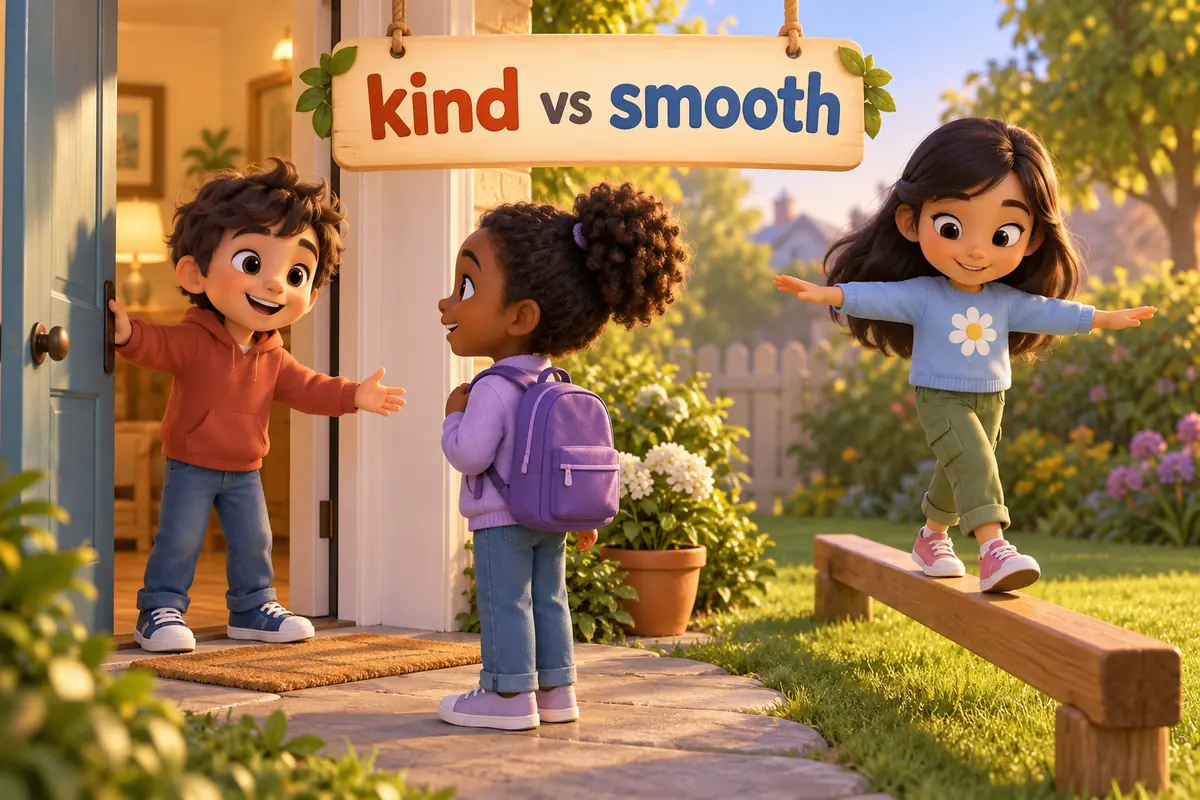
Gracious and graceful in a sentence: examples across contexts
The pair separates cleanly by subject, and more frames for movement sit in graceful in everyday sentences.
| Context | Example sentence | Why this works |
|---|---|---|
| Hosting | Our host was gracious and made every guest feel welcome. | gracious describes manners |
| Dance review | The lead dancer gave a graceful performance from start to finish. | graceful describes movement |
| Sport | Even after losing, the captain was gracious to the winners. | gracious means fair in defeat |
| Design | The bridge has a graceful curve that pleases the eye. | graceful describes shape |
| Business email | Thank you for your gracious reply to my request. | gracious marks courtesy |
| Nature writing | A graceful heron stepped through the shallow water. | graceful describes motion |
| Weddings | The couple were gracious to everyone who travelled so far. | gracious describes warmth |
| Gymnastics | She landed the jump with a graceful flourish. | graceful describes a controlled move |
| Public life | His gracious concession speech ended the contest. | gracious means dignified |
| Architecture | The staircase sweeps up in a graceful spiral. | graceful describes a form |
| Charity work | The volunteers were gracious to every family they met. | gracious marks warmth |
| Ballet | Her arms described a graceful circle in the air. | graceful describes a gesture |
Which should you use?
Match the word to whether the sentence praises manners or motion.
| Situation | Use | Example |
|---|---|---|
| A warm, polite host | gracious | a gracious welcome |
| Losing with dignity | gracious | gracious in defeat |
| Smooth, elegant movement | graceful | a graceful turn |
| A pleasing shape or line | graceful | a graceful curve |
| A courteous reply | gracious | a gracious reply |
Register is the second test. Gracious belongs to social and moral writing, where people are judged by how they treat one another, while graceful belongs to reviews, descriptions and design, where the subject is the look or the movement of a body or an object. When one person is both kind and elegant, both words can appear, but each keeps to its own job.
Word forms and grammar of gracious and graceful
| Form | Part of speech | Example |
|---|---|---|
| grace | noun | a dancer’s grace |
| graceful | adjective | a graceful movement |
| gracefully | adverb | She moved gracefully. |
| gracefulness | noun | the gracefulness of the swan |
| gracious | adjective | a gracious host |
| graciously | adverb | He smiled graciously. |
| graciousness | noun | her graciousness to guests |
Common mistakes with gracious and graceful
Mistake 1: graceful for kindness. Incorrect: She was graceful to her guests. Correct: She was gracious to her guests. Rule: kindness in manner is gracious.
Mistake 2: gracious for movement. Incorrect: a gracious dancer. Correct: a graceful dancer. Rule: smooth movement is graceful.
Mistake 3: the adverb for courtesy. Incorrect: She welcomed us gracefully. Correct: She welcomed us graciously. Rule: the adverb for courtesy is graciously.
Mistake 4: the adverb for motion. Incorrect: The deer moved graciously through the field. Correct: The deer moved gracefully. Rule: the adverb for smooth movement is gracefully.
Mistake 5: the fixed phrase for losing well. Incorrect: He was graceful in defeat. Correct: He was gracious in defeat. Rule: the fixed phrase for losing well uses gracious.
Practice using gracious and graceful
- Fill in the blank: The old man was ___ and thanked everyone for coming.
- Choose the better word: The swan glided across the lake in a (gracious / graceful) curve.
- Correct the error: The ballerina moved graciously across the stage.
- Build a sentence: use gracious to describe how a winner treats a rival.
- Spot the register: which fits a dance review, (a) a graceful lift, or (b) a gracious lift?
- Fill in the blank: Even in defeat, she remained ___.
Answers
- gracious, because he was kind to his guests.
- graceful, because the curve describes smooth movement.
- The ballerina moved gracefully across the stage; motion takes gracefully.
- The champion was gracious to the player she had beaten.
- (a), because a lift is a movement, not a manner.
- gracious, because losing well is a matter of manners.
The bottom line
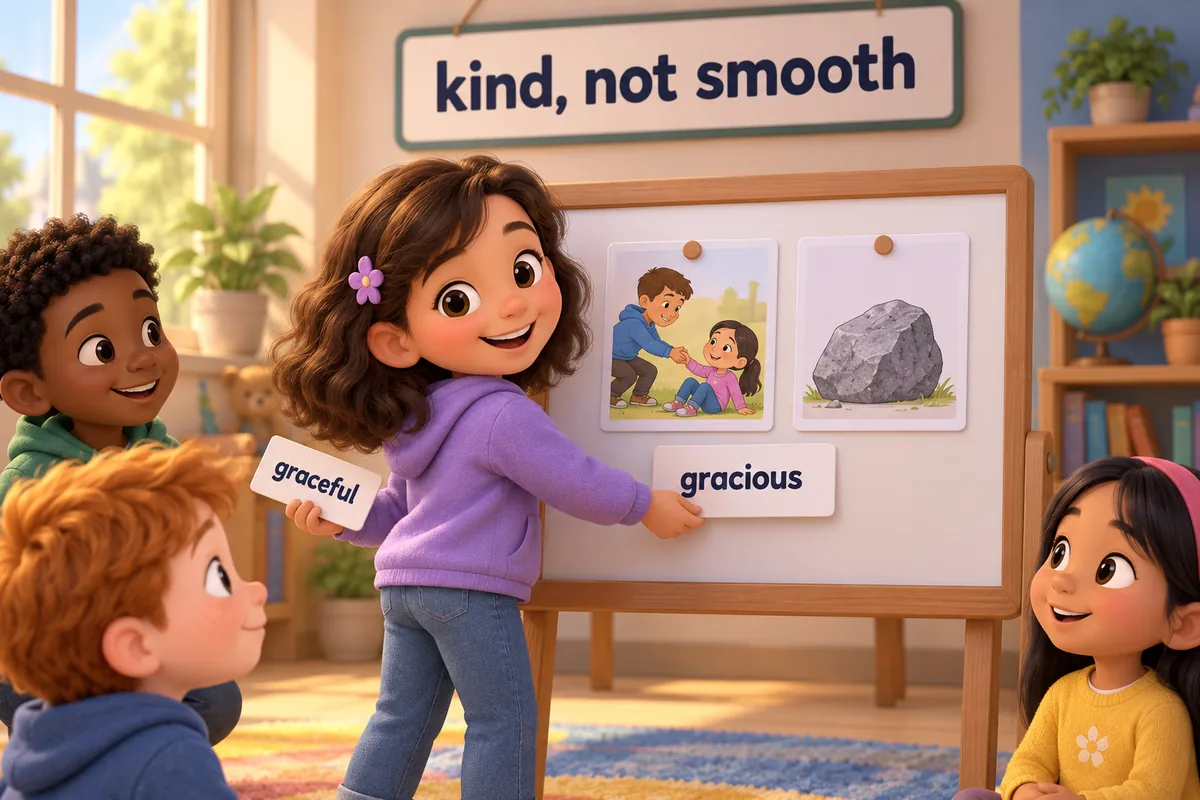
The gracious vs graceful choice comes down to manners versus motion: gracious praises how a person treats others, and graceful praises how a person or a thing moves or looks. Use gracious for hosts, replies and dignified defeats, and graceful for dancers, curves and elegant gestures. A single person can be both, so pick the adjective that matches the quality your sentence is actually praising.
Frequently asked questions about gracious and graceful
What is the difference between gracious and graceful?
Gracious describes character and manners, meaning kind, courteous, and generous, while graceful describes movement or form, meaning smooth and elegant. A gracious host puts guests at ease, and a graceful dancer moves without effort. The two qualities can belong to one person, but the words answer different questions.
Can a person be both gracious and graceful?
Yes. A person may welcome guests kindly and also move with ease, so both adjectives can describe them. Gracious covers how they treat others, and graceful covers how they carry themselves. Because the two qualities are independent, using one word does not rule out the other.
Is graceful ever about kindness?
Graceful stays close to smooth movement and pleasing form, so it rarely means kind. A graceful apology would suggest a well-shaped sentence rather than a warm one. For warmth toward other people, gracious is the right adjective, and graceful would change the meaning.
What does it mean to be gracious in defeat?
To be gracious in defeat means to lose politely, praising the winner and avoiding excuses. The phrase is fixed and always uses gracious, because the point is good manners rather than movement. Calling a loser graceful in defeat would instead suggest poise of body, which is not what the phrase means.