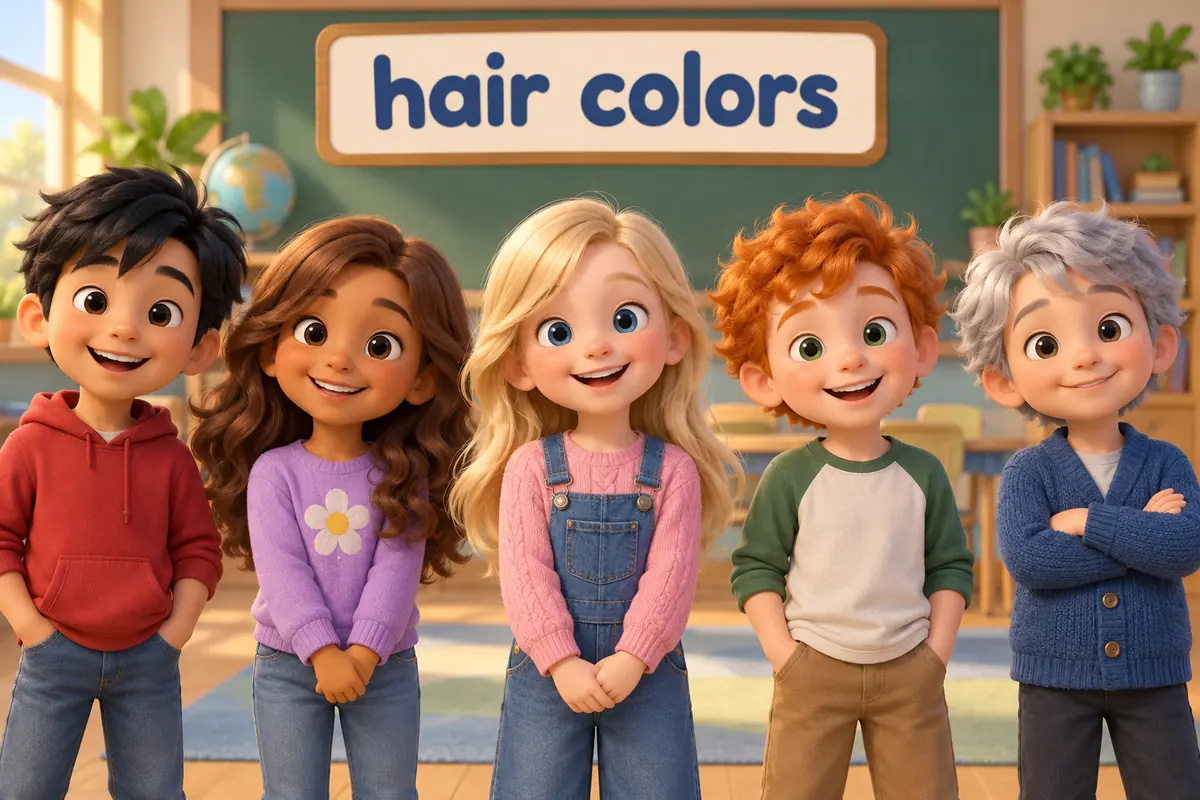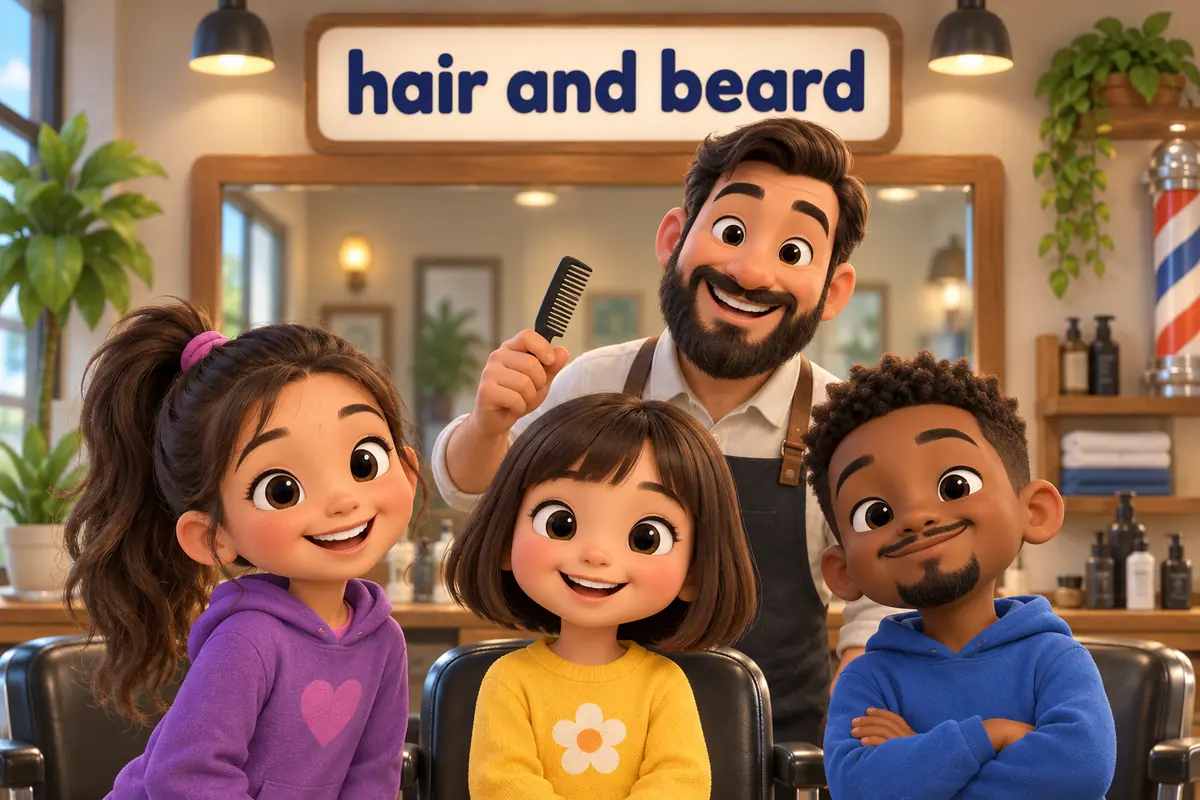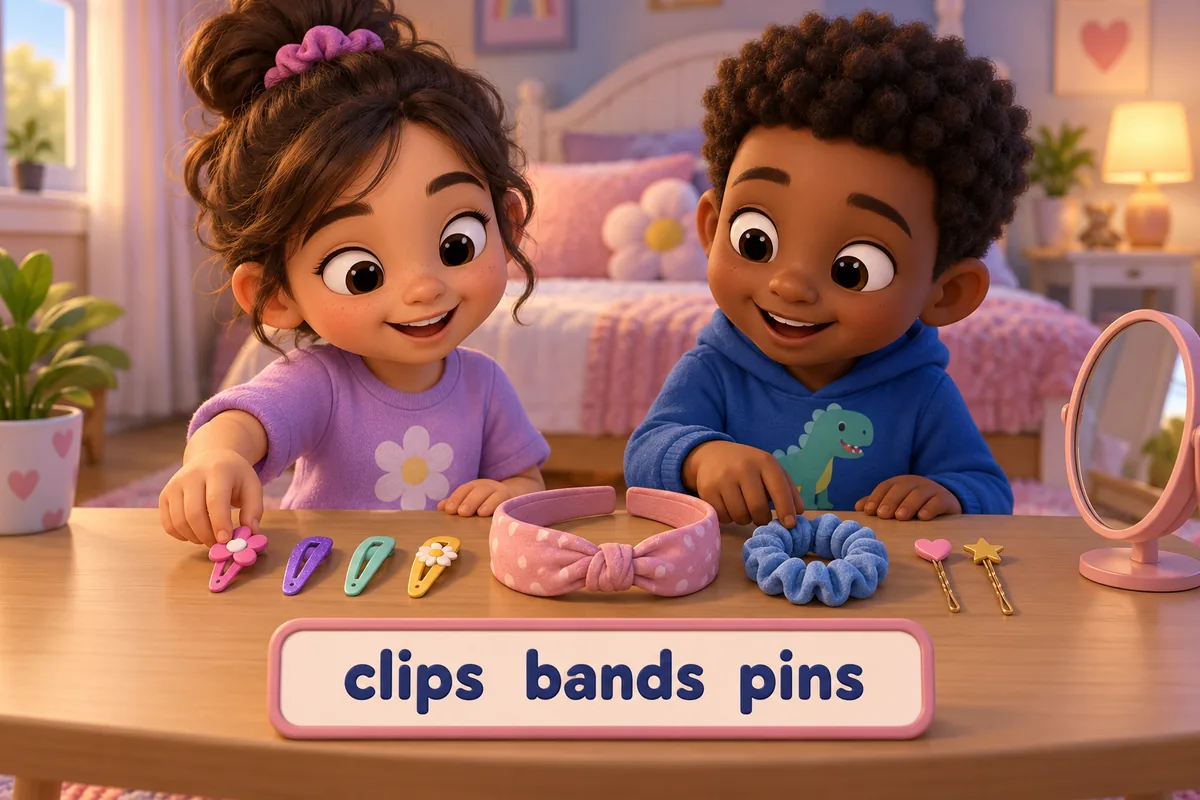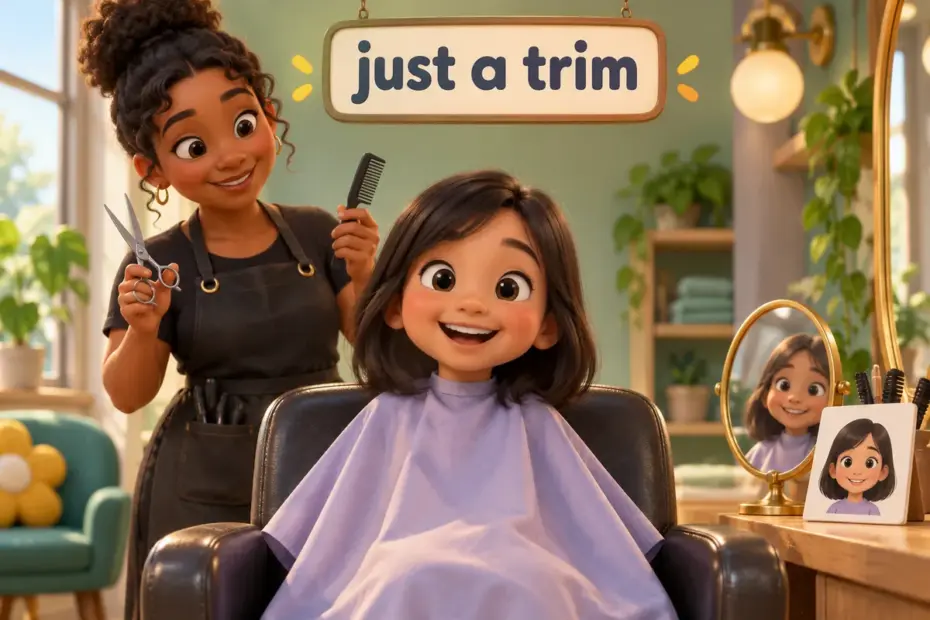
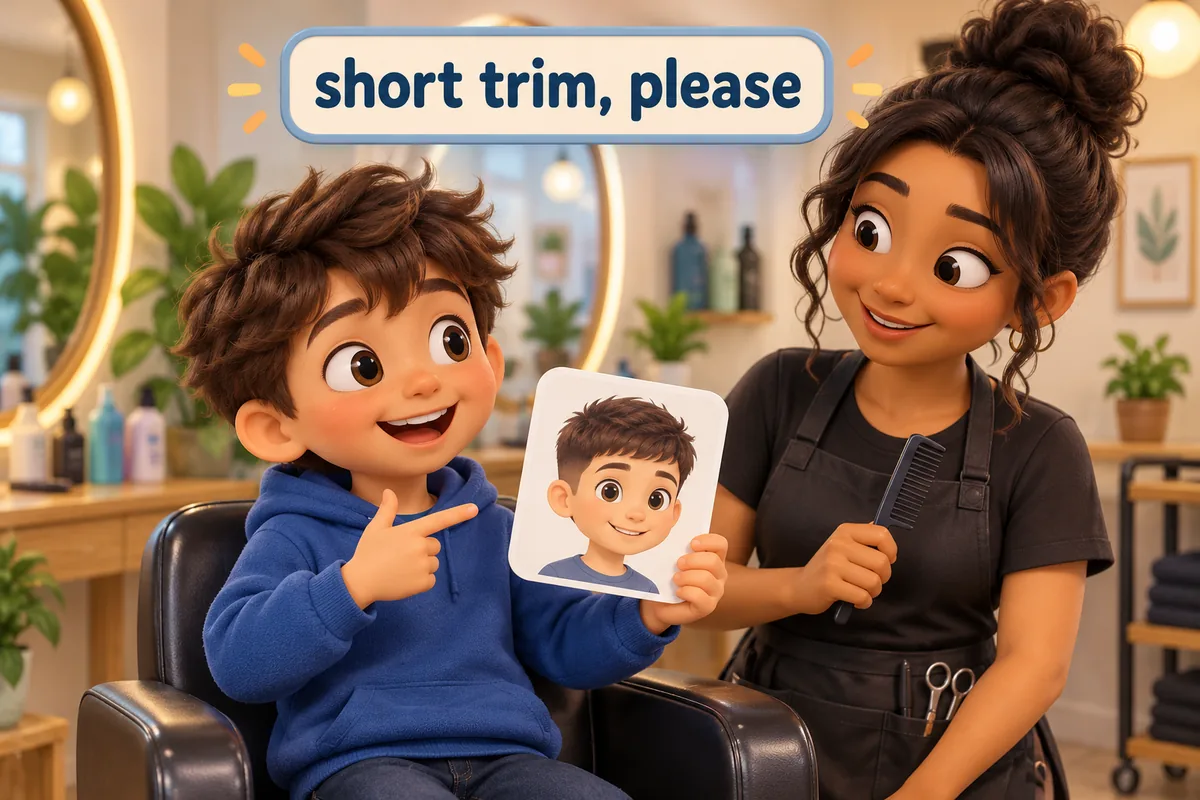
A haircut for kids is the trim a child receives at a salon, a barber or a kitchen chair, and the words used there matter as much as the scissors. Children meet terms such as trim, fringe, bangs and layers while a stylist works. “Just a short trim, please,” a child can say in the chair.
Haircut for kids at a glance
- A haircut is a cut that shortens or tidies a child’s hair.
- The usual request pattern is I would like a plus the name of the cut.
- Trim, fringe, bangs and layers are the words children hear most often.
- Fringe is the common British word; bangs is the common American word.
- The commonest mistake is writing haircut as two separate words.
What is a haircut for kids?
A haircut for kids is a cut that takes length off the hair, shapes it, or both, and the noun names the result as well as the event. The words a child needs are few and concrete, so learning half a dozen is enough to explain what is wanted. Each term below describes a shape or a length rather than a style name.
| Word | Meaning | Example sentence |
|---|---|---|
| trim | a small cut that removes very little | I only want a trim today. |
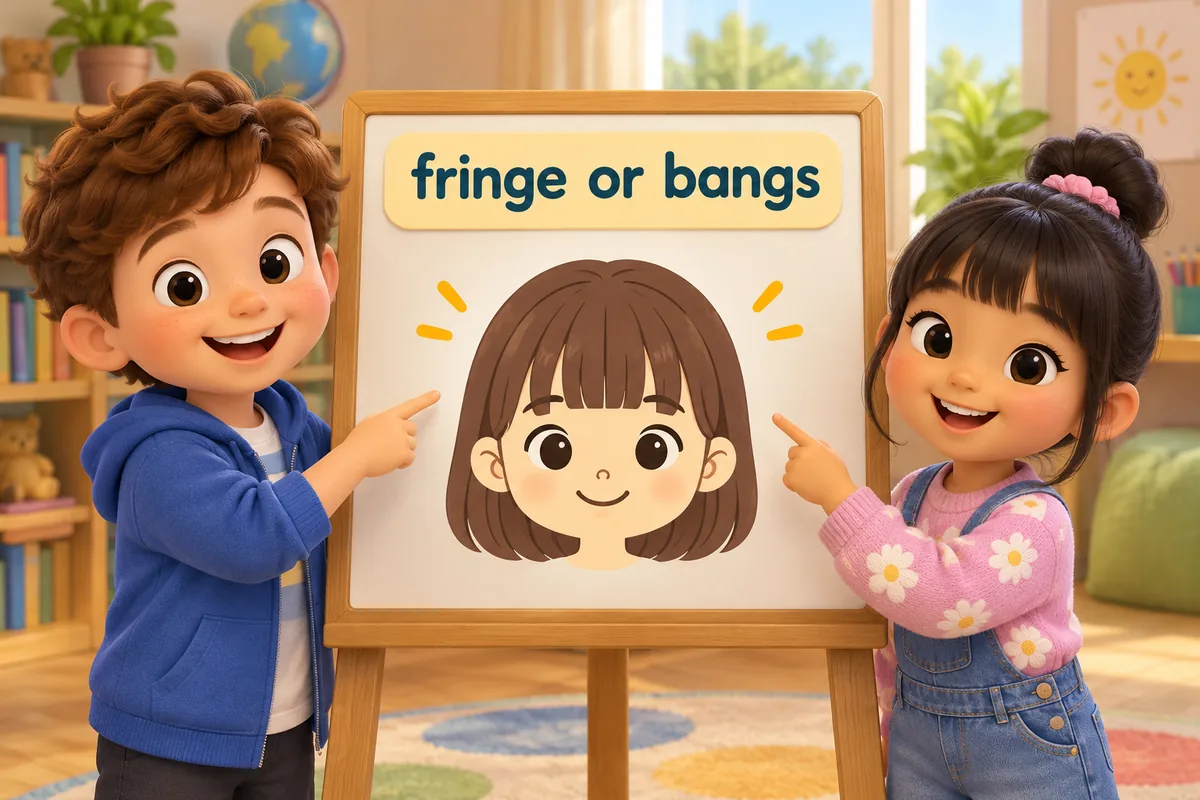
| fringe | hair cut straight across the forehead | Please tidy my fringe. |
| bangs | the American word for a fringe | She has long bangs over her eyes. |
| layers | hair cut to different lengths | The layers make her hair look fuller. |
| buzz cut | very short hair all over | He asked for a buzz cut for summer. |
| pigtails | two bunches tied at the sides | She wore pigtails after her haircut. |
One honest caution is worth stating: a haircut shortens hair, and it cannot add length back, so the words give a direction that is hard to undo. A child who is unsure should ask for a trim first. The difference between a trim and a cut is the single most useful distinction to learn, because a trim removes a centimetre while a cut can remove a hand span.
How do you ask for a haircut for kids?
Asking follows a short, polite pattern that a child can use with any stylist. The pattern names the amount, the shape and the part of the head, so nothing is left to guesswork.
| Pattern | Example | What it signals |
|---|---|---|
| I would like a + cut | I would like a trim, please. | a small amount to come off |
| Please cut + part of head | Please cut my fringe a little. | one specific area to tidy |
| Can you + verb + object | Can you take the ends off? | a polite request for a length |
| Not too + adjective | Not too short at the back, please. | sets a clear limit |
| I would like it + adjective | I would like it shorter and neat. | describes the finished shape |
Haircut terms across contexts
A child meets haircut words in many places beyond the salon chair, from a school photo note to a chat at home. Word lists help children name what they see, and pages such as a words for kids and c words for kids add the letters around terms like fringe, cut and comb.
| Context | Example sentence | Why this works |
|---|---|---|
| Salon visit | I would like a short trim, please. | polite request with a clear length |
| Barber shop | Could I have the sides shorter? | names the area to cut |
| Cutting at home | Hold still while I tidy your fringe. | names the part being trimmed |
| Phone booking | I would like an appointment for a child’s haircut. | books the event by name |
| School photo day | My hair is neat after a fresh cut. | links the cut to an event |
| Bedtime routine | Brush your hair before it tangles. | a simple instruction about hair |
| Summer holiday | He wanted a buzz cut to stay cool. | gives a reason for the short cut |
| Playground chat | Your new haircut looks great. | a friendly comment on a change |
| Classroom writing | My first haircut was very wobbly. | a story opening about an event |
| Family talk | We all had our hair cut on Saturday. | reports the family outing |
Which haircut should a child ask for?
The right choice depends on the child’s hair, the season and how much brushing the family can manage. A short list of situations makes the decision clearer.
| Situation | Best choice | Weaker choice | Reason |
|---|---|---|---|
| Nervous first visit | a trim | a buzz cut | a trim changes very little |
| Very warm summer | a short cut | long layers | less hair is cooler |
| Fine, flat hair | layers | a single blunt line | layers add movement and fullness |
| Hair always in the eyes | a tidy fringe | a longer fringe | shorter hair stays out of the eyes |
| Tangles every morning | a short bob | very long hair | less length means fewer knots |
A first haircut often goes better with a small reward and a short wait, because a child who is calm sits still. It also helps to show a picture of the wanted shape, since a picture says more than the word trim. Above all, agree the limit before the scissors start, so the result matches what the child expected.
Words and phrases linked to haircuts
The word haircut sits inside a small family of related words, and grouping them helps a child talk about the whole event. Young readers can pair cut and comb with compound words for kids, then describe the result with adjectives for kids such as neat, short and tidy.
| Word | Type | Example |
|---|---|---|
| haircut | noun | She had a haircut on Saturday. |
| hair cut | verb phrase | I had my hair cut yesterday. |
| barber | noun | The barber cut the boys’ hair. |
| stylist | noun | The stylist shaped her fringe. |
| cutting | verb form | He is cutting the paper, not the hair. |
Common mistakes with haircut words
Mistake 1: writing haircut as two words for the noun. Incorrect: I have a hair cut tomorrow. Correct: I have a haircut tomorrow. Rule: the noun is one word; the verb phrase is two, as in I had my hair cut.
Mistake 2: using fringe and bangs in the wrong region. Incorrect: Bangs is the usual British word. Correct: Fringe is the usual British word. Rule: fringe is British and bangs is American for the same hair.
Mistake 3: forgetting the article before the cut. Incorrect: I would like trim, please. Correct: I would like a trim, please. Rule: a countable cut takes a or an.
Mistake 4: confusing cut and trim. Incorrect: A trim took off ten centimetres. Correct: A cut took off ten centimetres. Rule: a trim removes very little, so a big change is a cut.
Mistake 5: dropping the pronoun in a request. Incorrect: Cut hair short, please. Correct: Please cut my hair short. Rule: English names the owner with my, your or his.
Mistake 6: saying hair are. Incorrect: My hair are long. Correct: My hair is long. Rule: hair is uncountable here, so it takes a singular verb.
Practice using haircut words
- Fill in the blank: I would like a ___ , please, just a little off the ends.
- Choose the better word: (bangs / buzz cut) for very short hair all over the head.
- Correct the error: She have a haircut on Friday.
- Build a sentence: ask a stylist to tidy your fringe but not to cut it short.
- Spot the register: which sentence suits a salon, (a) Please trim my fringe, or (b) Cut the hair now?
- Fill in the blank: After the trim, her hair ___ neat and shiny.
Answers
- trim, because a trim takes off only a little.
- buzz cut, because it means very short hair all over.
- She has a haircut on Friday; the subject is singular, so the verb is has.
- Please tidy my fringe, but do not cut it short.
- (a), because a request at a salon uses please and a clear noun.
- is, because hair takes a singular verb when it is uncountable.
The bottom line
Haircut words for kids are few and concrete: trim, fringe, bangs, layers and buzz cut cover almost every request. The noun haircut is one word, while the verb phrase hair cut is two, and the polite pattern I would like a plus the cut works anywhere. Learn the difference between a trim and a full cut, and a child can ask for exactly what is wanted.
Frequently asked questions about haircuts for kids
What is a fringe called in America?
Americans usually call a fringe bangs. Both words name the same strip of hair cut across the forehead. A child in Britain asks the stylist to tidy a fringe, while a child in America asks for the bangs to be trimmed. The meaning is identical in both places.
How do I prepare a child for a first haircut?
Visit the salon once just to look around, then explain that a trim takes off very little. Bring a picture of the wanted shape and agree a small reward for sitting still. A calm, short appointment with a familiar adult nearby makes the first haircut easier.
Is a buzz cut suitable for a young child?
A buzz cut is very short hair all over, and it suits warm weather and easy care, but it changes a child’s look a great deal. Because hair grows back slowly, it is better for a confident child than for one who is nervous. A short cut gives a similar easy-care result with less drama.
How often should a child have a haircut?
Most children have a trim every six to eight weeks, though short cuts need attention sooner and long hair can wait longer. A fringe may need tidying every three or four weeks to stay out of the eyes. The right interval is simply when the hair stops holding its shape.