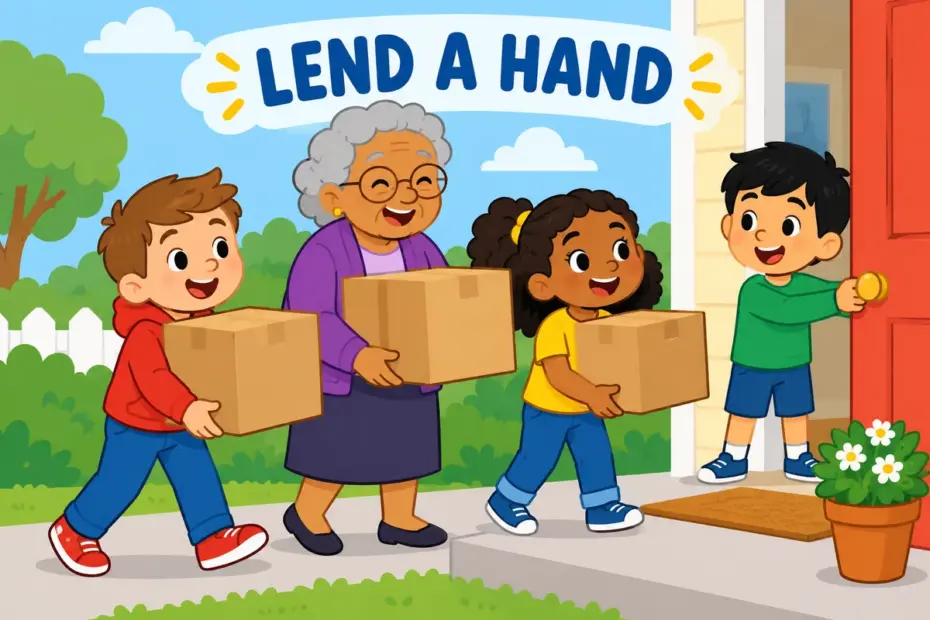
Help out means to assist someone, especially by sharing work or giving practical help at a busy moment. To use help out in a sentence, put the person after the verb or between its two parts: “Maya helped out her neighbour” or “Maya helped her neighbour out.” The particle out adds the sense of easing someone else’s load.
Help out at a glance
- Help out is a separable phrasal verb: help someone out and help out someone are both correct.
- With pronouns, the two parts must split: help her out, never help out her.
- It is transitive in most uses, but a bare thanks, you really helped out is common in speech.
- The particle out adds the idea of sharing a burden or easing pressure for a while.
- The commonest error is placing a pronoun after out instead of between the verb and the particle.
- The question form, as in can you help out, is common in speech and keeps the friendly tone.
What does help out mean?
Help out is a phrasal verb meaning to assist someone, usually by taking on part of a task or easing a burden for a while. The Cambridge entry for help out records this sense of giving practical assistance. Plain help is neutral, while help out carries warmth and a hint of shared effort: you help out a colleague who is overwhelmed. Because the verb is separable, the object may sit between help and out. The pronoun test settles the order in doubt: full nouns are flexible, but pronouns must split the pair, so help them out is correct and help out them is not.
| Sense | Plain meaning | Example sentence |
|---|---|---|
| Give practical assistance | Do part of someone’s work | We helped out at the school fair. |
| Ease a burden | Relieve pressure on someone | A neighbour helped them out with the rent. |
| Join in to assist | Add extra hands in a rush | Can you help out in the kitchen tonight? |
How do you use help out in a sentence?
Help out is separable, so the object can sit either side of the particle, and the pattern also decides whether the sentence names a task, a method or nobody at all. The table below sets out the five patterns that cover almost every use.
| Pattern | Example | What it signals |
|---|---|---|
| help + object + out | Ana helped the new boy out. | Separable; pronoun objects must go here. |
| help out + object | Ana helped out the new boy. | Separable; full nouns may follow out. |
| help out with + noun | They helped out with the cooking. | With introduces the task or area. |
| help out by + gerund | He helped out by driving the team. | By introduces the method. |
| help out (no object) | Thanks for coming to help out. | Intransitive use common in speech. |
Help out in a sentence: examples across contexts
| Context | Example sentence | Why this works |
|---|---|---|
| Family | When Gran moved house, the whole family helped her out. | Shows the pronoun between the verb and the particle. |
| Neighbours | Neighbours helped out with the snow after the storm. | Uses with to name the task. |
| Classroom | Sam helped out the new pupil at break. | Places a full noun object after the particle. |
| Workplace | A colleague helped out by covering the phones. | Uses by plus a gerund for the method. |
| Volunteering | Students help out at the food bank each Saturday. | Intransitive with a place phrase. |
| Customer service | The manager helped us out when the booking failed. | Friendly register with a pronoun object. |
| Sports club | Parents help out at matches by running the line. | Combines at and by in one sentence. |
| Emergency | A passer-by helped out until the ambulance arrived. | Intransitive, describing temporary assistance. |
| School fair | Can you help out at the stall on Friday? | Question form in everyday speech. |
| Community | The whole street helped out after the flood. | Collective subject and a sense of shared effort. |
| Charity shop | Regular volunteers help out by sorting donations. | Uses by plus a gerund to name the method. |
| Office move | Two colleagues helped us out with the packing. | Shows with plus a pronoun object. |
| Community garden | Neighbours help out at the plot every Sunday. | Intransitive with a place phrase. |
| Hospitality | Waiters helped out in the kitchen during the rush. | Shows a busy, temporary moment. |
Help out vs assist
Both verbs describe giving help, and related words such as aid the rescue and support the family cover the formal end of the same meaning.
| Feature | Help out | Assist |
|---|---|---|
| Meaning | Share a task and ease a burden | Provide support to someone |
| Register | Friendly, common in speech | Formal, common in reports |
| Particle | Separable, with a movable out | No particle; takes an object only |
| Scope | Suggests shared work | Suggests one-directional support |
| Warmth | Sounds willing and informal | Sounds official and neutral |
| Example | Neighbours helped out after the storm. | Staff assisted residents after the storm. |
Use help out when the tone is warm and the work is shared, and assist the residents when the writing needs distance and formality.
Can help out be used in formal writing?
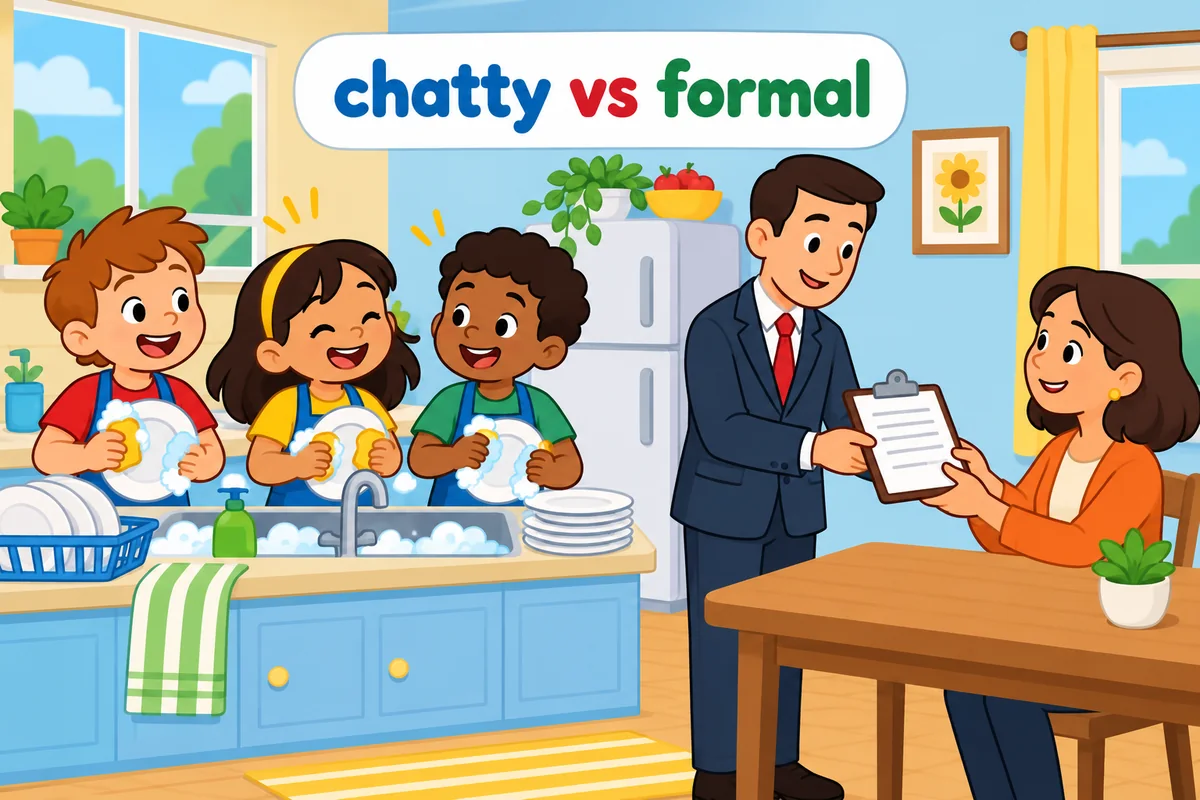
Help out does appear in formal writing, but it works best when the tone is already warm, as in a staff newsletter or a thank-you note. A legal document or a service report usually prefers assist or support because the particle sounds conversational. The table below shows the same idea at three levels of formality.
| Register | Typical sentence | Effect |
|---|---|---|
| Friendly note | Could you help out at the stall on Friday? | Warm and personal. |
| Staff newsletter | Volunteers helped out across the weekend. | Plain but still human. |
| Service report | Staff assisted residents during the outage. | Formal and neutral. |
Does help out need an object?
Help out is usually transitive, so it takes the person or the task as its object, but the particle can stand alone in friendly speech. In “she helped out all afternoon,” no object appears, and the listener understands that she shared the work. The table below separates the ways the object can behave.
| Position | Example | Notes |
|---|---|---|
| Object after out | We helped out the neighbours. | Full nouns fit here naturally. |
| Object before out | We helped the neighbours out. | The most common order in speech. |
| Pronoun before out | We helped them out. | Pronouns must come before out. |
| No object | Everyone helped out on the day. | Intransitive use names no one. |
The particle can carry other meanings too: ask out and back out show how out changes a verb, while relieve the pressure names the effect that help out aims for.
Word forms and grammar of help out
The base verb keeps its ordinary forms inside the phrase, so she helps out and helped out are both common in every register. In speech, pitch in is an even more informal way to join a shared task.
| Form | Part of speech | Example |
|---|---|---|
| help out | base phrasal verb | They help out every weekend. |
| helps out | third person singular | She helps out at the shelter. |
| helped out | past tense and participle | We helped out last winter. |
| helping out | participle | He is helping out with the move. |
| help | verb and noun | She gave the team useful help. |
| helper | noun | A helper carried the boxes. |
Common mistakes with help out
- Incorrect: She helped out me with the boxes. Correct: She helped me out with the boxes. Rule: pronouns must sit between help and out.
- Incorrect: He helped out to clean the hall. Correct: He helped out by cleaning the hall. Rule: use by plus a gerund for the method.
- Incorrect: They helped with out the tickets. Correct: They helped out with the tickets. Rule: keep the particle next to the verb.
- Incorrect: I help out my sister yesterday. Correct: I helped out my sister yesterday. Rule: use the past form helped for past time.
- Incorrect: Can you help out the meeting? Correct: Can you help out at the meeting? Rule: use at for a place or event.
Practice using help out
- When the office was short-staffed, Priya ___ by answering the phones.
- Choose the better word: With a pronoun, we say help (her out / out her).
- Correct the error: They helped out me at the market.
- Build a sentence using help out with about a school fair.
- Spot the register: which fits a friendly email, “Could you help me out on Friday?” or “You are required to assist on Friday”?
- My neighbours ___ us out during the power cut.
Answers
- helped out – the past form matches the finished action.
- her out – the pronoun sits between help and out.
- They helped me out at the market. – move the pronoun before out.
- We helped out with the tombola at the school fair. – with introduces the task.
- “Could you help me out on Friday?” – it keeps the warm, informal tone.
- helped – the simple past fits the completed event.
The bottom line
Help out in a sentence puts the person either after the verb or between help and out, and the particle adds the sense of easing a shared load. With pronouns the two parts must split, so help her out is correct and help out her is not. The phrase also appears in fixed friendly requests, such as could you help me out here, which sound natural in almost any workplace. Use help out for warm, practical assistance and assist when the writing calls for formality.
Frequently asked questions about help out
Is help out formal or informal?
Help out is friendly rather than formal, which is why it suits conversation, personal email and notes between colleagues. In a legal or customer-service document, assist or support usually fits the tone better. The phrasal verb is still standard English, not slang, and it appears in edited prose when the tone allows.
What is the difference between help and help out?
Help is neutral and can describe any assistance, while help out adds the idea of easing a burden or sharing work at a busy moment. You help someone carry a box, and you help out when a team is short-handed. The particle makes the action feel more generous and temporary.
Where does the pronoun go with help out?
When the object is a pronoun, it must sit between help and out: help me out, help her out, help them out. Help out me is not standard English. Full nouns are more flexible, so help out the neighbours and help the neighbours out are both correct.
Can help out stand alone without an object?
Yes. In friendly speech the verb often appears with no object, as in everyone helped out on the day. The listener understands that people shared the work without naming who was helped. This intransitive use is common and natural, though written sentences often name the task or the people.