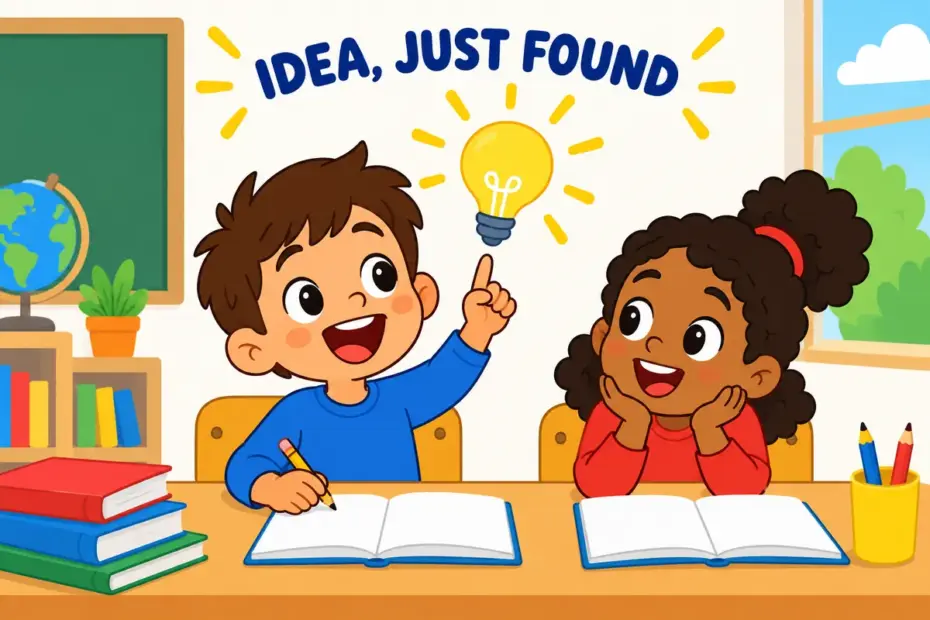
Hit on is a phrasal verb with two everyday senses: to discover or suggest an idea suddenly, and to approach someone in a flirtatious way. To use hit on in a sentence, put the object straight after on: “She hit on a neat fix.” The particle never moves, so hit an idea on is wrong.
Hit on at a glance
- Hit on is a transitive phrasal verb; both common senses take an object.
- The particle on is fixed, so the verb cannot be split.
- Its forms are hits on and hitting on; the past tense is hit on, not hitted.
- The discover sense is neutral; the flirt sense is informal and can be unwelcome.
- The commonest error is separating the verb, as in hit an idea on.
- A literal hit on, as in the ball hit him on the arm, is a free combination, not this phrasal verb.
What does hit on mean?
Hit on is a phrasal verb meaning either to think of an idea or solution suddenly, or to approach someone with romantic interest. The Cambridge entry for hit on separates the two, and the context decides which is meant. The idea sense is neutral, while the flirt sense carries the informal, sometimes unwelcome edge of unwanted attention.
| Sense | Plain meaning | Example sentence |
|---|---|---|
| Discover an idea | Think of a solution suddenly | She hit on a clever workaround. |
| Flirt with someone | Approach a person romantically | A stranger tried to hit on me at the station. |
| Strike, literal | A free combination, not the phrasal verb | The branch hit me on the shoulder. |
One limit is worth stating. Hit on does not mean to work hard at something or to pressure someone: the idea sense is a sudden find, not sustained effort, and the flirt sense is an approach, not a demand. Where a writer means to keep asking, suggest an idea or press is the safer verb, and for a plain find, discover a shortcut works just as well.
How do you use hit on in a sentence?
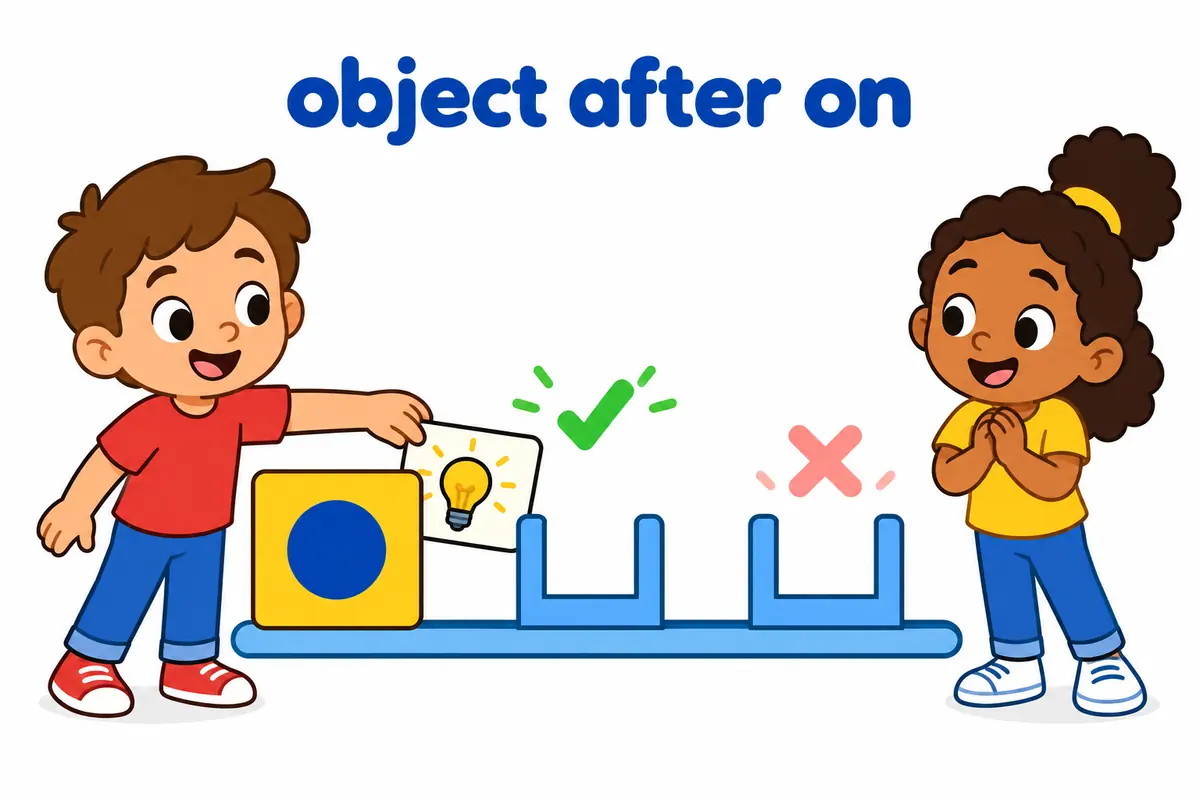
Hit on is transitive and inseparable. The object always follows on, the particle cannot strand at the end, and the past tense is identical to the base form because hit does not change. Six patterns cover the two senses and the literal lookalike.
| Pattern | Example | What it signals |
|---|---|---|
| hit on + idea | We hit on the answer by accident. | A sudden discovery, neutral register. |
| hit on + plan or name | He hit on a name for the band. | A creative find, often spoken. |
| hit on + person | Someone tried to hit on her at the party. | The flirt sense, informal. |
| hit upon + idea | The team hit upon a cheaper method. | The formal written variant, ideas only. |
| hit on + person + in/at + place | He hit on her in the queue. | Names where the approach happened. |
| hit + object + on + body part | The door hit me on the elbow. | A literal strike, not the phrasal verb. |
Hit on in a sentence: examples across contexts
These ten sentences keep the same phrasal verb while moving from a lab bench to a night bus. Each one makes clear which sense is meant, because the two meanings of hit on can collide in a single ambiguous line.
| Context | Example sentence | Why this works |
|---|---|---|
| Classroom | Maya hit on a way to remember the dates. | A neutral idea sense suits a school setting. |
| Workplace email | The team hit upon a cheaper supplier. | The formal variant appears in writing. |
| News report | Engineers hit on a fix after months of testing. | A sudden discovery frames the story. |
| Conversation | He tried to hit on the barista and failed. | The flirt sense is natural in speech. |
| Customer complaint | A customer hit on me in the queue, which was awkward. | Names unwelcome attention without detail. |
| Science writing | The researchers hit upon the pattern by accident. | The formal variant keeps an academic tone. |
| Diary | I hit on the perfect title while walking home. | A personal, everyday discovery. |
| Sports report | The coach hit on a formation that worked. | A tactical find after trial and error. |
| Legal writing | Counsel hit upon an argument the other side had missed. | The written variant fits a brief. |
| Safety notice | A loose tile hit him on the head. | The literal strike is a different structure. |
| Peer review | The reviewers hit upon a flaw the authors had missed. | The formal variant fits academic comment. |
| Family | We hit on the idea of a picnic just before the rain. | A light, everyday discovery in speech. |
Register and tone of hit on
The two senses live at opposite ends of the register scale. The idea sense is unmarked and appears in technical reports, sports writing and everyday speech, where it means little more than think of. The flirt sense, by contrast, is conversational and slightly blunt, which is why newspapers rarely print it and why formal prose usually reaches for a plainer phrase instead.
Tone also depends on the object. When the object is an idea, a plan or an answer, the sentence is safe in any register. When the object is a person, the reader hears the informal claim that somebody was approached for romance, and in a report about unwanted attention a description such as approach someone without invitation is the more careful choice.
Writers handle the overlap by making the object do the work. Naming the idea, the fix or the title removes any chance that a reader will hear the flirt sense, and that one habit keeps the phrasal verb usable even in a report where the romantic sense would be out of place.
Hit on vs hit upon
Hit on and hit upon share the idea sense, but hit upon is more formal and appears mainly in writing. It is also narrower: nobody uses hit upon for flirting. A reader who stumble upon a clue means the same kind of accident, while a sentence about approaching a person needs hit on.
| Attribute | hit on | hit upon |
|---|---|---|
| Idea sense | Yes, neutral | Yes, formal |
| Flirt sense | Yes, informal | No |
| Register | Neutral to informal | Formal, mainly written |
| Separability | Inseparable | Inseparable |
| Typical use | Speech and journalism | Academic and literary prose |
Verdict: use hit upon for a formal sentence about an idea, and hit on for conversation or for the flirt sense that hit upon cannot carry.
Word forms and grammar of hit on
Because hit is irregular, the phrasal verb hardly changes shape. The past tense is hit on, never hitted on, and the third person singular adds only an s to the verb. Another on-verb, build on a suggestion, develops an idea rather than finding one.
| Form | Part of speech | Example |
|---|---|---|
| hit on | verb, base form | They may hit on a solution later. |
| hits on | verb, third person singular | She hits on good ideas in the shower. |
| hit on | verb, past and past participle | We hit on the answer last night. |
| hitting on | verb, present participle | He kept hitting on the guests. |
| hit upon | verb, formal variant | The panel hit upon a compromise. |
| hit | verb, literal | The ball hit the post. |
Common mistakes with hit on
Five errors account for most learner sentences. Each row gives the wrong version, the corrected version and the rule that explains the fix.
- Incorrect:
She hit an idea on during the meeting.Correct: She hit on an idea during the meeting. Rule: The phrasal verb is inseparable, so the object follows on. - Incorrect:
He hit upon a girl at the dance.Correct: He hit on a girl at the dance. Rule: Hit upon is used for ideas, not for flirting. - Incorrect:
The manager hit on me to finish the report.Correct: The manager pressed me to finish the report. Rule: Hit on does not mean to pressure someone. - Incorrect:
We hit on to a solution.Correct: We hit on a solution. Rule: The particle is on, and no to is added after it. - Incorrect:
The scientist hit on the assistant.Correct: The scientist hit on an idea from the assistant. Rule: Keep the senses apart, because the object alone leaves the meaning ambiguous.
Practice using hit on
Six mixed exercises follow; the answer key gives the reason, not just the missing word.
- Fill the gap: The students ______ on a shortcut through the park.
- Choose the better word: In the formal report, the team (hit on / hit upon) a cheaper method.
- Correct the error: She hit a solution on after an hour.
- Build a sentence: use hit on with the idea sense about a name for a project.
- Spot the register: which belongs in a news report — Engineers hit on a fix after months of testing, or Engineers lucked into a fix after ages of testing?
- Disambiguate: The designer hit on the intern. Rewrite so only the idea sense remains.
Answers
- hit — the past tense of hit is hit, and the object follows on.
- hit upon — the formal variant suits written prose and ideas.
- She hit on a solution after an hour — the phrasal verb stays together.
- Model answer: We hit on a lively name for the project over lunch.
- Engineers hit on a fix after months of testing — a report avoids the slang of lucked into and ages.
- The designer hit on an idea from the intern — naming the idea removes the flirt sense.
The bottom line
Use hit on in a sentence for a sudden idea or for a flirtatious approach, and keep the object right after on because the phrasal verb is inseparable. Two nuances decide most sentences: hit upon is the formal choice for ideas only, and the flirt sense is informal enough that a neutral verb such as flirt with a stranger often reads better in careful writing.
Frequently asked questions about hit on
Is hit on rude?
The flirt sense of hit on is informal and can suggest unwelcome attention, so it often sounds impolite in a formal report. The idea sense is completely neutral. In careful writing, describe the approach with a plain verb instead of hit on when the attention was not wanted.
What does hit on mean outside flirting?
Outside flirting, hit on means to discover or think of something suddenly, usually an idea, a solution or a name. The discovery sense is neutral and appears in technical, academic and everyday writing. The subject is often we or an engineer, and the object is the thing found.
Can hit upon replace hit on?
Only for the idea sense. Hit upon is a more formal variant used in writing about discoveries, as in the team hit upon a method. It does not carry the flirt sense at all, so a sentence about approaching a person always needs hit on, not hit upon.
Is hit on separable?
No. Both common senses are inseparable, so the object stays after on and the particle cannot move to the end. You say she hit on an idea, never she hit an idea on. The literal phrase hit someone on the arm is a free combination and follows different rules.