What “In Contrast” Means
In contrast is a linking phrase that points out a difference between two people, things, situations, or ideas. It tells the reader to compare what follows with something already mentioned. The difference can be sharp, but the two things do not have to be exact opposites: a quiet library and a lively café differ in atmosphere, even though both are places to study.
Use the phrase when the comparison helps make a point. For example, “The first route is short but steep. In contrast, the second is longer and mostly flat.” The transition makes the relationship between the two sentences explicit. Without it, readers may still understand the difference, but they have to infer why the second detail follows the first.

How to Use “In Contrast” in a Sentence
There are two especially common patterns. As a sentence-level transition, put in contrast at the beginning of a new sentence and usually follow it with a comma: “The coastal town is mild in winter. In contrast, the mountain village often has snow.” It can also appear later in the sentence, often set off by commas: “The coastal town, in contrast, stays relatively mild.”
To compare a noun or noun phrase directly, use in contrast to (or, less often, in contrast with): “In contrast to the paper map, the navigation app updates as roads change.” Here, the phrase introduces the thing being compared. Choose the preposition that makes the relationship clear, and keep the two compared items parallel when possible.

More Examples of “In Contrast”
- The first phone has a large screen and a short battery life. In contrast, the second model is compact and lasts all day.
- In contrast to the earlier draft, the revised paragraph states its main point in the first sentence.
- The northern side of the building receives morning sun; the southern side, in contrast, is bright in the afternoon.
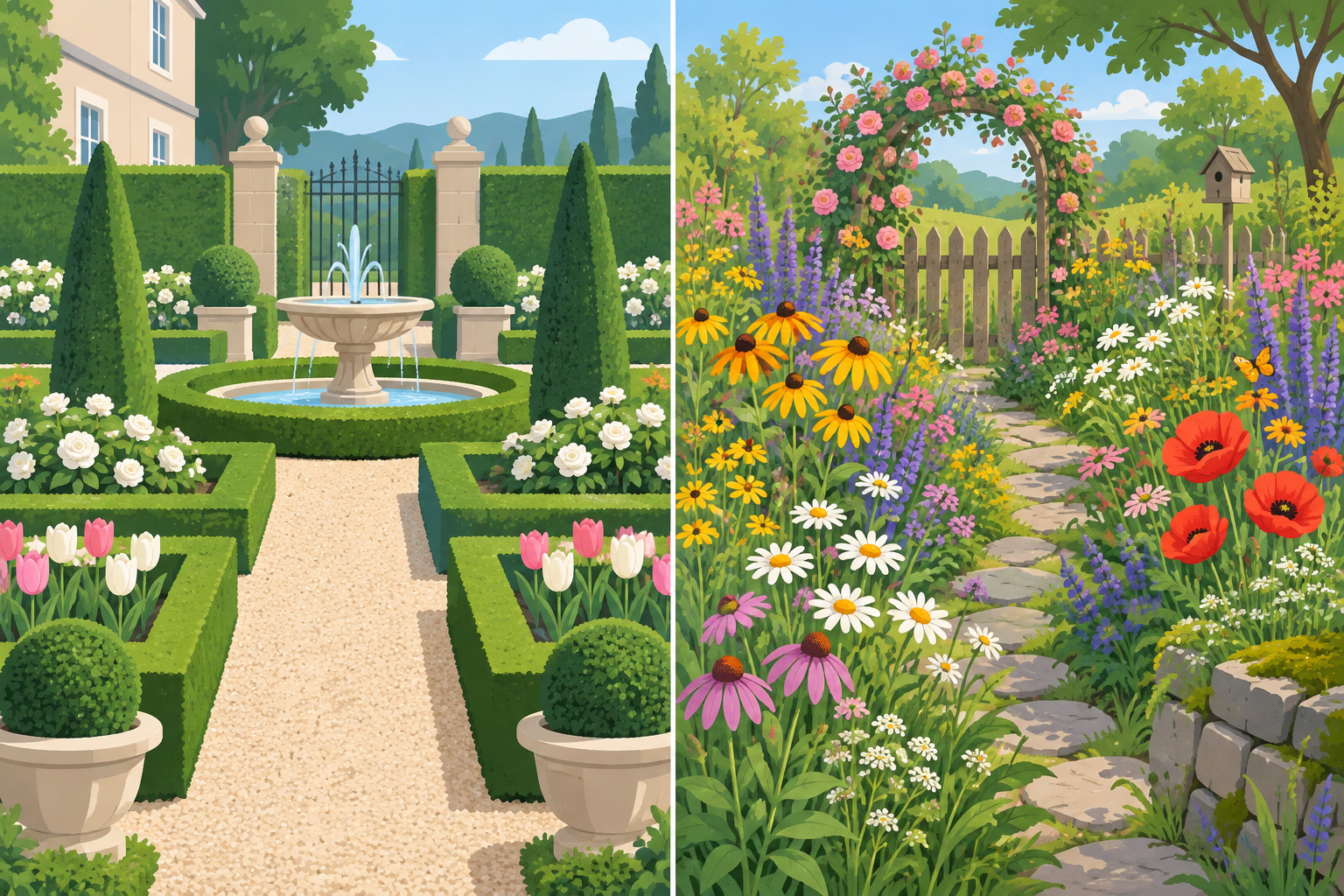
- Unlike the formal garden, the meadow is allowed to grow freely. In contrast to the clipped hedges, its flowers change throughout the season.
- The museum was nearly empty on Tuesday. In contrast, it was crowded during Saturday’s free-admission event.
- In contrast with last year’s plan, this version sets aside more time for practice and fewer hours for lectures.
- One recipe relies on fresh herbs for flavor. The other, in contrast, uses dried spices and a longer cooking time.
- The two candidates agree on the goal of improving public transit. In contrast, they propose different ways to pay for it.
These examples show that a contrast may involve degree, timing, method, or viewpoint, not only opposites such as hot and cold. If the comparison is subtle, name the specific quality that differs so readers do not have to guess.
Choose the Right Sentence Pattern
The construction depends on what comes after the phrase. When in contrast links a new statement to an earlier one, it works as a transition: “The first plan saves time. In contrast, the second plan costs less.” When in contrast to introduces a noun phrase, it sets up a direct comparison inside the sentence: “In contrast to the first plan, the second costs less.” Both sentences express a difference, but the first gives each plan its own sentence while the second keeps the comparison together.
It can help to name the dimension of comparison. You might contrast size, cost, pace, evidence, method, result, or point of view. For example, saying two classes are different is broad; saying one is discussion-based while the other relies on lectures tells readers exactly what changes. This small amount of detail keeps the transition from sounding like a label pasted between unrelated facts.
- Cost: The train ticket is cheaper. In contrast, renting a car gives travelers more flexibility.
- Evidence: The first study followed participants for one week. In contrast, the second tracked them for a full year.
- Point of view: The manager focused on the deadline; the design team, in contrast, emphasized usability.
“In Contrast” vs. “By Contrast” and “On the Contrary”
In contrast and by contrast both connect ideas by emphasizing a difference. In many sentences either will work: “The west side is wooded. In contrast, the east side is open grassland” and “The west side is wooded. By contrast, the east side is open grassland.” The choice is often stylistic; use one transition, not both together.
On the contrary has a different job. It corrects or rejects a preceding claim, often one that is negative: “The task was not impossible. On the contrary, the team finished it early.” When you simply compare two different things, use in contrast or by contrast: “Maya enjoys working in a group. By contrast, Leo prefers to work alone.”
Punctuation and Common Mistakes
- Use a comma after an introductory transition. Write “In contrast, the second sample contains more detail.” When the phrase interrupts a sentence, commas can mark the pause: “The second sample, in contrast, contains more detail.”
- Do not join two complete sentences with only a comma. The phrase does not turn a comma splice into a correct sentence. Use a period or semicolon: “The first option is inexpensive. In contrast, the second is more durable.” Or: “The first option is inexpensive; in contrast, the second is more durable.”
- Make the comparison logical. “The car is blue. In contrast, my favorite food is pasta” gives no meaningful basis for comparison. Connect details that differ in a relevant way.
- Avoid using it when there is no real difference. If the next idea adds support or gives an example, choose a phrase such as also or for example instead.
- Do not overuse transitions. If each sentence begins with “in contrast,” the writing feels mechanical. Sometimes a clear conjunction such as but, a direct comparison, or no transition at all reads better.
A Quick Check Before You Use It
Ask yourself: What two things am I comparing? What specific feature differs? Does the next sentence actually contrast with the previous one? If the answer is clear, in contrast can guide the reader smoothly. If the ideas do not oppose or differ, choose a transition that better describes their relationship.

Have you ever wondered how to effectively show the differences between two ideas in your writing? When you want to highlight contrast or distinguish between two opposing concepts, using an “in contrast” sentence can be a powerful tool.
“In contrast” is a phrase commonly used to introduce a sentence that contrasts with or contradicts the information presented in the previous sentence. This structure is essential in both academic and everyday writing to showcase distinctions, compare ideas, or emphasize differences between two subjects.
7 Examples Of In Contrast Used In a Sentence For Kids
- In contrast, the sun is hot and the moon is cool.
- Birds can fly, but fish swim in contrast.
- In contrast to a big elephant, a tiny ant is very small.
- Dogs bark loudly, in contrast to cats who meow softly.
- In contrast to summer, winter is cold.
- Red apples are sweet, in contrast to sour lemons.
- In contrast to daytime, nighttime is dark.
14 Sentences with In Contrast Examples
- In contrast to last semester, this year I am taking on more extracurricular activities.
- Studying during the day is completely different from cramming all night, in contrast to what some students prefer.
- In contrast to traditional lectures, online classes offer more flexibility.
- Some students enjoy group projects, in contrast to those who prefer working alone.
- In contrast to the previous syllabus, this year’s curriculum has more practical assignments.
- For some students, studying in quiet libraries is ideal, in contrast to those who prefer the hustle and bustle of coffee shops.
- In contrast to attending physical classes, online lectures allow students to rewind and rewatch them.
- In terms of career choices, some students prefer following their passion, in contrast to those who prioritize stable income.
- In contrast to relying solely on textbooks, some students prefer watching educational videos for better understanding.
- For many students, the transition from high school to college is a challenging one, in contrast to those who adapt easily.
- Some students excel in exams, in contrast to those who struggle with test anxiety.
- In contrast to students in other countries, Indian college students face more pressure from family expectations.
- Some students prefer studying alone for exams, in contrast to those who believe in group study sessions.
- In contrast to their classmates, some students prefer taking naps during breaks instead of socializing.
How To Use In Contrast in Sentences?
Using In Contrast in a sentence can help highlight differences between two or more subjects. To use In Contrast correctly, follow these simple steps:
-
Identify the two subjects or ideas you want to compare in your sentence. For example, “Cats are usually independent animals, in contrast to dogs, which are known for their loyalty.”
-
Place In Contrast after the first subject or idea, followed by a comma to separate it from the second subject or idea.
-
Ensure that the subjects or ideas you are comparing are related in some way but have notable differences. This will help make your comparison clear and effective.
-
Remember to use In Contrast when you want to emphasize differences between the two subjects or ideas, rather than similarities.
-
Practice using In Contrast in sentences to become more comfortable with incorporating it into your writing. This will help you enhance your ability to compare and contrast different concepts effectively.
Overall, using In Contrast is a valuable tool for drawing attention to distinctions between subjects or ideas in a sentence. By following these steps, you can effectively incorporate In Contrast into your writing and improve your ability to compare and contrast different elements.
Conclusion
In contrast, the variety of examples provided throughout this article demonstrate how this keyword can be used to highlight differences or opposing ideas within sentences. By using “in contrast,” writers can clearly convey distinctions between concepts, viewpoints, or events. This phrase serves as a useful tool for emphasizing comparisons and drawing attention to contrasting elements within a narrative or argument.
Employing “in contrast” effectively can improve the clarity and coherence of written communication, allowing readers to easily grasp the juxtaposition of ideas being presented. Whether used in academic essays, articles, or other forms of written work, this phrase helps to guide readers through contrasting points, enhancing the overall structure and impact of the text.