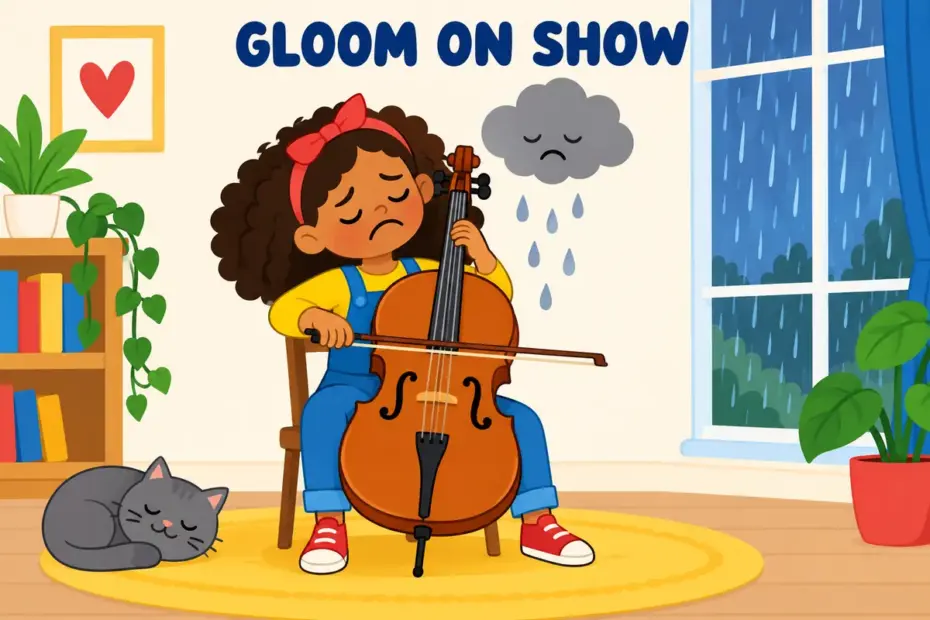
Lugubrious means looking or sounding sad, gloomy and mournful, often in a way that seems exaggerated. To use lugubrious in a sentence, put it before the thing that carries the gloom: “The clock struck with a lugubrious chime.” The word is literary, and its heaviness often carries a hint of humour.
Lugubrious at a glance
- Lugubrious is an adjective; the adverb is lugubriously and the noun is lugubriousness.
- It describes a gloomy look, sound, tone or atmosphere.
- The gloom it names is usually exaggerated, so it can tip into gentle comedy.
- It is a literary word, more common in fiction and reviews than in speech.
- The usual targets are voices, faces, music, clocks and landscapes.
- The commonest confusion is with ludicrous, which means absurd and funny, almost the opposite.
What does lugubrious mean?
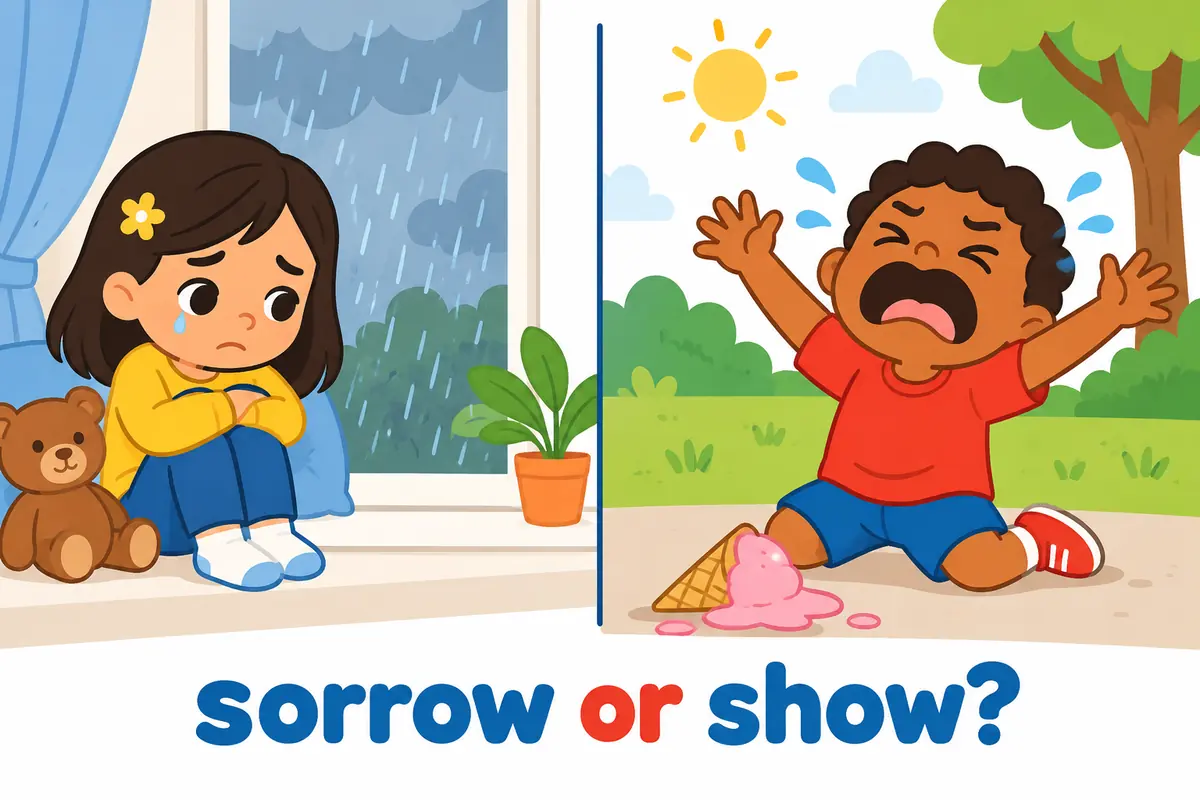
Lugubrious is an adjective meaning mournful, gloomy and sad in appearance or sound, usually to a degree that seems studied or excessive. The Cambridge entry for lugubrious records this sense, and the excess is the key: the word notices performance as well as sorrow. Where the sadness is genuine and restrained rather than on show, melancholy is the quieter and more common choice.
| Sense | Plain meaning | Example sentence |
|---|---|---|
| Mournful in look or sound | Sad and gloomy in visible or audible form | He gave a lugubrious sigh and set down the letter. |
| Exaggeratedly solemn | Heavy gloom that seems laid on, sometimes comic | The band played a lugubrious tune for a birthday. |
| Gloomy in atmosphere | A place or scene weighted with sadness | A lugubrious mist hung over the harbour. |
One limitation matters. Lugubrious is a literary and somewhat uncommon word, and using it for ordinary sadness sounds affected. If a friend has lost a job, sad or down is the natural word; lugubrious suits a description in fiction, a film review, or a deliberate contrast between enormous gloom and a small problem.
How do you use lugubrious in a sentence?
Lugubrious is an ordinary adjective, so it sits before a noun or after a linking verb. It works best when the sentence names the exact thing that carries the gloom, whether a voice, a face, a piece of music or a landscape.
| Pattern | Example | What it signals |
|---|---|---|
| lugubrious + noun | He answered in a lugubrious voice. | The noun identifies what actually sounds sad. |
| be or look or sound lugubrious | She looked lugubrious in every photograph. | Links the mood to a person’s visible manner. |
| lugubrious about + topic | He grew lugubrious about the state of the garden. | Shows the subject of the gloom, often comically trivial. |
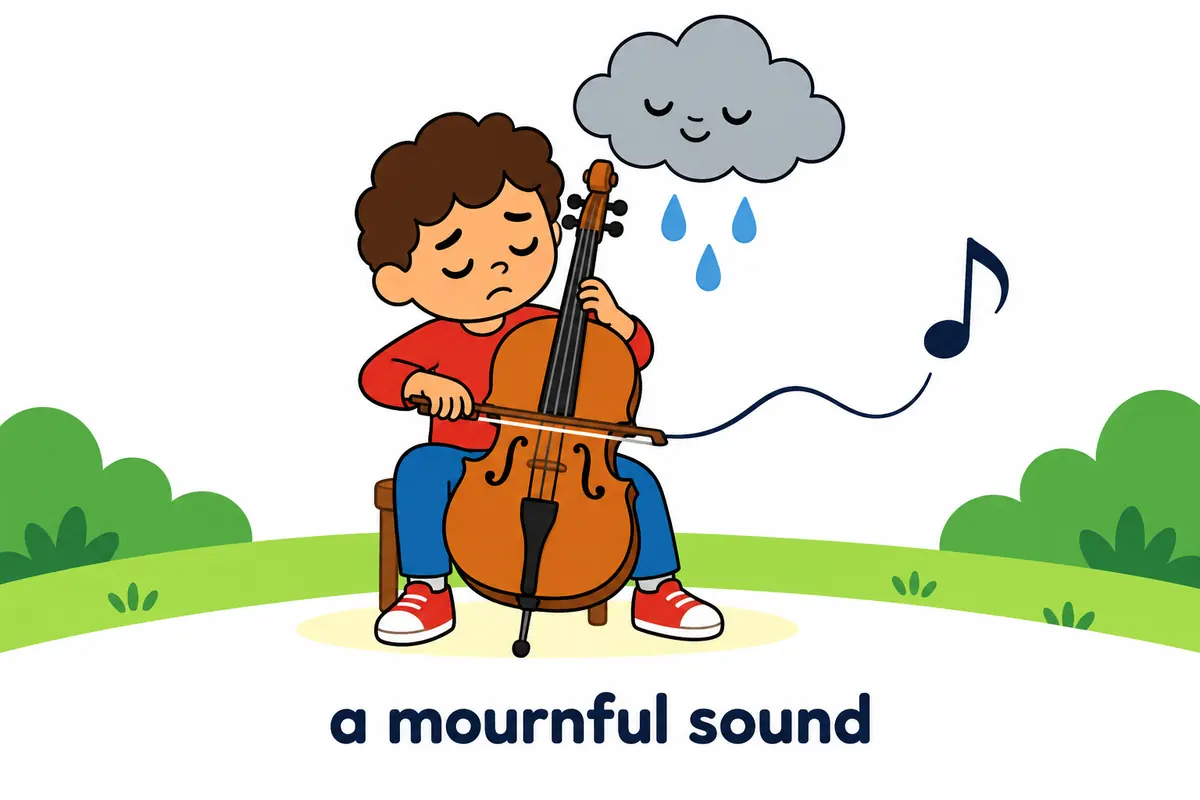
| a lugubrious + sound noun | A lugubrious bell marked each hour. | Applies the word to music, bells or weather. |
| lugubriously + verb | The cello lugubriously followed the singer. | Pushes the gloom onto the manner of an action. |
Lugubrious in a sentence: examples across contexts
Lugubrious lives mostly in written description, where its heaviness can be measured against the scene. The eight sentences below move from a book review to a piece of humour, and each one ties the gloom to something concrete.
| Context | Example sentence | Why this works |
|---|---|---|
| Book review | The narrator’s lugubrious tone makes even a tea party feel like a funeral. | Contrasts heavy gloom with a trivial event. |
| Film review | A lugubrious score drags the closing scene well past its point. | Attaches the word to music and its effect on pace. |
| News report | The mayor delivered a doleful summary of the year. | Uses a near synonym so the register stays formal. |
| Fiction | A lugubrious caretaker met us at the gate and said nothing. | Paints a character through a single adjective. |
| Music review | Two lugubrious ballads sit oddly among the faster tracks. | Judges songs by mood and by placement on an album. |
| Travel writing | The valley wore a gloomy look under a lugubrious sky. | Pairs the word with weather and landscape. |
| Obituary | His lugubrious face concealed a famously cheerful nature. | Uses the contrast between appearance and character. |
| Humorous writing | He described the missing biscuit in lugubrious detail. | Lets the exaggerated gloom create the joke. |
The last row shows the word’s comic edge most clearly: the heavier the matter, the funnier it is when lugubrious is aimed at something small.
Lugubrious vs mournful
Lugubrious and mournful both describe sorrow, but they place it differently. Mournful reports real grief and asks for sympathy, while lugubrious describes sadness put on display, and often overdone.
| Attribute | lugubrious | mournful |
|---|---|---|
| Core meaning | Gloomy in a way that seems exaggerated | Expressing genuine grief or sorrow |
| Where it lives | A look, voice, sound or atmosphere | Behaviour, music or words that carry loss |
| Emotional effect | Heaviness that can seem comic | Sympathy and shared sadness |
| Register | Literary and uncommon | Neutral and widely used |
| Implies excess | Yes, usually | No |
| Example | He told a lugubrious story about a lost hat. | The mourners sang a mournful hymn. |
Verdict: choose mournful when the sadness is real and the reader should feel it, and lugubrious when the gloom is too heavy for the occasion. Where the mood is quiet and dark without display, somber sits between the two.
Word forms and grammar of lugubrious
Lugubrious keeps one form for every gender and number and builds an adverb and a noun. It has no common comparative, so writers use more and most instead of inventing endings.
| Form | Part of speech | Example |
|---|---|---|
| lugubrious | adjective | His lugubrious expression said everything. |
| lugubriously | adverb | The wind moaned lugubriously through the chimney. |
| lugubriousness | noun | The lugubriousness of the speech tired the audience. |
| more lugubrious | comparative phrase | No voice could be more lugubrious than his. |
| lugubriouser | non-standard | Correct form: more lugubrious. |
| ludicrous | adjective, different meaning | The costume was ludicrous. |
Common mistakes with lugubrious
- Incorrect:
The comedians wore lugubrious costumes that made everyone laugh.Correct: The comedians wore ludicrous costumes that made everyone laugh. Rule: Ludicrous means absurd and funny; lugubrious means gloomy. - Incorrect:
She was lugubrious after her father died.Correct: She was mournful after her father died. Rule: Lugubrious implies excessive display, so it sits badly beside real grief. - Incorrect:
The speaker talked lugubrious for an hour.Correct: The speaker talked lugubriously for an hour. Rule: Use the adverb lugubriously to modify a verb. - Incorrect:
The mood was lugubriouser than before.Correct: The mood was more lugubrious than before. Rule: Lugubrious takes more, not the ending er. - Incorrect:
The party was lugubrious, so everyone went home early.Correct: The party was dull, so everyone went home early. Rule: Lugubrious needs visible mournfulness, not mere boredom. Where the mood is funereal rather than sad, funereal is the precise word.
Practice using lugubrious
Work through the six items, then read the reasons rather than only the answers.
- Fill the gap: The old clock gave a ______ chime at every hour.
- Choose the better word: The clown’s costume was (lugubrious / ludicrous).
- Correct the error: The cello played lugubrious under the singer’s voice.
- Build a sentence: use lugubrious voice about a character telling a sad story about a small mishap.
- Spot the register: which belongs in a film review, a lugubrious score, or everything felt super gloomy?
- Rewrite with the adverb: The wind moaned in a lugubrious way through the trees. Use lugubriously instead.
Answers
- lugubrious, because the chime carries heavy, mournful sound.
- ludicrous, because the costume is absurd and funny rather than gloomy.
- The cello played lugubriously under the singer’s voice, since the adverb is needed.
- Model answer: The guide told the story of a lost umbrella in a lugubrious voice.
- A lugubrious score, because a review keeps a formal register and names the music.
- The wind moaned lugubriously through the trees, because the adverb describes the manner of moaning.
The bottom line
Use lugubrious in a sentence when a sound, face or scene carries gloom that seems laid on far too heavily, and name the thing that holds it. The two details that decide most sentences are that the word is literary and uncommon, so sad or gloomy is clearer in ordinary writing, and that the excess it names often tips into comedy. Keep it for description that wants that weighted, slightly theatrical atmosphere.
Frequently asked questions about lugubrious
Is lugubrious a formal word?
Lugubrious is literary rather than strictly formal. It appears most often in fiction, essays and reviews, where a writer can afford a heavy descriptive adjective. In speech, people reach for gloomy, miserable or down. Using lugubrious in a text message would sound deliberately theatrical, which can be the point.
What is the difference between lugubrious and sad?
Sad is the plain, neutral word for unhappiness and fits almost any setting. Lugubrious describes sadness that shows, usually to an exaggerated degree, in a voice, face or sound. It also carries an extra judgement: the gloom seems performed, which is why it can read as comic rather than touching.
Can a place be lugubrious?
Yes. Weather, landscapes and rooms can all be lugubrious, because the word covers atmosphere as well as people. A lugubrious sky, a lugubrious harbour or a lugubrious hallway each suggest heaviness that presses on the scene. It suits descriptive writing, where a setting itself seems to mourn.
Why does lugubrious sometimes sound funny?
Lugubrious names gloom that is too large for its occasion, and that mismatch is inherently comic. Describing a lost biscuit or a broken umbrella in lugubrious detail makes the heaviness the joke. The word is rarely neutral, so a writer who wants sincere sorrow usually chooses mournful instead.
Have you ever come across a word that perfectly encapsulates a feeling of sadness and gloom? “Lugubrious” might be just the word you’re looking for. This adjective, pronounced loo-GOO-bree-us, describes something that is mournful, dismal, or sorrowful in a particularly exaggerated or exaggerated manner.
Used to paint a vivid picture of a dark and somber atmosphere, “lugubrious” conveys a sense of deep melancholy or sorrow with a touch of dramatic flair. This word is ideal for describing things like a mournful dirge, a dreary rainy day, or a melancholic funeral scene.
7 Examples Of Lugubrious Used In a Sentence For Kids
- The lugubrious ghost made funny faces.
- The lugubrious rain cloud disappeared and the sun came out.
- The little puppy had a lugubrious expression when it couldn’t find its toy.
- The spooky castle had a lugubrious atmosphere.
- The sad little duck had a lugubrious quack.
- The old tree had a lugubrious face carved into its trunk.
- The princess in the story had a lugubrious look on her face.
14 Sentences with Lugubrious Examples
- The students looked lugubrious as they slogged through their last-minute assignments.
- The lugubrious atmosphere in the lecture hall made it difficult to focus.
- After receiving their exam results, the room was filled with lugubrious faces.
- The rainy weather outside matched the lugubrious mood of the college campus.
- The professor’s lugubrious tone while discussing failing grades sent a chill down students’ spines.
- The never-ending pile of textbooks to study for finals left students feeling lugubrious.
- The tired and lugubrious expressions on students’ faces during exam week were hard to miss.
- The farewell party for graduating seniors was filled with lugubrious goodbyes and tears.
- The empty campus during summer break felt lugubrious without the usual hustle and bustle of students.
- As the deadline for project submissions approached, a sense of lugubrious urgency filled the air.
- The sound of the bell signaling the end of college for the day was met with lugubrious sighs of relief.
- The lugubrious sight of abandoned bicycles on campus during vacation painted a lonely picture.
- Watching the sunset from the college rooftop brought about a lugubrious sense of nostalgia for the graduating students.
- The empty cafeteria during exam season had a lugubrious silence that echoed throughout the halls.
How To Use Lugubrious in Sentences?
To use the word Lugubrious in a sentence, begin by understanding its meaning. Lugubrious is an adjective that describes something as looking or sounding sad and dismal, often in an exaggerated or overly dramatic way.
When constructing a sentence using Lugubrious, think of scenarios that evoke a sense of deep sorrow or mournfulness. For example, “The lugubrious melody of the funeral dirge filled the air as the mourners solemnly made their way to the cemetery.”
Alternatively, you can describe a setting or atmosphere as lugubrious to convey a sense of gloom or melancholy. For instance, “The old abandoned mansion had a lugubrious air about it, with its overgrown gardens and creaking doors echoing through the halls.”
Remember to always use Lugubrious in situations where you want to emphasize a sense of sadness or dreariness. Avoid using it in contexts where a lighter or more neutral tone is appropriate.
In summary, when incorporating Lugubrious into your sentences, consider the mood and atmosphere you wish to create. By understanding its meaning and choosing your words thoughtfully, you can effectively convey a sense of sorrow or gloom in your writing.
Conclusion
In conclusion, sentences containing the word “lugubrious” are often used to describe a feeling of sorrow, mournfulness, or gloom. These sentences convey a sense of deep sadness or melancholy, painting a picture of a somber or dreary atmosphere. For example, “Her lugubrious expression told of the loss she had suffered,” illustrates how the word can evoke a profound sense of sorrow or grief in a sentence.
The use of “lugubrious” helps to create a vivid emotional response in writing, allowing for the depiction of scenes imbued with a heavy sense of sadness or despair. By incorporating this word into sentences, writers can effectively convey a mood of mourning or darkness, adding depth and emotion to their descriptions.


