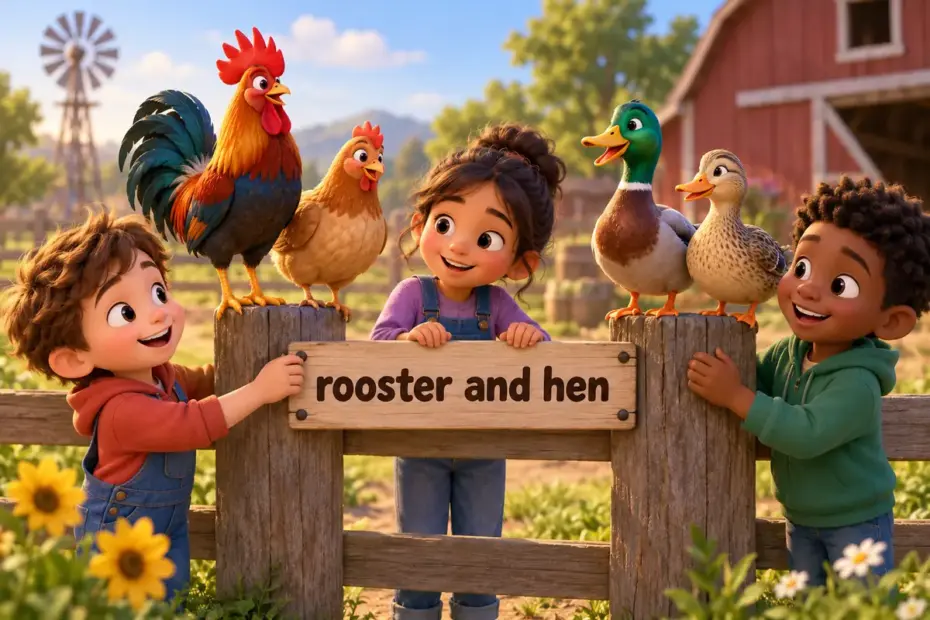
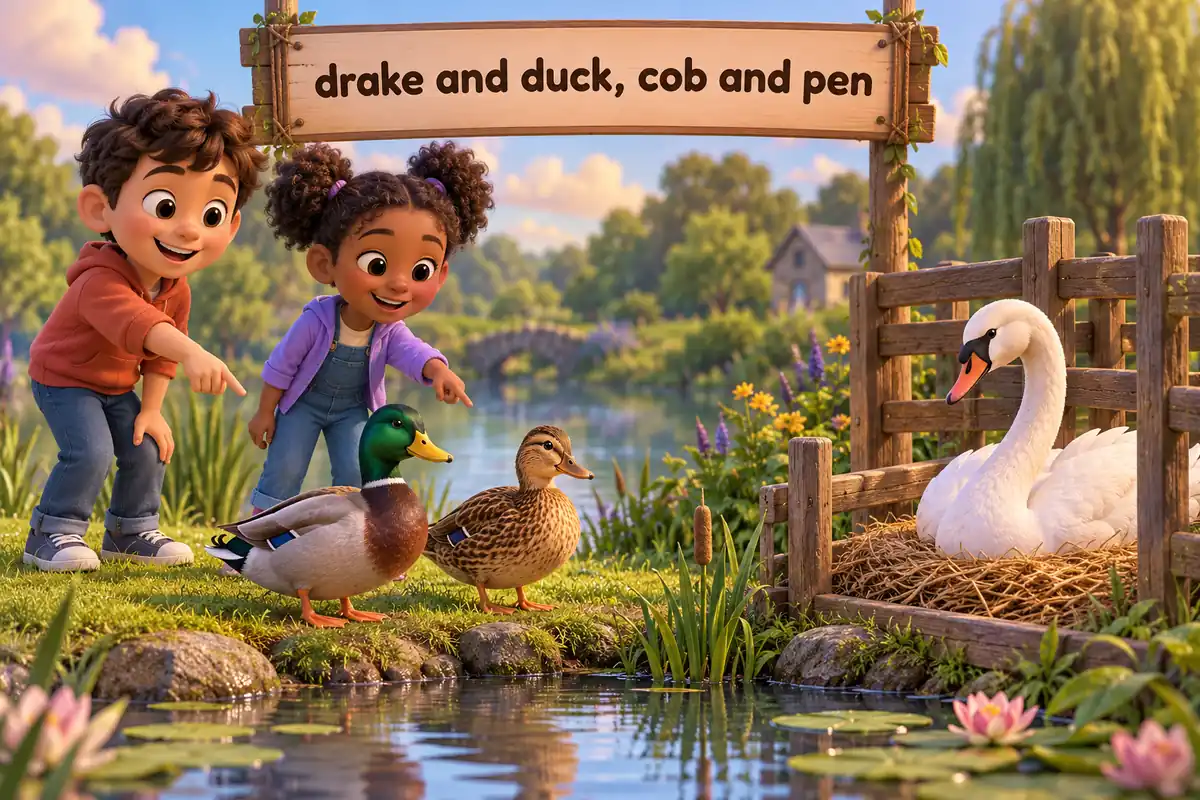
The masculine and feminine of birds are the word pairs that name a male and a female of the same species, such as rooster and hen, drake and duck, and cob and pen. Some species carry two distinct words, while others simply add male or female, and one example shows the shared pattern: a gander is a male goose.
Masculine and feminine of birds at a glance
- Some birds have fully distinct words, such as drake and duck or cob and pen.
- Others use a base word, such as male robin and female robin.
- The word cock or hen is the general masculine and feminine for many species.
- A few names reverse the usual size pattern, since a female falcon is larger than the male.
- The commonest error is using peacock for both the male and the female.
What are the masculine and feminine names for birds?
The masculine and feminine names for birds are a set of gendered nouns and phrases, and they fall into three kinds: distinct words, shared base words with a sex term, and the general pair cock and hen. The two adjectives themselves appear in masculine in a sentence and feminine in a sentence. A few species, including the falcon, reverse the usual pattern, because the female is the larger and stronger bird and the male takes a separate name.
| Bird | Male | Female | Note |
|---|---|---|---|
| Chicken | rooster or cock | hen | cock is standard in British English |
| Duck | drake | duck or hen | drake names the male only |
| Goose | gander | goose | the male name is used for one species group |
| Swan | cob | pen | the pair is fixed and formal |
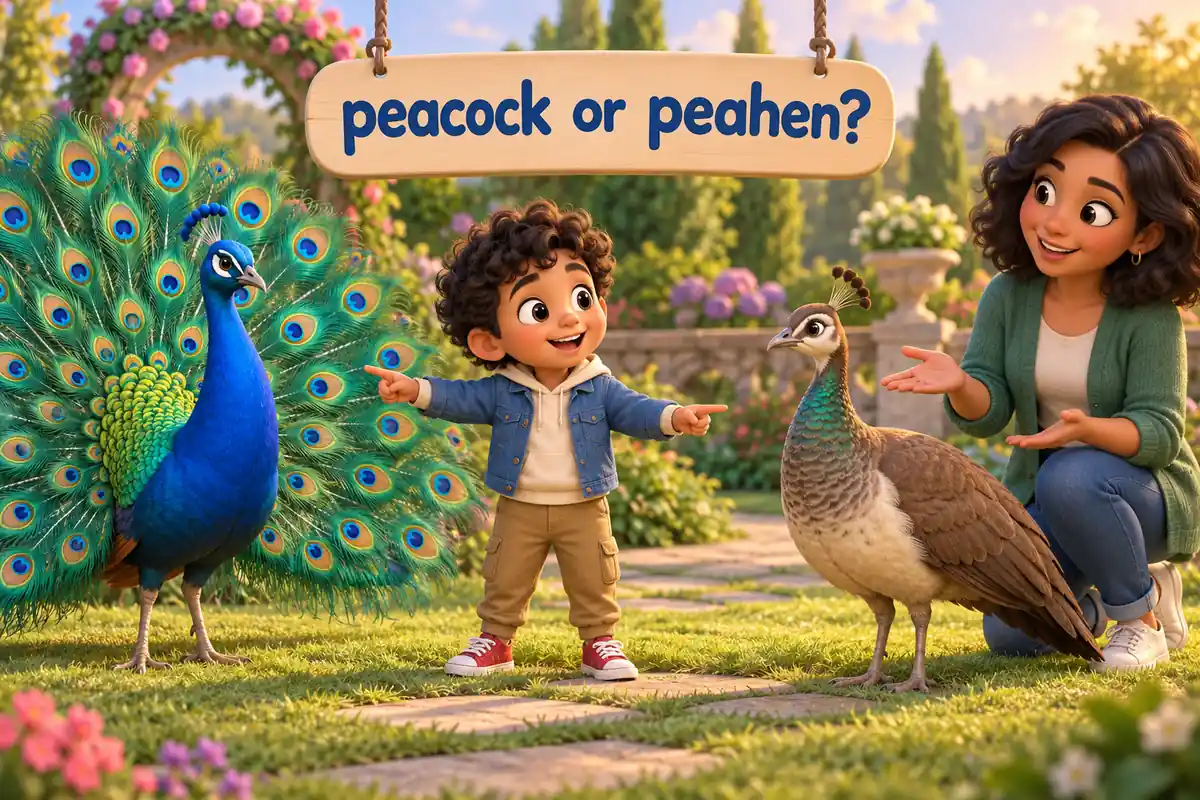
| Peafowl | peacock | peahen | peacock is the male, not the species |
| Turkey | tom or gobbler | hen | tom is the everyday male name |
| Falcon | tiercel | falcon | the female is larger, so she keeps the name |
| Pheasant | cock | hen | the general pair applies here |
| Ostrich | cock | hen | the general pair applies here |
| Robin | male robin | female robin | no special word exists |
How are these bird names built?
The names follow a few clear patterns, and the pattern tells you whether a species has its own words or borrows the general pair. The wider set of bird names appears in the list of birds A to Z.
| Pattern | Example | What it signals |
|---|---|---|
| two distinct words | drake and duck | the male has its own noun |
| shared root plus ending | peacock and peahen | the sex sits inside one family name |
| general pair | cock and hen | the species uses the everyday words |
| base word plus sex term | male robin, female robin | no special word exists |
| young word | cygnet, duckling | names the chick, not the sex |
Masculine and feminine of birds across contexts
The names appear in field guides, stories and classroom lessons, and the register decides how precise each one becomes. A related everyday phrase about a home appears in bird’s nest in a sentence.
| Context | Example sentence | Why this works |
|---|---|---|
| Field guide | The drake has a green head, unlike the brown duck. | places both words in one line |
| Classroom | A male chicken is a rooster and a female is a hen. | defines the pair clearly |
| Farm note | Each hen lays one egg on most days. | names the female by a habit |
| Story | The cob guarded the nest while the pen sat still. | a vivid pair of wild swans |
| Nature writing | A gander leads the flock on the long flight. | the male named in a scene |
| Poultry show | The judge compared one tom turkey with three hens. | a formal contest context |
| Falconry book | The tiercel is smaller than the falcon he flies with. | the reversed size pattern shown |
| Zoo sign | The peacock fans his tail; the peahen is plain brown. | separates the two names |
| Garden diary | A robin and his mate nested under the shed. | a plain male robin named |
| Exam answer | Give the feminine word for a male duck. | asks for a single correct noun |
Which word should you use?
Several of these names are misused, and the choice usually depends on whether a special word exists and which region you write for. A familiar phrase built on the plain bird word appears in birds of a feather in a sentence.
| Pair | Usual difference | Example |
|---|---|---|
| cock and rooster | rooster is the common American word; cock is British and standard elsewhere | The rooster crowed at dawn. |
| peacock and peafowl | peacock is the male; peafowl names the species | The peafowl strutted across the lawn. |
| duck and drake | duck often covers both, drake only the male | A drake followed the ducklings. |
| goose and gander | goose names the female or the species; gander the male | The gander hissed at the dog. |
| pen and cob | pen is the female swan; cob the male | The pen sat on the nest. |
Choose the specific word when the sex matters, and the general species name when it does not, since duck and goose can name either sex or the whole species. In American writing, rooster is safer than cock for the male chicken, because the shorter word carries a second, unintended meaning that most editors avoid.
Word forms and grammar of bird sex names
These nouns behave like ordinary count nouns, and the young of each species often take a name of their own.
| Form | Part of speech | Example |
|---|---|---|
| hen | count noun | One hen is brooding. |
| hens | count noun, plural | The hens scratch in the yard. |
| drake | count noun | A drake has brighter feathers. |
| gander | count noun | The gander is often larger. |
| male and female | adjectives | A male robin sings in spring. |
| chick | noun | The chick left the nest. |
| cygnet | noun | A cygnet follows the pen. |
Use hen and cock as ordinary nouns with a determiner, as in the hen or a hen, and keep male and female for the plain adjectives that sit before a species name. The young words, such as duckling, gosling and cygnet, name the chick rather than the sex, so a sentence about a young bird needs both facts kept apart.
Common mistakes with bird sex names
Mistake 1: peacock used for both sexes. Incorrect: The peacock laid an egg in the flowerbed. Correct: The peahen laid an egg in the flowerbed. Rule: peacock names the male, and the female is the peahen.
Mistake 2: drake used for the female duck. Incorrect: The drake led her ducklings across the pond. Correct: The duck led her ducklings across the pond. Rule: a drake is male, and the mother is a duck or a hen.
Mistake 3: gander used for any goose. Incorrect: Each gander lays a clutch of eggs. Correct: Each goose lays a clutch of eggs. Rule: gander names the male only, so the egg-layer is the goose.
Mistake 4: the falcon pair reversed. Incorrect: The male falcon is larger than the female. Correct: The female falcon is larger, and the male is called a tiercel. Rule: in falcons the female is the larger bird and keeps the name falcon.
Mistake 5: a young word used for an adult. Incorrect: The cygnet laid three eggs this spring. Correct: The pen laid three eggs, and the cygnet is her young. Rule: a cygnet is a young swan, not an adult.
Practice using bird sex names
- Fill in the blank: The ___ is the male of the swan pair.
- Choose the better word: The (peacock / peahen) is the plain brown female.
- Correct the error: The drake led her ducklings across the pond.
- Build a sentence: use gander to describe a male goose guarding a nest.
- Spot the register: which suits a field guide, (a) that boy duck, or (b) The drake has a bright green head?
- Fill in the blank: A young swan is called a ___.
Answers
- cob, because the cob is the male swan and the pen is the female.
- peahen, because the female peafowl is the plain brown bird.
- The duck led her ducklings across the pond; a drake is male.
- The gander hissed and stretched his neck to guard the nest.
- (b), because a field guide uses the precise sex word.
- cygnet, because a cygnet is a young swan.
The bottom line
The masculine and feminine of birds come in three kinds: distinct words such as drake and duck, shared roots such as peacock and peahen, and the general pair cock and hen. A few species, including the falcon, reverse the usual size rule and give the larger female the plainer name. Use the specific word when the sex matters, and the species name when it does not.
Frequently asked questions about bird sex names
Is a peacock male or female?
A peacock is male, and the female is a peahen. Together the species is called the peafowl, which covers both sexes and the young. The male carries the long, fanned tail feathers, while the female is smaller and mostly plain brown for camouflage.
What is the feminine of a duck?
The feminine of a duck is simply duck or hen, since duck names the female and the species, while the male is the drake. When the sex needs to be clear, say a female duck or a hen duck to avoid any confusion with the general word.
Why is the female falcon larger than the male?
In falcons and most birds of prey the female is larger and stronger, which helps her defend the nest and hunt for the young. The size gap is why the two sexes carry separate names: she is the falcon, and he is the smaller tiercel.
Do all birds have separate masculine and feminine names?
No. Only a small set of familiar birds, such as the chicken, duck, goose, swan and peafowl, carry separate words. Most species, from the robin to the sparrow, use the plain pattern of male plus the bird name and female plus the bird name.