What “Mindset” Means
Mindset is a noun for a person’s or group’s usual way of thinking about a subject, including the assumptions and attitudes that shape how they approach it. Cambridge Dictionary gives the concise sense as “a person’s way of thinking and their opinions”; in everyday writing, the word often points to a relatively settled outlook rather than one passing feeling or a single thought. You might describe a team’s collaborative mindset, a learner’s curious mindset, or a community’s entrepreneurial mindset.
The word can refer to a broad outlook or to a particular approach in a specific area. “Her mindset changed after the conversation” refers to a shift in outlook, while “a safety-first mindset” describes the lens someone uses when making decisions. The plural mindsets is also common when comparing different groups or approaches.

How to Use “Mindset” Naturally in a Sentence
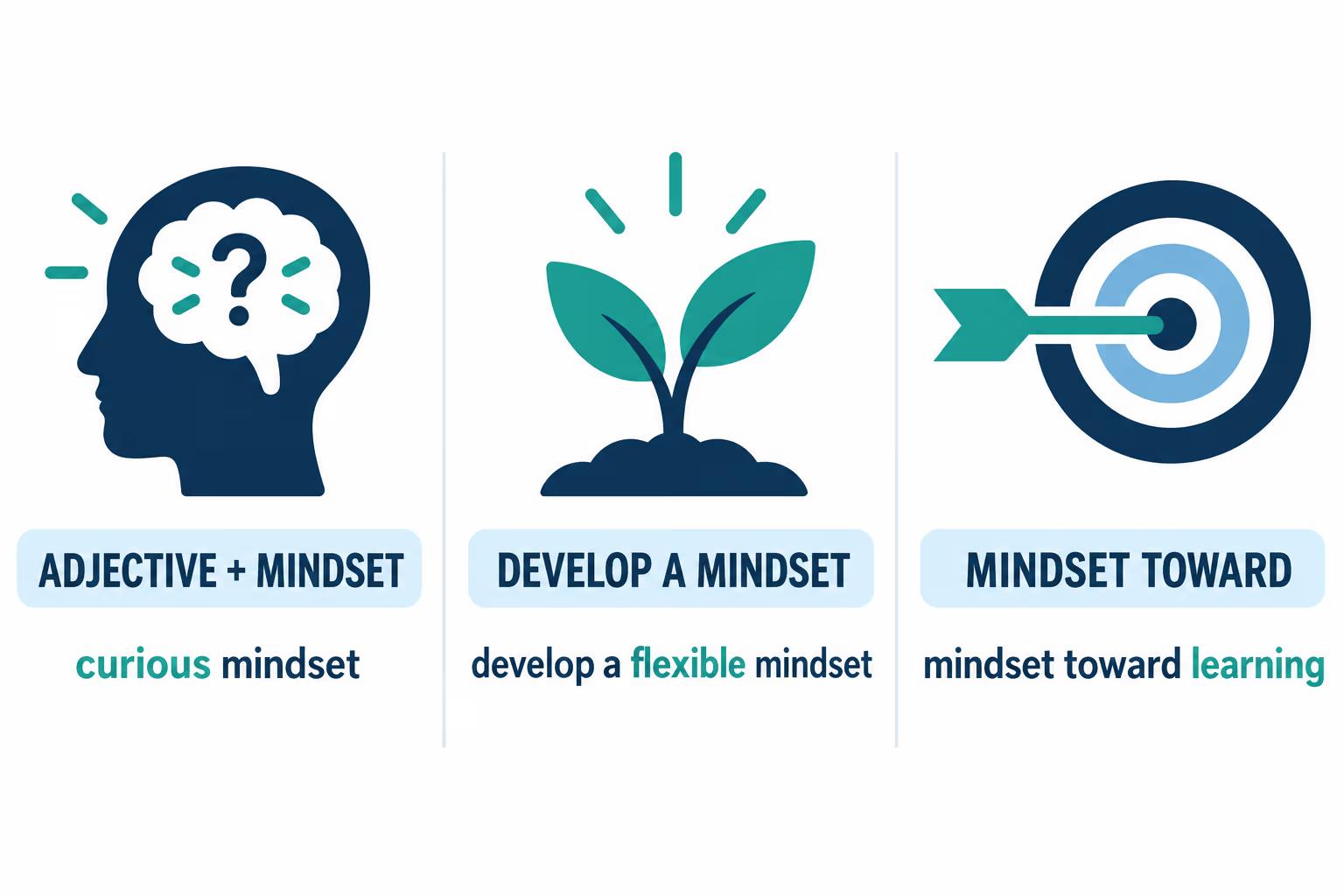
Because mindset is a noun, it often follows an article or possessive: a mindset, the mindset, my mindset, or their mindset. It commonly appears with verbs such as adopt, develop, maintain, change, shift, and challenge. Adjectives can specify the kind of outlook: positive, practical, curious, flexible, growth, or fixed.
- Adjective + mindset: “A curious mindset helped Noor ask useful questions during the museum visit.”
- Verb + mindset: “The new coach helped the team develop a more patient mindset.”
- Mindset toward + noun: “Her mindset toward feedback became more open after she saw how it improved the draft.”
- Mindset of + person or group: “The mindset of the volunteers was focused on solving the immediate problem.”
- Shift in mindset: “There was a shift in mindset once the group began treating mistakes as information.”
Use mindset when you mean an outlook or approach. If you mean a temporary emotion, words such as mood or feeling may be more precise. If you mean one specific belief, name the belief directly. For instance, “He has a cautious mindset about investing” describes a general approach; “He believes this investment is too risky” states one opinion.
Mindset Sentence Examples by Context
These examples show how the noun works in a range of settings. A modifier helps readers understand the kind of outlook being described, while the rest of the sentence supplies the situation.
Learning and school
- “Maya approached the difficult chapter with a curious mindset and wrote down questions as she read.”
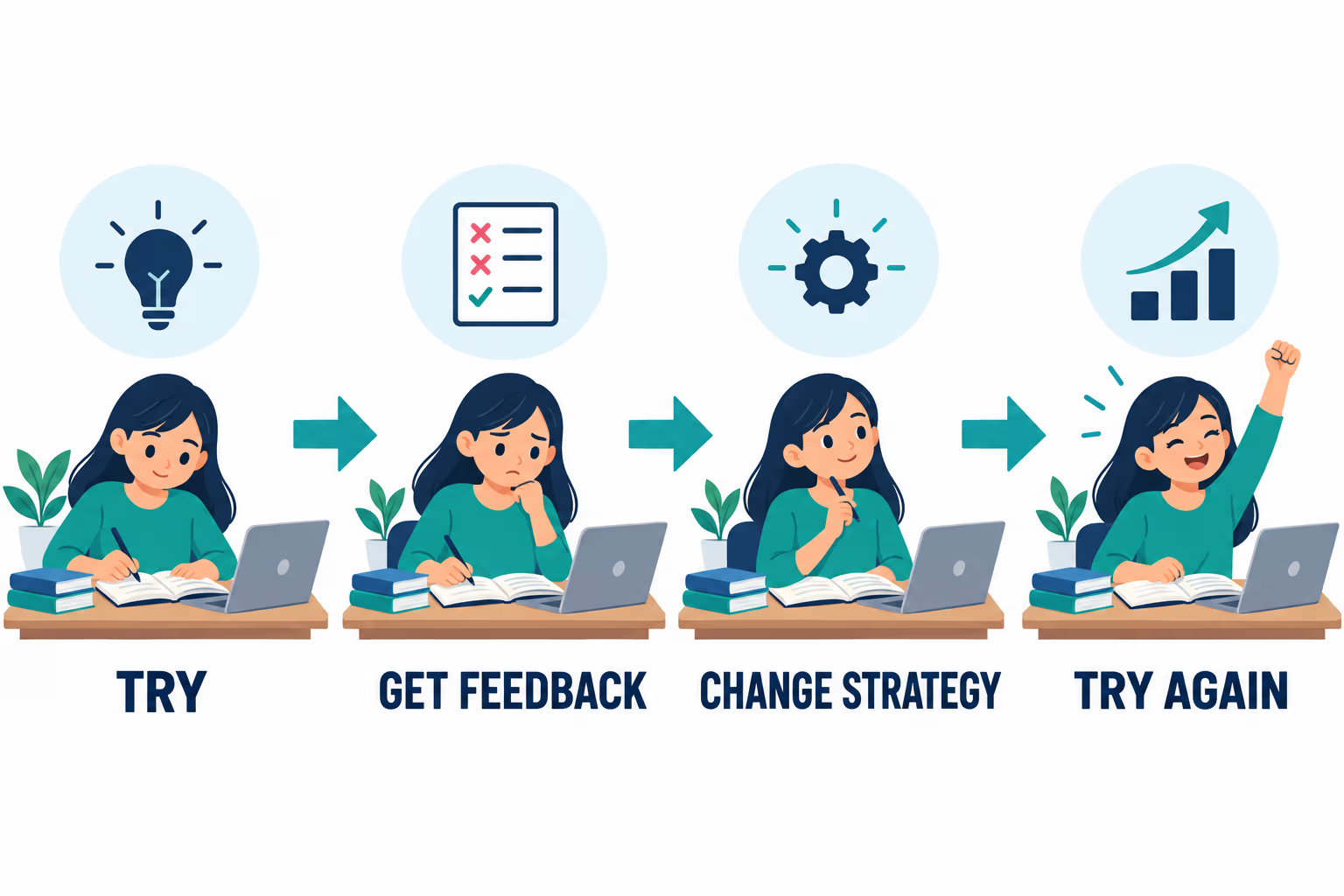
- “A growth mindset can encourage students to seek feedback and try a different strategy when an answer is wrong.”
- “The teacher’s patient mindset made it easier for the class to discuss mistakes without embarrassment.”
- “Instead of calling the lesson easy or impossible, Liam adopted a problem-solving mindset and worked through one step at a time.”
Work and collaboration
- “The design team adopted a customer-focused mindset before reviewing the first prototype.”
- “A flexible mindset helped the staff adjust when the delivery schedule changed.”
- “Her practical mindset kept the meeting focused on choices the group could make that week.”
- “The manager encouraged a collaborative mindset by inviting quieter colleagues to share their ideas.”
Sports, habits, and everyday life
- “The runner’s steady mindset helped her return to training gradually after a break.”
- “With a safety-first mindset, the hikers checked the weather and packed extra water.”
- “A more balanced mindset helped Omar protect time for both work and rest.”
- “Their resourceful mindset turned a canceled picnic into a relaxed lunch at home.”
Notice that the examples describe an approach, not a guarantee. A determined mindset may help someone keep working, but success can also depend on skill, time, support, health, and circumstances.
Growth Mindset and Fixed Mindset: A Careful Distinction
In education and psychology writing, growth mindset usually refers to the belief that abilities such as intelligence can develop. A fixed mindset treats an ability as largely unchangeable. The distinction can help explain why a learner might view a setback as a reason to try a new method, ask for help, or practice a skill.
It is best to describe this idea without turning it into a slogan. The American Psychological Association notes that growth-mindset beliefs in learning contexts are connected with persistence, strategy use, and help-seeking. That does not mean that positive thinking alone guarantees improvement. Good instruction, useful feedback, access to resources, and a workable strategy matter too. “After the first quiz, Elena used a growth mindset: she reviewed the errors, asked for help, and practiced the question types she had missed” is more concrete than simply saying she “thought positive.”
Positive, Negative, and Other Types of Mindset
There is no single adjective that fits every use. Choose one that communicates the actual attitude or approach:
- Positive mindset: emphasizes hopeful or constructive expectations; use it when optimism is relevant, not as a demand to ignore a real problem.
- Practical mindset: focuses on workable steps, limits, and likely outcomes.
- Open mindset: signals willingness to consider unfamiliar ideas or evidence.
- Critical mindset: examines claims carefully and looks for support; it does not necessarily mean hostile or negative.
- Strategic mindset: considers priorities and plans before acting.
- Scarcity mindset: frames choices around the perception that time, money, or other resources are limited.
- Abundance mindset: emphasizes perceived possibilities and options; use it as a description of perspective rather than a claim that resources are unlimited.
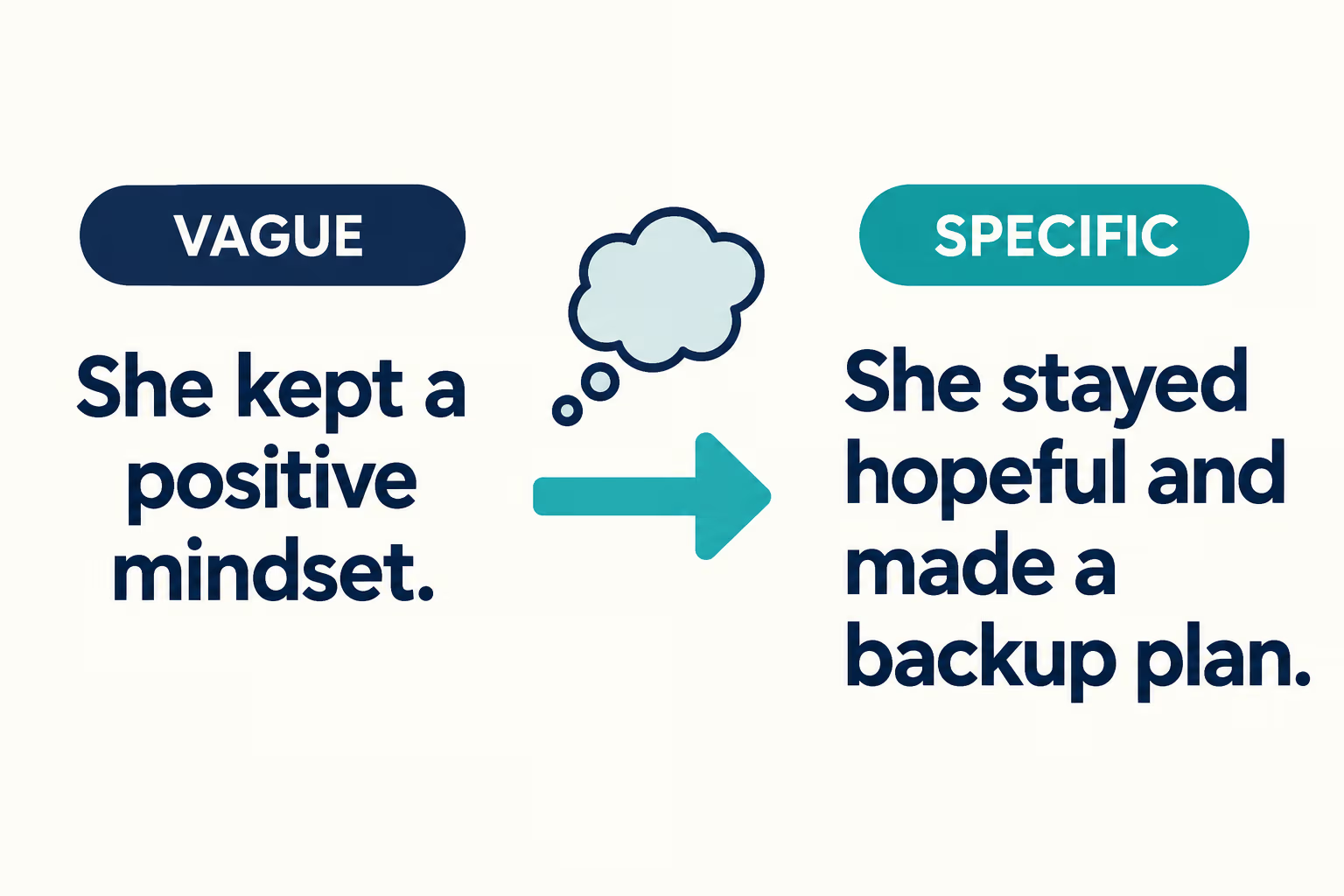
Some phrases, especially positive mindset, can sound vague when they are not supported by a detail. Explain what the person did: “She kept a positive mindset” is general; “She stayed hopeful while making a backup plan” gives the reader something observable.
Common Mistakes When Using “Mindset”
- Using it as a synonym for mood: a mindset is usually an outlook or habitual approach, while a mood is a temporary emotional state.
- Leaving the meaning too broad: add a modifier or name the subject, such as “a cautious mindset toward spending.”
- Making it sound like a cure-all: avoid suggesting mindset alone can overcome every barrier or guarantee a result.
- Using “mindset” where “opinion” is clearer: when a sentence concerns one view, stating that view directly can make the meaning sharper.
- Forgetting the article: in a singular count use, write “a mindset” or “the mindset,” not simply “she has mindset.”
A Simple Formula for Writing Your Own Sentence
Try this pattern: person or group + verb + adjective + mindset + specific situation. For example: “During the budget review, the committee brought a cautious mindset to proposals for new expenses.”
- Decide whether you mean a general outlook, a specific attitude, or a single opinion.
- Choose a precise adjective if the context calls for one.
- Pair the word with a natural verb or preposition, such as develop a mindset or mindset toward learning.
- Add a concrete situation so the reader can infer what the mindset looks like in practice.
- Read the sentence aloud and replace mindset with approach or outlook to see whether another noun sounds clearer.
Frequently Asked Questions
What does “mindset” mean?
Mindset means a person’s or group’s way of thinking about something. It can describe a broad outlook or a particular approach, such as a learning mindset or a safety-first mindset.
Is “mindset” a noun?
Yes. It is a noun, often used with an article or possessive: “a mindset,” “the right mindset,” or “her mindset.” Its plural form is mindsets.
What is a good sentence with “mindset”?
“A flexible mindset helped the team adjust when the original plan changed.” The adjective identifies the kind of outlook, and the second part shows how it mattered.
What is the difference between a growth mindset and a fixed mindset?
A growth mindset treats abilities as capable of development, while a fixed mindset treats them as largely unchangeable. In practice, learning also depends on effective strategies, teaching, support, and opportunity.
Can “mindset” be plural?
Yes. Use mindsets when referring to more than one outlook: “The two teams brought different mindsets to the shared project.”
Sources and Further Reading
- Cambridge Dictionary: mindset
- American Psychological Association: Growth mindset classroom cultures
- American Psychological Association: Motivation myth busters

Have you ever wondered how your mindset can greatly influence your outcomes and experiences in life? Your mindset refers to the set of beliefs and attitudes you hold, shaping the way you perceive and approach various situations.
Understanding the power of mindset is crucial for personal development and success. By cultivating a positive and growth-oriented mindset, you can overcome challenges, achieve your goals, and lead a more fulfilling life.
7 Examples Of Mindset Used In a Sentence For Kids
- Mindset means how we think about things.
- We can have a positive mindset by being happy and hopeful.
- A growth mindset helps us learn new things and improve.
- We can change our mindset by practicing positive thinking.
- Having a curious mindset means we are eager to learn new things.
- A good mindset can make us feel confident and strong.
- Let’s have a growth mindset and try our best in everything we do.
14 Sentences with Mindset Examples
- MINDSET plays a crucial role in facing academic challenges during college in India.
- Developing a growth MINDSET can lead to better learning outcomes and improved performance in exams.
- Having a positive MINDSET towards failure can help college students in India bounce back stronger.
- A proactive MINDSET towards time management is essential for balancing academics and extracurricular activities in college.
- Cultivating a collaborative MINDSET can enhance group projects and teamwork among college students in India.
- A flexible MINDSET allows college students to adapt to new learning environments and teaching styles.
- Building a resilient MINDSET can help students navigate the pressure and stress of exams and assignments.
- Maintaining a curious MINDSET encourages college students in India to explore new subjects and expand their knowledge.
- A growth-oriented MINDSET focuses on continuous improvement rather than seeking perfection in academics.
- Embracing a growth MINDSET can inspire college students to take on challenges and push their boundaries.
- Transitioning from a fixed MINDSET to a growth MINDSET can lead to greater academic success and personal development.
- Developing a strategic MINDSET empowers college students in India to set clear goals and work towards achieving them.
- A positive MINDSET towards feedback enables students to learn from their mistakes and grow academically.
- Nurturing a proactive MINDSET encourages college students to seek out opportunities for learning and self-improvement.
How To Use Mindset in Sentences?
To use the word Mindset in a sentence effectively, it is important to first understand its meaning. Mindset refers to a person’s attitudes, beliefs, and thoughts that shape their behavior and outlook on life.
Here is a simple guide on how to incorporate Mindset in a sentence:
-
Identify the context: Determine the topic or situation where you want to express a particular Mindset.
-
Choose the appropriate Mindset: Decide whether you want to convey a positive, negative, growth, fixed, open, or closed Mindset in your sentence.
-
Craft your sentence: Use Mindset as a noun in your sentence to express a particular outlook or attitude. For example, “Having a growth Mindset can lead to personal development and success.”
-
Reflect on the impact: Consider how using the word Mindset enhances the meaning and conveys your intended message effectively.
-
Practice using Mindset in various sentences: Try incorporating Mindset in different contexts to become more comfortable and adept at using it in your communication.
By following these steps, you can effectively incorporate the word Mindset in your sentences to express different attitudes, beliefs, and perspectives.
Conclusion
In conclusion, the examples of sentences with the keyword “mindset” illustrate the importance of having a positive and growth-oriented mindset in various aspects of life. Whether it’s overcoming challenges, achieving goals, or fostering personal development, one’s mindset plays a crucial role in shaping outcomes. Cultivating a resilient and open mindset can lead to greater success and fulfillment.
These sentences highlight how mindset influences our thoughts, decisions, and actions. By adopting a proactive and optimistic mindset, individuals can navigate obstacles with more confidence and adaptability. Ultimately, nurturing a growth mindset can empower individuals to thrive in the face of adversity and strive towards continual improvement.