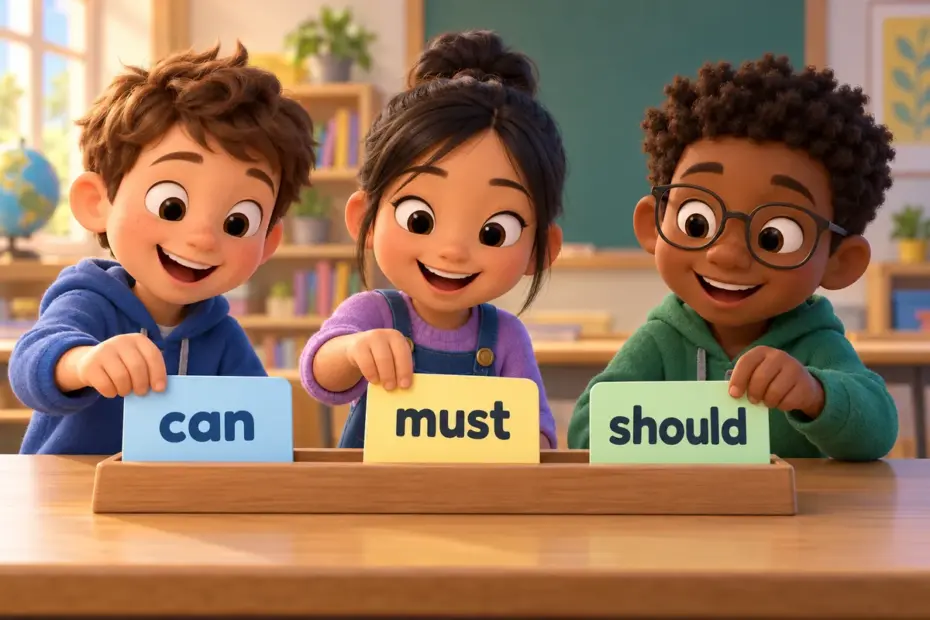
Modal verbs are the small helper verbs, such as can, must, and should, that add ideas like ability, permission, possibility, and obligation to a main verb. They never take an -s and are always followed by a base verb, so a sentence reads she must go rather than she musts goes. A short list covers almost every everyday use.
Modal verbs at a glance
- The core modal verbs are can, could, may, might, must, shall, should, will, and would.
- A modal never takes -s, so it is she can, not she cans.
- A modal is followed by a base verb, as in you must wait.
- Ought to is the one form that keeps the word to.
- The commonest error is adding to after a modal, as in must to go.
What are modal verbs?
A modal verb is a helping verb that changes the meaning of the main verb by adding ability, permission, possibility, or obligation. The modal carries no meaning on its own; it colours the verb that follows. Because the modal does not inflect, the sentence depends on it to express a stance rather than a time.
| Modal | Core meaning | Example |
|---|---|---|
| can | ability or permission | She can swim. |
| could | past ability or a soft possibility | We could try again. |
| may | permission or possibility | You may leave now. |
| might | a weaker possibility | It might rain later. |
| must | strong obligation or certainty | You must wear a helmet. |
| should | advice or expectation | You should rest. |
| will | the future or a promise | I will call you. |
| would | a conditional or a habit | I would help if I could. |
Some modals overlap, which is why a speaker chooses by tone as much as by meaning. Can and may both grant permission, but may sounds more formal; could and might both mark possibility, but might sounds the more tentative. The overlap is small, and the setting usually settles it.
How do you use a modal verb in a sentence?
A modal keeps the same form for every subject and passes the work of time and agreement to the words around it. The table shows the main patterns, from the plain statement to the question and the negative, and more everyday frames sit in modal sentence.
| Pattern | Example | What it signals |
|---|---|---|
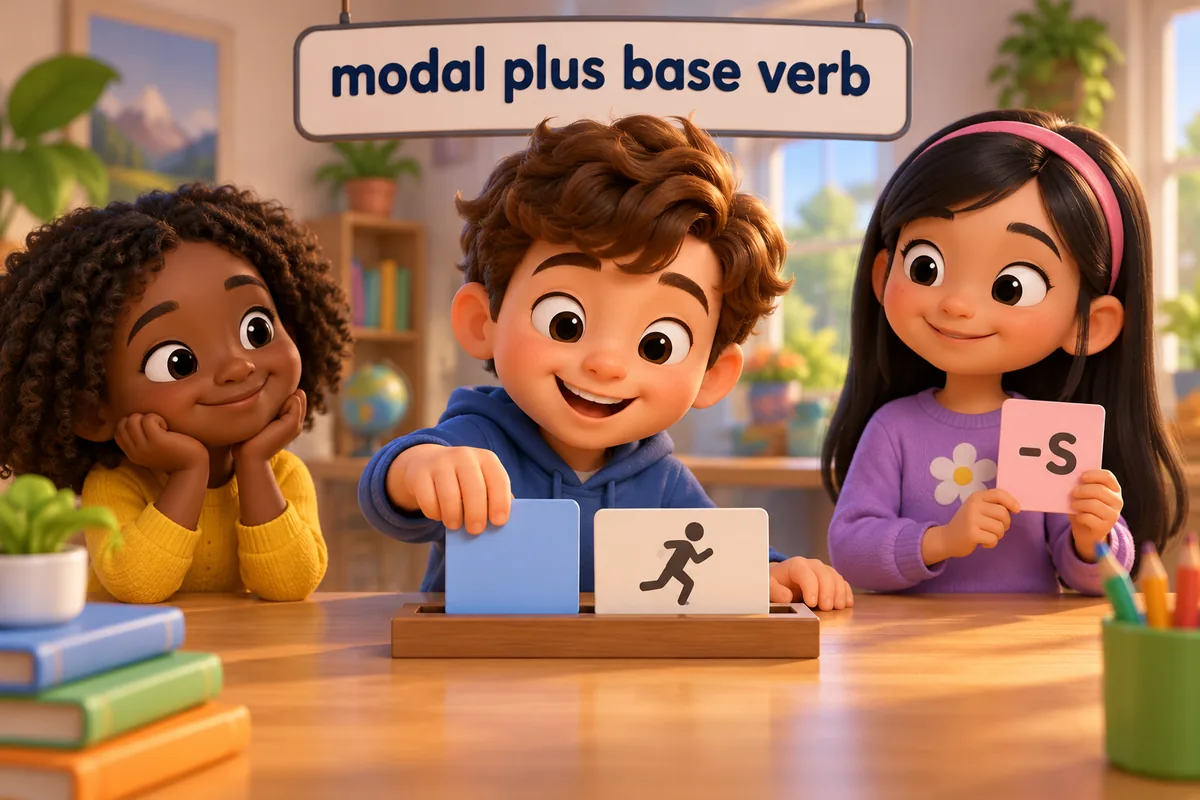
| modal + base verb | They can wait. | the standard frame |
| no -s on the modal | He can wait. | the modal never inflects |
| modal in a question | Can they wait? | the modal moves to the front |
| modal + not | They cannot wait. | the negative attaches to the modal |
| modal + have + participle | They must have left. | a deduction about the past |
Modal verbs: examples across contexts
The same small set of verbs carries the tone of a sentence in every register, from a classroom rule to a polite request. Reading them in different settings shows how much a single modal adds, and how the verbs resemble the action words gathered in verbs that start with a and verbs that start with c. The tone shifts with the modal even when the sentence stays the same: you may go grants permission, you should go gives advice, and you must go issues an order.
| Context | Sentence | Modal job |
|---|---|---|
| Classroom rule | You must hand in the essay on Friday. | strong obligation |
| Workplace email | Could you send the file today? | a polite request |
| Weather forecast | It might snow overnight. | a weak possibility |
| Parent to child | You may watch one programme. | permission |
| Notice | Visitors must not touch the exhibits. | a prohibition |
| Everyday speech | I can meet you at noon. | ability or willingness |
| Academic writing | The result may indicate a wider trend. | a careful possibility |
| Deduction | She must have missed the train. | a confident guess about the past |
| Offer | Shall I carry that for you? | an offer or suggestion |
| Advice column | You should drink more water. | a recommendation |
Which modal verb should you use?
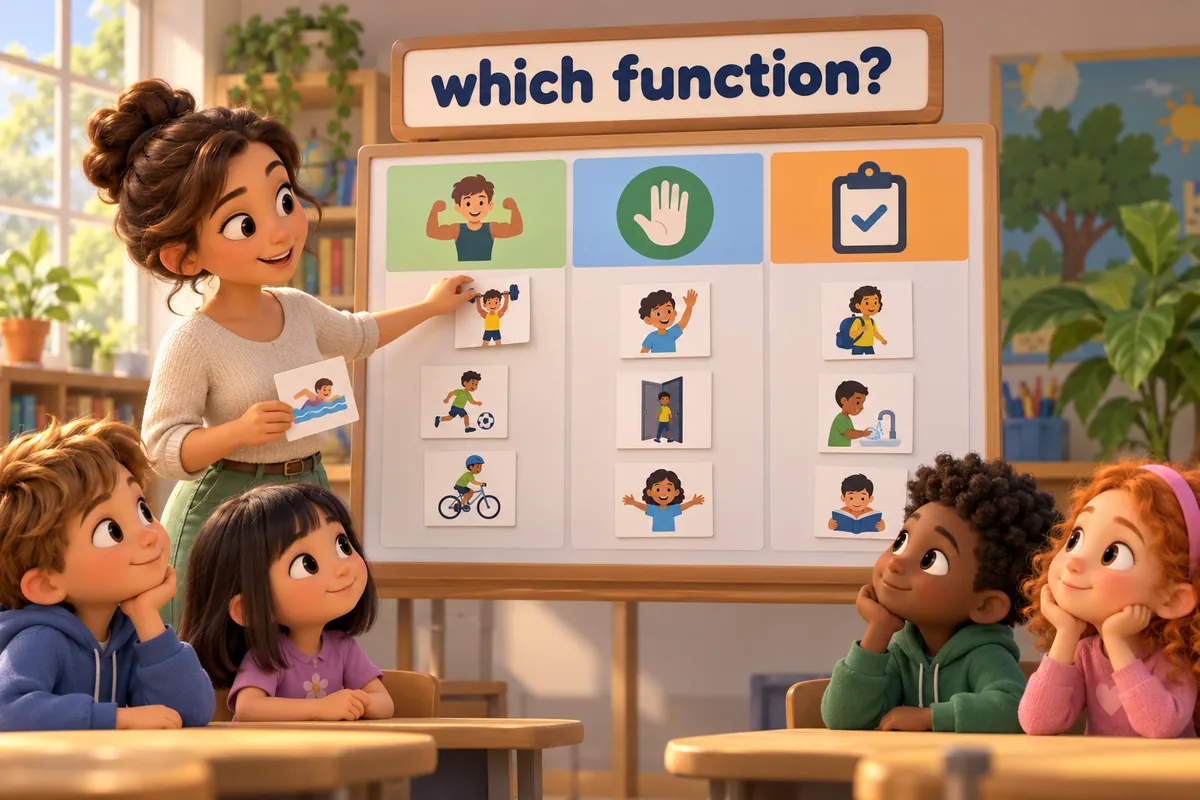
The choice follows the function a speaker wants, not the subject or the time. Obligation takes must or should, permission takes can or may, and possibility runs from could to might to may. Matching the function to the modal is the whole task.
| Function | Usual modal | Example |
|---|---|---|
| Ability | can, could | She can drive. |
| Permission | can, may | May I sit here? |
| Possibility | could, might, may | It may work. |
| Obligation | must, should | You must stop. |
| Advice | should, ought to | You ought to apologise. |
Tone also matters within one function. Must states an obligation firmly, while should offers the same point as advice, and could softens a request that can would make blunt. The same sentence changes its force as the modal changes.
Word forms and grammar of modal verbs
Modals share a set of rules that set them apart from ordinary verbs, and each rule explains a common slip. They take no -s, need no do in questions or negatives, and never appear two at a time. The table sets out the rules, and the way linking verbs such as be and seem behave is described in using adjectives with linking verbs be seem taste.
| Rule | In practice | Example |
|---|---|---|
| no -s | the same form for every subject | He can go. |
| no do-support | the modal moves for questions | Can he go? |
| base verb follows | no to, except ought to | You must wait. |
| no two modals together | use a phrase instead | She will be able to go. |
| past uses a phrase | replace the modal | I had to leave. |
Common mistakes with modal verbs
Each error below shows the wrong sentence, the corrected one, and the rule that explains the fix.
Mistake 1: adding to after a modal. Incorrect: You must to wait. Correct: You must wait. Rule: a modal takes a bare base verb, and only ought keeps to.
Mistake 2: adding -s to the modal. Incorrect: She cans swim. Correct: She can swim. Rule: a modal keeps the same form for every subject.
Mistake 3: stacking two modals. Incorrect: He might could come. Correct: He might be able to come. Rule: two modals never sit together, so a phrase replaces one.
Mistake 4: an invented past form. Incorrect: I musted leave. Correct: I had to leave. Rule: a modal has no past form, so a different phrase carries the past.
Mistake 5: do-support in a question. Incorrect: Do she can swim? Correct: Can she swim? Rule: the modal itself moves to the front.
Practice using modal verbs
Each item tests one rule from above, and the answers give the reason.
- Fill in the blank: You ___ wear a seatbelt. (must)
- Choose the better form: She (can / cans) speak three languages.
- Correct the error: They
might couldarrive late. - Build a sentence: use should to give advice about sleep.
- Spot the function: does may in may I sit here give permission or obligation?
- Fill in the blank: I ___ to leave early yesterday. (have)
Answers
- must, giving a strong obligation with a base verb after it.
- can, because a modal never takes an -s.
- They might be able to arrive late, since two modals cannot stand together.
- You should sleep for eight hours, using should for advice.
- permission, because may opens a polite request here.
- had, because the past of must is the phrase had to.
The bottom line
Modal verbs add ability, permission, possibility, and obligation to a main verb, and they do it with a fixed set of rules. Keep the modal free of -s, follow it with a base verb, and never join two of them. Match the function to the modal, and the small helper does a large share of the work.
Frequently asked questions about modal verbs
Is ought a modal verb?
Yes, ought behaves like a modal, but it is the one that keeps the word to, as in you ought to rest. It carries the sense of advice or mild obligation, close to should. Every other core modal is followed by a bare base verb.
Why can’t I say two modal verbs together?
Because a modal has no infinitive or participle form, so it cannot be chained to another modal. To combine two ideas, a phrase replaces one of them, as in she will be able to help rather than she will can help. The rule keeps the sentence grammatical.
What is the past of must and can?
Neither has a true past form, so a different phrase carries the past meaning. Must becomes had to, as in I had to leave, and can becomes could for ability or was able to for a single achievement. The modal itself never changes.
Do modal verbs need do in questions?
No. The modal moves to the front of the sentence on its own, as in can she swim rather than does she can swim. This is why a learner never adds do before a modal. The same rule keeps the negative on the modal, as in she cannot swim.