Nutcase in a sentence: “In the story, the impatient narrator calls the inventor a nutcase.” Nutcase is an informal noun for someone the speaker considers foolish or eccentric, and it can be offensive. It expresses the speaker’s judgment; it is not a medical diagnosis or a neutral description of a person.
Nutcase at a glance
- The ordinary grammatical role is a countable noun.
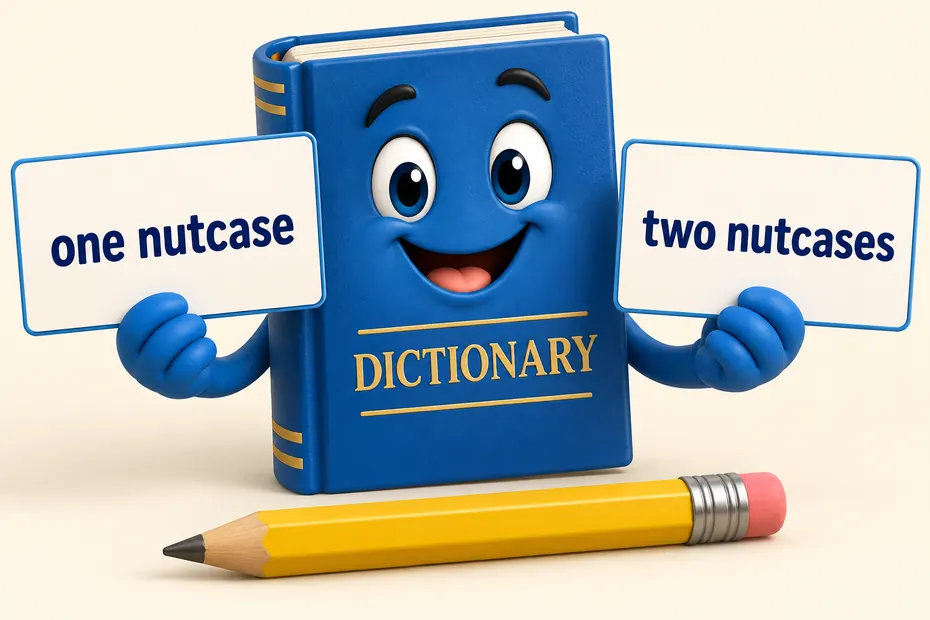
- Use a nutcase for one person and nutcases for several.
- The variant nut case also appears in dictionaries.
- The word can ridicule or insult its target.
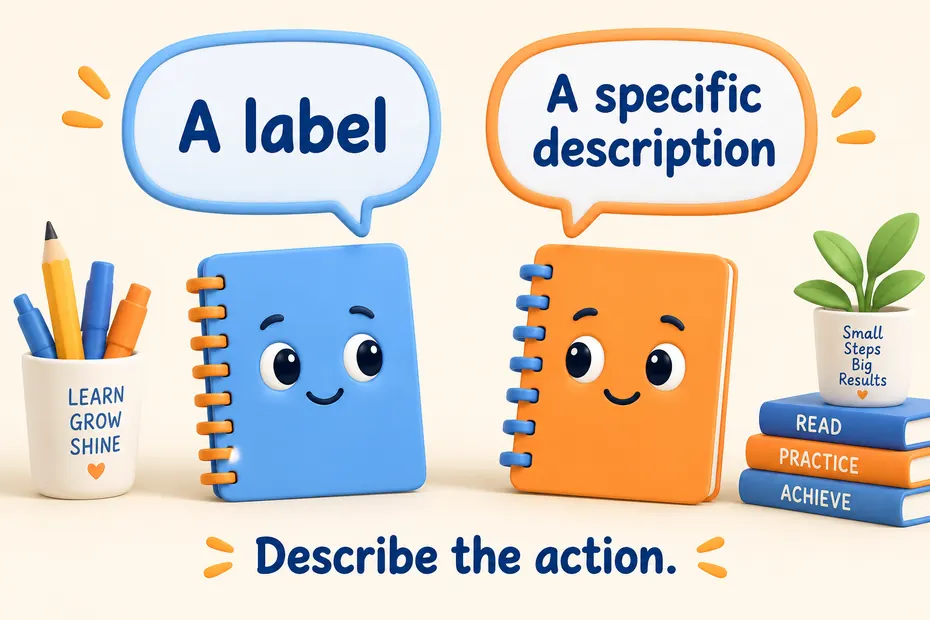
- In factual writing, describe the action rather than applying the label.
What does nutcase communicate?
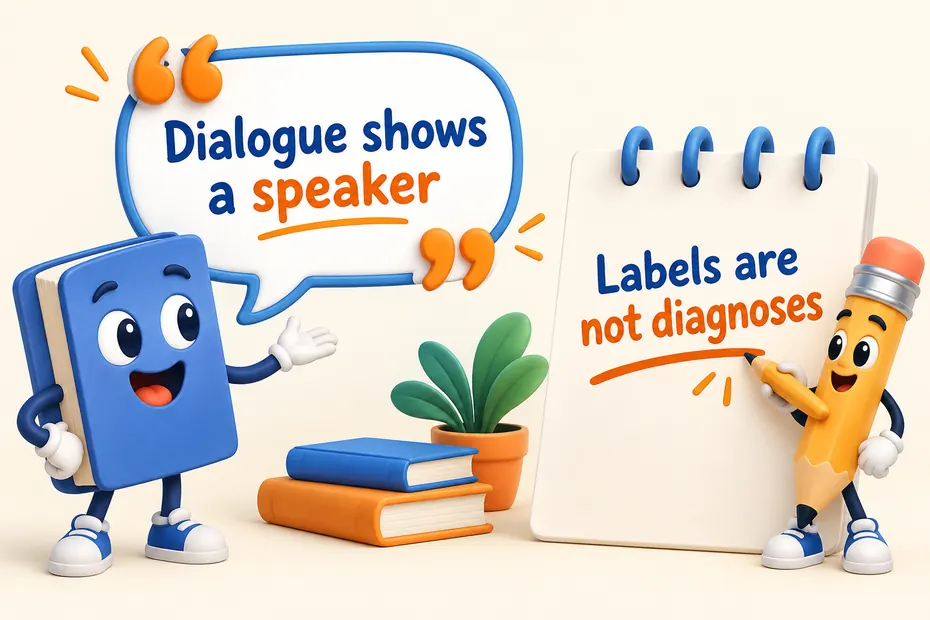
The word tells readers how a speaker evaluates someone. It does not establish whether that person has a mental health condition. A character who says “That nutcase moved the meeting again” may be frustrated or unfair; the insult does not prove anything beyond that character’s attitude.
Merriam-Webster’s nutcase entry includes foolish or eccentric behavior and marks a mental-health-related sense as sometimes offensive. The earlier introduction below describes humorous use, but that does not make the word reliably harmless. An intended joke can still offend its listener, particularly when directed at another person.
How does nutcase fit into a sentence?
As a singular count noun, nutcase normally needs a determiner. “The narrator calls him a nutcase” is grammatically complete; “The narrator calls him nutcase” usually is not. An insult shouted on its own can function as an exclamation, but that exception does not replace the usual noun pattern in a complete sentence.
| Pattern | Original teaching example | What it shows |
|---|---|---|
| A nutcase | The character describes herself as a nutcase. | Singular noun with an article. |
| The nutcase | The narrator’s phrase “the nutcase” reveals his impatience. | A known referent or quoted expression. |
| Nutcases | The editor removed the insult “nutcases” from the report. | Plural spelling. |
| Called someone a nutcase | He regretted calling his teammate a nutcase. | A label applied through the verb called. |
Some older examples below use Nutcase as though it were a name. Capitalize the word when it begins a sentence, appears in a title, or is deliberately a character’s name; ordinary mid-sentence use stays lowercase. The examples involving animals are playful extensions, rather than the clearest illustrations of its usual reference to people.
What can you write instead?
Choose a replacement that identifies the relevant behavior. If someone interrupted a lesson, write “The student interrupted the lesson.” If a plan was unsafe, explain the action: “The plan required crossing the road without checking traffic.” Neither sentence makes a sweeping claim about the person’s character or health.
For positive unusualness, imaginative or unconventional may fit. For a questionable choice, reckless may fit only when the behavior supports that description. These are not automatic synonyms: a creative costume, an unpopular opinion, and a dangerous stunt are different things. Match the replacement to the event.
Examples for understanding tone
- The reviewer said the narrator’s use of “nutcase” made him sound hostile.
- She apologized for calling her brother a nutcase during the argument.
- The dialogue includes the word “nutcase,” but the author does not endorse the insult.
- Our editor replaced “nutcase” with a description of the person’s actions.
- The actor emphasized “nutcase” to show the character’s anger.
- The teacher explained why the label could hurt someone’s feelings.
These examples teach the word without presenting an insult as a model for speaking to classmates. The older section headed “For Kids” is preserved below, but its heading should not be read as a recommendation to call children or friends nutcases. For classroom practice, quoted discussion and respectful alternatives give clearer context.
Frequently asked questions about nutcase
Is nutcase always an insult?
The effect depends on context and relationships, and some speakers use it jokingly about themselves. That possibility does not make it neutral. When another person is the target, assume it may sound insulting. A vocabulary lesson should identify the word’s social force as well as its dictionary meaning.
Can nutcase diagnose a condition?
No. The word is an informal judgment, not the name of a diagnosis. Do not infer someone’s health from an insult in a conversation, a story, or a headline. In factual writing, report the behavior you can describe and keep medical claims separate from a speaker’s personal reaction.
Is nut case also correct?
Yes. Merriam-Webster lists the two-word variant nut case as well as nutcase, with the corresponding plurals nut cases and nutcases. Pick one spelling and keep it consistent in a piece of writing. Neither spelling changes the need to consider whether the expression is appropriate for the audience.
Should I use nutcase in a formal report?
Usually a specific description will serve the reader better. “The customer shouted at the receptionist” records an action; “The customer was a nutcase” supplies a derogatory evaluation. If the word itself is evidence, quote and attribute it accurately so readers can distinguish the source’s language from your own judgment.
More nutcase sentence examples

Ever encountered a nutcase in your daily interactions? A nutcase is a term used to describe someone who behaves in a crazy or irrational manner, often displaying odd or unpredictable behaviors. Whether it’s a quirky colleague at work or an eccentric neighbor down the street, nutcases can add an element of unpredictability to our lives.
While the term “nutcase” may come off as negative or derogatory, it is usually used humorously to describe someone who is a bit kooky or offbeat. It’s important to remember that everyone’s quirks and eccentricities can make for interesting encounters, even if they occasionally leave us scratching our heads.
7 Examples Of Nutcase Used In a Sentence For Kids
- Nutcase wears funky hats to school.
- My friend thinks I am a nutcase when I dance funny.
- The monkey at the zoo is a real nutcase.
- The silly clown was acting like a nutcase.
- I pretended to be a nutcase and made everyone laugh.
- The squirrel in the park is a real nutcase.
- That joker is such a nutcase!
14 Sentences with Nutcase Examples
- Nutcase! I can’t believe he pulled that crazy stunt during the college fest.
- Did you hear about the nutcase who tried to sneak into the exam hall with cheat sheets written on his arms?
- I have a feeling our new roommate is a total nutcase – he stays up all night playing loud music.
- I heard the class topper got into a heated argument with some nutcase who challenged his knowledge.
- That guy in the front row who always argues with the professor is a total nutcase.
- Our college captain is a bit of a nutcase on the field, but his passion for the game is undeniable.
- Have you seen the graffiti in the men’s restroom? Some nutcase has been writing weird messages all over the walls.
- I can’t believe you did that nutcase experiment for your science project – you might actually win the competition!
- Our group presentation was going so well until that nutcase started rambling about aliens and conspiracy theories.
- We need to avoid that nutcase professor for our elective course next semester – he’s notorious for his tough assignments.
- That nutcase who always hangs out at the cafeteria has the wildest stories about his adventures during holidays.
- I heard there was a nutcase who streaked across the campus during the sports meet last week.
- The student council president is a bit of a nutcase – he always has some outlandish proposal for college events.
- I can’t believe how many nutcases we have in our class – there’s never a dull moment with them around!
How To Use Nutcase in Sentences?
To use the word Nutcase in a sentence, first, you need to understand its meaning. Nutcase is a slang term used to describe someone who is eccentric, eccentric, or crazy.
Here is a simple guide on how to correctly use Nutcase in a sentence:
-
Identify the context: Think about a situation where someone’s behavior seems odd or irrational.
-
Construct the sentence: Incorporate the word Nutcase into your sentence to describe the person’s eccentric behavior. For example, “He is such a Nutcase for believing that the moon is made of cheese.”
-
Ensure proper use: Make sure the sentence makes sense and accurately conveys the meaning of Nutcase.
-
Check for tone: Consider the tone of your sentence. The word Nutcase can be seen as derogatory, so use it cautiously.
Remember to use Nutcase in a respectful and appropriate manner. It’s essential to be mindful of the context in which you are using the word to avoid offending anyone. With these simple steps, you can confidently incorporate Nutcase into your vocabulary and conversations.
Conclusion
In conclusion, it is evident from the examples provided that a “nutcase” is often used to describe someone who is irrational, eccentric, or mentally unstable. This term is typically used in informal settings to convey a sense of disbelief or frustration towards an individual’s erratic behavior or unconventional beliefs. While it can be seen as a derogatory term, it is essential to handle such language with caution and sensitivity in order to avoid stigmatizing those with mental health issues.
By examining different contexts in which the term “nutcase” is used, it becomes clear that the word carries negative connotations and may perpetuate harmful stereotypes about mental health. It is important to promote understanding and empathy towards individuals who may be struggling with mental health challenges, rather than resorting to stigmatizing language that can further marginalize them.