Old English pronunciation follows the letters quite closely, so a reader sounds out most words instead of guessing them. The vowels are read as in Latin, the letter c is hard before a back vowel and soft before a front one, and a small mark over a vowel shows that it is held long.
Old English pronunciation at a glance
- The vowels are read close to their Latin values, so a is ah and i is ee.
- The letter ae, called ash, sounds like the a in cat.
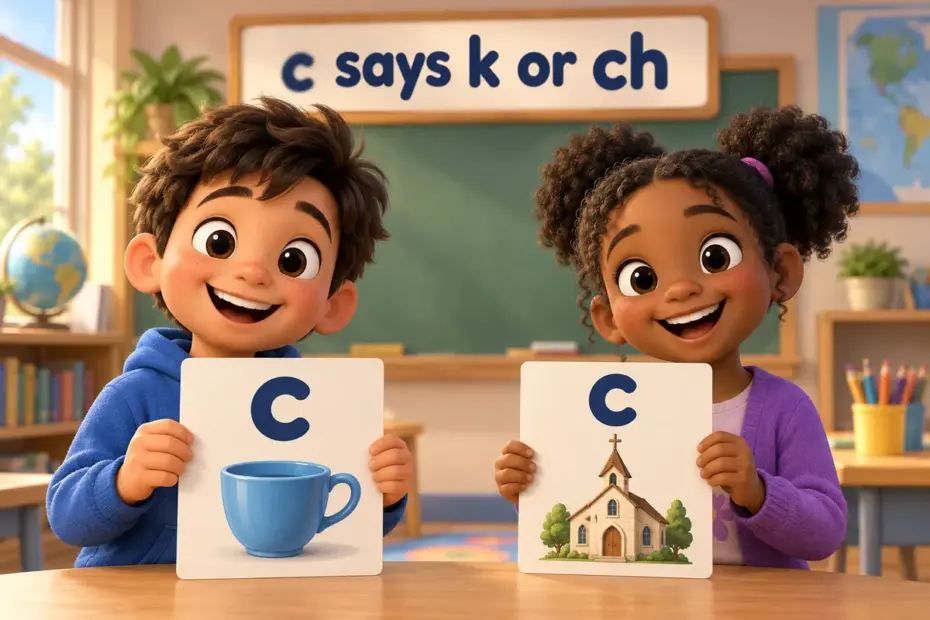
- The letter c is hard as k before a, o and u, and soft as ch before i and e.
- The letter sc is read as sh, as in scip for ship.
- The commonest error is reading every c as a hard k.
What sounds does Old English pronunciation use?
Old English pronunciation is the reconstructed sound system of the language spoken before about 1150, and it rests on a small set of regular rules. Each letter keeps a value, so the spelling is a reliable guide. The describing words for anything distant appear in adjectives for old, and the table gives the main sounds.
| Letter | Sound | Example |
|---|---|---|
| a | ah, as in father | stan, meaning stone |
| ae | a, as in cat | waes, a form of was |
| e | eh, as in bed | helpan, meaning help |
| i | ee, as in see | is, a form of is |
| o | oh, as in more | god, meaning good |
| u | oo, as in food | hus, meaning house |
| y | rounded ee, like a French u | fyr, meaning fire |
| c before a, o, u | hard k | cuman, meaning come |
| c before i, e | soft ch | cild, meaning child |
| sc | sh | scip, meaning ship |
| cg | dg, as in edge | ecg, meaning edge |
| th | th, as in thin or this | thing, meaning thing |
The table gives the main values, and the two pairs sc and cg are worth fixing early, because they change the shape of a whole word. Once those pairs are steady, a reader can sound out a line without stopping at every letter.
How do you read the vowels and consonants?
Two habits do most of the work: keep the vowel values steady, and watch c and g for a soft sound before a front vowel. A form that has dropped out of speech is often called old-fashioned in a sentence.
| Pattern | Example | What it signals |
|---|---|---|
| short vowel | god | a plain clipped sound |
| long vowel | god with a macron | the sound is held longer |
| soft c before a front vowel | cild | the letter sounds like ch |
| hard c before a back vowel | cuman | the letter sounds like k |
| consonant pair sc | scip | the pair sounds like sh |
| stress on the first syllable | morgen | the first part is stronger |
Vowel length is the subtlest point, since a short and a long vowel can separate two different words. A learner who marks the long vowels first will read the rest of a line with far fewer corrections than one who ignores them.

Old English pronunciation across contexts
The sound rules matter in reading aloud, in study and in translation, and each setting asks for a different level of care. A later idiom that uses the same word appears in good old days in a sentence.
| Context | Example sentence | Why this works |
|---|---|---|
| Reading aloud | The reader sounded the two letters in scip as sh. | applies the sc rule |
| Classroom | Read c as k before a, o and u. | states the hard rule plainly |
| Study note | A macron marks a long vowel in a modern edition. | explains the mark |
| Translation task | The letter ae is read like the a in cat. | gives a familiar match |
| Language blog | The letter y needs rounded lips, as in French. | describes the lip shape |
| Poetry reading | The first syllable of morgen takes the stress. | marks the stress rule |
| Dictionary entry | The entry gives a macron over the long vowel. | records vowel length |
| Exam question | Name one sound of the letter c. | asks for a single rule |
| Conversation | The word cild begins with a soft ch. | names the sound directly |
| Reading guide | Keep every vowel value short and clear. | sets a steady habit |
Which reading should you use?
The choice depends on whether a reader wants a careful reconstruction or a simple guide. A phrase about distant ages sits in as old as the hills in a sentence.
| Situation | Better choice | Why |
|---|---|---|
| A careful reconstruction | long and short vowels kept apart | the length can change a word |
| A first reading | plain Latin vowel values | they are easy to remember |
| A word with c before e | a soft ch | the front vowel softens the letter |
| A word with sc | sh | the pair shifts to a single sound |
| A modern loan word | the modern sound | the borrowed form follows present English |
| A poem | steady stress on the first syllable | the rhythm becomes regular |
Word forms and letters of Old English
The letters themselves carry the sound rules, and three of them need a note. A related modern idiom sits in old geezer in a sentence.
| Form | What it is | Example |
|---|---|---|
| ae | the letter ash | waes, a form of was |
| th | the letters thorn and eth, both read th | thing and this |
| macron | a mark for a long vowel | a line over the vowel |
| sc | a consonant pair read sh | scip, meaning ship |
| cg | a consonant pair read dg | ecg, meaning edge |
| double consonant | a sound held longer | a held sound in the middle of a word |
Common mistakes in reading Old English
Mistake 1: reading every c as a hard k. Incorrect: cild with a k sound. Correct: cild with a soft ch sound. Rule: c is soft before i and e.
Mistake 2: reading sc as two sounds. Incorrect: scip as s-kip. Correct: scip as ship. Rule: the pair sc stands for a single sh sound.
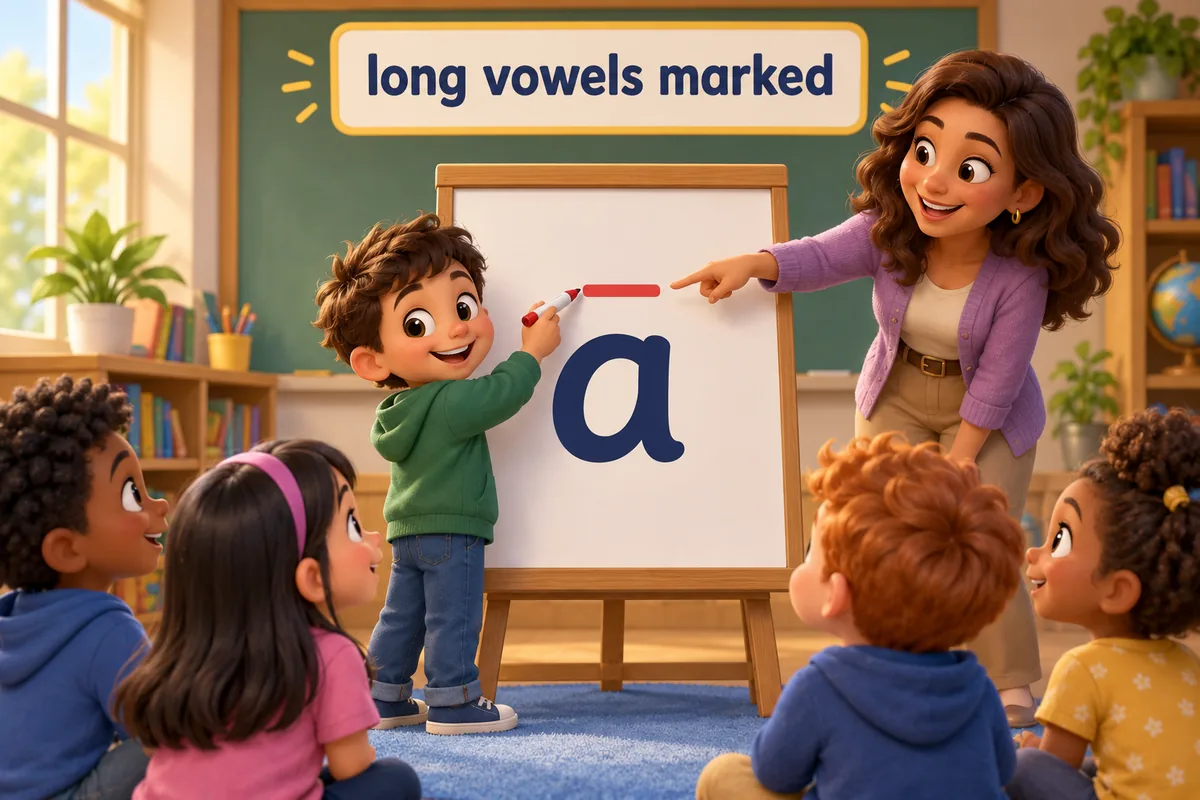
Mistake 3: ignoring the macron. Incorrect: reading a long vowel as a short one. Correct: holding the vowel longer. Rule: the mark shows that the sound is long.
Mistake 4: giving the letter ae a modern sound. Incorrect: reading ae as ay. Correct: reading ae like the a in cat. Rule: ash is a short front vowel.
Mistake 5: stressing the last syllable. Incorrect: stress on the final part of morgen. Correct: stress on the first part of morgen. Rule: most Old English words take the stress early.
Practice pronouncing Old English
- Fill in the blank: The letter pair sc is read as ___.
- Choose the better sound: Before i and e, c is (hard k / soft ch).
- Correct the error: cild is read with a hard k.
- Build a sentence: use macron about a long vowel.
- Spot the register: which suits a reading guide, (a) just say it how you like, or (b) keep each vowel value steady?
- Fill in the blank: The letter ae is called ___.
Answers
- sh, because the pair stands for a single sound as in scip.
- soft ch, because a front vowel softens the letter c.
- cild is read with a soft ch; c is hard before a, o and u.
- A macron marks a long vowel, so a reader holds the sound longer.
- (b), because a reading guide keeps the values steady.
- ash, because the joined letters are named ash.
The bottom line
Old English pronunciation rewards a steady method: read the vowels as in Latin, soften c and g before a front vowel, and give sc the sound of sh. A macron marks a long vowel, and the stress usually falls on the first syllable. Follow the letters rather than modern habit, and most words sound out cleanly.
Frequently asked questions about the sounds
How do you pronounce Old English vowels?
The vowels keep values close to Latin, so a is ah, e is eh, i is ee, o is oh and u is oo. The letter y needs rounded lips, as in a French u, and the letter ae is read like the a in cat. Length is marked with a small line.
Why does c have two sounds?
The sound of c depends on the vowel that follows it. Before a, o and u the letter is hard, as in cuman, but before i and e it softens to a ch, as in cild. The same pattern survives in many modern words with a soft and hard c.
What does a macron mean in Old English?
A macron is the small line printed over a vowel in modern editions, and it marks a long sound. It is an editorial sign rather than a mark from the manuscripts, so a reader should treat it as a guide to holding the vowel longer.
Is Old English pronounced like modern German?
No, but the two share habits, because both keep fairly steady vowel values and a similar stress on the first syllable. Old English also has sounds that German lacks, such as the joined letter ash. Treat the similarity as a helpful hint, not a rule.