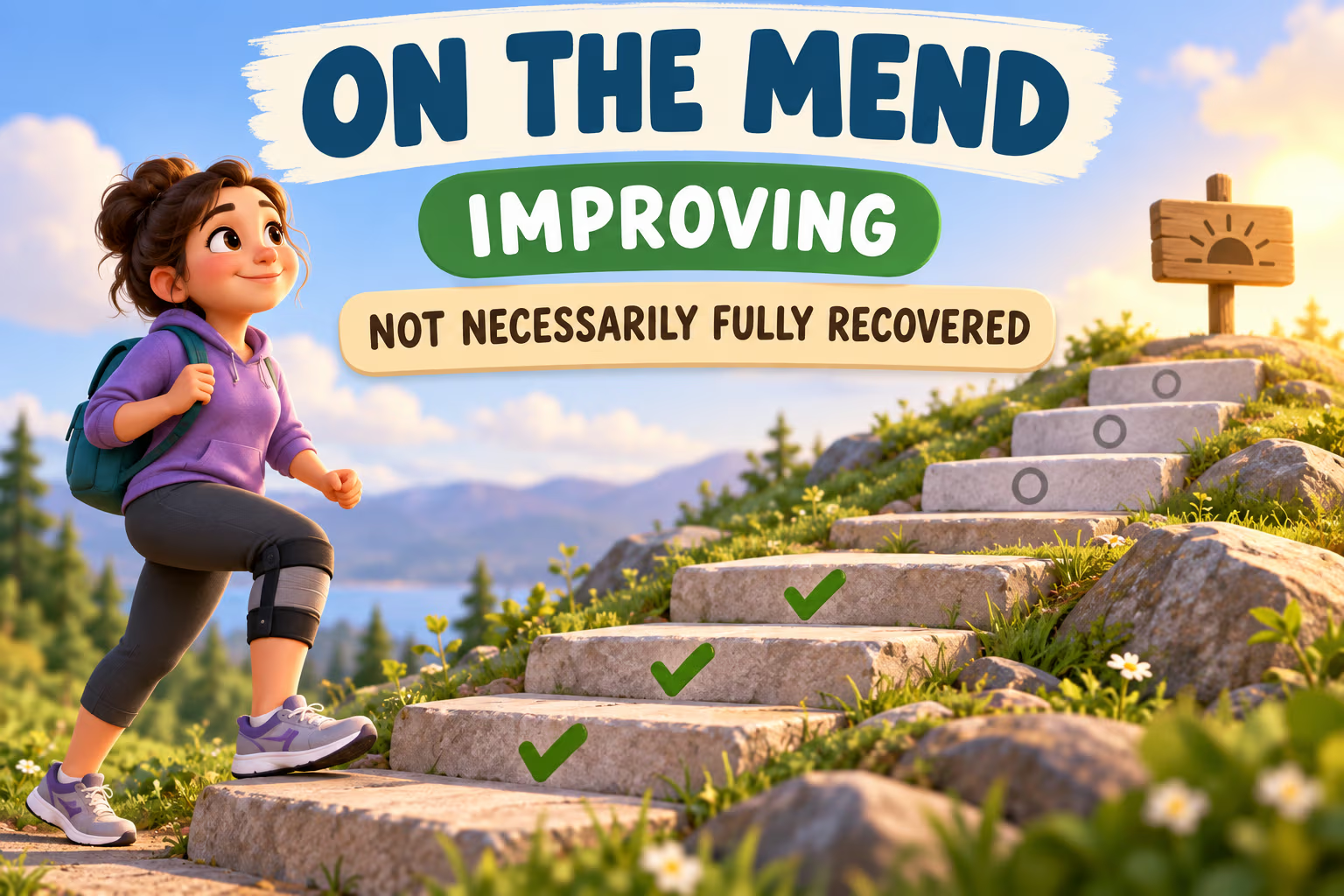
“On the mend” means gradually recovering or improving after illness, injury, or a difficult period. The informal phrase can describe a person’s health or a situation such as a relationship or economy. It signals progress, not necessarily a complete recovery.
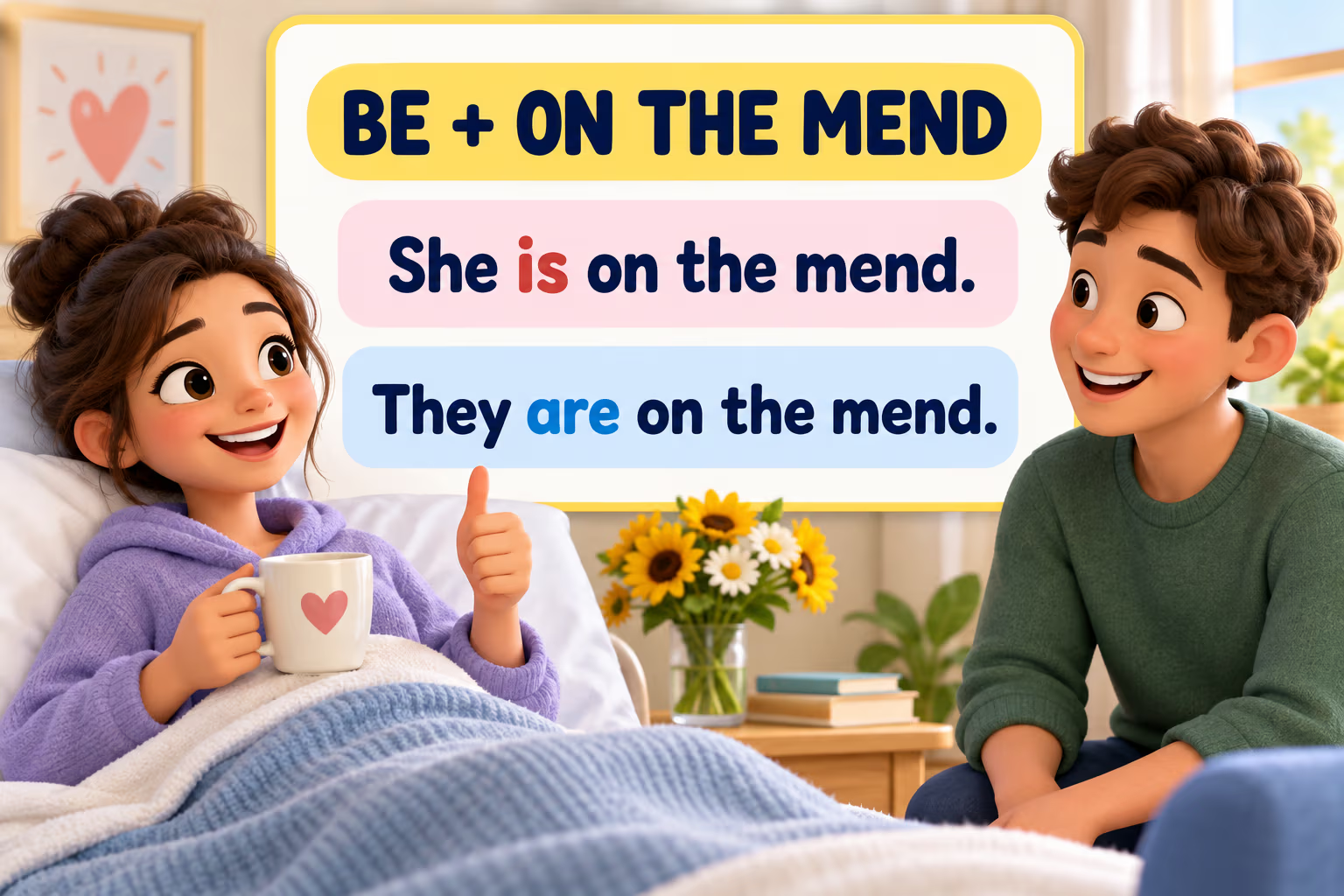
- Core pattern: subject + a form of be + on the mend.
- Health: someone is recovering after an illness or injury.
- Figurative use: a relationship, project, or situation is improving after trouble.
- Register: informal; choose “recovering” or “improving” in more formal writing.
- Nuance: improvement may be underway even if the person or situation is not fully back to normal.


What does “on the mend” mean?
“On the mend” is an informal idiom for getting better after illness or injury, and it also describes a situation improving after a difficult period. Cambridge defines the health sense in terms of getting better after illness or injury; Collins records both health and broader situation uses. The phrase is about a positive direction of change, not proof that recovery is complete.
For example, “Maya is on the mend after the flu” reports gradual improvement. In “Their relationship is on the mend,” the subject is not a person’s health: it is the relationship that has begun to improve. The expression does not say why the change happened, how quickly it will continue, or whether a full return to the earlier condition is certain.
How do you use “on the mend” in a sentence?
Place the phrase after a form of be: subject + am/is/are/was/were/has been + on the mend. The verb changes with the subject and the time being described; the words on the mend stay together.
| Time or subject | Pattern | Example |
|---|---|---|
| Present, singular | is on the mend | “My ankle is on the mend.” |
| Present, plural | are on the mend | “The repairs are on the mend” is not idiomatic; say “The building is being repaired” or “The situation is improving.” |
| Past | was/were on the mend | “After a few quiet days, Jo was on the mend.” |
| Present perfect | has/have been on the mend | “The team has been on the mend since the new plan began.” |
The phrase can follow a linking verb, as in “I feel as though I’m on the mend,” or appear after a time phrase, as in “By Friday, the company was on the mend.” It is not normally used as a direct object: write “She is recovering,” not “She is on the mend quickly.”
When can the phrase describe health or a situation?
Use on the mend for health recovery and for figurative improvement after difficulty. In health contexts, the subject is the person or sometimes a body part; in figurative contexts, the subject is the relationship, business, economy, or other situation being discussed.
| Context | Natural example | What is improving? |
|---|---|---|
| Illness | “After several days at home, Lee is on the mend.” | Lee’s health |
| Injury | “Her sprained wrist is on the mend.” | The wrist’s condition |
| Relationship | “After they talked, their friendship seemed to be on the mend.” | The relationship |
| Organization or economy | “The shop’s finances are slowly on the mend.” | The financial situation |
| Project or team | “With the main issue fixed, the project is on the mend.” | The project’s progress |
Cambridge and Collins mark the expression informal. In a report, clinical document, or formal business update, a more precise choice may be recovering, improving, or showing signs of recovery. The idiom is useful in everyday conversation because it is warm and concise, but it can be too vague when the reader needs measurable status or a specific cause.
Examples with “on the mend”
- “Grandpa is on the mend and hopes to join us for dinner next week.”
- “The runner’s knee is on the mend, though she is still following her clinician’s advice.”
- “After a difficult month, the family’s finances are finally on the mend.”
- “The neighbors’ relationship was on the mend after they resolved the noise dispute.”
- “Once the team replaced the faulty part, the delayed project was back on the mend.”
- “I’m feeling better, but I’m not fully recovered yet; I’m still on the mend.”
These examples use a clear subject followed by be and the idiom. A useful editing check is to ask: What exactly is improving? If the sentence does not make that subject clear, name it directly.
Have you ever heard someone mention that they’re “on the mend”? This expression is commonly used to describe the process of recovering or getting better from an illness, injury, or setback. When someone is on the mend, it means they are making progress towards healing and feeling healthier.
You might hear this phrase used in various contexts, from friends talking about a cold they’re recovering from, to athletes discussing a minor injury they are getting over. Understanding the phrase “on the mend” can help you empathize with others going through a rough patch and show support as they work towards full recovery.
7 Examples Of On The Mend Used In a Sentence For Kids
- On the mend means feeling better after being sick or injured.
- Some rest and medicine can help you get on the mend quickly.
- It’s important to take care of yourself when you are on the mend.
- Your body needs time to heal when you are on the mend.
- Eating nutritious food can help you stay strong while you are on the mend.
- Remember to listen to your doctor’s advice when you are on the mend.
- On the mend is a good sign that your body is getting better.
14 Sentences with On The Mend Examples
- On the mend after a stressful exam week and looking forward to the upcoming holidays.
- I noticed my roommate has been on the mend since the coaching classes started.
- The library has a designated quiet area for students who are on the mend.
- I heard that the professor is on the mend after falling ill last week.
- Let’s plan a movie night once you’re on the mend from your cold.
- Are you on the mend from the flu that’s been going around campus?
- It’s great to see you looking like you’re on the mend after that awful group project last semester.
- The study group is meeting tomorrow to help each other get on the mend before finals.
- I should be on the mend soon once I finish my treatment at the college clinic.
- After a long semester, I’m finally on the mend and ready for a break.
- I’ll be on the mend after I take a short nap before the night out.
- The campus counselor is always available if you need help while you’re on the mend.
- Join us for lunch once you’re on the mend from your food poisoning last night.
- I’ve been on the mend from the stress of balancing classes, internships, and extracurricular activities.
How To Use On The Mend in Sentences?
On The Mend is a phrase used to describe someone or something that is recovering or improving after a setback, illness, or injury.
To use On The Mend in a sentence, you can say something like, “After a few weeks of rest and medication, Jane is finally on the mend and feeling much better.”
You can also use On The Mend in a more general sense to describe the progress of a situation or project. For example, “Despite facing some challenges, the company is on the mend and is expected to return to profitability soon.”
When using On The Mend, it is important to highlight the idea of improvement or recovery after a difficult period. You can use it in both personal and professional contexts to convey the message that things are getting better or back on track.
Remember to follow the structure of subject + verb + on the mend + additional information to ensure that the sentence is clear and easy to understand. With practice, you will become more comfortable incorporating On The Mend into your conversations to accurately describe progress or improvement.
Conclusion
In summary, “on the mend” is a common phrase used to describe someone who is recovering from an illness or injury and showing signs of improvement. The examples provided illustrate how this phrase can be used in different contexts to convey the idea of gradual healing and progress towards better health. Whether it’s a physical injury, a medical condition, or a personal setback, being “on the mend” signifies a positive trajectory towards full recovery and well-being.
Overall, “on the mend” encapsulates the idea of overcoming obstacles and moving towards a brighter, healthier future. It serves as a hopeful reminder that even during challenging times, there is the potential for improvement and growth. As a familiar expression, it conveys optimism and resilience in the face of adversity.
How should you read the preserved examples?
The original examples below are kept intact as published. Some are useful illustrations of the health sense, while a few are incomplete or attach the idiom to a subject that does not naturally recover. For instance, a study group does not usually “get on the mend”; the people or the group’s progress can improve. Use the additional examples above as clearer models, and treat recovery claims as ordinary language rather than medical guidance.
The idiom also does not promise a quick result. In particular, “on the mend quickly” adds a speed claim that the phrase itself does not contain; recovery time depends on the person and circumstances. The phrase should not replace a clinician’s assessment or imply a diagnosis.
Frequently asked questions
Is “on the mend” formal or informal?
“On the mend” is informal, according to Cambridge and Collins. It suits conversation and friendly updates. For formal reports, choose a more specific phrase such as “recovering,” “improving,” or “showing signs of recovery,” and name the evidence when the reader needs a precise status.
Does “on the mend” mean fully recovered?
No. “On the mend” indicates that improvement or recovery is underway. It does not by itself say the person is completely well, the injury has healed, or the situation has returned to normal. Add details when the degree of recovery matters.
Can “on the mend” describe a relationship?
Yes. A relationship, friendship, or other difficult situation can be “on the mend” when it is improving. Collins gives this broader figurative sense, and Oxford Learner’s Dictionary includes an example about a relationship that seems to be on the mend.
What is the sentence pattern for “on the mend”?
Use a subject, a form of be, then on the mend: “I am on the mend,” “He was on the mend,” or “Their relationship is on the mend.” Change be for person and tense; keep the idiom phrase intact.
Sources
- Cambridge Dictionary, “be on the mend” — informal health-recovery meaning.
- Cambridge Business English, “mend” — improvement after difficulty or failure.
- Collins Dictionary, “on the mend” — health and figurative uses.
- Oxford Advanced Learner’s Dictionary, “mend” — relationship example.
In short, “on the mend” is a concise, informal way to say that health or a difficult situation is improving. Choose a clear subject, use the right form of be, and remember that progress does not necessarily mean a complete recovery.