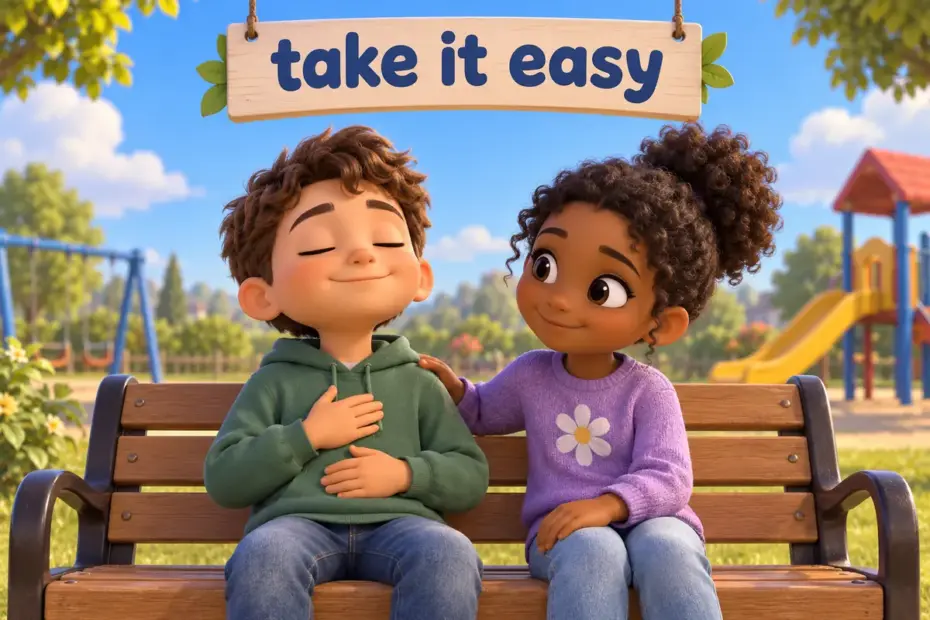
Other ways to say calm down run from take it easy and settle down to take a deep breath, and the right choice depends on who is upset. A blunt command can raise the temperature, while a soft phrase or a suggestion helps a person settle. The tables below group the phrases by tone and by setting.
Other ways to say calm down at a glance
- Take it easy and settle down are gentle, everyday choices.
- Take a deep breath and take a moment are practical and neutral.
- Keep calm and compose yourself suit formal or public settings.
- Chill out and simmer down are informal and easy to misread.
- The commonest error is opening with a blunt calm down, which often backfires.
What are other ways to say calm down?
Other ways to say calm down are phrases that help a person settle, and they differ in tone more than in meaning. The base phrase appears in calm down in a sentence, while the steady mood it names appears in adjectives for calm. The table lists twelve phrases with the tone each one carries.
| Phrase | Tone | Best for |
|---|---|---|
| take it easy | gentle and friendly | a friend who is anxious |
| settle down | calm but firm | a child who is over-excited |
| take a deep breath | soothing and practical | someone who is panicking |
| take a moment | polite and neutral | a colleague in a meeting |
| slow down | practical | a fast, rushed speaker |
| keep calm | steady and formal | a public announcement |
| compose yourself | formal | before a speech or interview |
| collect yourself | formal | after a shock |
| ease up | informal | a friend working too hard |
| quiet down | direct | a noisy room |
| simmer down | informal | someone who is angry |
| chill out | very informal | a close friend |
No single phrase is always right, so a speaker usually reads the moment first and then chooses. A word that names a concrete action, such as breath or moment, often lands better than a word that names a feeling.
How do you soften the phrase in a sentence?
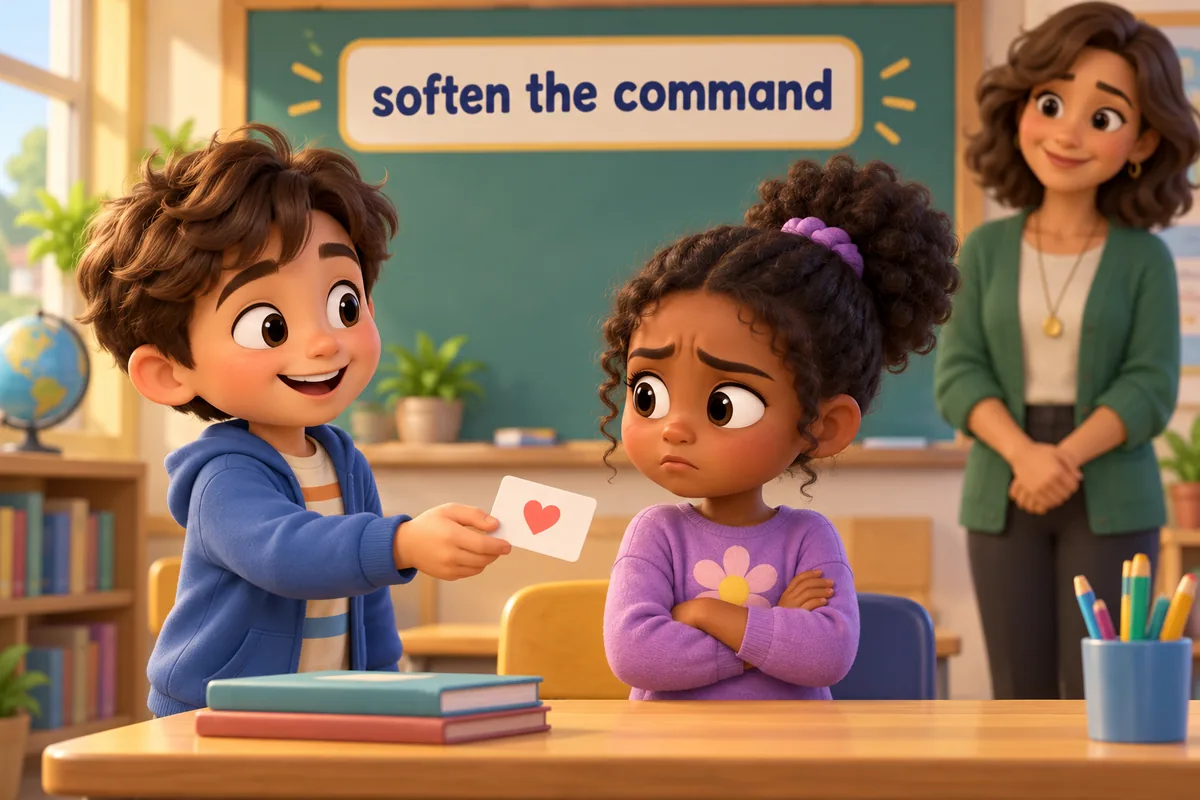
A command lands more gently when it becomes a suggestion or a shared decision, and a few small changes do most of the work. Other phrasal verbs built on down sit beside this set, such as back down in a sentence and batten down in a sentence.
| Pattern | Example | What it signals |
|---|---|---|
| soft imperative | Take it easy. | a direct but gentle command |
| add please | Take a deep breath, please. | politeness that softens the command |
| you could | You could take a moment. | a suggestion instead of a command |
| question form | Shall we slow down? | invites a joint decision |
| we instead of you | Let us take a moment. | avoids singling a person out |
Each change moves the sentence one step away from a command, so a writer can pick the level of firmness that the moment needs.
Other ways to say calm down across contexts
The phrases appear in classrooms, offices, hospitals and homes, and the setting decides how formal the wording becomes.
| Context | Example sentence | Why this works |
|---|---|---|
| Classroom | Settle down, everyone, and open your books. | firm but calm for a group |
| Office | Let us take a moment before we answer. | polite and shared |
| Hospital | Take a deep breath while I check. | practical and soothing |
| Home | Take it easy, I am here now. | warm and reassuring |
| Public address | Please keep calm and follow the signs. | steady and formal |
| Sports talk | Slow down and pick your pass. | direct and practical |
| Interview | Compose yourself, then begin your answer. | formal and confident |
| Argument | Let us both simmer down and talk. | informal but fair to both sides |
| Phone call | Quiet down a moment, I cannot hear you. | direct in a shared room |
| Chat | Chill out, it is only a game. | very informal with a close friend |
Which phrase should you use?
The choice turns on the relationship and the setting, and on how upset the listener is. A phrase built on down, such as bear down in a sentence, belongs to a different set and would not work here.
| Situation | Better choice | Why |
|---|---|---|
| An anxious friend | take it easy | the phrase is warm and low-pressure |
| A panicking stranger | take a deep breath | the phrase gives a clear next step |
| A colleague in a meeting | take a moment | the phrase is polite and neutral |
| A public announcement | keep calm | the phrase is formal and steady |
| A close friend who is angry | simmer down | the informal tone fits a close bond |
| A job interview | compose yourself | the phrase suits a formal setting |
A short phrase works best when it comes with a calm voice and steady eye contact, since the tone carries as much as the words. When the listener is a stranger, the safest choice is a neutral option such as take a moment or take a deep breath.
Word forms and grammar of calm down
The base phrase is a phrasal verb, so the particle can move around a pronoun object. This is the point most learners miss, and it decides where the word down sits.
| Form | Part of speech | Example |
|---|---|---|
| calm down | phrasal verb, intransitive | He calmed down after a minute. |
| calm someone down | phrasal verb, separable | She calmed him down. |
| calm | adjective | His voice stayed calm. |
| calmly | adverb | She spoke calmly. |
| take it easy | fixed phrase | Take it easy for a day. |
| chill out | phrasal verb, intransitive | They chilled out after the game. |
Common mistakes with the phrases
Mistake 1: opening with a blunt command. Incorrect: Calm down! as a first line. Correct: Take a deep breath. Rule: a command can raise the tension it tries to lower.
Mistake 2: putting a pronoun after the particle. Incorrect: Calm down him. Correct: Calm him down. Rule: a pronoun object goes between the verb and the particle.
Mistake 3: using a very informal phrase in a formal setting. Incorrect: Chill out, sir. Correct: Let us take a moment. Rule: match the phrase to the register.
Mistake 4: sounding patronizing. Incorrect: Relax, it is not a big deal. Correct: Take your time, I understand. Rule: a phrase that dismisses the worry can offend.
Mistake 5: using a phrase that fits a different meaning. Incorrect: He batted down when the argument started. Correct: He backed down when the argument started. Rule: each phrasal verb keeps its own sense, so down does not make them interchangeable.
Practice using the phrases
- Fill in the blank: Take a deep ___, and tell me what happened.
- Choose the better phrase: To a close friend who is angry, say (simmer down / compose yourself).
- Correct the error: Calm down him before the meeting.
- Build a sentence: use take a moment in an office setting.
- Spot the register: which suits a public announcement, (a) chill out, or (b) please keep calm?
- Fill in the blank: A formal phrase for settling yourself before a speech is ___ yourself.
Answers
- breath, because take a deep breath gives a clear next step.
- simmer down, because the informal tone fits a close friend.
- Calm him down before the meeting; a pronoun goes before the particle.
- Let us take a moment before we answer the question.
- (b), because a public announcement needs a formal, steady phrase.
- compose, because compose yourself suits a formal setting.
The bottom line
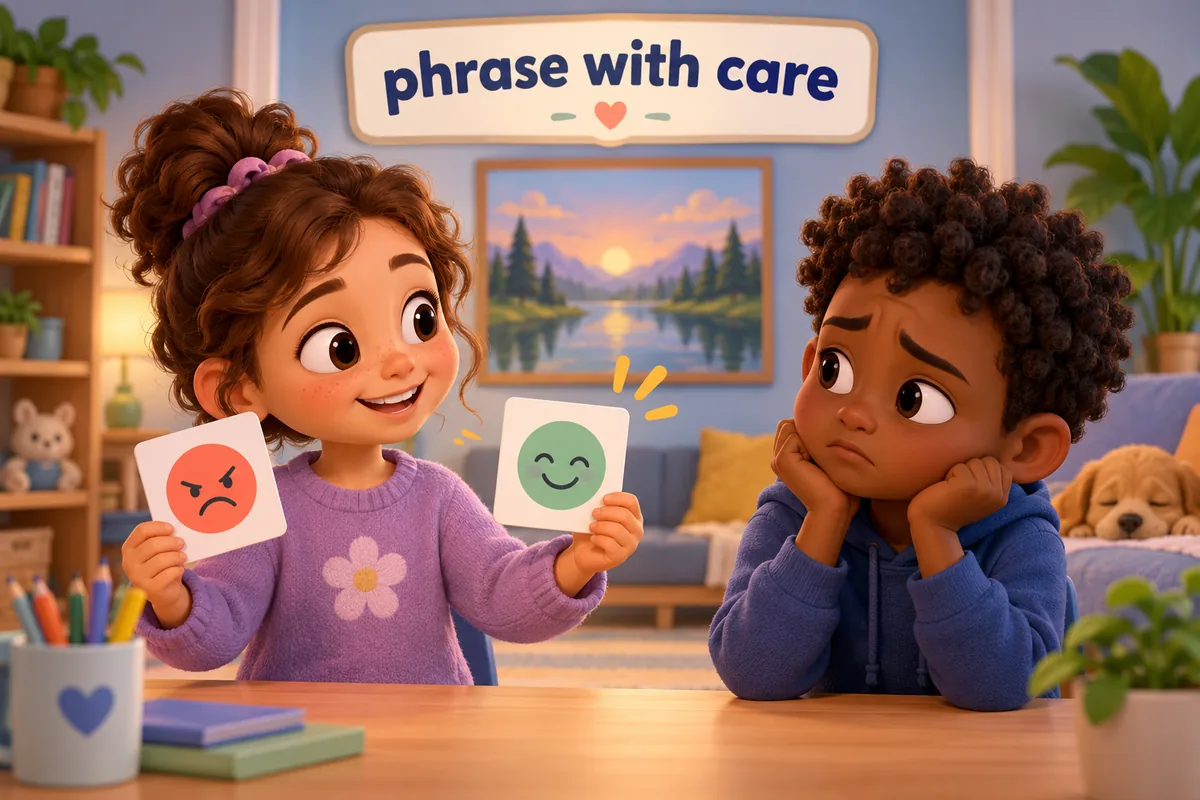
Other ways to say calm down range from the gentle take it easy to the formal compose yourself, and the setting decides which one fits. A soft phrase or a suggestion usually helps more than a blunt command, which can raise the very tension it names. Match the tone to the listener, and the words will settle rather than sharpen the moment.
Frequently asked questions about calm-down phrases
What is a polite way to say calm down?
Take a moment is a polite and neutral choice, because it suggests a pause rather than a command. You could also say take your time, which removes any hint of blame. Adding please to a short phrase softens it further without changing the meaning.
Why does calm down sometimes make people angrier?
A blunt calm down can sound dismissive, because it tells a person what to feel rather than helping them. The command also shifts attention to their behaviour instead of the problem. A phrase that offers a next step, such as take a deep breath, works better.
What is a formal alternative to calm down?
Compose yourself and collect yourself are the formal choices, and both suit a speech, a hearing or an interview. Keep calm also works in a public announcement. Each one keeps a steady tone while avoiding the sharpness of a direct command.
Is chill out the same as calm down?
The two are close in meaning, but chill out is far more informal and fits a close friend or a game. It would sound out of place in an office or a public notice. Calm down works in more settings, though a softer phrase is usually safer.