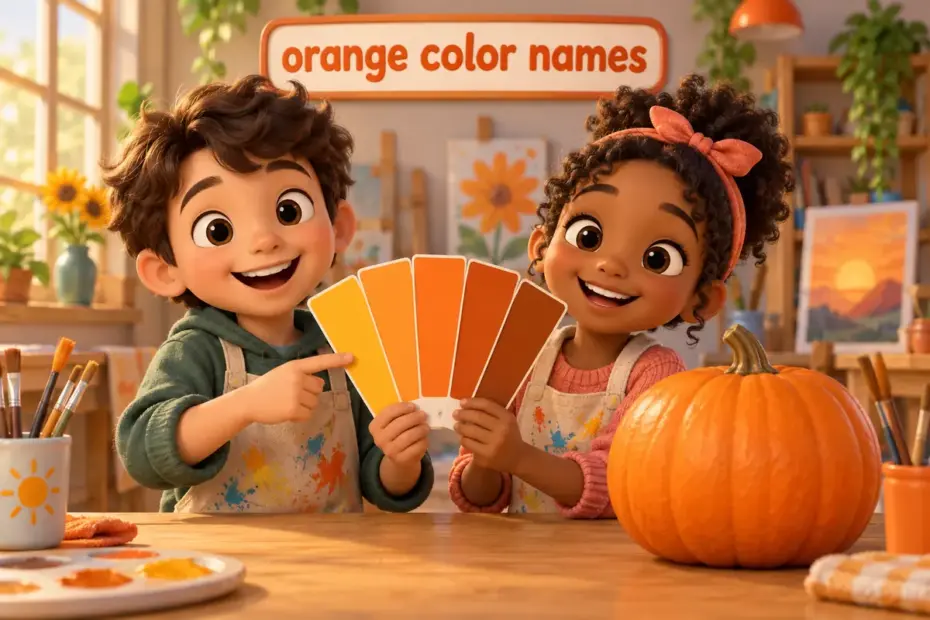
Orange color names range from the bright tangerine and marigold to the earthy rust and ochre. Orange sits between red and yellow, so its shades run from warm yellow-orange to deep red-orange. Designers pick a shade by warmth, because a golden amber feels very different from a burnt rust.
Orange color names at a glance
- Orange sits between red and yellow on the colour wheel.
- Shade names split into bright tones and earthy tones.
- Many shades are named for a fruit, a spice, a flower, or a material.
- Blue is the opposite of orange, so the pair gives strong contrast.
- The commonest error is calling a brown shade orange without a qualifier.
What are orange color names?
Orange color names are the words used to describe the shades of the colour that sits between red and yellow. Some names are bright and golden, such as tangerine and marigold, and some are dark and earthy, such as rust and ochre. A few name the colour of the thing they resemble, so peach, salmon, and pumpkin each point to a familiar object.
| Shade | Family | Typical look | Example sentence |
|---|---|---|---|
| Tangerine | bright | vivid yellow-orange | A tangerine scarf brightened the grey coat. |
| Amber | golden | warm golden-orange | The lamp gave the room an amber glow. |
| Apricot | pale | soft pale orange | She chose apricot walls for the nursery. |
| Coral | pink-orange | soft pinkish orange | Coral cushions warmed the blue sofa. |
| Peach | pale | light creamy orange | The sunset faded from gold to peach. |
| Salmon | pink-orange | muted pink-orange | He wore a salmon shirt to the party. |
| Pumpkin | deep | strong autumnal orange | Pumpkin banners lined the street. |
| Rust | earthy | dark brown-orange | Rust leaves covered the garden path. |
| Burnt orange | earthy | deep red-orange | A burnt orange rug anchored the room. |
| Ochre | earthy | muted yellow-brown | The old walls were painted in ochre. |
| Terracotta | earthy | warm brick orange | Terracotta pots stood on the step. |
| Marigold | bright | bold yellow-orange | Marigold flowers edged the vegetable bed. |
| Saffron | golden | rich golden-yellow | Saffron robes brightened the old hall. |
| Persimmon | deep | warm red-orange | Persimmon fruits hung on the bare tree. |
| Cantaloupe | pale | soft melon orange | A cantaloupe slice topped the plate. |
The family also shifts with light and material. The same amber reads golden in daylight and brown in shadow, and a glossy surface makes any orange look brighter than a matte one. That is why designers name a shade and then test it in the room where it will live, rather than trusting a swatch alone.
How do you use orange color names in a sentence?
The shade word works as an adjective before a noun, and the base word orange can also stand alone as a noun. Readers who want the wider set can browse color adjectives.
| Pattern | Example | What it signals |
|---|---|---|
| shade + noun | a bright orange kite | adjective before a noun |
| a shade of orange | a warm shade of orange | names the family |
| the orange of + thing | the orange of a ripe pumpkin | points to an object |
| shade + with + shade | orange with a hint of red | mixes two colours |
| shade + noun, verbed | The sky orangeed over the sea. | a rare creative verb |
| more / less + shade | a less rusty shade of orange | compares two shades |
Orange color names in context: examples across contexts
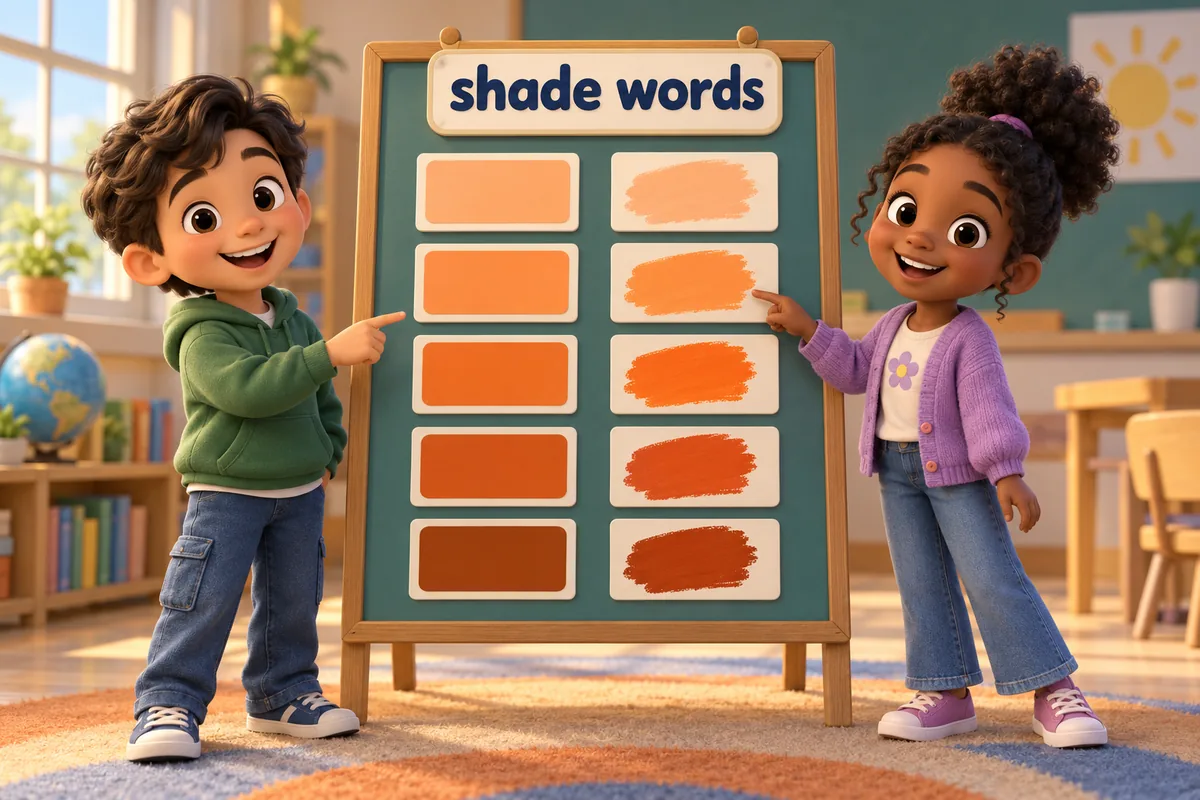
The same shade names appear in a classroom, a paint shop, and a fashion note, and the sentence around them changes with the setting. A broader set of describing words sits in adjectives for orange.
| Context | Example sentence | Why this works |
|---|---|---|
| Classroom | The teacher asked us to sort the orange color names from bright to dark. | a school sorting task |
| Paint shop | We chose a burnt orange for the front door. | a short buying note |
| Fashion note | Pair amber with cream for a warm autumn look. | a styling tip |
| Nature writing | The marigold heads glowed along the fence. | vivid description |
| Interior design | Terracotta tiles gave the kitchen a rustic feel. | a design comment |
| Children’s story | The fox had a bright orange coat. | simple narrative wording |
| Art lesson | Mix yellow and red to make a deep orange. | a clear instruction |
| Weather report | The sky turned amber before the storm. | a short observation |
| Menu | A peach and apricot tart closed the meal. | an appetising detail |
| Brand note | The logo uses a single tangerine shade. | a precise design detail |
| Textile note | The silk took the ochre dye unevenly. | a material observation |
| Poster brief | Use burnt orange and cream for the headline band. | a design instruction |
Tangerine, amber, and rust: how the shades differ
Grouping the names by warmth makes the whole list easy to read, because bright tones and earthy tones sit at opposite ends. The base word appears in plenty of other frames, as in orange in a sentence.
| Feature | Tangerine | Amber | Rust |
|---|---|---|---|
| Main look | vivid yellow-orange | warm golden-orange | dark brown-orange |
| Warmth | hot and light | golden and glowing | deep and muted |
| Where it appears | fruit, sportswear | resin, traffic lights | iron, autumn leaves |
| Best paired with | white and navy | brown and cream | denim and olive |
| Feeling | lively | cosy | earthy |
Word forms and grammar of orange color names
The base word orange is both a noun and an adjective, and a few shades take a -y adjective form. A full palette comes together in a color scheme.
| Form | Part of speech | Example |
|---|---|---|
| orange | noun or adjective | an orange; an orange lamp |
| oranges | noun, plural | Two oranges sat in the bowl. |
| orangey | adjective, informal | The sky was faintly orangey. |
| amber | noun or adjective | amber beads; an amber light |
| rust | noun or verb | a coat of rust; the gate rusts |
| rusty | adjective | a rusty hinge |
| ochre | noun or adjective | a pot of ochre; ochre walls |
| terracotta | noun or adjective | a terracotta pot |
| coral | noun or adjective | coral reefs; coral polish |
| peach | noun or adjective | a ripe peach; a peach dress |
Common mistakes with orange color names
Mistake 1: a brown shade called plain orange. Incorrect: The leaves were orange. Correct: The leaves were rust orange. Rule: a dark brown-orange needs its qualifier.
Mistake 2: the fruit and the colour swapped. Incorrect: I ate a ripe colour. Correct: I ate a ripe orange. Rule: orange is a fruit and a colour, and the context decides.
Mistake 3: amber described as a bright red. Incorrect: The light was bright red amber. Correct: The light was golden amber. Rule: amber is a golden-orange, not a red.
Mistake 4: a hyphen dropped from burnt orange. Incorrect: a burnt orange rug written without care. Correct: a burnt-orange rug before a noun. Rule: a two-word colour takes a hyphen before a noun.
Mistake 5: orange and blue called similar. Incorrect: Orange and blue are close shades. Correct: Orange and blue sit opposite each other. Rule: opposites give the strongest contrast.
Practice using orange color names
- Fill in the blank: The bright fruit shade is called ___.
- Choose the better word: A dark brown-orange is (rust / peach).
- Correct the error: The lamp gave a bright red amber glow.
- Build a sentence: use terracotta to describe a garden pot.
- Spot the register: which line suits a paint shop, (a) That orangey thing is nice, or (b) We chose a burnt orange for the front door?
- Fill in the blank: Orange sits between red and ___ on the colour wheel.
Answers
- tangerine, because tangerine is the bright fruit shade.
- rust, because rust is the dark brown-orange.
- The lamp gave a golden amber glow; amber is golden, not bright red.
- Terracotta pots gave the step a warm brick-orange look.
- (b), because a paint shop needs a precise shade name.
- yellow, because orange sits between red and yellow.
The bottom line
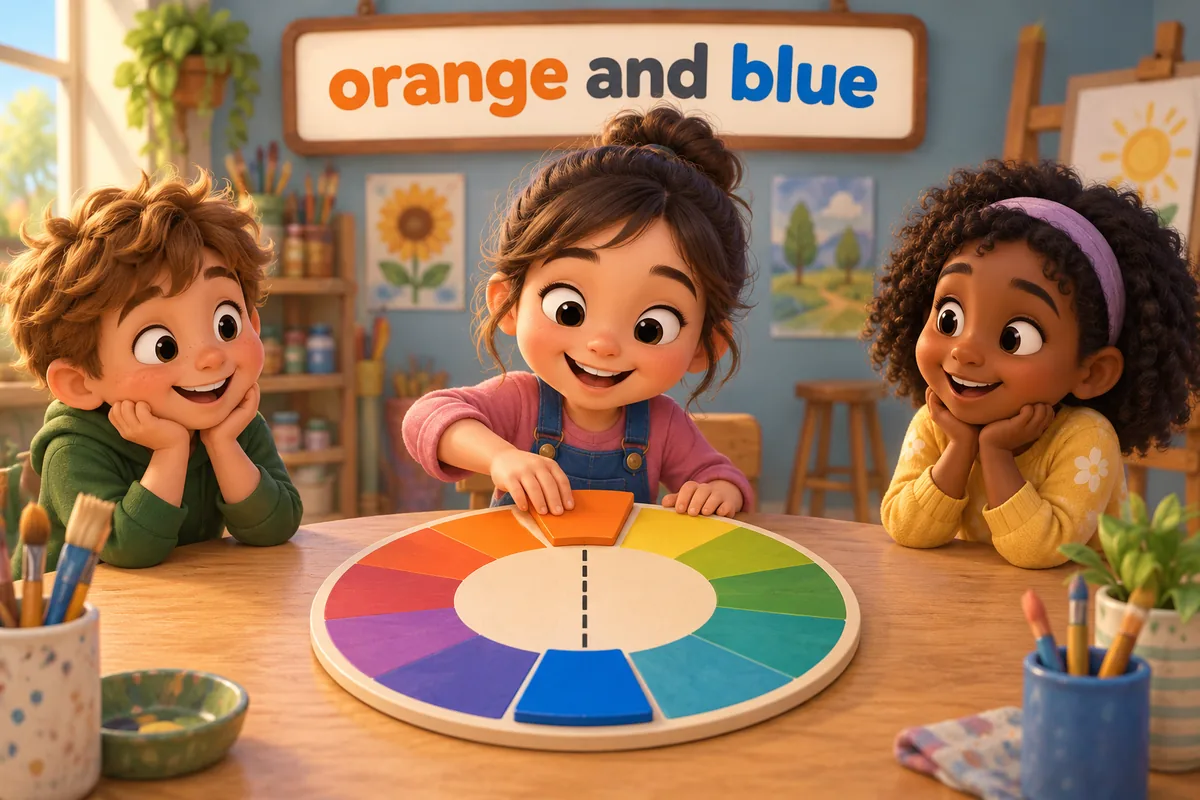
Orange color names split into two clear groups: the bright golden tones such as tangerine and marigold, and the earthy tones such as rust and ochre. Many of the names come from a fruit, a spice, or a material, which is why they feel so concrete. Because orange sits opposite blue, pairing the two gives the strongest contrast in the family.
Frequently asked questions about orange color names
What are some names for shades of orange?
Bright shades include tangerine, marigold, and pumpkin, while softer ones include peach, apricot, and coral. Earthy shades include rust, burnt orange, ochre, and terracotta. Amber and saffron sit in the golden middle, and each name points to a familiar object or material.
What is the difference between orange and amber?
Amber is a golden-orange with a warm, glowing quality, while plain orange is broader and can be either yellowish or reddish. Amber often suggests light passing through a translucent material, as in an amber lamp or amber beads. Orange is the general family name.
Which colors go well with orange?
Blue sits directly opposite orange, so the pair gives the strongest contrast, as in navy with tangerine. Warmer pairings use brown, cream, and olive with the earthy shades such as rust and terracotta. White lightens any orange and keeps the look clean and modern.
Is peach a shade of orange?
Yes. Peach is a pale, creamy orange that sits close to the pink end of the family. Because it is so light and soft, it often reads as a neutral rather than a bold colour, which is why it suits walls and clothing. Apricot and coral sit nearby on the same soft edge.