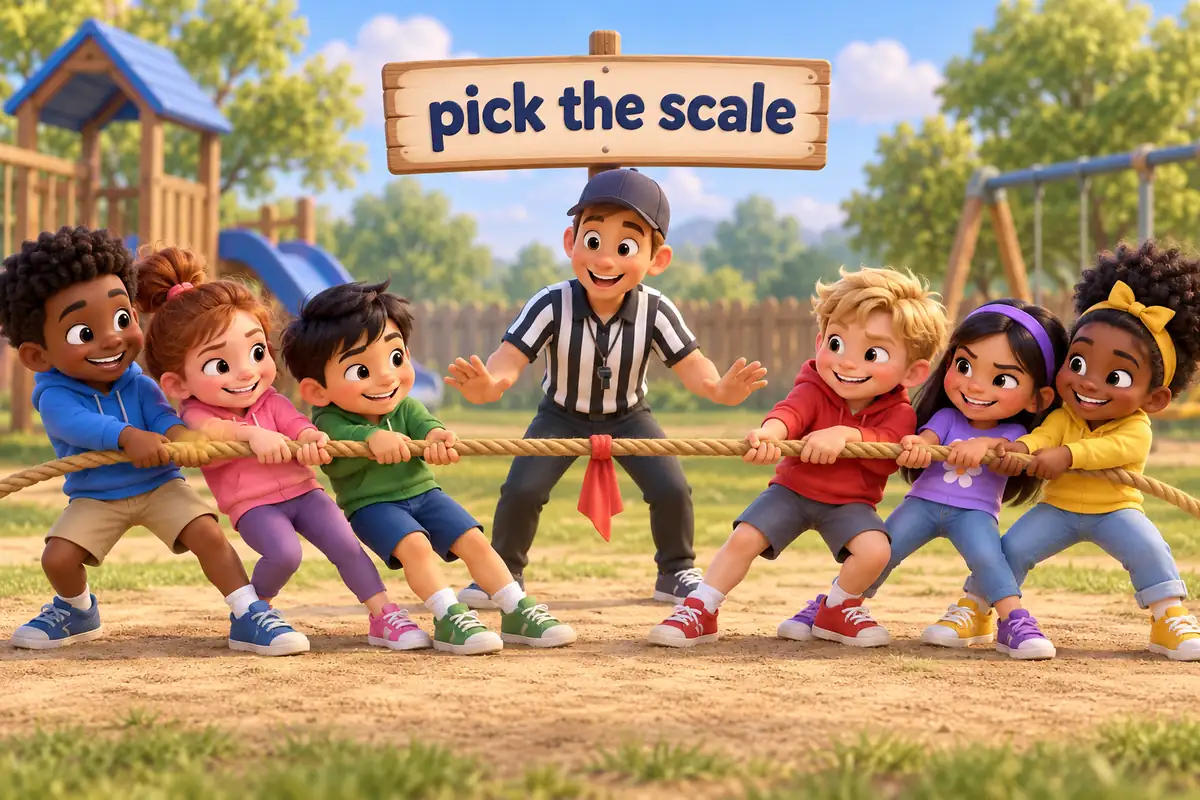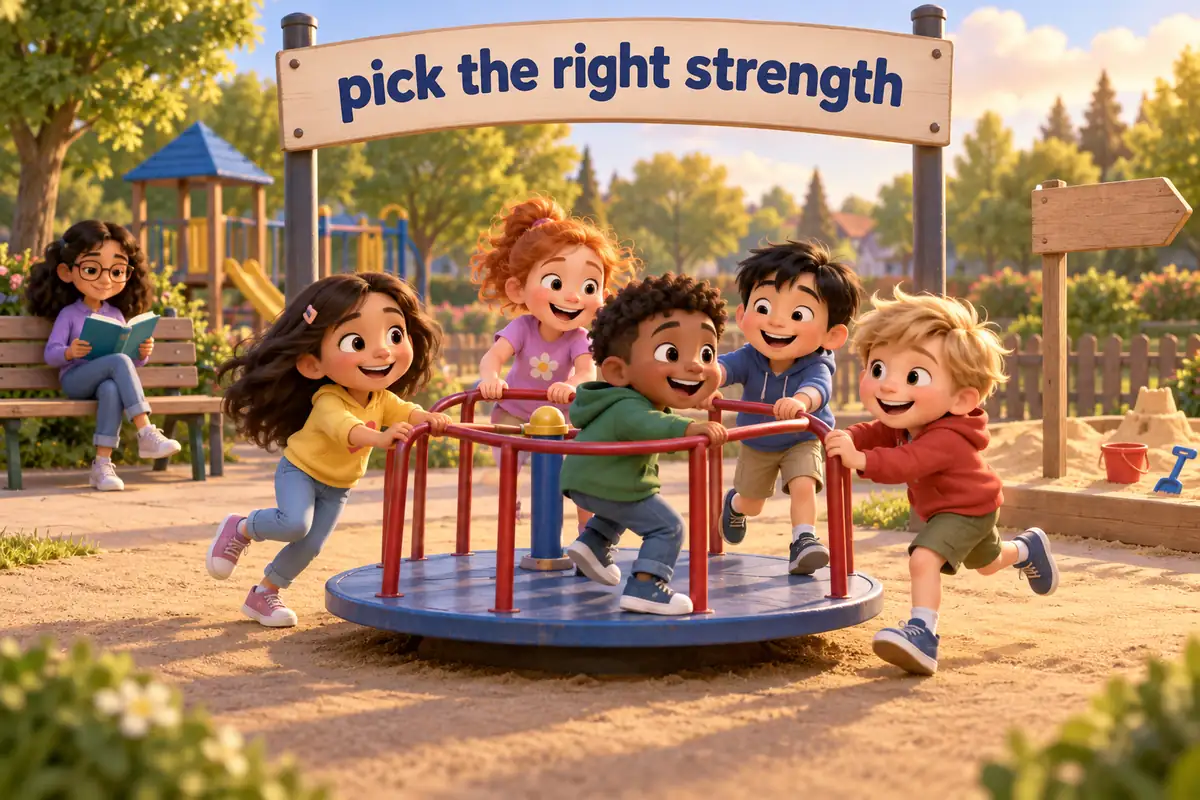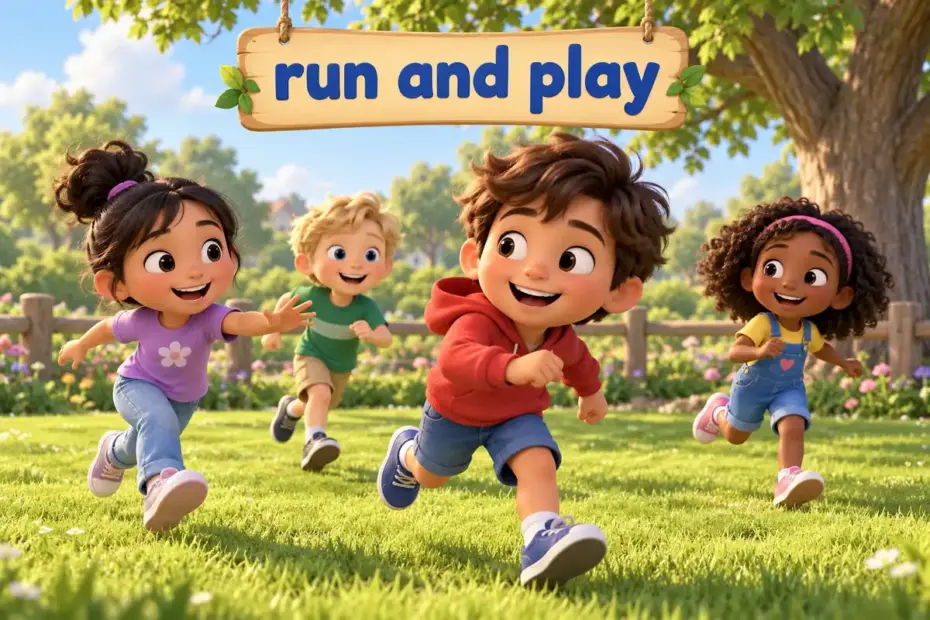
Outdoor games for kids are the active games children play in a garden, a park or a playground, such as tag, hide and seek and skipping. They build running, jumping and teamwork while the children call instructions to one another. “You are it!” a child shouts to start a game of tag.
Outdoor games for kids at a glance
- An outdoor game is an active game played outside, usually with little equipment.
- Instructions use short imperatives such as run, hide and get ready.
- Tag, hide and seek and skipping are the games children learn first.
- Clear boundaries keep the game safe and stop disputes about the rules.
- The commonest mistake is playing without agreeing where the game ends.
What are outdoor games for kids?
Outdoor games for kids are active games that use open space, fresh air and a simple set of rules. Most of them need only a ball, a rope or nothing at all, and the movement is the point. Each game below teaches a different skill, from speed to balance to working as a team.
| Game | How to play | Example sentence |
|---|---|---|
| Tag | one child chases and touches the others | You are it, so run and tag me. |
| Hide and seek | one counts while the others hide | Count to twenty, then come and find us. |
| Skipping | jump over a turning rope | She can skip for a whole minute. |
| Football | kick a ball into a goal | He passed the ball to a teammate. |
| Hopscotch | jump through numbered squares | We drew hopscotch with chalk. |
| Relay race | run a short leg and pass a baton | Our team won the relay race. |
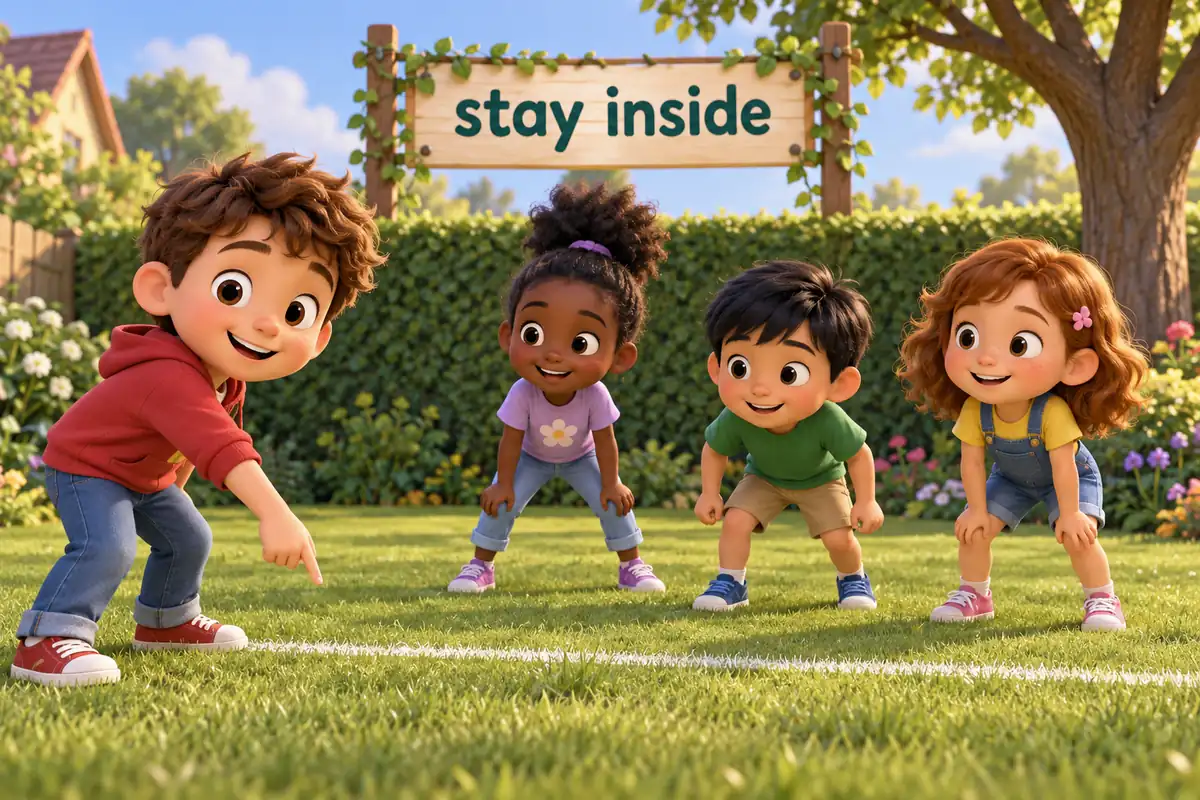
One honest caution is worth stating: an outdoor game needs a boundary as much as a rule. A game with no agreed edge sends children into the road or a neighbour’s garden, so the first instruction should always name where the game stops. Marking the edge with a tree, a line or a fence keeps the play safe and the arguments short.
How do you start an outdoor game?
Starting a game uses short patterns that set the rule, the boundary and the first move. These frames sound natural outdoors, where instructions are spoken quickly.
| Pattern | Example | What it signals |
|---|---|---|
| Imperative verb | Run to the big tree. | a direct instruction |
| Let us + verb | Let us play tag. | a shared suggestion |
| You are + role | You are it first. | assigns the opening turn |
| Do not + verb + past this line | Do not run past this line. | sets the boundary |
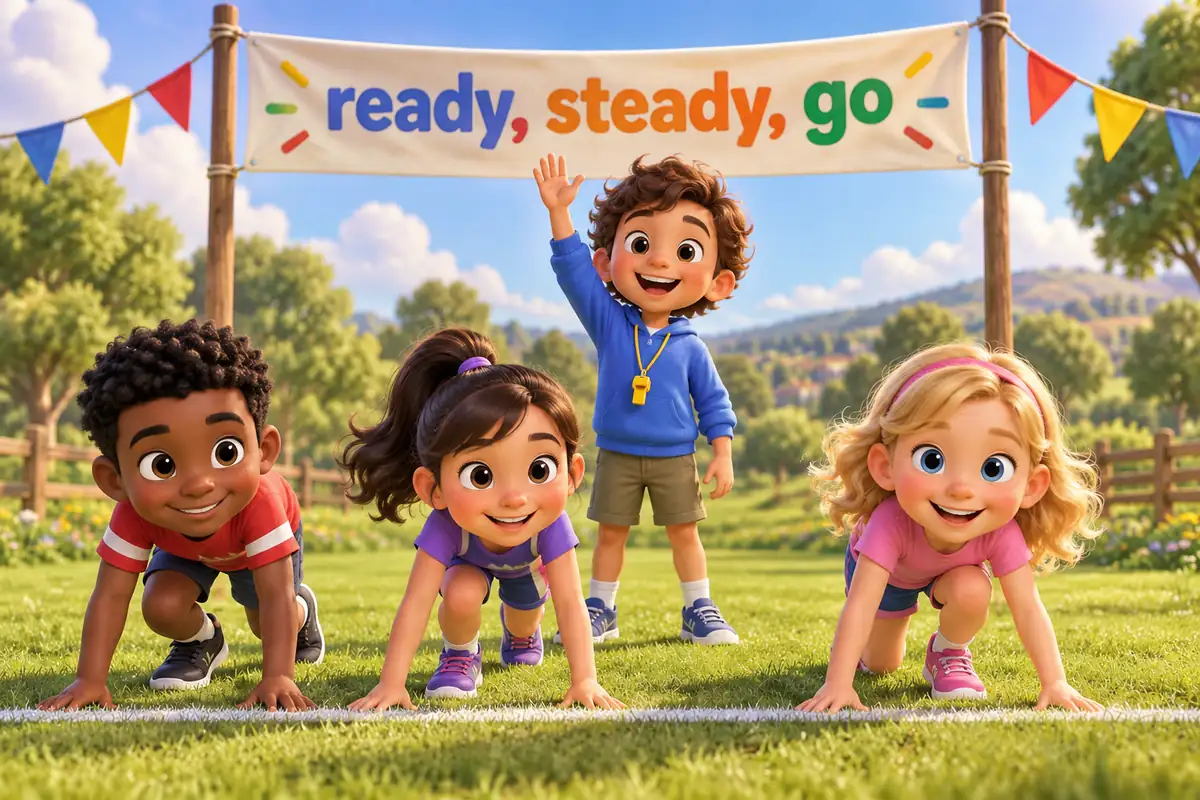
| Ready, steady, go | Ready, steady, go, find a spot. | a clear starting signal |
Outdoor games across contexts
The same few games suit a school break, a family picnic and a party in the garden, and each setting adds its own words. Children learn the language of play fastest when they hear it mid-game, and pages such as adjectives for video games and a words for kids add describing and naming words a child can use outside.
| Context | Example sentence | Why this works |
|---|---|---|
| School break | Let us play tag before the bell. | fits a short time slot |
| Back garden | Do not run past the fence. | sets a clear boundary |
| Park | We drew hopscotch on the path. | uses the open surface |
| Family picnic | The children played catch after lunch. | a light game for mixed ages |
| Beach | We raced to the water and back. | uses the space and the sand |
| Birthday party | The relay race was the favourite game. | a team game for a crowd |
| Sports club | Coach split us into two teams. | organises a larger group |
| Summer evening | We played hide and seek until dusk. | makes use of longer daylight |
| Grandparents’ garden | Grandpa taught us to skip. | links a game to family |
| Playground | Line up for the relay race. | gives an orderly start |
| Camp | We played stuck in the mud. | a game for a wide field |
Which outdoor game should you choose?
The right game depends on the space, the number of children and how much running is safe nearby. A short comparison helps an adult choose quickly.
| Situation | Better game | Weaker choice | Reason |
|---|---|---|---|
| Small garden | hopscotch | football | a small surface suits a still game |
| A large field | relay race | hopscotch | a big space needs a running game |
| Mixed ages | hide and seek | a fast chase | hiding suits every speed |
| Two children | catch | a team relay | a pair cannot fill two teams |
| Near a road | a seated ball game | tag | a still game keeps children from the road |
A game lasts longer when the children agree the rules before the first run and repeat them after a dispute. Boundaries do the most work, because a clear edge removes most arguments about who went too far. Children who invent one small change of their own, such as a new safe spot, stay engaged because the game becomes partly theirs.
Words and phrases linked to outdoor games
Outdoor play sits inside an active family of words that helps a child describe movement. Young readers can pair playground and teammate with compound words for kids, then describe the pace with b words for kids such as brisk and brave.
| Word | Type | Example |
|---|---|---|
| run | verb | We run to the far tree. |
| chase | verb and noun | He chased me across the field. |
| team | noun | Each team wears a band. |
| rule | noun | The first rule is to stay inside. |
| turn | noun | It is your turn to be it. |
Common mistakes with outdoor game words
Mistake 1: playing with no boundary. Incorrect: Just run anywhere. Correct: Run up to the big tree and no further. Rule: a boundary keeps the game safe.
Mistake 2: using the wrong preposition. Incorrect: We played on tag. Correct: We played tag. Rule: play takes a direct object with no preposition.
Mistake 3: writing come and play as come play. Incorrect: Come play outside. Correct: Come and play outside. Rule: this invitation keeps the word and.
Mistake 4: leaving out the third person s. Incorrect: She run very fast. Correct: She runs very fast. Rule: a singular subject takes a verb ending in s.
Mistake 5: confusing it is and its. Incorrect: Its your turn to be it. Correct: It is your turn to be it. Rule: it is takes an apostrophe; its shows possession.
Mistake 6: using outdoors as a noun. Incorrect: We played in the outdoors park. Correct: We played in the park outdoors. Rule: outdoors is an adverb, not an adjective before a noun.
Practice using outdoor game words
- Fill in the blank: Do not run past the ___ , or the game stops.
- Choose the better game: (hopscotch / football) for a small, flat path.
- Correct the error: We played on tag in the garden.
- Build a sentence: invite a friend to a game and set the boundary.
- Spot the register: which instruction suits a playground, (a) Run to the tree, please, or (b) Run now fast go?
- Fill in the blank: Ready, steady, ___ , find a hiding spot.
Answers
- fence, because a boundary keeps the play safe.
- hopscotch, because a small flat surface suits a still game.
- We played tag in the garden; play takes a direct object with no preposition.
- Let us play hide and seek, and do not go past the fence.
- (a), because a clear instruction with please is easy to follow.
- go, because ready, steady, go is the fixed starting signal.
The bottom line
Outdoor games for kids turn fresh air and open space into active play, and the best ones need little more than a ball, a rope or a voice. Tag, hide and seek, skipping and relay races suit most settings, while short instructions such as run, hide and it is your turn keep the game moving. Agree the boundary first, and the play stays safe and fair.
Frequently asked questions about outdoor games for kids
What outdoor games need no equipment?
Tag, hide and seek, stuck in the mud and Simon says need no equipment at all beyond a safe space. They use running, hiding and listening, so a child can start within seconds. A piece of chalk turns the same space into a hopscotch court.
How do I keep outdoor play safe?
Set a clear boundary before the first run and name the tree, line or fence where the game ends. Check the space for traffic, sharp edges and deep water, and keep a grown-up within sight. Short games and regular water breaks suit warm afternoons especially well.
What outdoor games suit a mixed-age group?
Hide and seek works well because hiding needs no speed and every child can take part. Catch and a slow relay race also suit different ages, since the pace can change. A game with simple rules lets an older child help a younger one rather than leaving them behind.
Why is outdoor play good for children?
Outdoor play builds strength, balance and coordination through running, jumping and throwing. Fresh air and daylight also lift the mood and help sleep at night. A game with other children adds teamwork, turn taking and the small negotiations that teach fair play.