Pack out means to fill a place to capacity with people, or to fill a container tightly with things. To use pack out in a sentence, name what is filled and put the crowd or contents after it: the concert packed out the hall. The verb is separable, so a pronoun goes in the middle: pack it out.
Pack out at a glance
- Pack out is a transitive phrasal verb; its forms are packs out, packed out and packing out.
- It is separable, so the object may follow the verb or sit between pack and out.
- The place or container being filled is the object, never the crowd itself.
- The passive phrase be packed out describes a full venue and is common in reviews.
- A separate outdoor sense means to carry something away, especially litter.
- The commonest error is confusing pack out with pack up, which means to put things away.
What does pack out mean?
Pack out is a phrasal verb meaning to fill a place completely, so that no room is left. The first and most common sense is about an audience: a band, a film or a speaker packs out a venue. The second sense is about containers, where pack out means to fill a bag, box or van until it is full. A third, chiefly outdoor sense means to carry something away with you, usually rubbish. The Cambridge entry for pack out records the fill-a-place sense as the core one.
| Sense | Plain meaning | Example sentence |
|---|---|---|
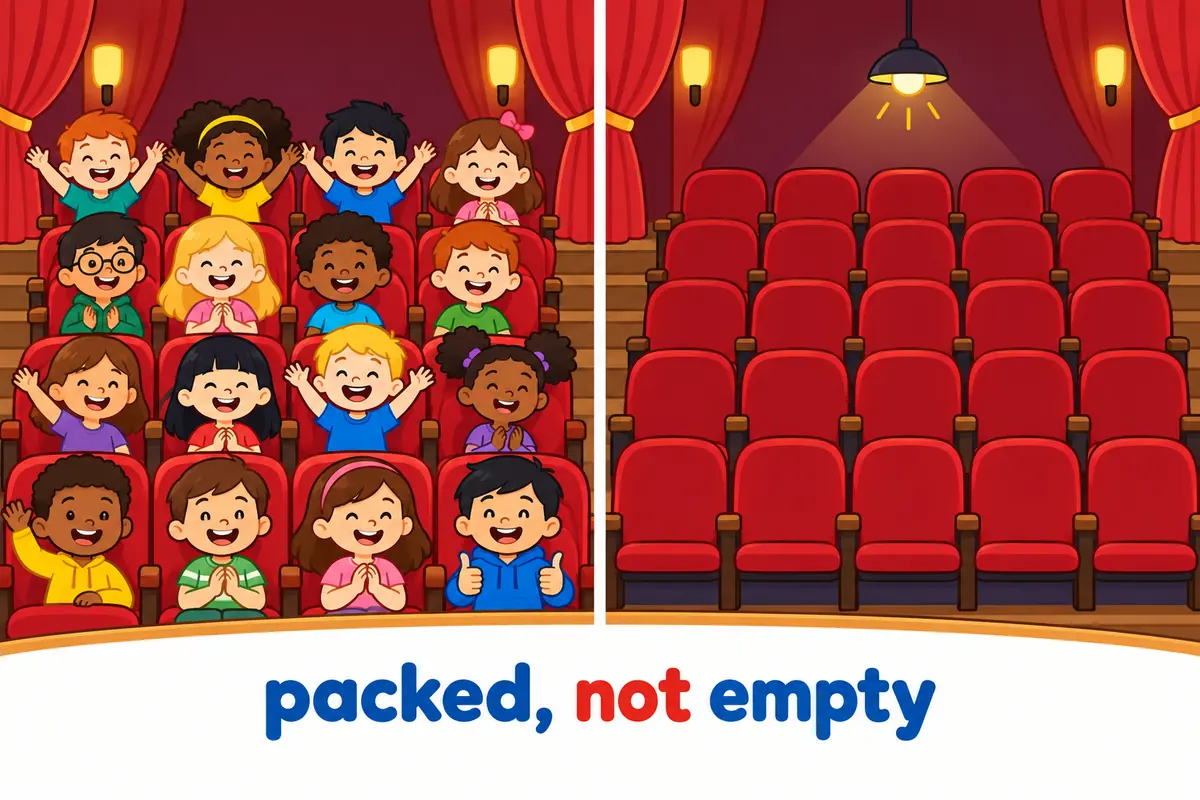
| Fill with people | Fill a venue to capacity with an audience | The reunion band packed out the old theatre. |
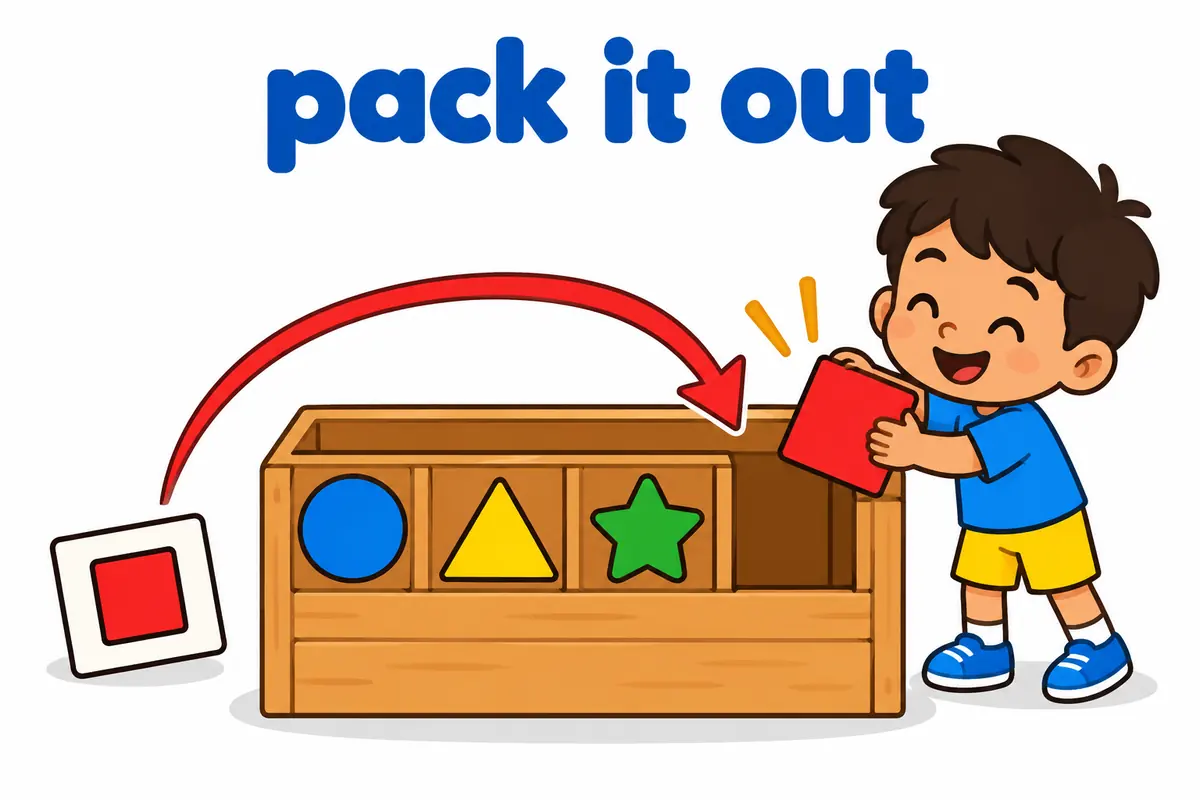
| Fill a container | Fill a bag, box or vehicle tightly with things | They packed out the van before the rain started. |
| Carry away | Take something out with you, especially waste | Campers are asked to pack out everything they bring. |
One limitation is worth stating plainly. Pack out is not a synonym for pack up: pack up means to put things away or to stop work for the day. It is also not the same as pack in, which an entertainer does and which means attracting an audience rather than filling the room.
How do you use pack out in a sentence?
Pack out is transitive, so it always needs something to fill, and it is separable, so the object can follow the verb or sit between pack and out. A pronoun object must go in the middle. The place being filled is the object, not the crowd, so the pattern is the show packed out the hall, never the crowd packed out the hall.
| Pattern | Example | What it signals |
|---|---|---|
| pack out + place | The tribute act packed out the club. | The object is the venue that became full. |
| pack + place + out | The tribute act packed the club out. | The separable form, equally correct. |
| pack + pronoun + out | The band packed it out for three nights. | A pronoun must sit between the verb and the particle. |
| be packed out | The hall was packed out an hour early. | Passive form used to describe a full venue. |
| pack out + container + with | She packed out the crate with donations. | Names the contents that filled the container. |
When the point is simply that something is full, a single verb is plainer. Writers may choose cram a shelf for a tight squeeze or fill for a neutral statement, while pack out keeps the vivid idea of a place brimming with people.
Pack out in a sentence: examples across contexts
Pack out moves easily between entertainment, travel and outdoor writing. The ten sentences below each name what became full, and two show the antonym and the shared particle in other verbs.
| Context | Example sentence | Why this works |
|---|---|---|
| Concert review | The final night packed out the riverside arena. | The venue is the object, which is the standard review pattern. |
| Sports report | A capacity crowd packed out the ground for the derby. | Names both the size and the place in one line. |
| Cinema listing | The midnight screening was packed out within minutes. | The passive form suits a short listing. |
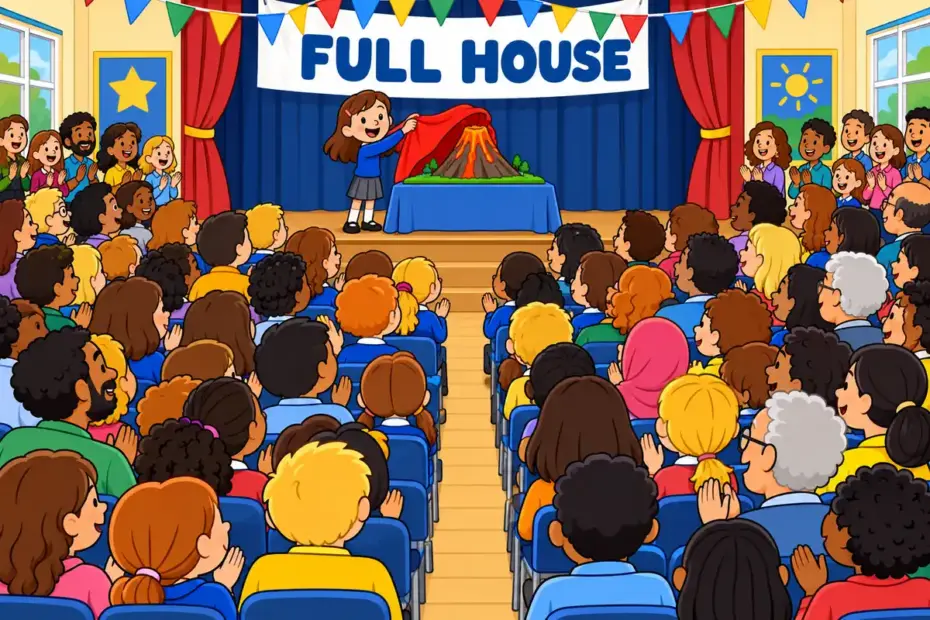
| School notice | Families packed out the hall for the science fair. | A warm, everyday subject keeps the tone light. |
| Restaurant review | The new bistro packs out every Friday evening. | Present tense signals a regular, reliable crowd. |
| Moving day | We packed out the car with boxes and a lamp. | Shows the fill-a-container sense. |
| Warehouse log | Staff packed out two pallets before the shift ended. | Names the container and the contents indirectly. |
| Hiking advice | Rangers ask walkers to pack out all food wrappers. | Closest to the carry-away sense, common on trail signs. |
| Conversation | The whole street packed out the little bakery on Saturday. | The first clause is a natural spoken subject. |
| Shared particle | The organisers had to back out when the roof leaked. | Same particle, but back out means to withdraw from a plan. |
The trail sign in row eight is the useful reminder that pack out has a life outside crowds, and the last row shows that out carries a different meaning in every phrasal verb.
Pack out vs pack in and fill
Pack out is close to two expressions but not identical to either. crowd and fill simply describe how full something is, and pack in means to attract a crowd rather than to fill the room. Pack out keeps both ideas at once: the people come, and the place is full.
| Attribute | pack out | pack in | fill |
|---|---|---|---|
| Core job | Fill a place to capacity | Attract a large audience | Make something full |
| Object | The venue or container | The venue or container | The venue, container or a gap |
| Focus | The result: a full place | The drawing power | The act of adding |
| Register | Informal, common in reviews | Informal, common in showbiz | Neutral and general |
| Typical phrase | packed out the hall | the act packs them in | fill the hall |
| Works for containers | Yes: packed out the van | No | Yes |
Verdict: use pack out when a venue or container ends up completely full, pack in when the focus is on a performer’s drawing power, and fill for a plain, neutral statement.
Word forms and grammar of pack out
Pack out follows the regular pattern of pack, and the table also marks the hyphenated adjective and the near neighbour learners mix it up with.
| Form | Part of speech | Example |
|---|---|---|
| pack out | phrasal verb, base form | They expect the choir to pack out the chapel. |
| packs out | third person singular | The comedy night packs out the upstairs room. |
| packed out | past and past participle | The talk packed out the library on a wet Tuesday. |
| packing out | present participle | The festival is packing out every field it uses. |
| packed-out | adjective, hyphenated | It was a packed-out house from the first note. |
| pack up | phrasal verb, different meaning | We packed up the stall at four o’clock. |
The antonym in plain use is empty, which describes the same place once everyone has gone, while vacate names the act of leaving it.
Common mistakes with pack out
- Incorrect:
The crowd packed out the hall.Correct: The crowd packed the hall, or the show packed out the hall. Rule: The place is the object, not the people doing the filling. - Incorrect:
We packed out away the chairs.Correct: We packed up the chairs. Rule: Pack up means to put things away; pack out means to fill or carry out. - Incorrect:
The band packed out them for three nights.Correct: The band packed them out for three nights. Rule: A pronoun object sits between pack and out. - Incorrect:
The room was packed out of visitors.Correct: The room was packed with visitors. Rule: Use packed with for contents; packed out describes the place alone. - Incorrect:
The flyer packed out.Correct: The flyer packed out the cafe. Rule: The verb is transitive, so it needs a place or container.
Practice using pack out
Work through the six items, then compare your wording with the reasoning in the answers.
- Fill the gap: The school play ______ the hall on both nights.
- Choose the better word: The market (packed out / packed up) the square by nine.
- Correct the error: The fans packed out it before the gates opened.
- Build a sentence: use be packed out about a small cinema.
- Spot the register: which belongs on a trail sign — please take your litter home, or please pack out your litter?
- Rewrite with the antonym: The stadium was packed out. Use empty instead.
Answers
- packed out — the hall is the place filled to capacity.
- packed out — the market filled the square; packed up would mean the stallholders left.
- The fans packed it out before the gates opened — the pronoun belongs between pack and out.
- Model answer: The little cinema was packed out for the first showing.
- Please pack out your litter — it uses the carry-away sense that fits an outdoor sign.
- The stadium was empty — the antonym describes the same place with nobody in it.
The bottom line
Use pack out in a sentence when a place fills to capacity with people or a container fills to the brim. Two nuances decide most sentences: the place or container is the object, never the crowd, and the verb is separable, so a pronoun must sit between pack and out. When you only mean that something is full, clear and empty describe the opposite state, and fill is the plainer choice.
Frequently asked questions about pack out
Is pack out a separable phrasal verb?
Yes. Pack out is separable, so the object may follow the whole verb or sit between pack and out: the band packed out the club, or the band packed the club out. Both are correct. A pronoun must go in the middle, giving packed it out rather than packed out it.
What is the difference between pack out and pack up?
Pack out means to fill a place or container, or to carry something away, as in packing out the hall or packing out your litter. Pack up means to put things away or stop work, as in packing up the stall. The particle changes the meaning completely, so the two are not interchangeable.
What does packed out mean in a review?
In a review, packed out describes a venue that was filled to capacity, often put in the passive as the hall was packed out. It signals a strong turnout and is slightly more vivid than sold out, which refers only to tickets rather than to a room full of people.
Can pack out be used about rubbish?
Yes, and this sense is common on trail signs and campsite notices. To pack out rubbish means to carry it away with you rather than leaving it behind. Campers are often asked to pack out everything they carry in, which keeps the site clean for the next visitors.