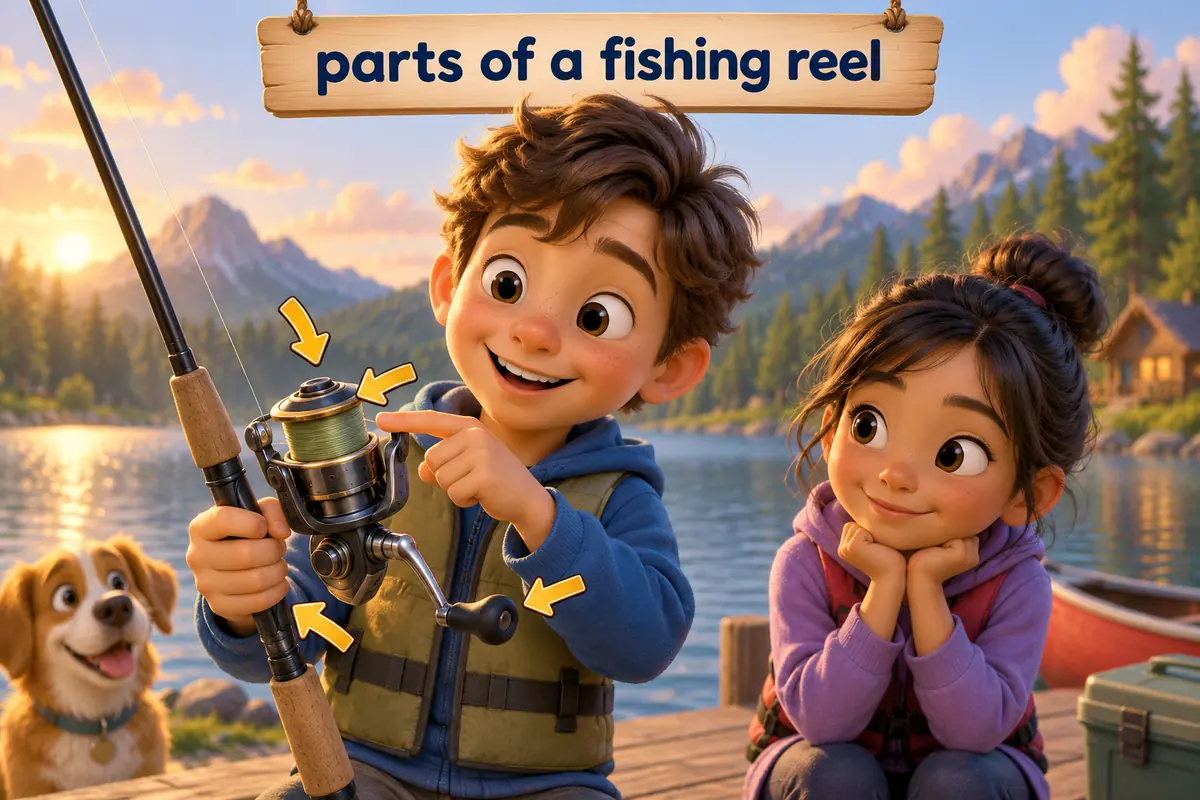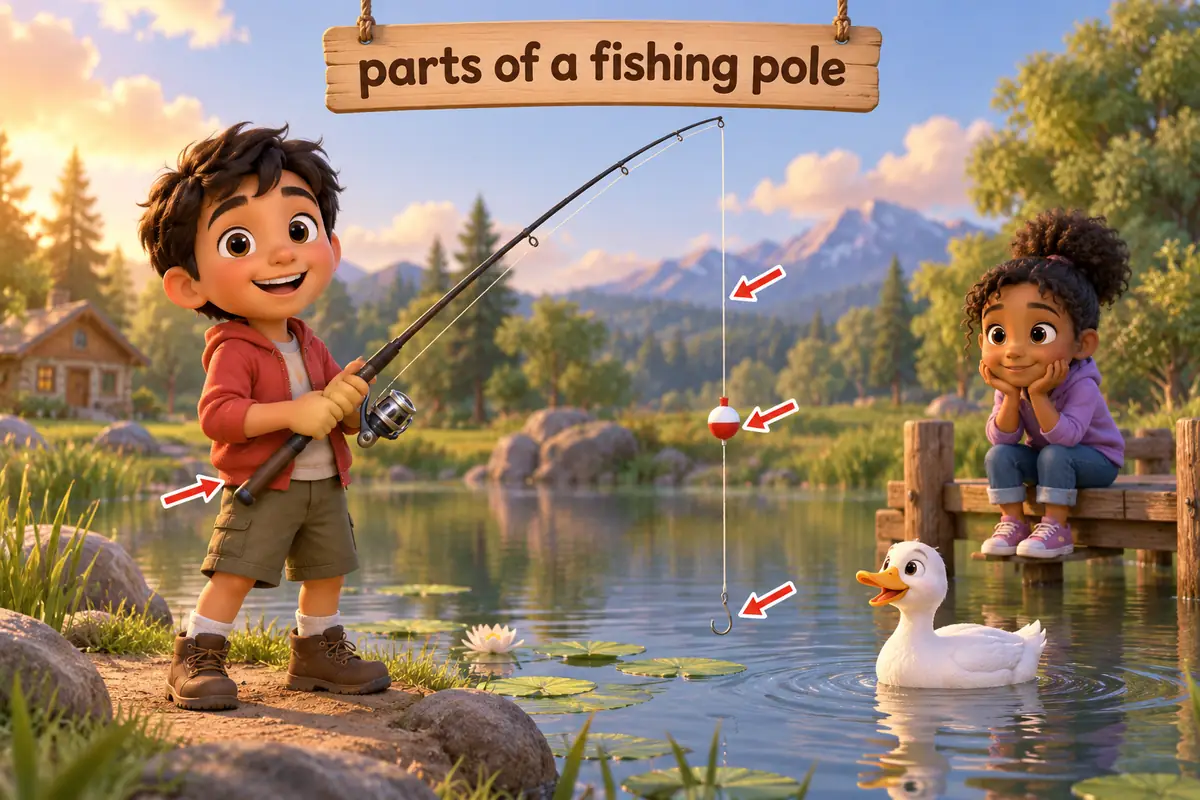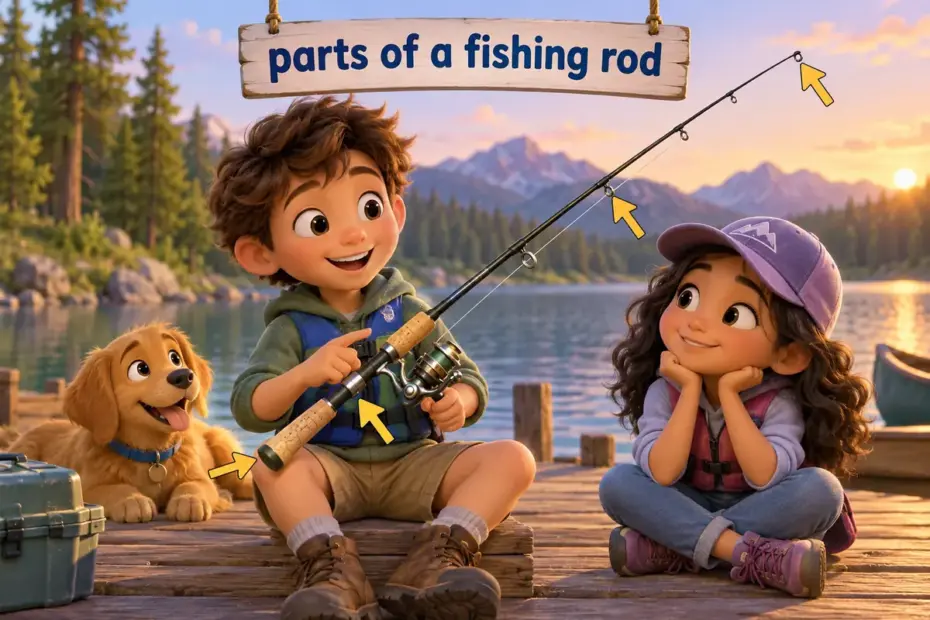
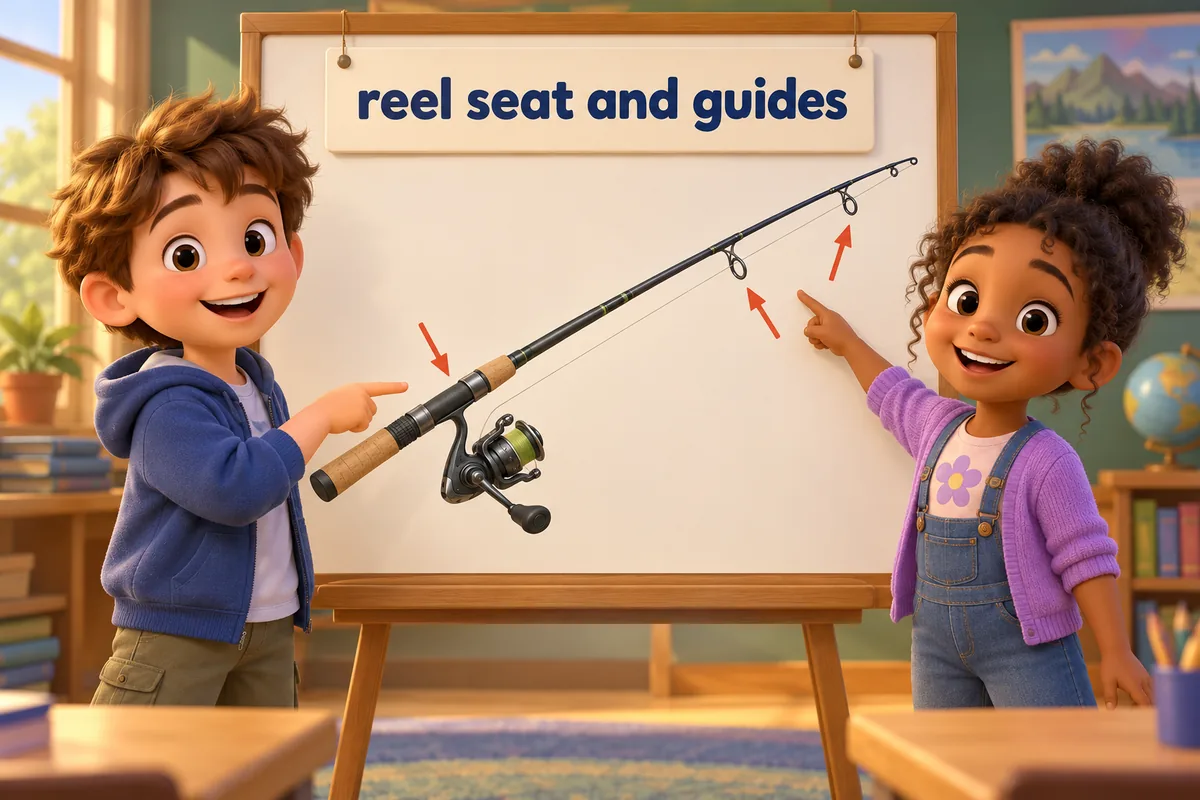
The parts of a fishing rod are the butt, handle, reel seat, blank, guides, and tip-top that carry and control the fishing line. The reel seat holds the reel, the guides keep the line close to the rod, and the tip-top is the last guide at the end.
Parts of a fishing rod at a glance
- A fishing rod has a handle end and a tip end, joined by the blank.
- The reel seat locks the reel onto the rod above the rear grip.
- The guides, including the tip-top, keep the line close to the blank.
- The stripping guide is the first and largest guide, nearest the reel.
- The commonest error is calling the blank the handle, or the reverse.
What are the parts of a fishing rod?
The parts of a fishing rod are the structures that hold the reel and carry the line from the handle to the tip. The butt and rear grip form the hold, the reel seat clamps the reel in place, and the blank is the rod itself, which flexes under load. Along the blank, the guides lead the line, and the tip-top is the smallest guide at the very end.
| Part | Where it is | What it does | Example sentence |
|---|---|---|---|
| Butt | Bottom end | Rests against the body | The butt of a fishing rod sits against the forearm. |
| Rear grip | Above the butt | Where the hand holds | The rear grip of a fishing rod is often cork. |
| Reel seat | Above the rear grip | Holds the reel | The reel seat of a fishing rod locks the reel in place. |
| Foregrip | In front of the reel seat | A second handhold | The foregrip of a fishing rod steadies a cast. |
| Blank | The rod itself | Flexes under load | The blank of a fishing rod bends when a fish pulls. |
| Stripping guide | Nearest the reel | First guide the line meets | The stripping guide of a fishing rod takes the first turn. |
| Running guides | Along the blank | Keep the line straight | The running guides of a fishing rod spread the load. |
| Tip-top | Very end | The last guide | The tip-top of a fishing rod is the smallest guide. |
| Hook keeper | Above the grip | Holds the hook | The hook keeper of a fishing rod keeps the hook safe. |
| Ferrule | Between sections | Joins two pieces | The ferrule of a fishing rod fits the sections together. |
| Winding check | Above the grip | Covers the thread wrap | The winding check of a fishing rod neatens the handle. |
How do you use the parts of a fishing rod in a sentence?
The naming phrase works like any other: put the part before of a fishing rod, or let the rod own it with an apostrophe. A beginner who needs more tackle words can browse fishing gear in a sentence.
| Pattern | Example | What it signals |
|---|---|---|
| the + part + of a fishing rod | The tip-top of a fishing rod is tiny. | names one structure |
| a fishing rod’s + part | A fishing rod’s blank flexes under load. | shows possession |
| plural part + of a fishing rod | The guides of a fishing rod line the blank. | talks about a group |
| part + verb | The reel seat clamps the reel. | describes a job |
| label + part | Students labelled each part of a fishing rod. | school and diagram use |
| part + is made of + material | The rear grip is made of cork. | describes a material |
Parts of a fishing rod in context: examples across contexts
The same names appear in a classroom, a tackle shop, and a repair bench, and the sentence around them changes with the setting. To see the word used in real frames, read fishing line in a sentence.
| Context | Example sentence | Why this works |
|---|---|---|
| Classroom | The teacher asked us to name each part of a fishing rod on the worksheet. | a school task about labelling |
| Tackle shop | This rod has a cork rear grip and six guides. | a short sales note |
| Instruction guide | Slide the reel foot into the reel seat and tighten it. | a step-by-step direction |
| Fishing diary | The tip-top of my rod broke on the last cast. | a personal record |
| Repair note | A running guide had lost its ring, so the line frayed. | a fault description |
| Children’s story | The girl held her rod steady as the line went tight. | simple narrative wording |
| Nature club | Keep the rod tip low when you land a fish. | a practical tip |
| Exam question | Label the parts of a fishing rod shown in the diagram. | a clear instruction |
| Safety notice | Check the guides for cracks before you cast. | a firm warning |
| Product review | The blank is light but strong under load. | a measured detail |
Butt, blank, and guides: how the parts differ
Grouping the parts by job makes the diagram easy to read, because holding, flexing, and guiding use different structures. A familiar phrase such as a hot rod borrows the same rod image in a very different setting.
| Feature | Butt and grip | Blank | Guides |
|---|---|---|---|
| Main job | hold and mount | flex and store energy | guide the line |
| Position | lower end | the whole rod | along the blank |
| Typical material | cork and metal | carbon or fibreglass | metal with a hard ring |
| Number | a few parts | one piece or sections | several, in a line |
| Diagram label | grip | blank | guide |
Word forms and grammar of the parts of a fishing rod
Most part names are nouns, and a few double as verbs. The verb to flex describes the bend of the blank, and to land means to bring a fish ashore. To see the base noun used in real frames, read fishing in a sentence.
| Form | Part of speech | Example |
|---|---|---|
| rod | noun | The rod was light and stiff. |
| rods | noun, plural | Two rods stood in the corner. |
| blank | noun | The blank flexed smoothly. |
| grip | noun or verb | The grip is cork; grip the rod lightly. |
| reel seat | noun phrase | The reel seat held the reel tight. |
| guide | noun or verb | Each guide is ringed; guide the line through. |
| tip-top | noun | The tip-top is the last guide. |
| ferrule | noun | The ferrule joined the sections. |
| flex | verb | The rod flexes under a load. |
| land | verb | She landed the fish on the bank. |
Common mistakes with the parts of a fishing rod
Mistake 1: blank for the whole rod. Incorrect: The blank includes the handle and the reel. Correct: The blank is the rod shaft itself. Rule: the blank is only the bare shaft, not the handle.
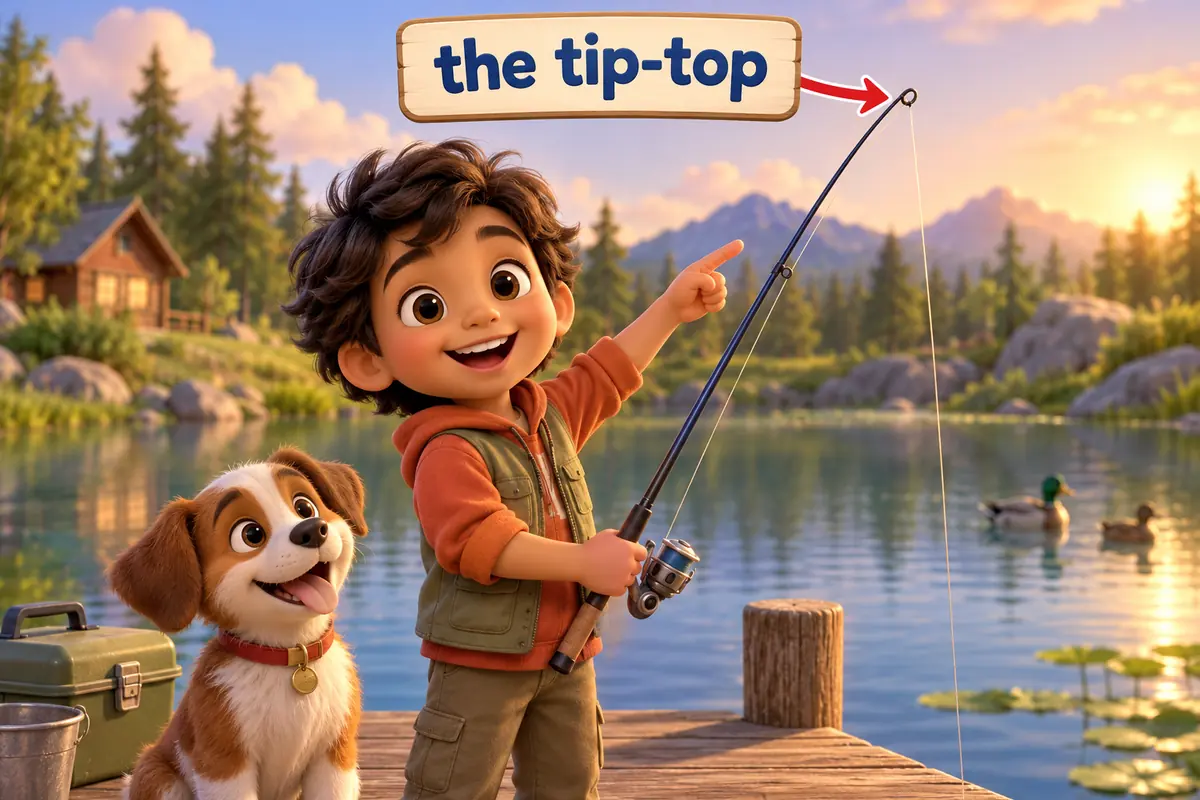
Mistake 2: the tip-top as a guide on the handle. Incorrect: The tip-top is near the reel. Correct: The tip-top is at the very end of the rod. Rule: the tip-top is the last, smallest guide.
Mistake 3: reel seat on the butt. Incorrect: The reel sits on the butt. Correct: The reel sits on the reel seat. Rule: the reel seat is the mounting clamp.
Mistake 4: guides called rings. Incorrect: The rings line the rod. Correct: The guides line the rod. Rule: a guide is the frame and ring together.
Mistake 5: a rod has one guide. Incorrect: A rod has a single guide. Correct: A rod has several guides, ending in the tip-top. Rule: the line needs support along the whole blank.
Practice using the parts of a fishing rod
- Fill in the blank: The ___ clamps the reel onto the rod.
- Choose the better word: The (butt / tip-top) is the smallest guide at the end.
- Correct the error: The reel sits on the butt of the rod.
- Build a sentence: use blank to say how a rod bends under load.
- Spot the register: which line suits an instruction guide, (a) Shove the reel on anywhere, or (b) Slide the reel foot into the reel seat and tighten it?
- Fill in the blank: The ___ guide is the first and largest guide, nearest the reel.
Answers
- reel seat, because it clamps the reel in place.
- tip-top, because the tip-top is the last, smallest guide.
- The reel sits on the reel seat of the rod; the butt is the lower end.
- The blank flexes and stores energy when a fish pulls.
- (b), because a guide needs clear step-by-step wording.
- stripping, because the stripping guide is nearest the reel.
The bottom line
The parts of a fishing rod run in order from the butt and grips to the reel seat, then along the blank to the guides and the tip-top. The blank stores the energy of a cast, and the guides keep the line close so that energy travels to the fish. Once you can point to each part in order, the diagram stops being a memory test.
Frequently asked questions about the parts of a fishing rod
What are the main parts of a fishing rod?
The main parts are the butt, the rear grip, the reel seat, the foregrip, the blank, and the guides that end in the tip-top. The handle group holds the rod and mounts the reel, while the blank and guides carry the line. Smaller parts such as the hook keeper and winding check finish the handle.
What do the guides do on a fishing rod?
The guides are the ringed loops along the blank that keep the fishing line close to the rod and spread the load evenly when a fish pulls. The first, largest one is the stripping guide, and the last is the tip-top. A cracked guide ring can fray the line, so they are checked often.
What is the reel seat on a fishing rod?
The reel seat is the clamp above the rear grip that holds the reel firmly against the rod. Most seats have two locking rings or a screw hood that tightens over the reel foot. A loose reel seat lets the reel wobble, which spoils the cast and can damage the rod.
What is the tip-top of a fishing rod?
The tip-top is the small guide fixed at the very end of the rod, and it is the last point the line touches before it leaves. Because it takes the sharpest angle, it wears fastest, so it is checked for cracks. On a two-piece rod it sits on the upper section.