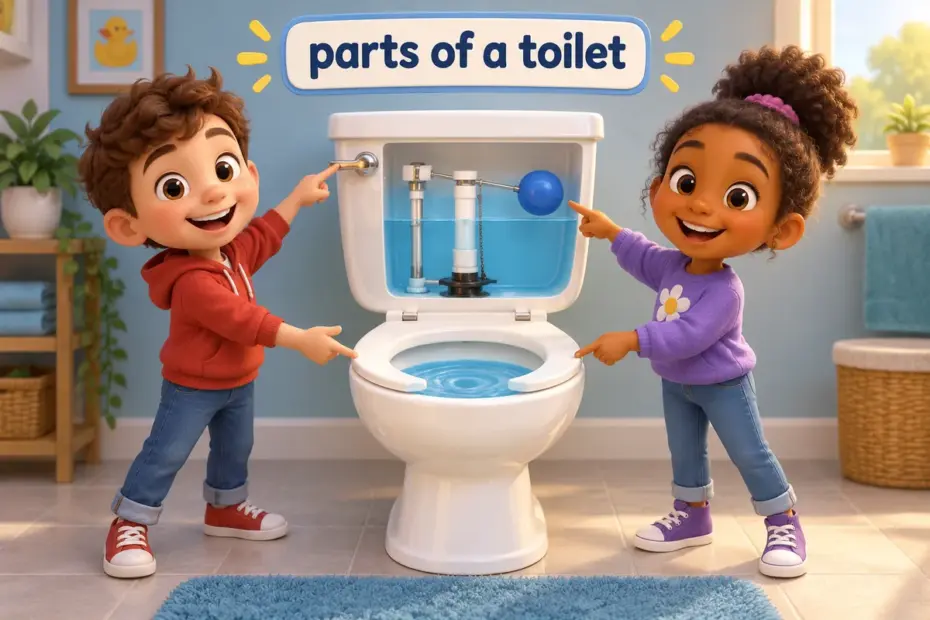
The parts of a toilet are the tank, the bowl, the seat, and the flush mechanism that moves water between them. The tank stores the water, the bowl receives the waste, and the trapway carries it away, so each part plays one clear role.
Parts of a toilet at a glance
- A toilet has four main parts: the tank, the bowl, the seat, and the flush mechanism.
- The tank stores water above and behind the bowl.
- The flush valve drops water into the bowl when you press the handle.
- The trapway is the curved passage that carries waste away.
- The commonest error is using lavatory for the toilet itself in everyday speech.
What are the parts of a toilet?
A toilet is a fixture that collects waste and carries it into a drain using a measured flush of water. The tank sits above the bowl and holds the water, the bowl receives everything, and the trapway leads out to the waste pipe. Inside the tank, a fill valve and a flush valve refill and release that water after every press of the handle.
| Part | Where it is | What it does | Example sentence |
|---|---|---|---|
| Tank | Above and behind the bowl | Stores the water | The tank of a toilet holds about six litres. |
| Cistern | Another name for the tank | Stores the water | The cistern of a toilet is often white. |
| Bowl | Below the tank | Receives the waste | The bowl of a toilet was clean. |
| Seat | On top of the bowl | Gives a place to sit | The seat of a toilet lifts up. |
| Lid | Over the seat | Covers the bowl | The lid of a toilet was down. |
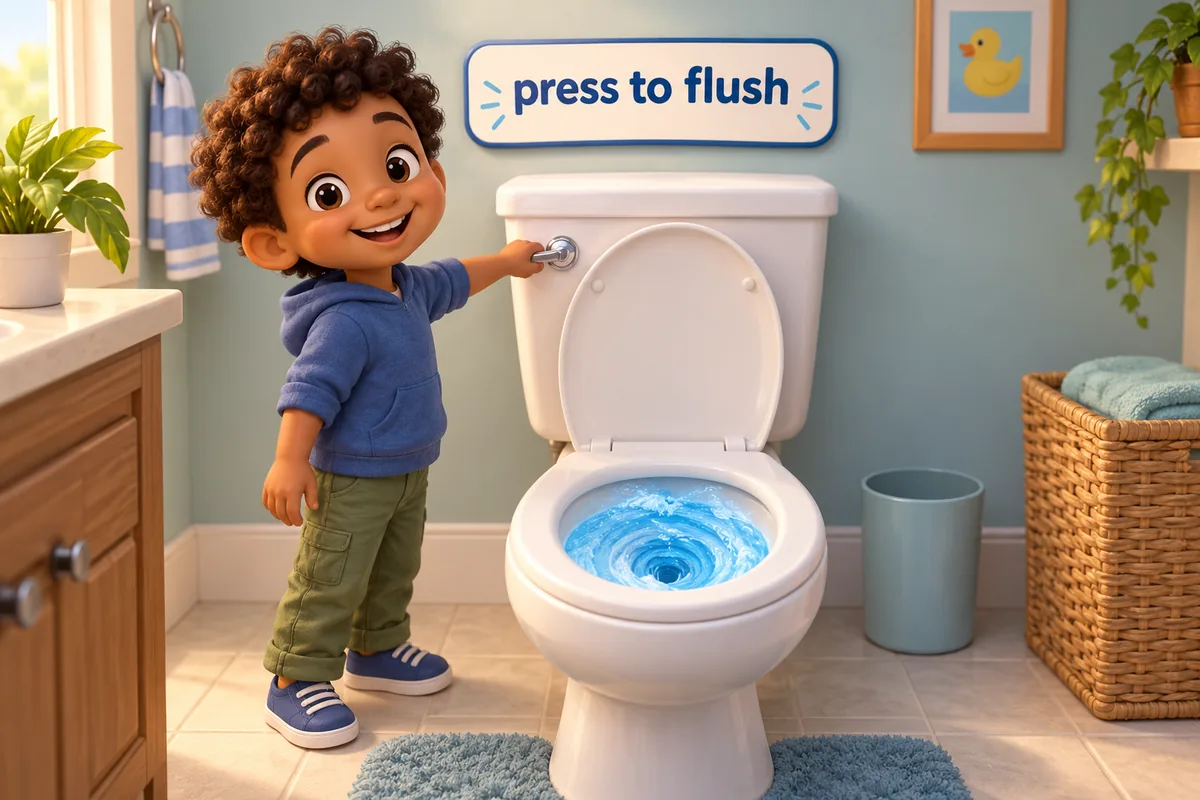
| Flush handle | On the tank | Starts the flush | Press the handle of a toilet lightly. |
| Flush valve | Inside the tank | Releases the water | The flush valve of a toilet had worn out. |
| Fill valve | Inside the tank | Refills it after a flush | The fill valve of a toilet kept running. |
| Float | On the fill valve | Stops the water level | The float of a toilet rose with the water. |
| Trapway | Inside the base | Carries waste away | The trapway of a toilet curves downward. |
| Wax ring | Between base and floor | Seals out leaks | The wax ring of a toilet had dried. |
| Supply line | Behind the bowl | Brings fresh water | A supply line of a toilet leaked. |
How do you use the parts of a toilet in a sentence?
The naming phrase puts one part before of a toilet, or lets the toilet own that part with an apostrophe. Match the verb to the number of parts you name, because parts such as the valves and the seat take their own singular or plural verbs.
| Pattern | Example | What it signals |
|---|---|---|
| the + part + of a toilet | The tank of a toilet holds water. | names one part |
| a toilet’s + part | A toilet’s seat was loose. | shows possession |
| plural part + of a toilet | The valves of a toilet wear out. | talks about several parts |
| part + verb | The trapway carries waste away. | describes a job |
| label + part | The plumber replaced the wax ring. | trade and repair use |
| part + helps + verb | The float helps stop the water. | explains a function |
Parts of a toilet in context: examples across contexts
The same names appear in a classroom, a repair manual, and a rental agreement, and the wording around them changes with the setting. A parallel labelled list sits in car parts that starts with a to z.
| Context | Example sentence | Why this works |
|---|---|---|
| Classroom | The teacher asked us to name each part of a toilet. | a school labelling task |
| Repair manual | Lift the tank lid and check the flush valve. | a practical instruction |
| Rental agreement | Report a leaking toilet to the landlord within a day. | a formal clause |
| Plumbing note | The fill valve of a toilet was replaced. | a short trade record |
| Hotel sign | Please do not flush wipes down the toilet. | a public warning |
| Exam question | Name the part that stores the water. | a clear instruction |
| Science lesson | Water flows from the tank into the bowl when flushed. | a plain factual statement |
| DIY video | Turn off the supply line before you work. | a safety step |
| Story | The old toilet in the shed had rusted shut. | simple narrative wording |
| Shop listing | This seat fits most standard toilets. | a buyer note |
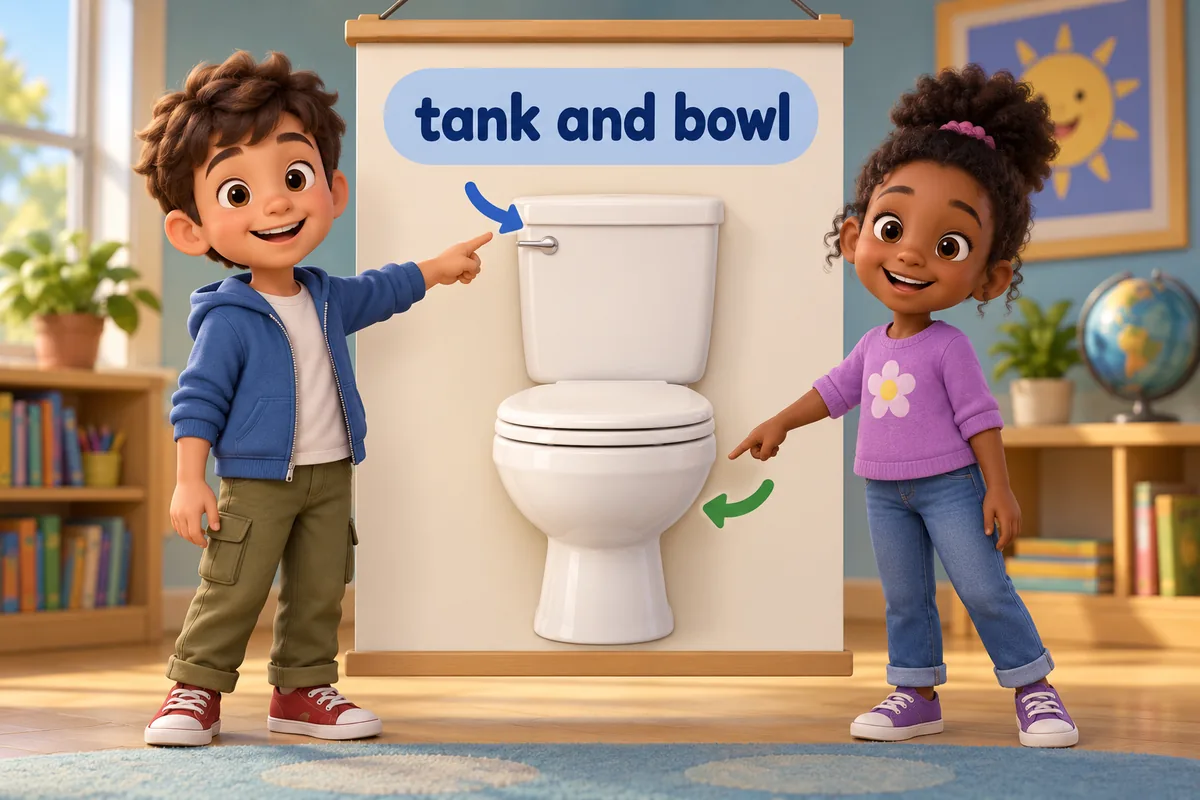
Tank, bowl, and trapway: how the parts differ
Grouping the parts by when they act makes the flush easy to follow, because storage, reception, and removal happen in order. A similar one-name-one-job list appears in human body parts that start with a.
| Feature | Tank | Bowl | Trapway |
|---|---|---|---|
| Main job | stores the water | receives the waste | carries it away |
| Where it is | above and behind | the middle | inside the base |
| When it acts | before the flush | during the flush | after the flush |
| Typical material | glazed ceramic | glazed ceramic | glazed ceramic |
| Diagram label | tank | bowl | trapway |
Word forms and grammar of the parts of a toilet
Most part names are nouns, and a few carry older alternatives. The words lavatory and commode once named the fixture but now sound dated in everyday speech. A comparable list of human body parts that start with b shows the same naming habit.
| Form | Part of speech | Example |
|---|---|---|
| toilet | noun | The toilet is new. |
| toilets | noun, plural | The toilets were all busy. |
| flush | verb and noun | A flush uses little water. |
| cistern | noun, British | The cistern is in the loft. |
| lavatory | noun, dated | The lavatory is at the back. |
| commode | noun, dated | A commode once meant a chair. |
| seat | noun | Lower the seat, please. |
| sewage | noun | Sewage flows to the plant. |
| plumbing | noun | The plumbing is modern. |
| drain | noun and verb | The water drains away. |
Common mistakes with the parts of a toilet
Mixing the fixture with the room, or the parts with each other, causes most of the errors, so keep each name with its one job.
Mistake 1: toilet for the whole room. Incorrect: The toilet has a mirror and a shower. Correct: The bathroom has a mirror and a shower. Rule: toilet names one fixture, not the whole room.
Mistake 2: handle for the fill valve. Incorrect: Press the handle to fill the tank. Correct: Press the handle to flush the toilet. Rule: the handle flushes, while the fill valve refills.
Mistake 3: broke for broken. Incorrect: The toilet is broke again. Correct: The toilet is broken again. Rule: use the adjective broken after is.
Mistake 4: bowl for tank. Incorrect: The bowl of a toilet store water. Correct: The tank of a toilet stores water. Rule: the tank stores water, and the bowl receives waste.
Mistake 5: cistern for seat. Incorrect: Wipe the cistern seat before you sit. Correct: Wipe the toilet seat before you sit. Rule: the seat is the part you sit on, and the cistern is the tank.
Practice using the parts of a toilet
- Fill in the blank: The ___ stores the water above the bowl.
- Choose the better word: Waste leaves through the (trapway / seat).
- Correct the error: The toilet is broke again.
- Build a sentence: use flush valve to say how the water is released.
- Spot the register: which line suits a rental agreement, (a) The loo is knackered, or (b) Report a leaking toilet within a day?
- Fill in the blank: Press the ___ to start the flush.
Answers
- tank, because the tank stores the water above and behind the bowl.
- trapway, because the trapway is the curved passage that carries waste away.
- The toilet is broken again; use the adjective broken after is.
- The flush valve opens to release water from the tank into the bowl.
- (b), because a rental agreement uses formal, precise wording.
- handle, because the handle starts the flush.
The bottom line
The parts of a toilet split into three stages: the tank stores the water, the bowl receives the waste, and the trapway carries it away. Learn what each part does, because the flush valve releases, the fill valve refills, and the float stops the level. Once the sequence is clear, the fixture stops being a mystery.
Frequently asked questions about the parts of a toilet
What are the main parts of a toilet?
A toilet has four main parts: the tank, the bowl, the seat, and the flush mechanism. Inside the tank sit the flush valve, the fill valve, and the float, and inside the base runs the trapway. A wax ring and a supply line complete the fittings.
What is the difference between the tank and the bowl?
The tank is the box above and behind that stores the water for the flush, while the bowl is the lower part that receives the waste. When you press the handle, water moves from the tank down into the bowl. The bowl then empties through the trapway.
How does a toilet flush work?
Pressing the handle lifts the flush valve, and water rushes from the tank into the bowl. That rush pushes the waste through the curved trapway and out to the drain. The fill valve then refills the tank until the float rises and stops the flow.
Why does a toilet have a trapway?
The trapway is the curved channel inside the base that leads waste out to the drain. Its shape holds a small amount of water after each flush, and that water seal blocks sewer gases from rising into the room. Every flush refills the seal automatically.