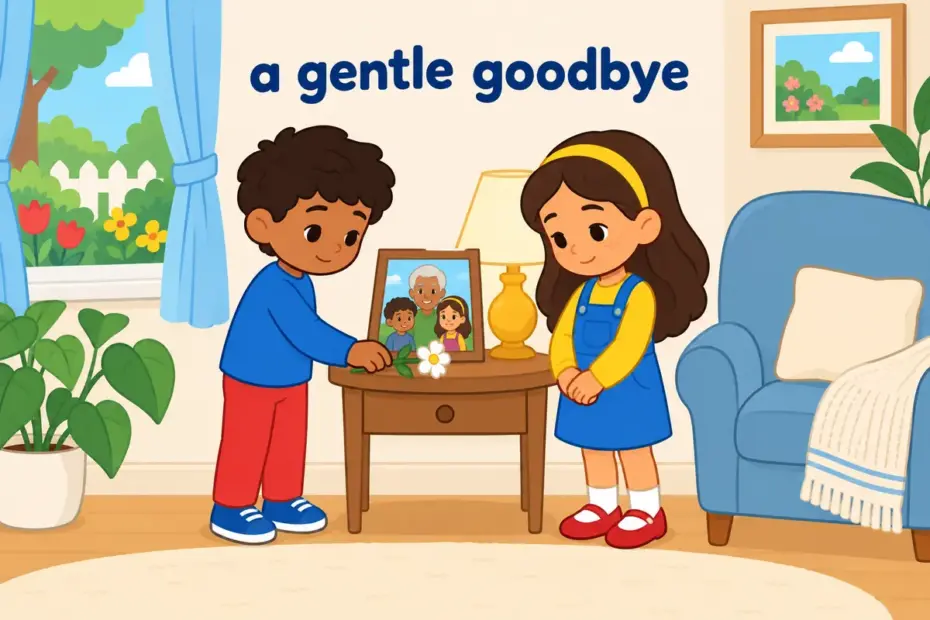
Pass away is a gentle phrasal verb meaning to die, used when a speaker wants to soften the plain word die. To use pass away in a sentence, keep it intransitive and inseparable: “Her grandfather passed away quietly at home.”
Pass away at a glance
- Pass away is an intransitive phrasal verb; its forms are passes away, passed away and passing away.
- Its main meaning is to die, said gently and politely.
- It is inseparable: away cannot be moved away from pass.
- Its most common subjects are people, and in a literary sense, time.
- The commonest error is giving it an object, as in she passed away her mother.
What does pass away mean?
Pass away is an intransitive phrasal verb meaning to die, and it also has a literary sense in which time passes away. The Cambridge entry for pass away records the die sense as the main one. Where a writer wants the blunt truth rather than comfort, the verb die is the plain alternative, because pass away deliberately avoids the word death.
| Sense | Plain meaning | Example sentence |
|---|---|---|
| Die, gently | To die, said politely | Her neighbour passed away last winter. |
| Of time, literary | To go by or elapse | The long afternoon passed away in silence. |
| Fade from use, rare | To come to an end | The old custom passed away with the century. |
One limitation is worth stating plainly. Pass away is a euphemism, and euphemisms can hide what happened. In a clinical note or a news report that must be exact, die is the honest choice, and pass away can sound evasive. The phrase also carries real comfort in obituaries and sympathy messages, so the right choice depends on the reader, not on the grammar.
How do you use pass away in a sentence?
Pass away is intransitive, so it never takes an object: a person passes away, and nothing is passed away. The particle away is inseparable, so it cannot move to the other side of a noun, and because there is no object there is nothing to strand it around. The pattern is simply subject plus pass away, and the usual subjects are people and, in the literary sense, time.
| Pattern | Example | What it signals |
|---|---|---|
| subject + passed away | Her uncle passed away last night. | The core intransitive pattern with a person. |
| subject + passed away + adverb | He passed away peacefully. | An adverb of manner softens the report. |
| subject + passed away + place | She passed away at home. | Names where, a common obituary detail. |
| subject + passed away + time | They passed away within a year of each other. | Places the event in time. |
| time + passed away, literary | The hours passed away unnoticed. | The secondary sense, about elapsing time. |
Compare the shared-verb phrase pass by, which means to go past a place and does not mean to die. Same base verb, different particle, completely different sense.
Pass away in a sentence: examples across contexts
Pass away keeps its gentle tone while the setting changes. The nine sentences below move from an obituary to a sympathy card, and each one keeps the verb intransitive.
| Context | Example sentence | Why this works |
|---|---|---|
| Obituary | She passed away on Sunday at the age of ninety-two. | Supplies the time and keeps the tone respectful. |
| Family conversation | Grandad passed away before the youngest cousins were born. | Softens the news for a family setting. |
| News report | The former teacher passed away after a long illness. | Names the fact while preserving dignity. |
| Sympathy card | We were so sorry to hear that your father passed away. | The phrase belongs in the fixed language of condolence. |
| Novel | Her mother passed away in the spring, and the house grew quiet. | The literary register suits reflective fiction. |
| History essay | Both poets passed away before the war ended. | Keeps a formal, respectful distance. |
| School email | We are sad to share that our caretaker passed away last week. | Matches the tone a school community expects. |
| Religious writing | He passed away peacefully, surrounded by his family. | The adverb and the detail convey comfort. |
| Literary prose | Long summer evenings passed away while the river moved on. | Uses the secondary sense about time. |
Pass away vs die and perish
Pass away, die and perish name the same event but carry different feelings. Pass away is gentle and comforting, die is plain and direct, and perish is formal or grim. The three are not interchangeable in tone even though they share a meaning.
| Attribute | pass away | die | perish |
|---|---|---|---|
| Register | Gentle and euphemistic | Plain and neutral | Formal and often harsh |
| Transitivity | Intransitive | Intransitive | Intransitive |
| Feeling it suggests | Comfort, avoids the word death | Direct and factual | Disaster or violence |
| Typical use | Obituaries, sympathy, family | Everyday and clinical writing | Histories and disasters |
| Takes an object | Never | Rarely | Never |
Verdict: use pass away for comfort, die for the plain truth, and perish for formal or grim contexts. To perish is to die in a disaster or a hard setting, and to succumb is to die after a long struggle against illness, so both carry a weight that pass away quietly avoids.
Word forms and grammar of pass away
Pass away inflects like the regular verb pass, but the particle stays fixed in every form. The table also lists the near neighbours that learners mix up most.
| Form | Part of speech | Example |
|---|---|---|
| pass away | phrasal verb, base | People often pass away at home. |
| passes away | phrasal verb, third person | He passes away quietly in the final chapter. |
| passed away | phrasal verb, past | Her aunt passed away in June. |
| passing away | phrasal verb, participle | She was passing away as the family gathered. |
| pass over | phrasal verb, different meaning | They pass over the difficult question, meaning skip it. |
The noun for the event is death, or the softer demise, but there is no accepted noun passing-away for the act. Keep the particle after the verb in every tense, because passed quiet away is never grammatical.
Common mistakes with pass away
- Incorrect:
She passed away her mother last year.Correct: Her mother passed away last year. Rule: Pass away is intransitive, so it never takes an object. - Incorrect:
He passed his father away on Monday.Correct: His father passed away on Monday. Rule: The particle is inseparable, so away cannot be separated by a noun. - Incorrect:
My phone passed away after the update.Correct: My phone stopped working after the update. Rule: The phrase belongs to people and, in literature, to time, not to broken gadgets. - Incorrect:
He past away at dawn.Correct: He passed away at dawn. Rule: The verb is pass, so the past tense is passed, not past. - Incorrect:
She passed away from a sudden accident.More natural: She died in an accident. Rule: The gentle phrase suits quiet, natural farewells better than sudden, harsh events.
Practice using pass away
Work through the six items, then read the reasoning rather than only the key.
- Fill the gap: The family dog ______ away peacefully on the rug.
- Choose the better word: For an exact medical record, write (passed away / died).
- Correct the error: He passed away his grandfather in the spring.
- Build a sentence: use passed away about a neighbour, in a gentle way.
- Spot the register: which belongs in a condolence message — I was sorry to hear your aunt passed away, or your aunt kicked the bucket?
- Rewrite the sense: The evening slipped by quietly. Use passed away in its time sense.
Answers
- passed — the past tense of the verb pass is passed, and away follows it.
- died — an exact record needs the plain verb, not the euphemism.
- His grandfather passed away in the spring — the verb cannot take an object, so the person is the subject.
- Model answer: Our neighbour passed away quietly after a long life.
- I was sorry to hear your aunt passed away — condolence keeps a gentle, respectful tone.
- The evening passed away quietly — the same particle carries the literary sense of elapsing time.
The bottom line
Use pass away in a sentence when you want a gentle way to say that someone has died, and keep the verb intransitive and inseparable. The two details that decide most sentences are that it never takes an object, so the person is always the subject, and that it also carries a literary sense in which time passes away. Where comfort is not the aim, die is the plain and honest word.
Frequently asked questions about pass away
Is pass away a phrasal verb?
Yes. Pass away is an intransitive, inseparable phrasal verb. That means it never takes an object and the particle away cannot move away from the verb. You say the person passed away, never the person passed away something. It behaves like a single unit in every tense and form.
What is a more direct word than pass away?
Die is the direct word. Pass away softens the news and avoids the word death, which suits obituaries, sympathy messages and family conversation. In a medical record or a factual report, die is clearer and more honest. Other options such as perish and succumb are stronger still and suit formal or grim contexts.
Can you say pass away in a news report?
Reporters do use it, especially in obituaries and appreciations, because it respects the subject. In a hard news story about a sudden or violent event, however, many editors prefer died for accuracy. The choice depends on tone: pass away sounds gentle and formal, while died sounds plain and exact.
Does pass away always mean die?
No. The main sense is to die, but pass away also has a literary sense meaning to elapse, as in the hours passed away in silence. A third, rarer sense describes a custom or thing fading from use. Context makes the meaning clear, since only the die sense takes a person as its subject.
Dealing with loss is an inevitable part of life. When someone passes away, it can be a challenging and emotional experience for those left behind.
To “pass away” is a polite and gentle way of saying that someone has died. This phrase is often used to convey the news of someone’s passing in a sensitive manner.
7 Examples Of Pass Away Used In a Sentence For Kids
- My pet goldfish may pass away if we don’t feed it properly.
- Grandma told me that people pass away when they get very old.
- It’s important to be gentle with plants so they don’t pass away.
- The butterfly will pass away if we touch its delicate wings.
- We should be careful with animals so they don’t pass away.
- Sometimes our favorite toys can break and pass away.
- Let’s take care of each other so no one has to pass away too soon.
14 Sentences with Pass Away Examples
- Unfortunately, my grandmother will pass away before my exams start.
- I heard that the famous author is battling a serious illness and may pass away soon.
- The student council is organizing a memorial service for the professor who recently passed away.
- Please inform the college administration if a family member passes away during the semester.
- It is important to take time off to grieve properly if a loved one passes away.
- The campus counseling center offers support to students who have recently passed away or experienced loss.
- The college community expressed their condolences upon hearing that a fellow student had passed away.
- It can be difficult to focus on studies when a close friend passes away.
- The professor allowed me to take a break from classes after my pet passed away.
- Attending the funeral of a classmate who passed away was a somber experience for everyone.
- The college organized a charity event in memory of a beloved staff member who passed away.
- It is important to have a support system in place if a roommate passes away unexpectedly.
- The student body held a candlelight vigil for the victims of a tragic accident who had passed away.
- The library has resources available for students who are coping with the loss of a family member who passed away.
How To Use Pass Away in Sentences?
Pass Away is used to express that someone has died in a more respectful and gentle way. To use Pass Away in a sentence, you can follow these simple steps:
- Identify the person who has died or the subject of the sentence.
- Insert Pass Away after the person’s name or pronoun in the sentence.
- Make sure to use the correct verb tense based on the timing of the person’s passing. For example, if the person recently passed away, use “passed away” but if it happened in the past, use “had passed away.”
- Depending on the context, you can add additional information about the person’s passing or the reaction to their death in the sentence.
Example:
– She passed away peacefully in her sleep last night.
– The actor had passed away before they finished filming the movie.
– We were sad to hear that our neighbor’s dog passed away after a long and happy life.
Remember that Pass Away is a more polite way to talk about someone’s death and is often used when discussing it with sensitivity. It can be interchangeable with phrases like “died” or “passed on,” but it carries a softer connotation.
Conclusion
In conclusion, the phrase “pass away” is often used to describe someone’s death in a respectful and gentle manner. It conveys the idea of someone peacefully departing from this world. For example, “She peacefully passed away in her sleep” or “His grandfather passed away after a long illness.” While it may seem like a softer term than “die,” it is commonly accepted and widely used in various contexts to discuss the loss of a loved one.
By choosing to use “pass away” in conversations and writing, individuals can show empathy and sensitivity when discussing the topic of death. It allows for a more gentle way to express and acknowledge the passing of someone, helping to convey condolences and support to those who are grieving.


