
Past perfect continuous uses and examples centre on one job: showing how long an action had been going on before a later past moment. The tense is built with had been plus an -ing verb, as in “she had been waiting for an hour”. It answers the question of duration in the past.
Past perfect continuous at a glance
- The form is had been plus the -ing form of the main verb.
- Had never changes with the subject: I had, you had, she had, they had.
- It describes an action still in progress before a later past event.
- Time phrases such as for two hours, since morning and all day fit naturally.
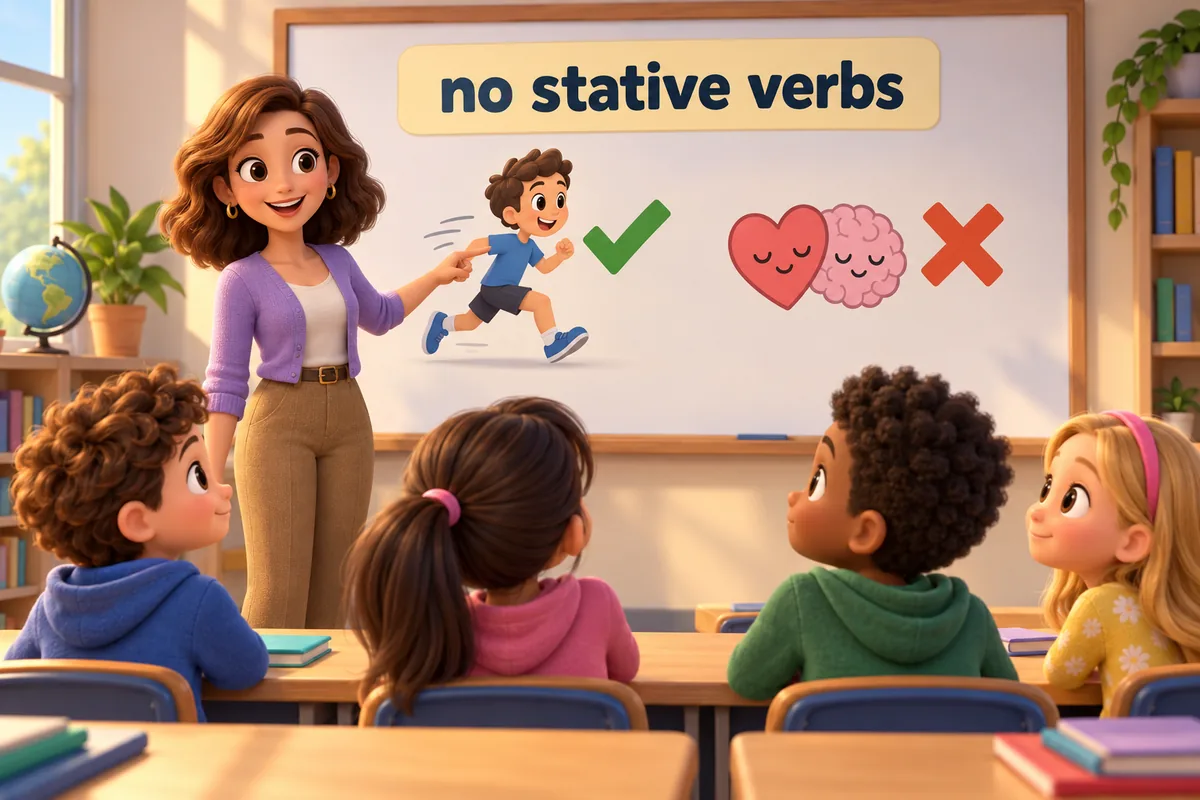
- Stative verbs such as know, own and believe stay in the simple form.
What is the past perfect continuous?
The past perfect continuous is a verb tense that shows an action in progress before another action in the past. It looks back from a past point and measures how long something had been happening. Each part of the form has a fixed role, shown below.
| Element | Form | Example |
|---|---|---|
| Auxiliary | had | I had / she had / they had |
| Participle | been | had been |
| Main verb | -ing form | had been studying |
| Time phrase | for / since / all | had been reading all morning |
How do you form the past perfect continuous?
Keep the auxiliary had fixed and change only the ending of the main verb. The table shows the four sentence shapes a learner needs.
| Sentence type | Form | Example |
|---|---|---|
| Positive | had been + -ing | They had been working all day. |
| Negative | had not been + -ing | She had not been sleeping well. |
| Yes/no question | had + subject + been + -ing | Had you been waiting long? |
| Wh-question | wh-word + had + subject + been + -ing | How long had he been driving? |
Two clauses normally work together: one carries had been and the other carries the later past event in the past simple. The time phrase with for or since belongs in the had been clause, not the shorter clause that ends it.

Past perfect continuous in sentences: examples across contexts
The tense appears in report writing, conversation and storytelling. The table pairs each context with a sentence and the reason it fits.
| Context | Sentence | Why this works |
|---|---|---|
| Report writing | The team had been testing the pump for weeks before it failed. | measures duration before a past event |
| Everyday talk | I had been looking for my keys when you called. | sets background to a past interruption |
| Story opening | Rain had been falling since dawn. | frames the scene before the action |
| Job interview | I had been leading the project before it closed. | gives a past role with a time span |
| News report | Rescuers had been searching the slopes all night. | stresses the length of the effort |
| Classroom | She had been practising for months before the recital. | links preparation to a result |
| Customer email | We had been waiting for the part since Monday. | explains a delay politely |
| Diary entry | He had been feeling tired for days. | notes a sustained state in the past |
| Sports report | The runners had been training all winter. | shows long preparation |
| Instruction recap | What had they been doing before the alarm? | asks about earlier duration |
| Film script | The lights had been flickering for minutes before the power cut. | builds tension before an event |
| Safety briefing | The crew had been checking the ropes since sunrise. | records careful preparation |
Writers often meet the tense first in the continuous sentence examples, then in the past sentence examples for the later event, while the perfect sentence examples cover the close relative that reaches to the present.
Past perfect continuous vs past continuous: which should you use?
The two tenses sit close together and are often confused. The table separates them on form, focus and the words that usually appear with each.
| Attribute | past perfect continuous | past continuous |
|---|---|---|
| Form | had been + -ing | was / were + -ing |
| Focus | duration before a past point | action in progress at a past point |
| Example | She had been reading for hours. | She was reading at eight. |
| Time words | for, since, all day | while, at eight, when |
| Common error | used for a single finished act | used for long duration |
Use the past perfect continuous when the length of the action matters, and the past continuous when the moment matters.
A useful test is to ask whether the sentence would lose its meaning without the time phrase. If the length is doing real work, this tense is the right choice; if the sentence only needs a moment, the past continuous is simpler.
Word forms and grammar of the past perfect continuous
Spelling and verb choice decide most accuracy. The table shows the patterns, including the verbs that avoid this tense.
| Base verb | Past perfect continuous | Note |
|---|---|---|
| work | had been working | regular -ing |
| run | had been running | double the final n |
| travel | had been travelling | British spelling doubles the l |
| lie | had been lying | change -ie to -y |
| write | had been writing | drop the final e |
| see | had been seeing | fine for repeated meetings |
| know | had known | stative verb, simple form only |
| own | had owned | stative verb, simple form only |
The -ing spelling follows the usual rules, so run doubles its final n and lie changes to lying. When a verb is stative, replace the whole tense with the past perfect simple rather than forcing an -ing ending.
Common mistakes with the past perfect continuous
Five errors appear constantly. Each gives the wrong sentence, the corrected version, and the rule.
She had been knew the answer.She had known the answer. Stative verbs such as know keep the simple form.I had been waiting for two hours when he arrives.I had been waiting for two hours when he arrived. Keep the later event in the past simple.He was been working all day.He had been working all day. The auxiliary is had, not was.They had being waiting outside.They had been waiting outside. The form is been, not being.We had been went to the market.We had been going to the market. Use the -ing form after been.
Practice using the past perfect continuous
Complete the six exercises, then compare your answers with the reasons given.
- Complete: They ___ (wait) for an hour before the bus came.
- Choose the better form: By the time we arrived, she (had been cooking / cooked) for three hours.
- Correct the error: He had being studying all night.
- Build a sentence using “had been raining” about a wet morning.
- Choose the better form: She (had been knowing / had known) him for years.
- Make a question from: you / how long / wait / before the shop opened.
Answers
- Had been waiting. The action lasted an hour before the later past event.
- Had been cooking. The phrase for three hours signals duration before a past point.
- He had been studying all night. The participle after had is been, not being.
- It had been raining since dawn, so the pitch was soaked. The tense measures the rain before a past moment.
- Had known. Know is stative, so it stays in the simple form.
- How long had you been waiting before the shop opened? The wh-question places how long first, then had before the subject.
The bottom line
Past perfect continuous uses and examples come down to duration before a past moment, built from had been plus -ing. Keep the auxiliary fixed, place a time phrase with for or since, and leave stative verbs in the simple form. When the moment, not the length, is the point, switch to the past continuous.
Frequently asked questions about the past perfect continuous
When do you use the past perfect continuous?
Use the past perfect continuous when an action was still going on before a later past event, and you want to stress how long it lasted. A sentence such as she had been reading for two hours before the guests arrived measures the duration and then marks the later event with the past simple.
What is the difference between had been and has been?
Had been belongs to the past perfect continuous and looks back from a past point, as in he had been working, while has been belongs to the present perfect continuous and connects to now, as in he has been working. The auxiliary had points to a past reference; has points to the present.
Can the past perfect continuous use stative verbs?
Stative verbs such as know, own, believe and belong rarely take the continuous form in any tense. Instead of had been knowing, write had known. A few verbs such as see and have change meaning when they become continuous, so check the sense before choosing the tense.
How is the past perfect continuous formed?
The tense is formed from had been plus the -ing form of the main verb. Had stays the same for every subject. Negatives add not after had, and questions move had before the subject, as in had they been waiting long before the doors opened.