Pull off is a phrasal verb meaning to succeed in doing something difficult: the young team pulled off a surprise win. The phrase is transitive and strongly separable, so a pronoun object always sits in the middle, as in they pulled it off.
Pull off at a glance
- Pull off is a transitive phrasal verb; its forms are pulls off, pulled off and pulling off.
- Its senses are achieving something hard, removing clothing, and leaving a road.
- A noun object may follow the particle, but a pronoun must split it: pull it off.
- The usual subjects are people or teams facing a challenge: the class, the understudy, the engineers.
- The commonest error is putting the pronoun after the particle, as in pulled off it.
What does pull off mean?
Pull off is a phrasal verb meaning to succeed in something difficult, to remove a garment by pulling, or to leave a road. The Cambridge entry for pull off covers the achievement sense and the physical sense, and the achievement sense is the one readers meet most often.
| Sense | Plain meaning | Example sentence |
|---|---|---|
| Achieve something hard | Bring off a difficult plan or result | The understudies pulled off a flawless show. |
| Remove by pulling | Take off clothing or a covering | He pulled off his muddy boots at the door. |
| Leave a road | Turn a vehicle off the highway | We pulled off at the next exit to refuel. |
One limitation is worth stating plainly. Pull off does not mean to try, and it does not mean to start; it reports that the difficult thing was completed. When the focus is simply on finishing a task, accomplish is the more neutral verb.
How do you use pull off in a sentence?
Pull off is transitive, and the object names the achievement, never the person. The phrase is strongly separable: a full noun may follow the particle, but a pronoun cannot, so the split is the pattern that trips learners.
| Pattern | Example | What it signals |
|---|---|---|
| pull off + achievement | They pulled off a dramatic comeback. | Success against the odds. |
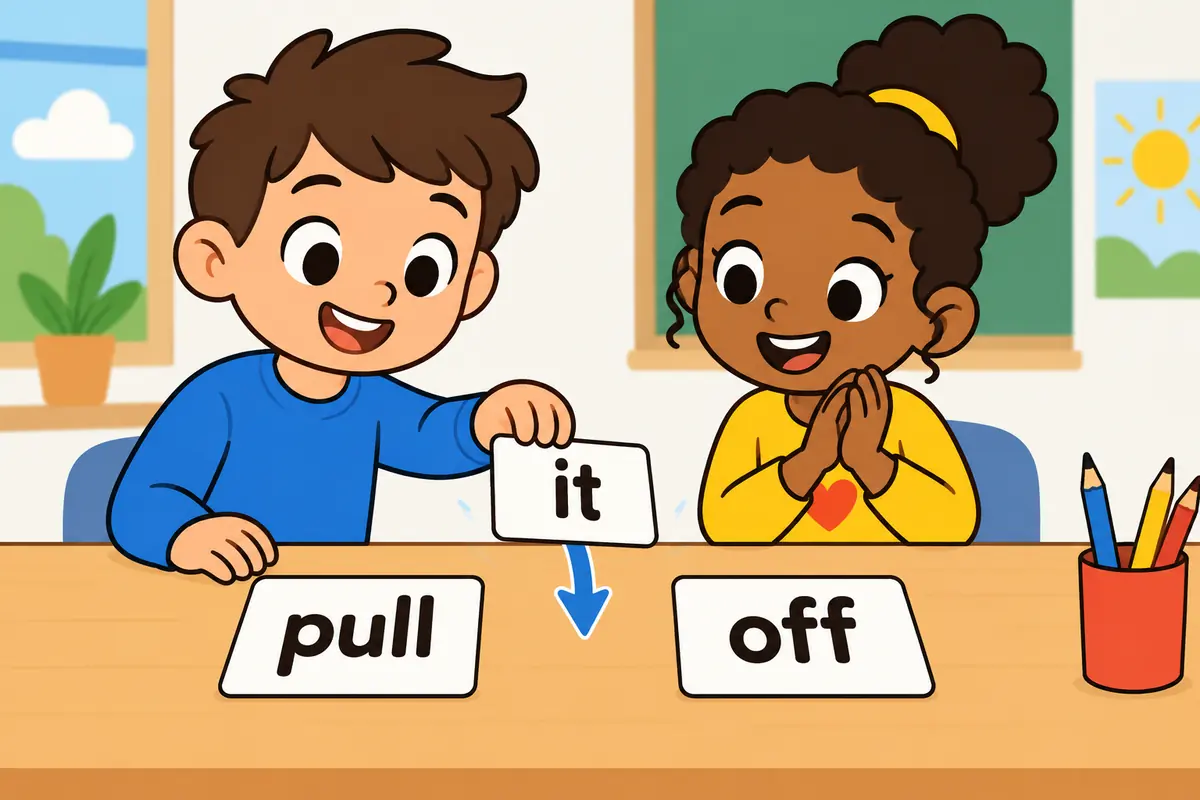
| pull + pronoun + off | She pulled it off on the final night. | Separable form; the pronoun must sit inside. |
| be pulled off | The rescue was pulled off in near darkness. | Passive, keeping attention on the feat. |
| pull off + garment | He pulled off his wet coat. | The literal removal sense. |
| pull off + road word | The van pulled off the track. | Leaving a route onto a side area. |
Pull off in a sentence: examples across contexts
Pull off suits any sentence where the odds were against the result. Eight contexts show how the same verb moves from a school play to a business report.
| Context | Example sentence | Why this works |
|---|---|---|
| News report | Rescuers pulled off a daring evacuation before the tide turned. | Pairs a hard feat with the difficulty that framed it. |
| Sports writing | The substitute pulled off the only goal of the match. | Names the feat and the unlikely scorer. |
| Workplace email | The team pulled off the launch two weeks early. | Reports success without overclaiming. |
| Classroom | The class pulled off a tidy performance despite missed rehearsals. | Keeps the achievement modest and concrete. |
| Performing arts | The orchestra pulled off the difficult finale without a rehearsal. | Pits a demanding piece against thin preparation. |
| Business writing | The negotiators pulled off a deal everyone had written off. | Sets the win against public doubt. |
| Conversation | You really pulled that off, and nobody noticed the mix-up. | Shows the pronoun split in casual speech. |
| Everyday planning | We pulled off the surprise party after weeks of cover stories. | Applies the sense to a domestic feat. |
In a measured report, manage often replaces pull off to keep the tone cool.
Pull off vs pull through
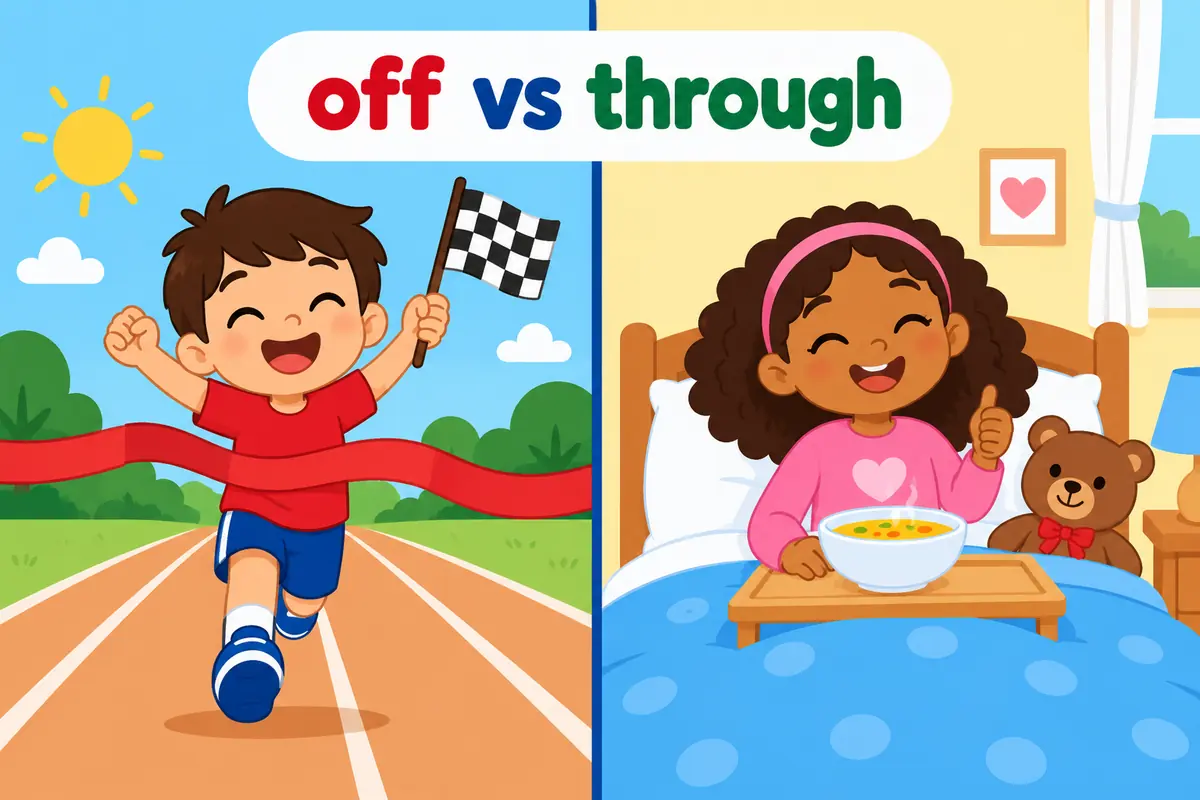
Pull off and pull through both end in success, but the kind differs. Pull off is about achieving a difficult thing, while pull through is about surviving an illness or a crisis. The plain verb succeed states the outcome without the added difficulty.
| Attribute | pull off | pull through |
|---|---|---|
| Core meaning | Complete something difficult | Survive or recover from danger |
| Typical subject | A person or team attempting a feat | A patient, a company or a country |
| What is won | A result or performance | Continued existence |
| Register | Neutral, common in journalism | Neutral, common in health writing |
| What it implies | Skill beat the odds | Endurance beat the odds |
Verdict: choose pull off for a feat that can be judged a success, and pull through when the subject merely survives a crisis. Its plain opposite is to botch the attempt, or simply to fail.
Word forms and grammar of pull off
Pull off follows the regular pattern of separable phrasal verbs, and the two shared-verb neighbours below show how much the particle changes the meaning. Do not confuse pull off with pull down, which means to demolish or lower, or with pull back, which means to withdraw.
| Form | Part of speech | Example |
|---|---|---|
| pull off | phrasal verb, base form | Few believe they can pull off the plan. |
| pulls off | phrasal verb, third person | She pulls off these stunts every year. |
| pulled off | phrasal verb, past and participle | They pulled off a narrow win. |
| pulling off | phrasal verb, present participle | He is good at pulling off difficult tricks. |
| pulled it off | separable form with pronoun | Nobody thought they could, but they pulled it off. |
Common mistakes with pull off
- Incorrect:
She pulled off it in the last minute.Correct: She pulled it off in the last minute. Rule: a pronoun object must sit between the verb and the particle. - Incorrect:
The plan was hard, but we pulled off.Correct: The plan was hard, but we pulled it off. Rule: pull off is transitive, so it always needs an object naming the achievement. - Incorrect:
We pulled off to finish the project on time.Correct: We managed to finish the project on time. Rule: pull off takes a noun phrase, not a to-infinitive. - Incorrect:
He is good at pull off difficult tricks.Correct: He is good at pulling off difficult tricks. Rule: after a preposition, a verb takes the -ing form. - Incorrect:
The driver pulled off when he saw the police lights.Correct: The driver pulled over when he saw the police lights. Rule: pull off means to achieve or to leave a road; for stopping at the roadside, the verb is pull over.
Practice using pull off
Work through the six items, then read the reasons as closely as the answers.
- Fill the gap: The understudies ______ a flawless opening night.
- Choose the better word: Despite the storm, they (pulled off / pulled down) the outdoor concert.
- Correct the error: She pulled off it in the final minute.
- Build a sentence: use be pulled off about a surprise party that almost failed.
- Spot the register: which fits a school newsletter — the class pulled off a great show, or the class pulled off?
- Rewrite with manage: The engineers pulled off a difficult landing. Use manage.
Answers
- pulled off — the show is the difficult achievement and the subject completes it.
- pulled off — the concert is the feat; pull down would mean demolish or lower.
- She pulled it off in the final minute — the pronoun must split the phrasal verb.
- Model answer: The surprise party was pulled off even though two guests arrived early.
- The class pulled off a great show — a newsletter needs the object, and pull off cannot stand alone.
- The engineers managed a difficult landing — manage keeps the same success without the dramatic edge.
The bottom line
Use pull off in a sentence when someone succeeds at something difficult, and make the achievement the object. Two nuances decide most sentences: the phrase is strongly separable, so a pronoun belongs in the middle, and the difficulty is part of the meaning, which is why plainly succeeding sounds weaker. For a literal sense, removing clothing or leaving a road, the same words take a more physical object.
Frequently asked questions about pull off
Is pull off one word or two?
Pull off is written as two words in every verb form: pulls off, pulled off and pulling off. The parts join with a hyphen only in a noun, as in a pull-off victory. Keep the verb open and the reader will never stumble over it.
Why do we say pull it off and not pull off it?
Pronoun objects are closely bound to the verb in English, so they must sit between a separable verb and its particle. A full noun is freer and may follow the particle, as in pull off a win, but a pronoun takes the fixed slot: pull it off.
Can you pull off something bad?
Usually not, because pull off praises the skill needed to complete a difficult thing. A sentence such as the gang pulled off a robbery is possible in news writing, where the feat itself is skilled even if the act is criminal. The verb comments on difficulty, not on morality.
What is the difference between pull off and pull over?
Pull off means to succeed at something or to leave a road onto a side area, while pull over means to stop at the side of the road. A driver who sees flashing lights will pull over, not pull off, because the point is stopping rather than turning away.
Have you ever struggled to successfully accomplish a task or achieve a desired outcome? The term “pull off” refers to successfully completing something difficult or challenging. It involves executing a plan or action skillfully to achieve the desired result.
Whether it’s a complicated project at work or a daring stunt, being able to “pull off” something requires careful planning, coordination, and sometimes a bit of luck. From organizing a surprise party to executing a flawless performance, the ability to “pull off” a task demonstrates skill, determination, and sometimes creativity.
7 Examples Of Pull Off Used In a Sentence For Kids
- Pull off your shoes before entering the house.
- Can you pull off your socks by yourself?
- Try to pull off the sticker from your book.
- Let’s see if you can pull off a funny face.
- Pull off your sweater if you feel hot.
- Remember to pull off your mask before eating.
- Can you pull off a dance move for us?
14 Sentences with Pull Off Examples
- I need to figure out how to pull off studying for two exams in one day.
- It’s challenging to find the right outfit to pull off the traditional day theme for our college event.
- She managed to pull off submitting her assignment just in time before the deadline.
- I hope I can pull off balancing my academics and extracurricular activities this semester.
- He successfully pulled off organizing a successful fundraiser for a social cause.
- How do you think we can pull off throwing a surprise party for our friend without her finding out?
- I’m not sure if I can pull off getting an internship at a prestigious company with my current experience.
- We need to pull off winning the inter-college debate competition next month.
- Can you help me brainstorm ideas on how to pull off a last-minute presentation for our group project?
- I have to pull off passing all my subjects this semester to maintain my scholarship.
- Do you think we can pull off arranging a successful college fest this year with the current budget constraints?
- I’m determined to pull off preparing for the competitive exams alongside my regular college studies.
- Let’s strategize on how we can pull off convincing our professor to extend the assignment deadline.
- She was ecstatic to pull off being elected as the president of the student council.
How To Use Pull Off in Sentences?
Pull Off is a phrasal verb that means to succeed in doing something difficult or to achieve something impressive. When using Pull Off in a sentence, it is important to follow some guidelines for clarity and accuracy.
To use Pull Off correctly in a sentence, first identify the action that was achieved or the difficult task that was successfully completed. For example, “She managed to pull off a stunning performance in the play.”
Remember to place Pull Off immediately after the subject of the sentence to show who is achieving the success. For instance, “The team was able to pull off a surprise victory in the tournament.”
Consider using Pull Off in a positive context to highlight accomplishments or impressive feats. For example, “Despite the odds, they were able to pull off a flawless presentation.”
Make sure to conjugate the verb correctly based on the subject of the sentence. For plural subjects, use “pull” instead of “pulls.” For example, “They successfully pulled off the daring rescue mission.”
By following these simple guidelines, you can effectively incorporate Pull Off into your sentences to express achieving success or accomplishing impressive tasks.
Conclusion
In conclusion, the concept of “pulling off” something refers to successfully accomplishing a task or achieving a goal, often in a skillful or impressive manner. The phrase is commonly used to describe someone’s ability to execute a difficult or challenging feat with precision and excellence. It signifies the act of overcoming obstacles, demonstrating expertise, and attaining a desired outcome against all odds.
Whether it’s executing a perfect performance, achieving a particular look, or successfully completing a risky maneuver, being able to “pull off” something requires determination, skill, and sometimes a bit of luck. It reflects a high level of competence and capability in a given activity, showcasing one’s proficiency and talent in a specific area.


