
Put up with means to accept something annoying without complaining or leaving, and the three words stay together as one fixed unit. To use put up with in a sentence, place the annoying thing after with: We put up with the noise because the rent was cheap. The object never goes between put and up.
Put up with at a glance
- Put up with is a three-word phrasal verb and does not split.
- It means to tolerate something unpleasant, often over a long period.
- The subject is usually a person, and the object is the annoying thing.
- It is common in everyday speech and neutral in register.
- The commonest error is inserting the object before up, as in put it up with.
What does put up with mean?
Put up with is a phrasal verb meaning to tolerate something annoying without complaining or removing yourself from it. The Cambridge entry for put up with records the sense of accepting something unpleasant, and the emotion is usually quiet endurance rather than approval. In a formal report, tolerate a nuisance is the measured equivalent.
| Sense | Plain meaning | Example sentence |
|---|---|---|
| Tolerate | Accept an annoyance without complaining | I put up with the drilling all morning. |
| Endure over time | Keep accepting something for a long stretch | They put up with the cold for three winters. |
| Accept a person | Overlook somebody’s difficult behaviour | She puts up with his lateness because he is kind. |
One limitation is worth stating plainly. Put up with never means to agree or enjoy; a person who puts up with a rule would change it if they could, and the phrase often hints that patience is wearing thin. Where the hardship is long and serious, endure a delay carries more weight.
How do you use put up with in a sentence?
The three words form a single unit, so the object always lands after with, and the verb put never changes its spelling. Five frames cover nearly every real sentence, including the negative that marks a limit.
| Pattern | Example | What it signals |
|---|---|---|
| put up with + noun | I put up with the traffic for years. | The object is the disliked thing. |
| put up with + pronoun | We put up with it until spring. | Pronouns follow with, never split the phrase. |
| cannot or will not + put up with | I will not put up with rudeness. | Negation shows where patience ends. |
| put up with + verb-ing | She puts up with being interrupted. | A gerund can be the object. |
| past: put up with | He put up with the noise last winter. | The base form serves as past and participle. |
Because the phrase is inseparable, put it up with and put the noise up with are both wrong, even though other phrasal verbs allow that movement. In speech, stand the mess is a shorter and equally natural choice.
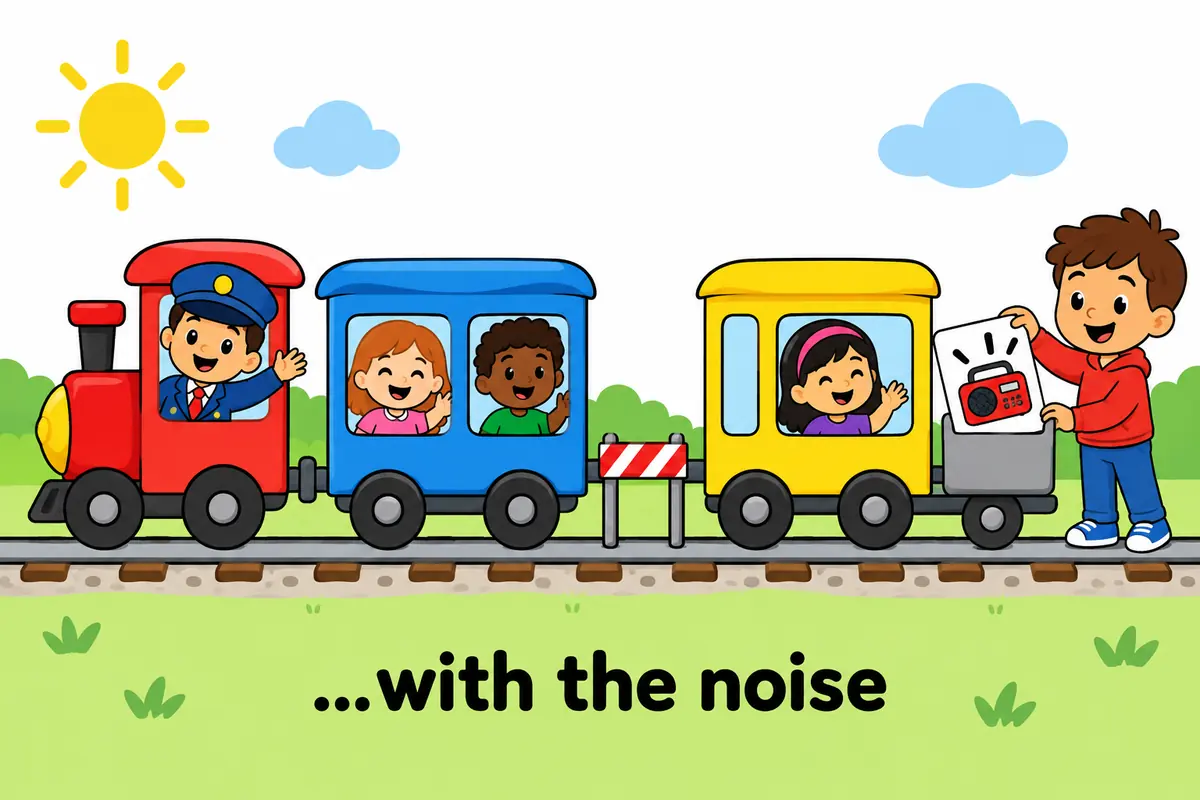
Put up with in a sentence: examples across contexts
Put up with changes register more than it changes meaning. The nine sentences below keep the phrase intact while moving from a classroom to a news feature, and each one names the annoyance being accepted.
| Context | Example sentence | Why this works |
|---|---|---|
| Classroom | The class put up with the squeaky chair until a new one arrived. | A short-lived annoyance keeps the tone light. |
| Workplace email | We can put up with the slower system for one more week. | A time limit signals reluctant acceptance. |
| News feature | Residents say they have put up with the smell for a decade. | The long stretch makes the endurance newsworthy. |
| Sports report | The keeper put up with heavy booing without losing focus. | Pairs the phrase with public pressure. |
| Advice column | Do not put up with a colleague who takes credit for your work. | The negative marks a firm limit. |
| Academic prose | Workers often put up with unsafe conditions rather than lose pay. | Shows the trade-off behind the endurance. |
| Conversation | I put up with his jokes because he means well. | The informal frame fits daily speech. |
| Diary | She put up with the cold flat for two years to save for a house. | Ties endurance to a clear purpose. |
| Review | We put up with slow service because the food was excellent. | The contrast explains the choice. |
The phrase works best when the sentence also signals a limit or a reason, because the bare acceptance would otherwise sound passive.
Put up with vs tolerate and endure
Put up with overlaps with two verbs and swaps cleanly for neither. Tolerate a nuisance is neutral and formal, endure stresses length and hardship, and put up with keeps a conversational, slightly resigned tone.
| Attribute | put up with | tolerate | endure |
|---|---|---|---|
| Core meaning | Accept an annoyance quietly | Allow something without objection | Suffer something patiently over time |
| Register | Informal and conversational | Neutral to formal | Formal and weighty |
| Implies hardship | Mild to moderate | Mild | Severe |
| Splits apart | No | No, single verb | No, single verb |
| Typical object | Noise, delays, a person | Behaviour, opinions, noise | Hardship, pain, a long trial |
Verdict: choose tolerate for a neutral statement, endure when the hardship is long and serious, and put up with when the tone should stay close to everyday speech.
Word forms and grammar of put up with
The phrase is fixed, so the grammar is mostly about the object and the tense. The table lists the forms and the movement that is never allowed.
| Form | Part of speech | Example |
|---|---|---|
| put up with | phrasal verb, base and past | They put up with the heat every summer. |
| puts up with | third-person singular | She puts up with the early starts. |
| putting up with | present participle | He is putting up with a noisy neighbour. |
| put up with (past) | unchanged past form | We put up with it last year. |
| put it up with | non-standard split | Never separate put and up. |
Because put is invariant, there is no putted and no did put up with in the simple past. In speech bear the noise sounds slightly more formal than put up with it, while abide survives mainly in the negative.
Common mistakes with put up with
- Incorrect:
I put it up with for years.Correct: I put up with it for years. Rule: the phrase is inseparable, so the object follows with. - Incorrect:
She putted up with the noise.Correct: She put up with the noise. Rule: put is irregular and keeps the same form in the past. - Incorrect:
We put up the rain.Correct: We put up with the rain. Rule: the preposition with is part of the phrase and cannot be dropped. - Incorrect:
He put up with to work late.Correct: He put up with working late. Rule: the object is a noun or gerund, never a to-infinitive. - Incorrect:
They put up with of the delays.Correct: They put up with the delays. Rule: with takes the object directly, with no of.
Practice using put up with
Work through the six items, then read the reasoning behind each answer.
- Fill the gap: I cannot ______ the tapping any longer.
- Choose the better word: The staff (put up with / putted up with) the old printer for months.
- Correct the error: She put it up with while she saved money.
- Build a sentence: use put up with about a noisy building site.
- Spot the register: which belongs in a formal report, The team tolerated the delay, or The team put up with the delay?
- Rewrite with endure: They put up with the flooding for years. Use endure.
Answers
- put up with: the gap needs the whole three-word phrase.
- put up with: put is irregular and never becomes putted.
- She put up with it while she saved money: the object follows with, not up.
- Model answer: We put up with the drilling until the roof was finished.
- The team tolerated the delay: tolerate suits a formal report.
- They endured the flooding for years: endure carries the longer, heavier hardship.
The bottom line
Use put up with in a sentence for accepting an annoyance quietly, and keep the three words together with the object after with. The two nuances that decide most sentences are that the phrase never splits, as in put it up with, and that put is invariant in the past. For a neutral or formal tone, countenance, tolerate and endure are the cleaner choices.

Frequently asked questions about put up with
Is put up with formal or informal?
Put up with is informal and conversational, which is why it fills speech and emails but rarely a legal document. Tolerate is the neutral equivalent and endure is the weightier one. All three mean accepting something unpleasant, but only put up with carries the easy, everyday tone of a chat between colleagues.
Can I split put up with?
No. The three words form one inseparable unit, so the object always follows with. You say I put up with it, never I put it up with. Some other phrasal verbs allow the object to move between the verb and the particle, but put up with is a fixed phrase, and moving the object makes it sound wrong.
What is the past tense of put up with?
The past tense is put up with, because put is irregular and keeps the same spelling. I put up with the noise yesterday is correct, while I putted up with it is wrong. The past participle is also put, so the perfect is I have put up with it for a long time.
Is put up with the same as put up?
No. Put up alone has several unrelated meanings, such as to build something or to let someone stay. Put up with the extra word with means to tolerate. The preposition changes the whole sense, so put up a shelf and put up with a neighbour describe completely different actions and should never be mixed.
Have you ever found yourself tolerating something you don’t particularly like or agree with? This act of enduring or accepting an unpleasant situation or behavior is known as “putting up with.” When we put up with something, we are choosing to bear it even though it may be bothersome or challenging.
Putting up with can be seen in various aspects of daily life, from dealing with difficult people to persevering through uncomfortable circumstances. It often requires patience, tolerance, and sometimes a bit of resilience. Let’s explore this concept further and discover how we navigate situations where we must put up with things we’d rather not.
7 Examples Of Put Up With Used In a Sentence For Kids
- Put up with your friend’s silly jokes in class.
- Can you put up with the noisy traffic outside?
- Let’s put up with the rainy weather and still have fun.
- Don’t worry, we can put up with the long line at the lunch counter.
- Remember to put up with your sibling’s teasing and be kind.
- I know it’s hard, but we must put up with the construction noise.
- It’s important to put up with challenges and keep trying our best.

14 Sentences with Put Up With Examples
- Putting up with noisy roommates can be challenging, especially during exam season.
- Put up with the slow Wi-Fi connection in the library, as it’s the only study spot available.
- It’s important to put up with strict hostel rules to maintain a peaceful living environment.
- Many students have to put up with limited food options in the canteen due to budget constraints.
- She had to put up with a difficult professor because the course was a prerequisite for her major.
- It can be frustrating to put up with late-night construction noises near the dormitory.
- Put up with the crowded buses during peak hours to get to and from campus.
- Dealing with unresponsive group members is part of the challenge that students have to put up with during group projects.
- Put up with the lack of study space in the overcrowded library during exam week.
- It’s tough to put up with the constant power outages on campus, especially during important deadlines.
- Many students have to put up with the unhygienic conditions of shared bathrooms in their hostels.
- Some students have to put up with academic pressure from their parents to excel in their studies.
- It can be exhausting to put up with long waiting times at the administrative office to resolve academic issues.
- Some students have to put up with uncomfortable living conditions in off-campus housing due to limited options.

How To Use Put Up With in Sentences?
Put Up With is a phrasal verb that means to tolerate or endure something that is unpleasant or annoying. Here is a guide on how to use Put Up With in a sentence:
- Identify the situation: First, identify what you are tolerating or enduring. It could be a person, a situation, a behavior, or anything that is causing annoyance or discomfort.
- Formulate your sentence: Once you have identified what you are putting up with, construct your sentence by starting with the subject, followed by the phrasal verb Put Up With, and then the object or situation you are tolerating.
- Example sentences:
- “I have to put up with my noisy neighbors every night.”
- “She puts up with her boss’s constant criticism because she needs the job.”
- “We put up with the long wait times at the doctor’s office.”
- Take note of pronouns: When using Put Up With with pronouns like he, she, it, or they, make sure to use the appropriate form of the verb (puts up with, put up with) to match the subject.
- Practice: The best way to master the usage of Put Up With is through practice. Try using it in different sentences to become more comfortable with its application.
By following this guide and practicing using Put Up With in sentences, you will be able to effectively communicate your tolerance for unpleasant or annoying situations.

Conclusion
In social relationships or daily interactions, individuals often need to tolerate or endure certain behavior or circumstances, also known as “putting up with” them. This phrase implies a level of acceptance, patience, or resilience in facing challenges or annoyances without reacting negatively. When someone says they are “putting up with” something or someone, it suggests that they are enduring a situation despite its difficulties or unpleasantness.
Learning to put up with minor frustrations or annoying habits can help maintain harmonious relationships and foster a peaceful environment. It is a valuable skill to navigate various interpersonal dynamics and cope with life’s inevitable challenges. By acknowledging and accepting that not everything will be perfect, individuals can build resilience and develop patience in dealing with the ups and downs of daily life.


