Rein In in a Sentence: Meaning, Examples & Practice
Rein in means to bring something under control, usually spending, behaviour or a group that has gone too far. To use rein in in a sentence, place the thing being curbed after the verb: “The board reined in the budget.” The phrasal verb is transitive and separable, so the object may sit before the particle as well.
Rein In at a glance
- Rein in is a transitive phrasal verb built from the noun rein, the strap that guides a horse.
- It is separable: rein in spending or rein spending in, but a pronoun goes between, as in rein it in.
- The literal sense is to slow a horse with the reins; the figurative sense is to restrain people, costs or behaviour.
- Usual objects are spending, costs, behaviour, a person or a group that has grown too bold.
- The commonest error is writing reign in, which confuses rein with the unrelated verb reign.
What does rein in mean?
Rein in is a phrasal verb meaning to bring someone or something under control, especially after it has already begun to run ahead. The Cambridge entry for rein in records both the riding sense and the figurative sense of restraining costs or behaviour. The rows below keep those senses apart, because a sentence about a pony and a sentence about a budget use the same words to do different work.
| Sense | Plain meaning | Example sentence |
|---|---|---|
| Literal, riding | Pull the reins to slow or stop a horse | She reined in the pony just before the gate. |
| Restrain spending or costs | Bring money or resources back under a limit | The bank reined in lending after the warning. |
| Restrain people or behaviour | Make a person or group behave less freely | The chair reined in the meeting before it turned personal. |
One limitation is worth stating plainly. Rein in does not mean stop altogether, and it does not mean forbid. It implies that something was already moving and has now been pulled back toward a limit, so a rule that prevents spending before it starts is usually better described with curb or contain the damage.
How do you use rein in in a sentence?
Put the thing being controlled after the verb, or between the verb and its particle. Separability is the point learners miss, and the rule is firmer with pronouns than with nouns: a pronoun must sit in the middle, while a short noun may go either side. Five patterns cover almost every real sentence.
| Pattern | Example | What it signals |
|---|---|---|
| rein in + noun | The bank reined in lending last quarter. | Object follows the particle; the usual written order. |
| rein + noun + in | Stewards reined the crowd in at half time. | Object moves to the middle; natural with a short concrete noun. |
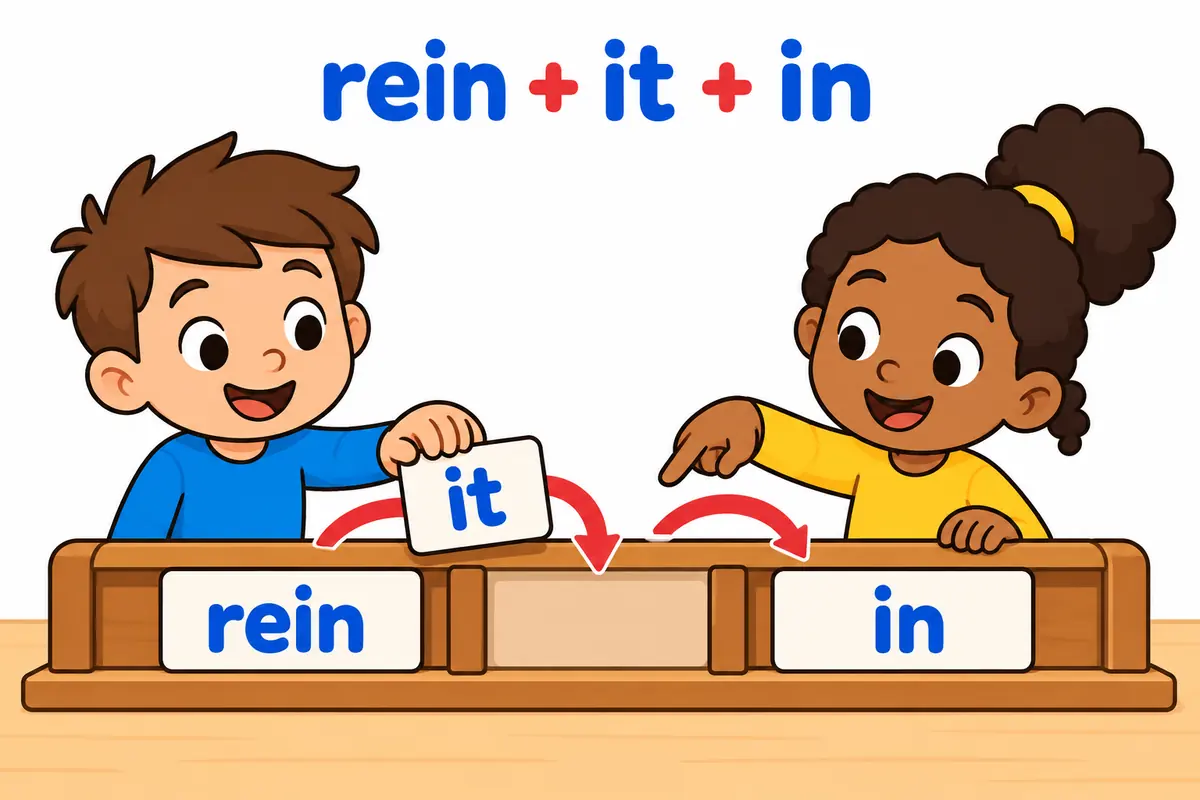
| rein + pronoun + in | The chair reined them in gently. | Pronouns must sit in the middle; rein in them is ungrammatical. |
| be reined in | Runaway costs were finally reined in. | Passive, used when the restrainer is obvious or unknown. |
| rein in + noun, literal | She reined in the pony at the gate. | The old riding sense, still common in stable talk. |
A finance team that wants to curb spending may still choose rein in when the overspend has already happened, because the phrase carries the idea of catching something in motion.
Rein in in a sentence: examples across contexts
The ten sentences below keep the same phrasal verb while changing who is being controlled. Each row names the thing that had run ahead and the limit it was pulled back to.
| Context | Example sentence | Why this works |
|---|---|---|
| Household | We had to rein in our grocery bill after the holidays. | A concrete budget makes the restraint easy to picture. |
| Workplace email | Please rein in the travel budget before the quarter closes. | The imperative puts the task directly on the reader. |
| News report | Regulators moved to rein in the fast-growing lenders. | Names an authority acting on a runaway industry. |
| Business writing | Management reined the project timeline in by six weeks. | The separable order keeps the measure close to the verb. |
| Education | The head reined in the noisy corridor before assembly. | Shows restraint applied to behaviour, not money. |
| Politics | Backbenchers urged the minister to rein in spending. | The infinitive after urge needs the base phrase rein in. |
| Sports commentary | The captain reined in his temper after the first foul. | Points the phrase at a person’s own behaviour. |
| Science writing | Better insulation reined in energy demand across the estate. | A technical measure is the subject that supplies the control. |
| Conversation | Rein it in a bit, or you will get us both in trouble. | The pronoun sits in the middle, as it always must. |
| Riding | He reined in the horse as the path narrowed. | Uses the original horseback sense in a plain setting. |
In conversation many speakers say hold back where a report would say rein in, so the register of the phrase is easy to hear: rein in belongs to money, management and behaviour that needed managing.
Rein in vs reign in and free rein
Three expressions share the sound of the word rein and are mixed up constantly. Rein in controls something, reign describes a monarch ruling, and free rein grants full freedom. None of the three can stand in for another.
| Attribute | rein in | reign | free rein |
|---|---|---|---|
| Correct spelling | rein in, from the noun rein | reign, with a g | free rein, not free reign |
| Meaning | To restrain or bring under control | To rule as a monarch | Complete freedom to act |
| Part of speech | Phrasal verb | Noun or verb of monarchy | Noun phrase |
| Typical subject | A manager, a committee or a rule | A king, queen or era | A person given trust |
| Example | The board reined in costs. | The queen reigned for forty years. | She gave the designer free rein. |
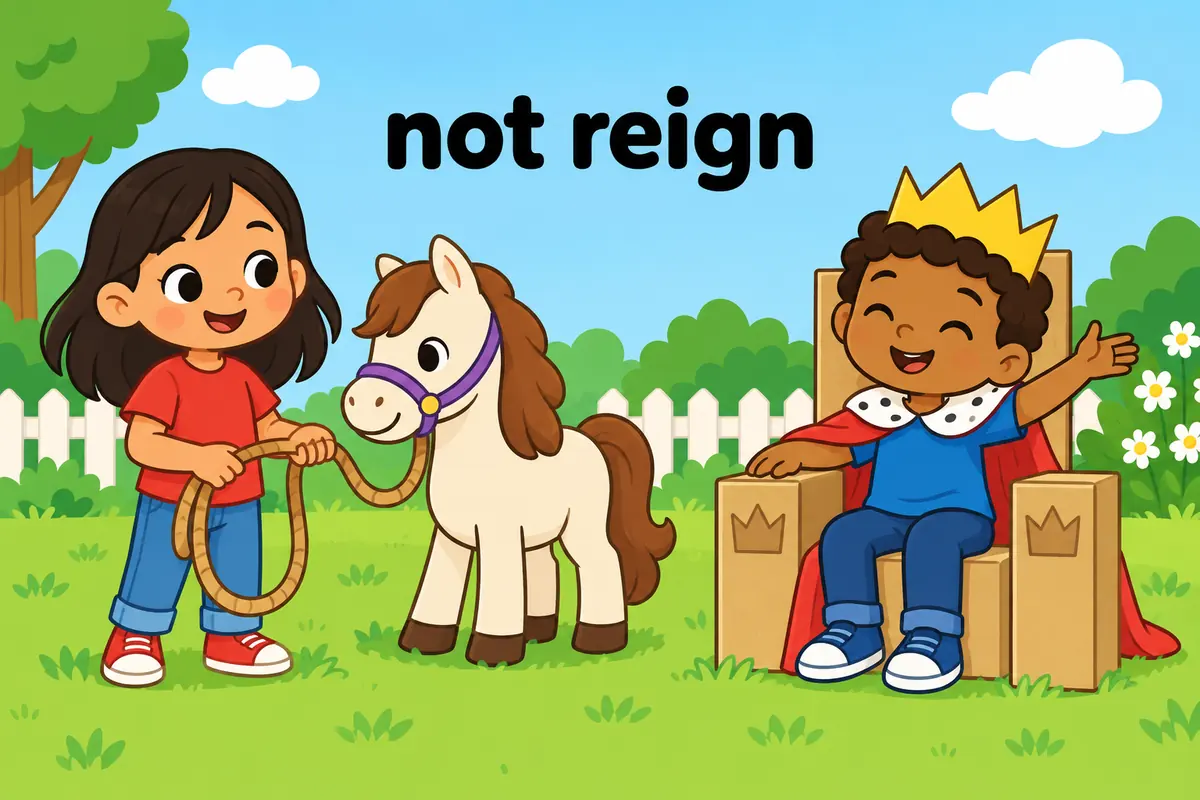
Verdict: a king reigns, a rider reined in the horse, and a trusted colleague gets free rein. The spelling of rein stays the same across all the senses that involve control, and reign never does.
Word forms and grammar of rein in
Rein in inflects on the verb, and its parts stay in the same order except when the object moves to the middle. The table also lists the homophone that causes most of the trouble. The phrase is built from the noun rein, the strap a rider uses to guide a horse.
| Form | Part of speech | Example |
|---|---|---|
| rein in | phrasal verb, base | We must rein in the overtime. |
| reined in | past and past participle | The committee reined in the deficit. |
| reining in | present participle | They are reining in costs this year. |
| rein | noun | He slackened the rein and let the horse walk. |
| reins | plural noun | The reins were wet after the crossing. |
| reign | homophone, different word | The monarch reigned for a decade. |
Because the base verb rein is rare outside this phrase, the past tense reined in is the form learners meet most often in newspapers.
Common mistakes with rein in
- Incorrect:
The government tried to reign in inflation.Correct: The government tried to rein in inflation. Rule: A monarch reigns; a rider reined in the horse, and the figurative sense follows the horse. - Incorrect:
The manager reined in on the overtime.Correct: The manager reined in the overtime. Rule: Rein in takes a direct object, so no preposition is needed. - Incorrect:
They reined in them at last.Correct: They reined them in at last. Rule: A pronoun object must sit between the verb and the particle. - Incorrect:
We gave the interns free reign.Correct: We gave the interns free rein. Rule: A horse’s rein grants freedom; reign belongs to royalty. - Incorrect:
The spending was reined suddenly.Correct: The spending was reined in suddenly. Rule: The particle in is part of the verb and cannot be dropped.
Practice using rein in
Work through the six items, then check the reasoning rather than only the answer.
- Fill the gap: The new treasurer promised to ______ in unnecessary travel.
- Choose the better word: A good king must (rein / reign) with care.
- Correct the error: Please rein in them before they break something.
- Build a sentence: use be reined in about a project that was overspending.
- Spot the register: which belongs in a formal email — We must rein in the costs, or We gotta rein in the costs?
- Rewrite with the object in the middle: The coach reined in the players. Use the pronoun them.
Answers
- rein — the phrase needs the base verb rein before the particle in.
- reign — a king rules, so the verb is reign, not rein.
- Please rein them in before they break something — a pronoun goes between verb and particle.
- Model answer: The overspend was reined in after the audit.
- We must rein in the costs — a formal email avoids the contraction gotta and keeps the standard form.
- The coach reined them in — the pronoun takes the middle slot.
The bottom line
Use rein in in a sentence when something has already grown too large and now needs pulling back, and keep the particle next to the verb or around its object. Two nuances decide most sentences. The phrase is separable, so rein it in is right and rein in it is wrong, and the spelling is always rein, never reign. Where the emphasis falls on plainly holding a person back, restrain is the more exact word.
Frequently asked questions about rein in
Is rein in one word or two?
Rein in is written as two words, and the second word is a particle, not a preposition that can change. It can be split by its object, as in rein it in, so it is never joined into reining like a single word. Keep a space whenever the phrase appears.
What is the past tense of rein in?
The past tense is reined in, formed by adding the regular ending to the verb. The board reined in spending last year keeps the particle attached after the verb. The present participle reining in appears in sentences such as they are reining in costs this quarter.
Does rein in mean the same as curb?
The two overlap but are not identical. Curb works for a limit applied before something grows, while rein in suggests control applied to something already moving too fast. A budget curb sets a rule; a manager reining in spending catches an overspend that has already happened.
Can you rein in a person?
Yes, when the person is behaving with too much freedom and needs restraint. The teacher reined in the noisy class treats the pupils as the thing being controlled. It is a little impersonal, so for one individual many writers prefer restrain or calm down instead.