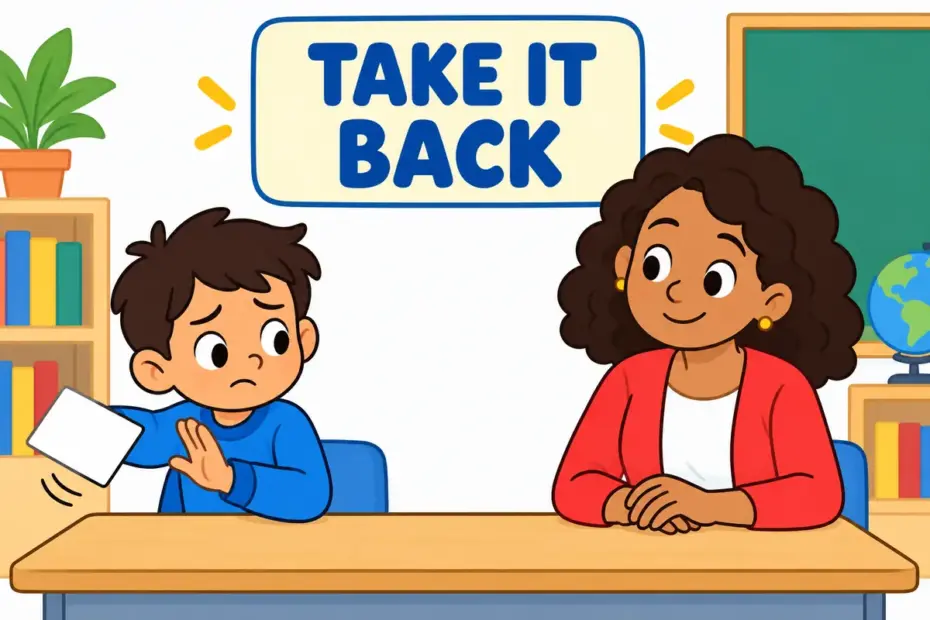
Retract means to withdraw a statement, offer or claim that you made earlier, or to pull a physical part back inside. To use retract in a sentence, give it a direct object: “The newspaper retracted the false headline the next morning.” The verb is transitive in both senses, so something must always be retracted.
Retract at a glance
- Retract is a verb; its forms are retracts, retracted, retracting and retraction.
- The commonest sense is withdrawing a statement, offer or accusation.
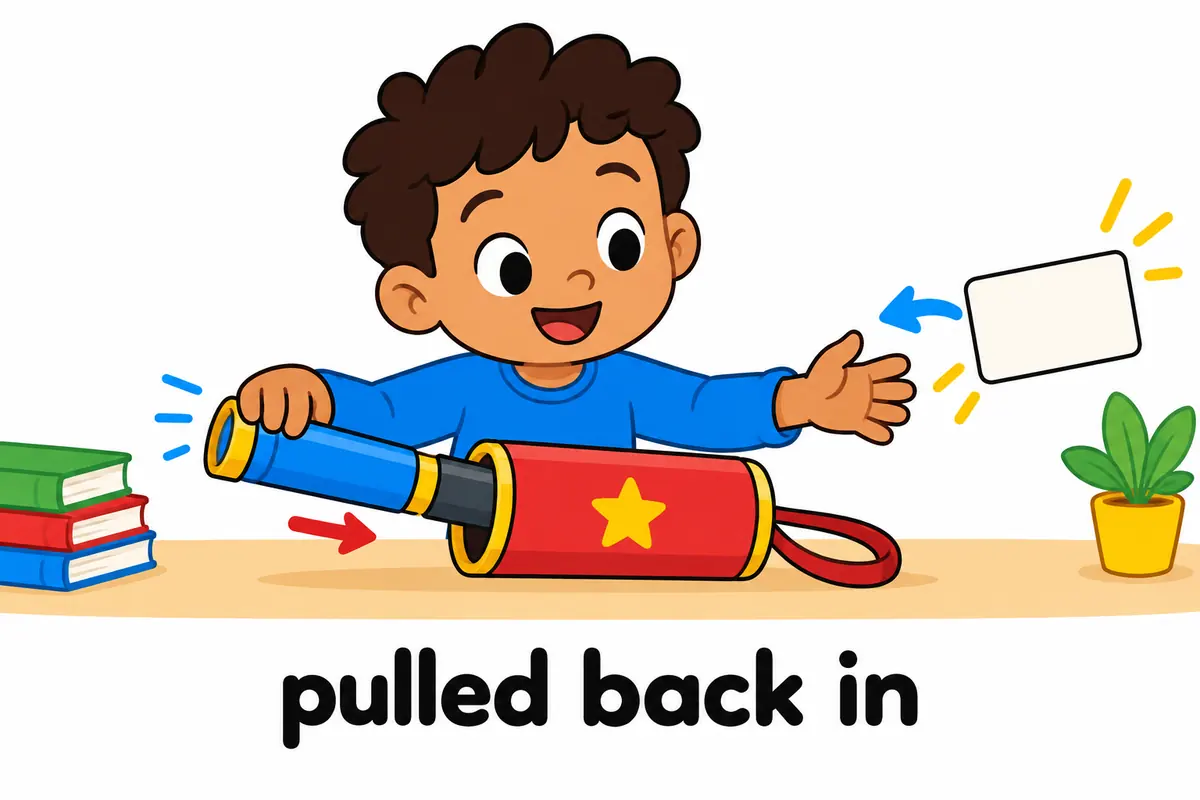
- The physical sense is pulling something back in, as a cat retracts its claws.
- Typical objects are a statement, a claim, an offer, an accusation and, in engineering, landing gear.
- The commonest confusion is with detract, which means to reduce value or worth.
What does retract mean?
Retract is a verb meaning to take back something you said or offered, or to draw a part back inside. The Cambridge entry for retract records both the verbal and physical senses, and they share the idea of pulling back. A speaker may withdraw a remark informally, but retract is the more formal and deliberate word for an official withdrawal.
| Sense | Plain meaning | Example sentence |
|---|---|---|
| Withdraw words | Take back a statement or claim | The minister retracted the remark within hours. |
| Cancel an offer | Withdraw something that was offered | The seller retracted the offer after the survey. |
| Pull back physically | Draw a part back inside a body or frame | The wheels retract after take-off. |
| Move back from a place (rare) | Draw troops or people back to a position | The units retracted to the ridge before dawn. |
Retract is not the right verb for every reversal. It fits words, offers and claims that came from a person, while rescind a rule or revoke a licence is correct for laws, policies and permissions. For a formal abandonment of a belief under pressure, recant is stronger. Retract also does not mean denying something you never said.
How do you use retract in a sentence?
Retract always needs an object, and in its formal sense that object is words. The verb does not take from when it withdraws a statement, so the pattern is retract a claim rather than retract from a claim. Only the physical sense can take a directional phrase such as from a ridge.
| Pattern | Example | What it signals |
|---|---|---|
| retract + a statement, claim or accusation | She retracted the accusation at once. | withdrawing words |
| retract + an offer | The company retracted the offer in writing. | cancelling something offered |
| retract + what + subject + said | He retracted what he had told police. | reported speech as the object |
| retract + a body or machine part | The cat retracted its claws. | physical pulling back |
| retract + from + a place | The troops retracted from the ridge. | rare positional movement |
| retract from + a statement | Incorrect: retract from the statement | the verb takes the object directly |
Retract in a sentence: examples across contexts
The nine rows below place retract in different registers. Each keeps the object explicit, which is what makes the verb sound controlled rather than vague.
| Context | Example sentence | Why this works |
|---|---|---|
| Classroom | The pupil retracted the untrue claim about a classmate. | names the object and the person affected |
| Workplace email | We retract the earlier delivery date and will confirm a new one. | formal, precise correction |
| News report | The paper retracted the story the day after publication. | a clear journalistic action |
| Legal writing | The witness retracted her statement before the hearing. | standard legal collocation |
| Conversation | He quickly retracted the joke when he saw her face. | spoken register with a visible cue |
| Engineering note | The wheels retract automatically during the climb. | physical sense in a technical setting |
| Diplomatic report | The delegation retracted its objection to the draft. | formal removal of a formal claim |
| Biography | He never retracted the accusation, even years later. | shows a lasting refusal |
| Sports report | The club retracted its appeal after new footage emerged. | procedure explained in one clause |
A quick reversal in an argument is often better described with backtrack, which stresses changing position rather than formally withdrawing words, and the noun retraction is the standard label for a printed correction.
Retract vs detract
Retract and detract differ by their first two letters and by everything else. Retract means to take something back, while detract means to reduce value or worth, almost always in the phrase detract from. Choose retract for withdrawal and detract for loss of quality.
| Attribute | Retract | Detract |
|---|---|---|
| Core meaning | withdraw or pull back | reduce worth or value |
| Common pattern | retract a claim | detract from a performance |
| Typical object | a statement, offer or claw | value, attention or enjoyment |
| Direction | inward, toward the source | away from, downward |
| Spelling signal | begins re- | begins de- |
| Example | retract an offer | a flaw that detracts from the show |
Word forms and grammar of retract
| Form | Part of speech | Example |
|---|---|---|
| retract | verb | They retract the claim only under pressure. |
| retracts | verb, third person | She retracts nothing she has written. |
| retracted | verb, past tense or participle | The statement was retracted on Friday. |
| retracting | verb, present participle | He is retracting the accusation he made. |
| retraction | noun | The journal printed a retraction. |
| retractable | adjective | A retractable roof covered the court. |
| retractation | non-standard noun | Avoid; write retraction. |
Common mistakes with retract
The editor agreed to detract the false quote.Incorrect. The editor agreed to retract the false quote. Retract means withdraw, while detract means reduce value.He retracted from his earlier statement.Incorrect. He retracted his earlier statement. The verb takes the object directly and does not use from for words.The government retracted the law after protests.Incorrect. The government rescinded the law after protests. Laws and policies are rescinded or revoked, not retracted.Under questioning she retracted her belief in the cause.Incorrect. Under questioning she recanted her belief in the cause. Abandoning a belief is recanting.The company retractment came too late.Incorrect. The company’s retraction came too late. The noun is retraction, not retractment.The bird retracted back inside its shell.Awkward. The bird pulled its head back into its shell. The physical sense usually needs a named part as the object.
Practice using retract
The exercises below move from a spelling choice to building a sentence, so work through them in order and check each reason.
- Fill in the blank: The newspaper agreed to __________ the incorrect figure.
- Choose the better word: A single late goal (retracted / detracted) from an otherwise fine match.
- Correct the error: She retracted from the offer when the price rose.
- Build a sentence: use retract a statement about a witness in a hearing.
- Spot the register: which sentence suits a legal letter, (A) We formally retract the allegation, or (B) Yeah, we take that back?
- Choose the better word: The council voted to (retract / rescind) the parking ban.
Answers
- retract — the object is a printed claim, which is the core sense of the verb.
- detracted — the goal reduced the quality of the match, which is the meaning of detract from.
- She retracted the offer when the price rose — the verb takes the object directly, without from.
- The witness retracted her statement before the hearing — the formal object is a statement.
- (A) — it keeps the formal register and the direct object that a legal letter expects.
- rescind — a ban is a rule, and rules are rescinded rather than retracted.
The bottom line
Retract means taking back words or pulling a part back in, and it always needs a direct object. Use it for statements, offers and claims made by a person, and use rescind or revoke for rules and licences. Keep recant for beliefs and reserve detract for anything that reduces value. A correct retract in a sentence names exactly what is being withdrawn.
Frequently asked questions about retract
What does it mean to retract a statement?
It means formally withdrawing something you said or wrote and treating it as no longer valid. A retracted statement is usually corrected in public, which is why newspapers and courts use the word. It is a deliberate, recorded reversal rather than a casual change of mind.
Is it retract or recant?
Retract fits a statement, claim or offer that a person withdraws, while recant fits a belief or faith that a person formally abandons, often under pressure. A witness retracts testimony; a heretic was once forced to recant a belief. The objects decide which verb is correct.
Can you retract an offer?
Yes, retracting an offer means withdrawing it before it is accepted, and the phrase appears in business and legal writing. It is stronger and more formal than simply cancelling. Once an offer has been accepted it becomes a contract, and then the ordinary word is cancel or terminate.
What is the difference between retract and detract?
Retract means to take something back or pull it in, and it takes a direct object such as a claim. Detract means to reduce worth or value and almost always appears as detract from, as in a flaw detracts from the performance. The two are separated by meaning, not just spelling.
Have you ever said something you regretted and wished you could take back? That’s where the word “retract” comes into play. When you retract a statement, you are essentially withdrawing or taking back what was said.
In various situations, whether in verbal conversations, written documents, or public statements, the ability to retract can help correct mistakes, clarify misunderstandings, or simply express a change of heart. The act of retracting allows for the reconsideration or alteration of previously communicated information.
7 Examples Of Retract Used In a Sentence For Kids
- Retract the pencil when you make a mistake.
- Please retract your arms while sitting at the table.
- I will retract my statement if I am wrong.
- Remember to retract your legs before closing the car door.
- The cat can retract its claws when playing.
- Let’s practice how to retract a yo-yo.
- It is important to retract the scissors after using them.
14 Sentences with Retract Examples
- Retract your statement about skipping class last week.
- Make sure to retract your application before the deadline.
- It’s better to retract a false accusation rather than face consequences.
- Remember to retract your assignment if you need to make corrections.
- If you realize you made a mistake in your presentation, you can still retract it.
- Always double-check your sources before you retract any information you have shared.
- Don’t be afraid to retract a statement if you discover new evidence that contradicts it.
- It’s important to retract any misleading information in your research paper.
- After submitting your project proposal, you won’t be able to retract it.
- Before making any bold claims in your essay, consider if you may need to retract them later.
- If you have any doubts about your decision, it’s better to retract it now rather than regret it later.
- It’s better to retract your application for an internship if you change your mind.
- Before spreading rumors, always consider the consequences of having to retract your words.
- If you mistakenly submit your assignment before it’s ready, see if you can retract it.
How To Use Retract in Sentences?
To use Retract in a sentence, first ensure that you understand the definition of the word. Retract means to draw back or withdraw something that was said or done.
When incorporating Retract into a sentence, consider situations where you need to take back a statement or action. For example, “After realizing his mistake, he decided to retract his previous statement and apologize for the confusion it caused.”
To construct a sentence using Retract, start with a subject performing an action. Then, include the word Retract followed by the specific statement or action that is being withdrawn. Make sure the context of the sentence is clear to accurately convey the act of retracting.
Remember to use Retract when wanting to correct a previous statement or action. It is important to acknowledge when you have made an error and take steps to rectify it by retracting the inaccurate information.
Practice using Retract in various sentences to familiarize yourself with its appropriate usage. By mastering the art of incorporating Retract into your conversations or writing, you will effectively communicate your intentions to retract or withdraw something previously communicated.
Conclusion
In conclusion, retracting statements or actions involves taking back or undoing what has been said or done. It is a tool used to correct errors, clarify misunderstandings, or change opinions. Crafting sentences with the keyword “retract” highlights the importance of acknowledging mistakes, showing humility, and being open to revision.
By practicing the act of retracting, individuals can demonstrate integrity, honesty, and a willingness to learn from their missteps. Additionally, retracting statements can prevent harm, foster healthy communication, and promote a culture of accountability. In essence, using sentences with the keyword “retract” serves as a reminder of the power of owning up to our faults, seeking improvement, and fostering understanding in our interactions with others.


