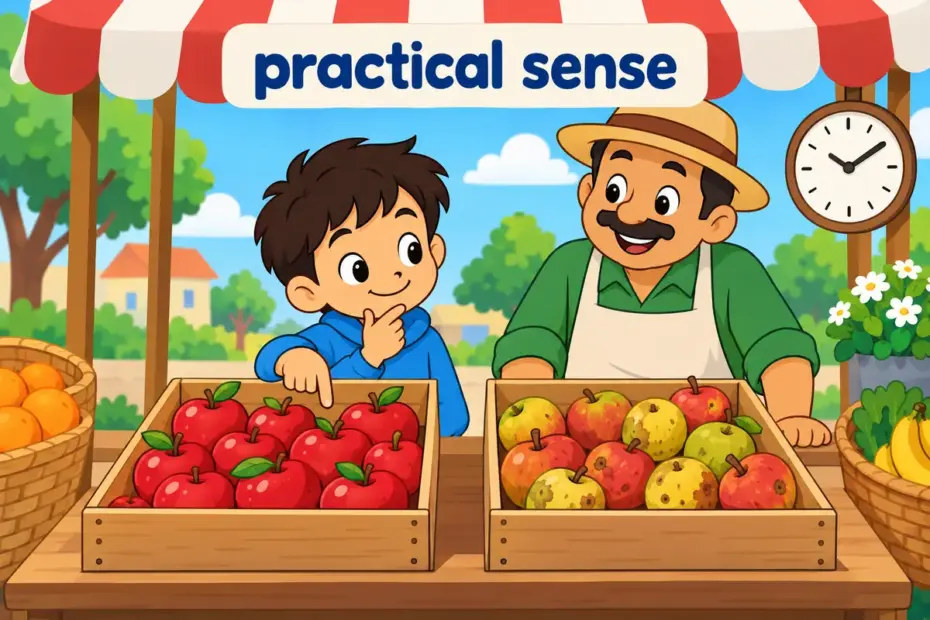
Shrewd describes a person who reads a situation quickly and turns it to practical advantage, combining sharp judgement with realism. To use shrewd in a sentence, place it before the person or move it after a linking verb: “a shrewd negotiator,” “her guess was shrewd.” The word carries quiet admiration, though it can hint at self-interest.
Shrewd at a glance
- Shrewd is an adjective meaning sharp and practical in judgement.
- Its forms are shrewder, shrewdest, shrewdly and shrewdness.
- It describes people, decisions, guesses and business moves.
- Shrewd is usually admiring, but it can suggest hard self-interest.
- The commonest error is confusing shrewd with cunning, or mistaking shrew for its noun.
What does shrewd mean?
Shrewd is an adjective meaning having or showing sharp practical judgement, especially about people and advantage. The Cambridge entry for shrewd records that practical astuteness, and the praise it carries is cautious rather than warm: a shrewd observer misses little, but is also assumed to be looking after their own interests. Where the judgement is about understanding rather than advantage, astute is the closer word, and it carries no hint of self-interest.
| Sense | Plain meaning | Example sentence |
|---|---|---|
| Sharp judge of people | Reads others and situations quickly | A shrewd judge of character spotted the lie at once. |
| Practical and advantage-seeking | Turns a situation to benefit | She made a shrewd investment in the quiet market. |
| Hard-headed | Shows realism rather than sentiment | It was shrewd to settle before the costs rose. |
One limitation is worth stating plainly. Shrewd is not wisdom and not honesty; it measures how well someone judges an advantage, not how kindly they act. A shrewd move can be selfish, and a shrewd person can be wrong about everything except their own interests.
How do you use shrewd in a sentence?
Shrewd is an ordinary descriptive adjective, so it either precedes a noun or follows a linking verb. Five patterns cover nearly every real sentence, and the third names the field in which the judgement shows.
| Pattern | Example | What it signals |
|---|---|---|
| shrewd + noun | She is a shrewd negotiator. | Classifies a person or a decision. |
| be + shrewd, often + of | That was shrewd of you. | Predicative use, praising a specific act. |
| shrewd + in or at + noun | He is shrewd in business. | Names the field where the judgement shows. |
| a shrewd + move, guess or choice | Buying early was a shrewd move. | Applies the quality to a decision, not a person. |
| shrewdly + verb | She shrewdly waited for the price to fall. | The adverb shows judgement guiding an action. |
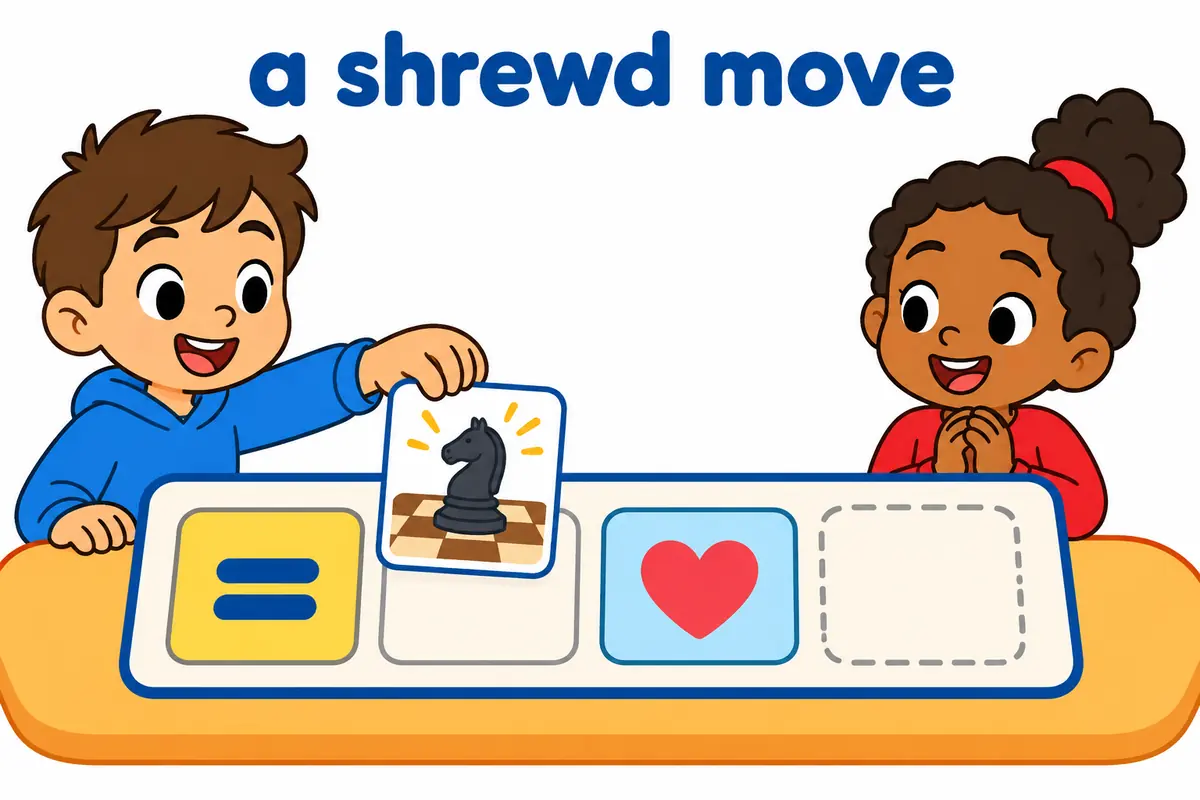
Shrewd in a sentence: examples across contexts
Shrewd keeps its practical edge while the setting changes. The nine sentences below move from a classroom to a finance page, and each one shows what the good judgement is applied to.
| Context | Example sentence | Why this works |
|---|---|---|
| Classroom | That was shrewd of Maya to trade her spare pen before the test. | Small stakes make the practical judgement easy to picture. |
| Workplace email | A shrewd manager books the meeting before everyone leaves on Friday. | Ties the adjective to a concrete organisational habit. |
| News report | Analysts called the takeover a shrewd purchase at a depressed price. | Applies the word to a business decision. |
| Academic writing | The author offers a shrewd reading of the letters. | Uses the word to praise insight in scholarship. |
| Conversation | It was shrewd of you to keep the receipt. | Everyday predicative use, anchored in a real object. |
| Sports column | The captain made a shrewd change at half time. | Attributes the quality to a tactical decision. |
| Parenting advice | A shrewd parent sets the rule before the argument starts. | Shows the word applied to a person and a method. |
| Finance page | Her shrewd timing avoided the worst of the downturn. | Pairs the adjective with a concrete financial outcome. |
| Detective story | The inspector was shrewd about which alibi to doubt. | Uses the about pattern with a focused object. |
Shrewd vs astute and cunning
Shrewd, astute and cunning all describe a quick mind, and only one of them implies deceit. A wily person is crafty in the same tricky way, while shrewd judgement can be completely honest. The difference is whether the intelligence serves fair dealing or a trick.
| Attribute | shrewd | astute | cunning |
|---|---|---|---|
| Core meaning | Practical judgement about advantage | Insightful understanding | Cleverness used to deceive |
| Feeling it carries | Admiring, with a hint of self-interest | Clearly positive | Negative and distrustful |
| Typical subject | A person, decision or guess | A person, analysis or remark | A person or a plan |
| Implies deception | No, though the motive may be self-serving | No | Yes |
| Common pairing | a shrewd negotiator | an astute observer | a cunning scheme |
Verdict: prefer shrewd for practical, usually fair judgement, astute for intellectual insight, and savvy for the informal, street-smart version of the same compliment.
Word forms and grammar of shrewd
Shrewd follows ordinary adjective endings, and its noun shrewdness names the quality itself. The unrelated noun shrew, a small mammal and an old-fashioned insult, is not the noun form of this adjective.
| Form | Part of speech | Example |
|---|---|---|
| shrewd | adjective | A shrewd answer saved the deal. |
| shrewder, shrewdest | comparative and superlative | She is shrewder than her rivals. |
| shrewdly | adverb | He shrewdly kept his doubts private. |
| shrewdness | noun | Her shrewdness impressed the board. |
| shrew | noun, unrelated | A shrew crossed the garden path. |
| shrewdly judged | adjective phrase | A shrewdly judged trade paid off. |
Common mistakes with shrewd
- Incorrect:
He is very shrewed about money.Correct: He is very shrewd about money. Rule: The adjective is spelled shrewd, with no second e before the d. - Incorrect:
Her shrewd was obvious to the whole team.Correct: Her shrewdness was obvious to the whole team. Rule: Shrewd is an adjective; the matching noun is shrewdness. - Incorrect:
He is shrewd of business.Correct: He is shrewd in business. Rule: Name the field with in or at, not of. - Incorrect:
She acted shrewd in the meeting.Correct: She acted shrewdly in the meeting. Rule: Use the adverb shrewdly to modify the verb acted. - Incorrect:
The spy used a shrewd trick to steal the plans.Correct: The spy used a cunning trick to steal the plans. Rule: When the cleverness is deceptive, choose cunning; shrewd describes judgement rather than trickery.
Practice using shrewd
Work through the six items, then read the reasoning rather than only the answer.
- Fill the gap: It was ______ of you to buy the tickets before the price rose.
- Choose the better word: The pickpocket used a (shrewd / cunning) distraction.
- Correct the error: She is very shrewd of money.
- Build a sentence: use a shrewd move about a sensible decision at school.
- Spot the register: which belongs in a business report — the board made a shrewd acquisition, or the board got a really smart deal?
- Rewrite with the noun: He judged the market well. Use shrewdness instead.
Answers
- shrewd — buying early shows practical judgement, which is the adjective at work.
- cunning — the distraction is deceptive, so the negative word fits better.
- She is very shrewd in money matters — name the field with in or at, not of.
- Model answer: Taking the early train was a shrewd move before the strike began.
- The board made a shrewd acquisition — a formal report avoids slang and vague intensifiers.
- His shrewdness about the market was clear — the noun names the quality itself.
The bottom line
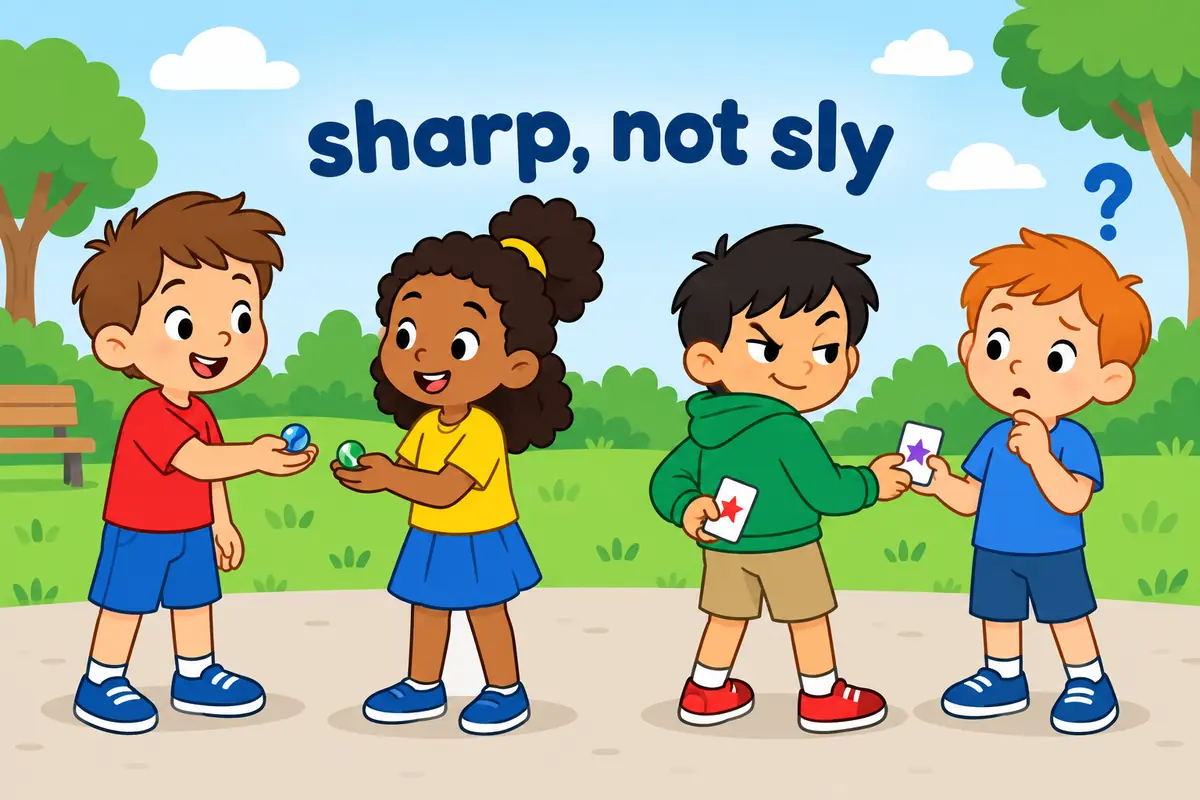
Use shrewd in a sentence for sharp, practical judgement that turns a situation to advantage, either before a noun or after a linking verb like be. Two nuances decide most sentences: the word admires the judgement while hinting at self-interest, and it never implies deceit, so cunning is wrong when a trick is involved. Where a lighter, more general word will do, clever and sharp are less pointed.
Frequently asked questions about shrewd
Is shrewd a compliment?
Shrewd is mostly a compliment, praising quick and practical judgement. It is a guarded compliment, though, because it also suggests the person looks after their own interests. In a sentence such as a shrewd dealer, the speaker admires the skill and quietly warns you to check the price.
What is the difference between shrewd and cunning?
Shrewd describes practical judgement and implies no dishonesty. Cunning describes cleverness used to deceive, so it is always negative. A shrewd investor reads the market well; a cunning one hides a fee. Choose shrewd for fair judgement and cunning only when a trick is involved.
Can a decision be described as shrewd?
Yes. Shrewd attaches easily to a move, a guess, a choice or a purchase, as in buying early was a shrewd move. Used this way it praises the decision rather than the person, which lets a writer separate the quality of the judgement from the character of the decision-maker.
Is shrew the noun form of shrewd?
No. Shrewd is an adjective whose noun is shrewdness. Shrew is a separate noun for a small mammal and an old-fashioned insult, and it shares only a spelling with the adjective. If you need to name the quality, write shrewdness rather than shrew.
Do you ever wonder how some individuals always seem to make clever and astute decisions? They are often described as shrewd in their approach. The term “shrewd” refers to someone who demonstrates sharp intelligence and keen judgment in their actions or dealings.
A shrewd individual possesses the ability to quickly grasp a situation and make wise decisions that benefit themselves or others. This trait is often associated with strategic thinking, foresight, and a knack for understanding people’s motives.
7 Examples Of Shrewd Used In a Sentence For Kids
- Shrewd foxes are clever animals.
- The shrewd squirrel saved its nuts for winter.
- The shrewd owl hunts at night.
- Shrewd monkeys swing from tree to tree.
- Shrewd elephants have excellent memories.
- The shrewd cat caught the mouse.
- Shrewd dolphins are playful in the water.
14 Sentences with Shrewd Examples
- Shrewd students always manage to find the best deals on textbooks and study materials.
- The shrewd decision to form study groups helped the students excel in their exams.
- Shrewd time management skills are essential for balancing academics and extracurricular activities.
- By being shrewd with their budgeting, students can save money for future expenses.
- Shrewd networking can open up opportunities for internships and job placements.
- Making a shrewd choice of elective courses can complement a student’s major and enhance their skillset.
- Shrewd research skills are crucial for producing high-quality academic papers and projects.
- Forming shrewd study habits early on can lead to success in higher education.
- The shrewd decision to participate in competitions and events can enhance a student’s resume.
- Utilizing shrewd problem-solving techniques can help students navigate academic challenges effectively.
- Developing shrewd negotiation skills can benefit students in group projects and collaborations.
- Shrewd planning ahead of time can prevent last-minute stress during exams and deadlines.
- By being shrewd in choosing extracurricular activities, students can build a well-rounded profile for future opportunities.
- The shrewd decision to seek guidance from mentors and seniors can provide valuable insights for academic and career development.
How To Use Shrewd in Sentences?
To use “shrewd” in a sentence, begin by understanding that the word is typically used to describe someone who is clever, astute, and sharp in judgment. Here is a simple guide on how to construct a sentence using “shrewd”:
-
Identify a person or situation that demonstrates wisdom or cunning. For example, “The shrewd businessman knew exactly when to invest in the stock market.”
-
Make sure the context of your sentence highlights the person’s keen perception or intelligence. For instance, “Her shrewd analysis of the data helped the team make a successful decision.”
-
If you are describing someone who is skillful in their actions or decisions, use “shrewd” to emphasize their expertise. For example, “The detective’s shrewd interrogation techniques led to the capture of the criminal.”
-
Remember to use “shrewd” in a positive light, as it conveys a sense of intelligence and strategic thinking. Avoid using it in situations where deceit or manipulation are involved.
By following these guidelines, you can effectively incorporate “shrewd” into your writing to convey a sense of cleverness and keen insight. Practice using the word in various contexts to become more comfortable with its usage and to enhance your vocabulary.
Conclusion
In conclusion, utilizing shrewdness in decision-making and problem-solving can lead to successful outcomes in various situations. By employing shrewd judgment, individuals can navigate complex circumstances with acumen and insight. Whether negotiating a business deal, making financial investments, or assessing a difficult situation, shrewd individuals demonstrate sharp intelligence and cleverness in their actions.
Through shrewdness, individuals can effectively analyze information, anticipate potential outcomes, and make strategic choices that benefit themselves or others. This quality of discernment and keen perception allows for wise and calculated decisions to be made, ultimately leading to desired results. Embracing shrewdness can empower individuals to navigate challenges adeptly and achieve their goals with finesse.


