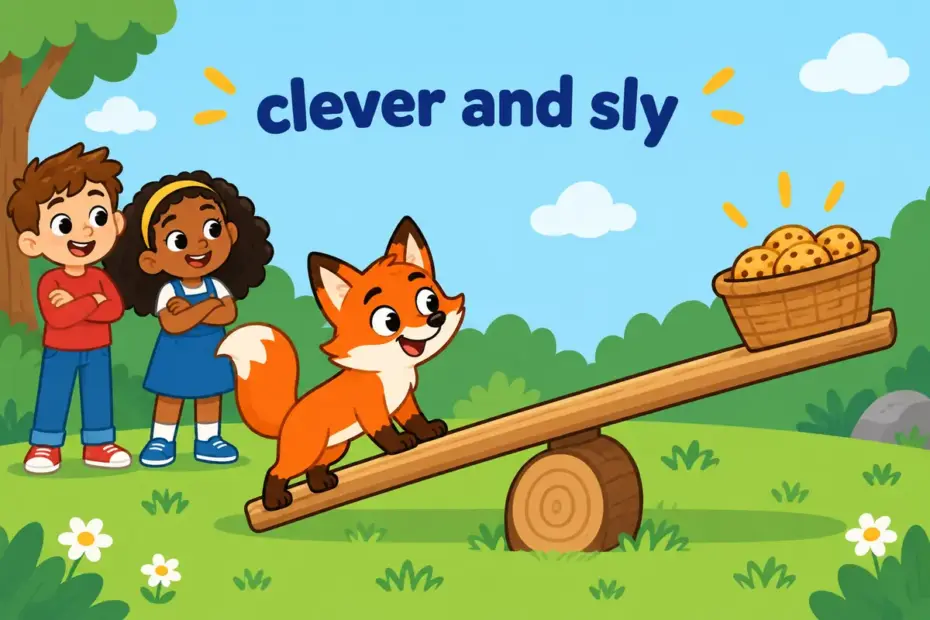
Wily means cunning and sly, using clever tricks to get what one wants without breaking the rules. To use wily in a sentence, place it before the noun: “a wily negotiator kept the deal alive.” The adjective often carries grudging admiration as much as suspicion.
Wily at a glance
- Wily is an adjective meaning cunning, crafty and hard to outwit.
- It normally sits before the noun it describes: a wily opponent, a wily old fox.
- The comparative and superlative are wilier and wiliest, with the y changing to i.
- Its usual subjects are people, animals and plans that win by cleverness.
- The commonest error is spelling it wiley, which is a name rather than the adjective.
What does wily mean?
Wily is an adjective meaning cunning in a practical, self-serving way, so it describes someone who wins by outthinking others rather than by force or honesty. The Cambridge entry for wily stresses the crafty cleverness, and the Merriam-Webster entry adds the note that a wily person is full of stratagems. That gives the word two faces: skill on one side, trickery on the other.
| Sense | Plain meaning | Example sentence |
|---|---|---|
| Cunning and crafty | Wins by clever tricks | The wily trader never named a price first. |
| Shrewd and experienced | Hard to fool after long practice | A wily old goalkeeper reads the penalty. |
| Playfully sly | Mischievous rather than cruel | The wily puppy hid every shoe in the house. |
One limitation matters here. Wily is not a compliment the way clever is, because it always suggests a trick. It is milder than devious, which implies real dishonesty, and warmer than sly, which is purely negative. Where the cleverness is honest and admired, shrewd is the better adjective.
How do you use wily in a sentence?
Place the adjective before the noun or after a linking verb such as be or seem. Four patterns cover almost every real sentence, and the attributive pattern is the one that sounds most natural.
| Pattern | Example | What it signals |
|---|---|---|
| wily + noun | A wily negotiator kept the deal alive. | The standard slot, before the person or plan described. |
| wily old + noun | The wily old fox knew every path. | The fixed pairing that signals long experience. |
| be / seem + wily | The offer seemed wily to the buyers. | Reports a judgement rather than a fact. |
| wilier / wiliest | The second bidder was the wiliest of all. | Shows comparison; the y becomes i before -er and -est. |
Native writers often add old to wily when the cleverness comes from experience rather than youth. The phrase a wily old campaigner sounds admiring, while a wily trick leaves the trick as the point. That single word before the noun changes the tone more than any synonym can.
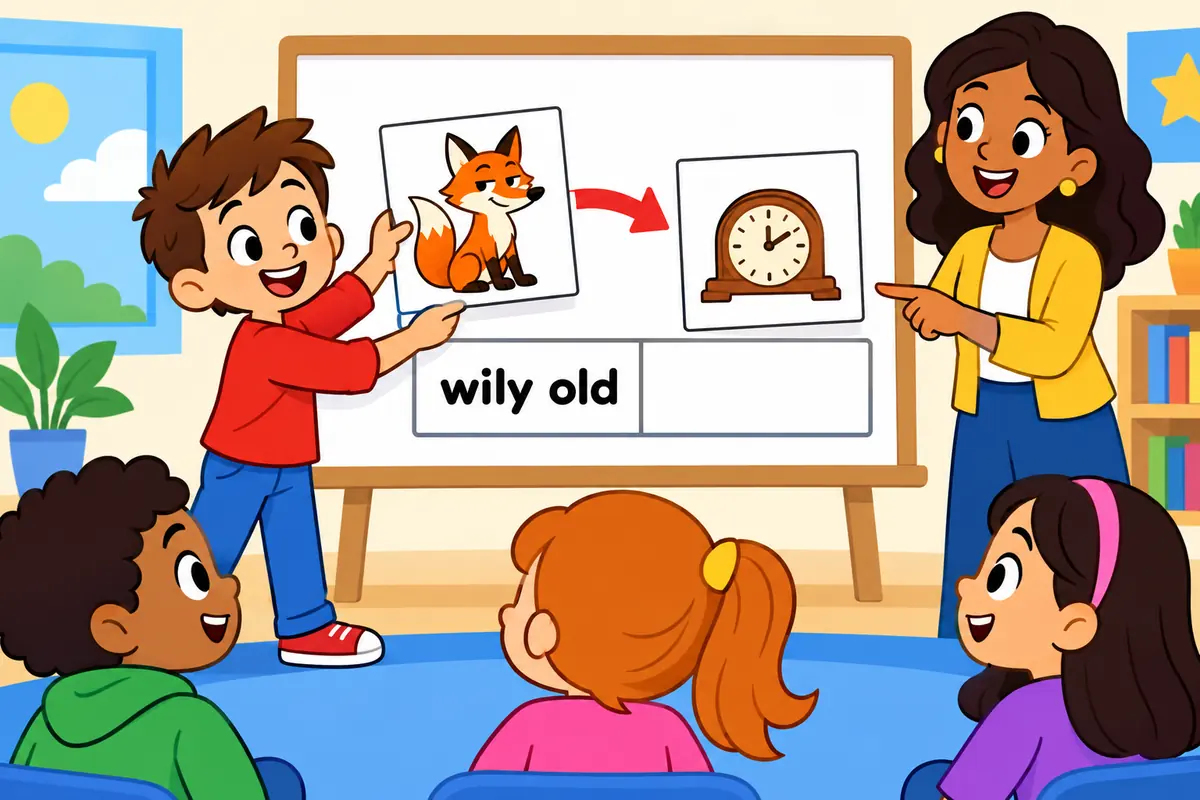
Wily in a sentence: examples across contexts
The word keeps its meaning while changing company, from a game of chess to a business email. The eight sentences below each name what the wily subject is trying to win.
| Context | Example sentence | Why this works |
|---|---|---|
| Classroom | The wily pupil traded two stickers for the last biscuit. | A harmless trade shows craftiness without harm. |
| Sports report | A wily defender drew the foul and won a penalty. | Praise mixed with suspicion, the word’s natural tone. |
| News feature | The wily veteran outmanoeuvred three younger rivals. | Uses experience as the source of the cunning. |
| Business email | Our wily competitor waited for us to publish first. | Names a strategy without accusing anyone of cheating. |
| Children’s story | The wily fox talked the crow out of the cheese. | The classic fable pairing of cunning and greed. |
| Academic prose | Wily rulers used marriage to secure their borders. | Treats cunning as a historical method. |
| Conversation | He is wily enough to let someone else ask first. | The be pattern keeps the judgement personal. |
| Legal writing | The wily clause hid a penalty inside the schedule. | Applies the adjective to a clever, slippery document. |
Every sentence keeps the subject active: a wily person or thing does something to win. That is the test of a good wily sentence, because the adjective describes behaviour rather than a static quality.
Wily vs sly
Wily and sly both describe cleverness used to gain an advantage, but sly is almost always a criticism while wily can be half admiring. A sly remark is sneaky and unkind; a wily move is clever and can even be respected.
| Attribute | wily | sly |
|---|---|---|
| Core meaning | Cunning and hard to outwit | Sneaky and secretive |
| What it implies | Strategy, often respected | Deceit, usually disliked |
| Typical subjects | A negotiator, a fox, a veteran, a plan | A smile, a wink, a hint, a trick |
| Register | Neutral to literary | Negative, informal to neutral |
| Typical partners | wily old, wily opponent | sly grin, sly dig |
| Opposite | Naive, trusting | Frank, open |
Verdict: choose wily when the cleverness is a skill you can almost admire, and sly when you want to signal that the trick was underhand. Where the cleverness is entirely honest, cunning and shrewd are the safer words.
Word forms and grammar of wily
Wily changes spelling as it inflects, and the change trips up learners who keep the y. The table also lists the noun that many writers need instead.
| Form | Part of speech | Example |
|---|---|---|
| wily | adjective | The wily keeper guessed the right way. |
| wilier | comparative | The second trader was wilier than the first. |
| wiliest | superlative | She was the wiliest player at the table. |
| wilily | adverb, rare | The fox wilily doubled back on its tracks. |
| wiliness | noun | His wiliness won the argument but lost the room. |
| wile | noun, related | She used every wile she knew to delay the vote. |
The noun craftiness is a close substitute for wiliness, and the two are often interchangeable. The adjective itself is never used as a noun, so a phrase such as the wily of the fox is wrong and needs the noun wiliness.
Common mistakes with wily
- Incorrect:
She came up with a wiley plan.Correct: She came up with a wily plan. Rule: The adjective ends in -ily; wiley is a surname. - Incorrect:
He is wilyer than his brother.Correct: He is wilier than his brother. Rule: A final y after a consonant becomes i before -er and -est. - Incorrect:
The wily of the fox impressed everyone.Correct: The wiliness of the fox impressed everyone. Rule: Wily is an adjective and cannot be the subject of a noun phrase. - Incorrect:
The children were wily to escape the chores.Correct: The children were wily enough to escape the chores. Rule: The adjective takes enough to or a that-clause, not a bare to-infinitive. - Incorrect:
The plan was very wily and dishonest.Correct: The plan was very sly and dishonest. Rule: Wily allows some admiration, so pairing it with dishonest fights its tone.
Practice using wily
Work through the six items, then check the reasoning as well as the answer.
- Fill the gap: The ______ trader never showed the other side her cards.
- Choose the better word: The note was a (wily / sly) dig at his old rival.
- Correct the error: The fox was wilyer than the hounds.
- Build a sentence: use wily old about a goalkeeper who guesses correctly.
- Spot the register: which belongs in a news feature — the wily veteran outmanoeuvred his rivals, or he craftily tricked them?
- Rewrite with the noun: The fox was wily. Use wiliness instead.
Answers
- wily — the trader wins by outthinking others, which is the adjective’s core sense.
- sly — the dig is underhand, so the negative word fits better than wily.
- The fox was wilier than the hounds — the y becomes i before the ending.
- Model answer: The wily old goalkeeper guessed the right way and saved the penalty.
- The wily veteran outmanoeuvred his rivals — a news feature favours the measured adjective.
- The fox’s wiliness impressed the villagers — the noun names the quality itself.
The bottom line
Use wily in a sentence when someone wins by cleverness and you want to signal that the skill shades into trickery. Two nuances decide most sentences: the word sits before the person or plan and usually describes behaviour, and it sits between shrewd, which is honest and admired, and sly, which is purely negative. Where the cunning is fully admirable, shrewd is the better word, because guileful still hints at deceit.
Frequently asked questions about wily
Is wily a compliment or an insult?
Wily sits between the two, which is why it is so useful. It credits real cleverness but warns that the person uses tricks. Calling a negotiator wily suggests you respect the skill while staying on your guard. In a genuine insult a writer would choose sly, devious or sneaky instead.
What is the difference between wily and sly?
Wily describes a clever strategy that may be admired, while sly describes secrecy and deceit that is usually disliked. A wily opponent is hard to outwit; a sly opponent is not to be trusted. The two words overlap in meaning, but the emotional charge is quite different.
How do you spell the comparative of wily?
The comparative is wilier and the superlative is wiliest, with the y changing to i before the ending. This follows the usual rule for an adjective ending in a consonant plus y. The spelling wilyer is wrong, and the adverb wilily keeps the same change.
Can wily describe an animal or a thing?
Wily most often describes people and animals, especially foxes and other storybook creatures known for cunning. It can also describe a plan, a clause or a strategy that is cleverly designed to gain an advantage. When it describes a thing, the cleverness still comes from the person who made it.
Are you familiar with the term “wily”? This adjective typically describes someone or something that is cunning, sly, or clever in a deceitful way.
In an example sentence with “wily,” this word can be used to paint a picture of a crafty individual who uses their intelligence and cleverness to achieve their goals, often through subtle manipulation or trickery.
7 Examples Of Wily Used In a Sentence For Kids
- The wily fox tried to trick the other animals in the forest.
- Be careful of the wily rabbit, he is very clever.
- The wily squirrel always finds a way to get to the nuts.
- Watch out for the wily crow, he likes to steal shiny things.
- The wily snake slithered silently through the grass.
- The wily monkey swung from tree to tree, trying to hide its bananas.
- The wily cat sneaked up on the mouse and pounced.
14 Sentences with Wily Examples
- The wily professor always came up with tricky questions to challenge his students during exams.
- She devised a wily plan to distract her roommates so she could study without interruptions.
- The wily senior managed to secure the best internship opportunities by networking cleverly with industry professionals.
- He used his wily negotiation skills to get the best deals on textbooks and study materials.
- The wily group of friends always found creative ways to save money on food and transportation expenses.
- She impressed everyone with her wily ability to balance academics and extracurricular activities effectively.
- The wily student organization devised a clever strategy to advocate for student rights on campus.
- He came up with a wily scheme to organize a successful college festival that attracted a large crowd.
- The wily classmates collaborated on a project that stood out for its innovative approach and ideas.
- The wily student leader managed to rally support from fellow students for a beneficial cause.
- She utilized her wily charm to convince the professor to extend the deadline for the assignment.
- The wily debate team members strategically presented their arguments to win the competition.
- The wily research team found a unique methodology to address a complex problem in their field of study.
- He demonstrated his wily resourcefulness by finding solutions to various challenges faced during his college years.
How To Use Wily in Sentences?
Wily is an adjective that means clever, crafty, or cunning. When using Wily in a sentence, it is important to understand its meaning and use it appropriately. One way to use Wily in a sentence is: “The Wily fox outsmarted the farmer and stole the chickens from the coop.”
To effectively use Wily in a sentence, consider the context in which you are describing someone or something as being clever or devious. For example, you could say, “The Wily con artist swindled the unsuspecting tourists out of their money.” In this sentence, Wily is used to convey the idea that the con artist was cunning and manipulative.
Another way to use Wily in a sentence is: “Despite his Wily tactics, the detective was able to uncover the truth behind the crime.” Here, Wily is used to describe the detective’s clever and strategic approach to solving the case.
Overall, when using Wily in a sentence, make sure it fits the context and conveys the meaning of being clever or sly. By understanding the definition of Wily and practicing using it in sentences, you can improve your vocabulary and communication skills.
Conclusion
In conclusion, the various examples of sentences with the word “wily” highlight its meaning of cunning or deceitful. Whether describing a character’s behavior in a story or a politician’s tactics in real life, “wily” captures a sense of cleverness used for deceptive purposes. Through phrases like “the wily fox outsmarted the hunting dogs” or “the wily salesman persuaded the customer with misleading promises,” the word conveys a shrewdness that is not always used with good intentions. Overall, “wily” is a term that signifies a sly and crafty nature, often associated with individuals who manipulate situations to their advantage through cunning means.


