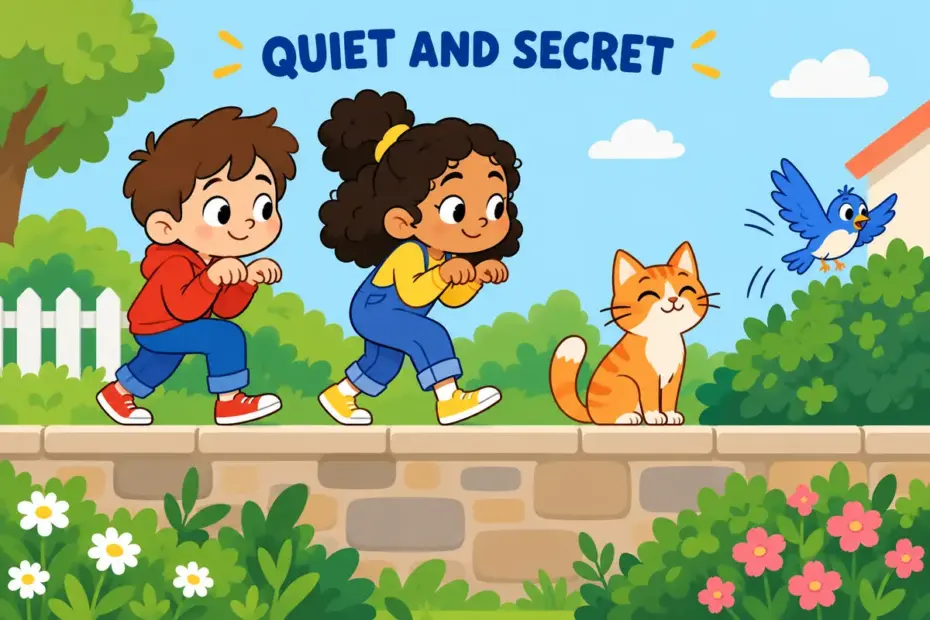
Sneak around means to move quietly and secretly so that nobody notices you, and it often suggests that something is being hidden. To use sneak around in a sentence, keep the phrase whole: “The cat sneaked around the garden at dusk.” The verb is intransitive, so around points at a place or a person rather than an object you carry.
Sneak around at a glance
- Sneak around is an intransitive phrasal verb built from sneak + around.
- Its forms are sneaks around, sneaked around, snuck around and sneaking around.
- The main sense is moving quietly to avoid being seen.
- A second sense means acting in secret, often to deceive someone.
- The standard past tense is sneaked, while snuck is informal and mainly American.
- The commonest error is splitting the phrase or confusing it with sneak out.
What does sneak around mean?
Sneak around is an intransitive phrasal verb meaning to move quietly and secretly, usually to avoid being seen. The Cambridge entry for sneak around records both the physical sense and the sense of acting in secret, and the difference matters in practice: one describes footsteps, the other describes a hidden motive. Where the secrecy is playful rather than guilty, fool around is the lighter phrase, because sneak around carries the extra hint that somebody is being kept in the dark.
| Sense | Plain meaning | Example sentence |
|---|---|---|
| Move secretly | Walk quietly so as not to be seen | The children sneaked around the sleeping dog. |
| Act behind someone’s back | Behave secretly, often to deceive | He was sneaking around behind the manager’s back. |
| Creep about a place | Move from spot to spot, keeping out of sight | Reporters sneaked around the hotel all morning. |
One limitation is worth stating plainly. Sneak around describes the secrecy, not the destination, so it never means to leave a place quietly; that job belongs to sneak out. It also stops short of proving dishonesty, because a person can sneak around to prepare a surprise as easily as to hide a mistake.
How do you use sneak around in a sentence?
Because sneak around is intransitive, it takes no direct object, and around works as a preposition pointing at a place or a person. Four patterns cover almost every real sentence, and the verb stays whole in all of them.
| Pattern | Example | What it signals |
|---|---|---|
| sneak around + place | The cat sneaked around the garden. | Names the area where the movement happens. |
| sneak around + behind + person | She was sneaking around behind her brother. | Adds the idea of deception, not just quiet steps. |
| be + sneaking around | Somebody has been sneaking around the office. | Highlights repeated, suspicious activity. |
| sneak around + to + verb | They sneaked around to watch the parade. | Gives the purpose of the secret movement. |
Notice that around can be replaced by the shorter round in British writing: the cat sneaked round the garden. Writers who want to describe moving from place to place without a secret motive often choose get around, which drops the hidden element entirely.
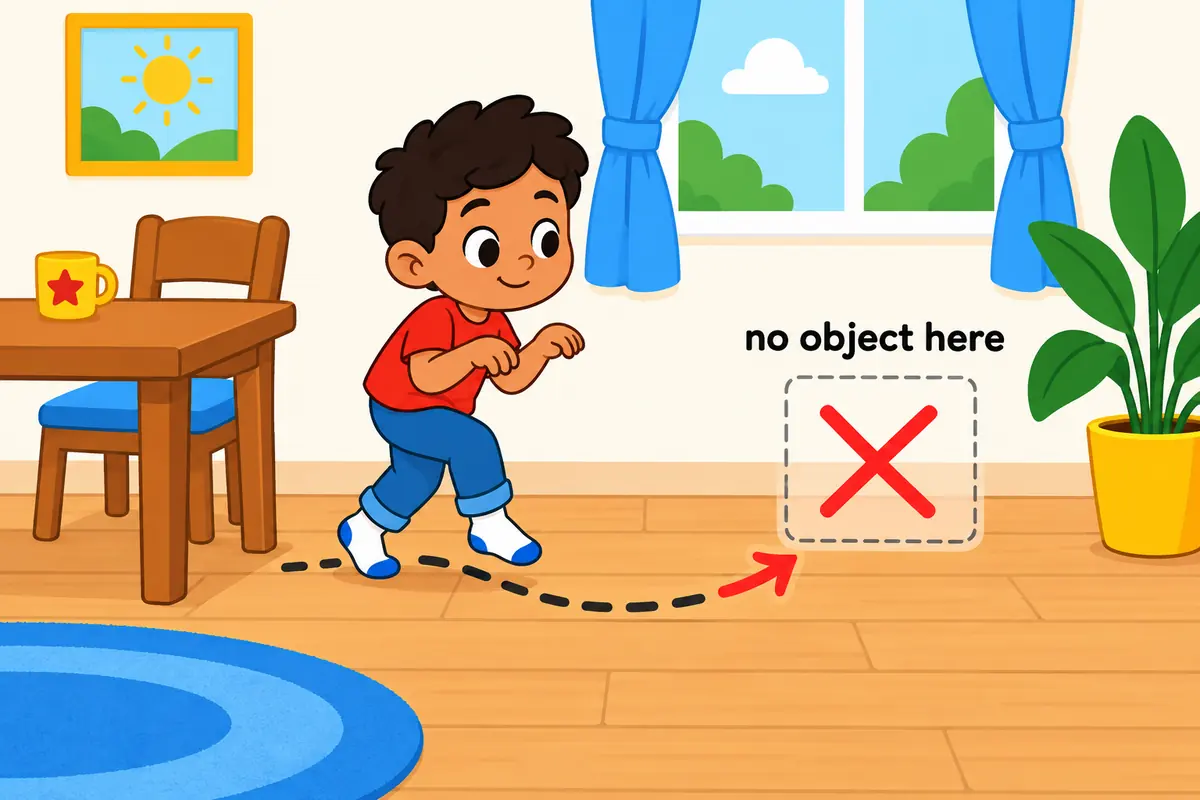
Sneak around in a sentence: examples across contexts
Sneak around changes register more than it changes meaning. The ten sentences below move from a playground to a newsroom, and each shows whether the secrecy is harmless or suspicious.
Two features hold across every context. The phrase stays together, with nothing inserted between sneak and around, and the tense usually decides the tone: the present participle sneaking around often signals ongoing suspicion, while the simple past reports a single quiet movement that is now over.
| Context | Example sentence | Why this works |
|---|---|---|
| Playground | The boys sneaked around the hut to surprise their friends. | A harmless motive keeps the phrase playful. |
| Household | The cat sneaked around the kitchen table at night. | A pet shows the purely physical sense. |
| Workplace | Someone has been sneaking around the stockroom after hours. | The ongoing form suggests a hidden reason. |
| News report | Reporters sneaked around the venue to reach the players. | Uses the verb for a professional purpose. |
| Detective story | A stranger sneaked around the dark yard for an hour. | The setting turns quiet movement into suspicion. |
| School notice | Pupils must not sneak around the corridors during lessons. | A rule uses the phrase to forbid secret movement. |
| Family conversation | He was sneaking around behind his parents to buy the tickets. | Behind marks the deception sense clearly. |
| Historical writing | Messengers sneaked around the guards to reach the gate. | Shows the physical sense in a formal register. |
| Nature writing | A fox sneaked around the edge of the field at dawn. | The animal subject keeps the tone gentle. |
| Office email | Let us not have anyone sneaking around collecting signatures. | The negative frame criticises secret behaviour. |
Notice that only one sentence uses the behind pattern. The deception sense is less common in writing than the physical sense, but it is the one readers picture when the subject is an adult rather than an animal or a child.
Sneak around vs sneak out
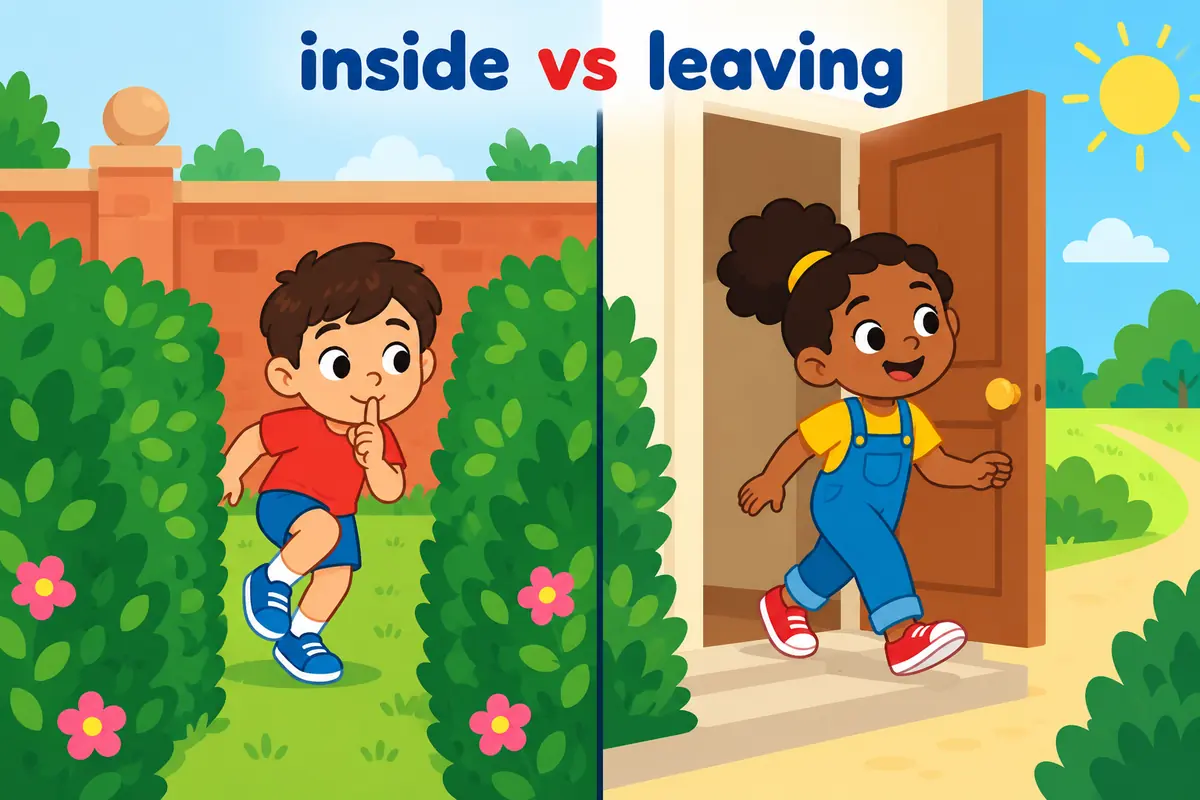
Sneak around and sneak out both describe secret movement, and they answer different questions. Sneak around says where somebody crept; sneak out says that somebody quietly left.
| Attribute | sneak around | sneak out |
|---|---|---|
| Core meaning | Move secretly within a place | Leave a place quietly |
| Focus | The hidden movement, not the exit | The exit itself |
| Object | No object, or a place after around | No object, or of after out |
| Typical place | Indoors and enclosed spaces | Doorways and boundaries |
| Usual tone | Suspicious or playful | Escaping or breaking a rule |
| Example | Somebody sneaked around the office. | Somebody sneaked out of the office. |
Verdict: choose sneak out when the point is leaving, and choose sneak around when the point is creeping about where you should not be.
Word forms and grammar of sneak around
Sneak around inflects by changing the verb and leaves around fixed. The table lists the forms, including the informal past tense and the British variant, so the choices are clear.
| Form | Part of speech | Example |
|---|---|---|
| sneak around | base phrasal verb | Do not sneak around the house at midnight. |
| sneaks around | third person singular | She sneaks around the lab after hours. |
| sneaked around | standard past tense | We sneaked around the back to avoid the queue. |
| snuck around | informal past tense | He snuck around the side of the building. |
| sneaking around | present participle | Someone is sneaking around the courtyard. |
| sneak round | British variant | They sneaked round the corner together. |
Keep the particle fixed in every form, and never insert an object between the two words. Where a sentence only needs a general sense of moving about, hang around describes staying in a place without any secrecy, which is a different idea entirely. A reader who wants the visible, innocent version of moving about a place should compare look around, which names seeing rather than hiding.
Common mistakes with sneak around
- Incorrect:
He sneaked the letter around the desk.Correct: He sneaked around the desk. Rule: Sneak around is intransitive, so it never takes a direct object; the noun after around is a place, not a thing being moved. - Incorrect:
They sneaked around out of the building.Correct: They sneaked out of the building. Rule: Sneak around describes movement within a place; use sneak out when the meaning is leaving it. - Incorrect:
She was sneaking around of the room.Correct: She was sneaking around the room. Rule: Around is a particle or preposition and takes no of; only out pairs with of. - Incorrect:
The dog snucked around the garden.Correct: The dog sneaked around the garden. Rule: The standard past tense is sneaked; snuck is accepted informally but snucked is not a word. - Incorrect:
Someone sneaked- around the office.Correct: Someone sneaked around the office. Rule: The phrase is written as two separate words, with no hyphen between the verb and its particle.
Practice using sneak around
Work through the six items, then check the reasoning rather than only the answer.
- Fill the gap: The kitten ______ the sofa while the puppy slept.
- Choose the better word: The spies (sneaked around / sneaked out) the embassy all night before they left at dawn.
- Correct the error: She sneaked the parcel around the kitchen.
- Build a sentence: use sneak around behind about a classmate planning a surprise.
- Spot the register: which belongs in a school rule – pupils must not sneak around the labs, or the kids were sneaking about?
- Change the tense: They sneak around the old mill. Put the verb in the informal past.
Answers
- sneaked around – around names the area, and the verb takes no object.
- sneaked around – the spies moved about inside the building; leaving would need sneak out of.
- She sneaked around the kitchen – the phrase is intransitive, so the parcel cannot be the object.
- Model answer: Mia sneaked around behind the shed to hide the gift.
- Pupils must not sneak around the labs – a rule keeps a formal, impersonal register.
- Model answer: They snuck around the old mill – snuck is the informal past tense, mostly American.
The bottom line
Use sneak around in a sentence when somebody moves quietly and secretly within a place, or acts behind another person’s back. Two nuances decide most sentences: the verb is intransitive, so around points at a place rather than an object, and the phrase never means to leave, which is sneak out. Keep the two words together and choose sneaked for formal writing.
Frequently asked questions about sneak around
Is the past tense sneaked or snuck?
Both appear, but they belong to different registers. Sneaked is the standard past tense taught in schools and used in formal writing, while snuck is informal and mainly American. For a report, an essay or an exam answer, choose sneaked. In conversation and fiction, snuck is common and perfectly understandable.
Can sneak around take an object?
No. Sneak around is intransitive, so it never takes a direct object. A place can follow around, as in sneak around the garden, but that noun is the object of the preposition, not of the verb. To move something secretly you need a different verb, such as smuggle or carry.
What is the difference between sneak around and sneak out?
Sneak around describes moving secretly inside a place or acting behind someone’s back, while sneak out means leaving a place quietly. A pupil who sneaks around the corridors stays in school; a pupil who sneaks out of school leaves it. The choice depends entirely on whether the sentence is about creeping about or about an exit.
Is sneak around always negative?
No. The phrase can be playful, as when children sneak around a hut to prepare a surprise, and it can be neutral, as when an animal sneaks around a field. It turns negative when the sentence adds behind someone’s back or after hours, because those details suggest that honesty, not just noise, is the issue.