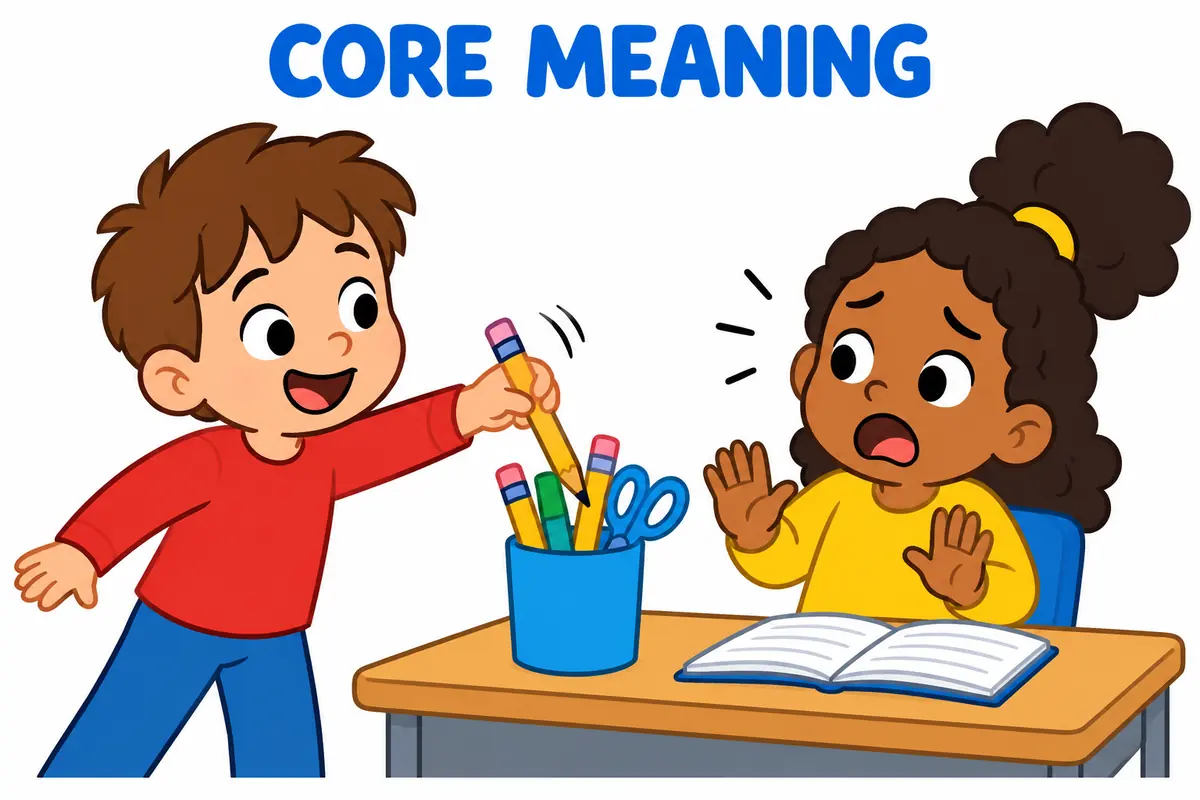
Stack Up is a phrasal verb meaning to accumulate, to compare with something, or to make sense. To use stack up in a sentence, choose the sense first: “The bills stacked up.” “How does it stack up against the old one?” “The story does not stack up.” Each sense needs a different structure.
Stack up at a glance
- Stack up is a phrasal verb with three senses: accumulate, compare and make sense.
- The literal arrange sense is separable: stack the chairs up.
- The accumulate and sense senses are inseparable: the receipts stacked up.
- The compare sense uses the frame stack up against something.
- The commonest error is omitting against in the comparison sense.
What does stack up mean?
Stack up is a phrasal verb meaning to grow into a pile, to measure against a standard, or to form a believable whole. The Cambridge entry for stack up lists these as distinct senses, and the structure tells them apart. The accumulate sense needs no object, the compare sense needs against, and the sense sense usually appears negated. A fourth, literal sense means to arrange things in a pile, as in stack the boxes up.
| Sense | Plain meaning | Example sentence |
|---|---|---|
| Accumulate | Grow into a pile over time | The dishes stacked up in the sink. |
| Compare | Measure against a standard | How does it stack up against the rival model? |
| Make sense | Form a believable, consistent whole | The explanation does not stack up. |
| Arrange in a pile | Put things one on another | Stack the chairs up before you leave. |
One limitation matters here. Stack up says nothing about quality on its own; the comparison sense needs against to supply the standard. Nor is it a word for scattering or reducing. When a pile is simply growing, accumulate is the neutral choice, and pile up is the closest everyday alternative.
How do you use stack up in a sentence?
The four senses grow from a single image of objects resting on one another. Physical objects pile up, numbers and requests accumulate in the same way, and a story stacks up when each detail supports the next without contradiction. That shared picture is why one phrasal verb covers all four uses.
Separability depends on the sense. The literal arrange sense lets the object sit between the parts, giving stack the chairs up or stack up the chairs. The accumulate, compare and make-sense senses are inseparable, so nothing may come between stack and up, and the compare sense adds against before its object. Five patterns cover almost every real sentence.
| Pattern | Example | What it signals |
|---|---|---|
| subject + stack up (intransitive) | Emails stacked up while she was on leave. | Things accumulating on their own. |
| stack up + against + noun | The plan stacks up well against the alternatives. | Comparison with a standard of value. |
| negated + stack up | His account simply does not stack up. | The sense sense, usually said of a doubtful story. |
| stack + object + up (separable) | Stack the boxes up neatly. | Arrange physical objects in a pile. |
| stack up + adverb | Costs stacked up quickly over the year. | How fast accumulation happened. |
You can test which sense you have by asking what follows. If a bare adverb follows, the meaning is accumulation. If against follows, the meaning is comparison. If nothing follows and the sentence is negative, the meaning is coherence.
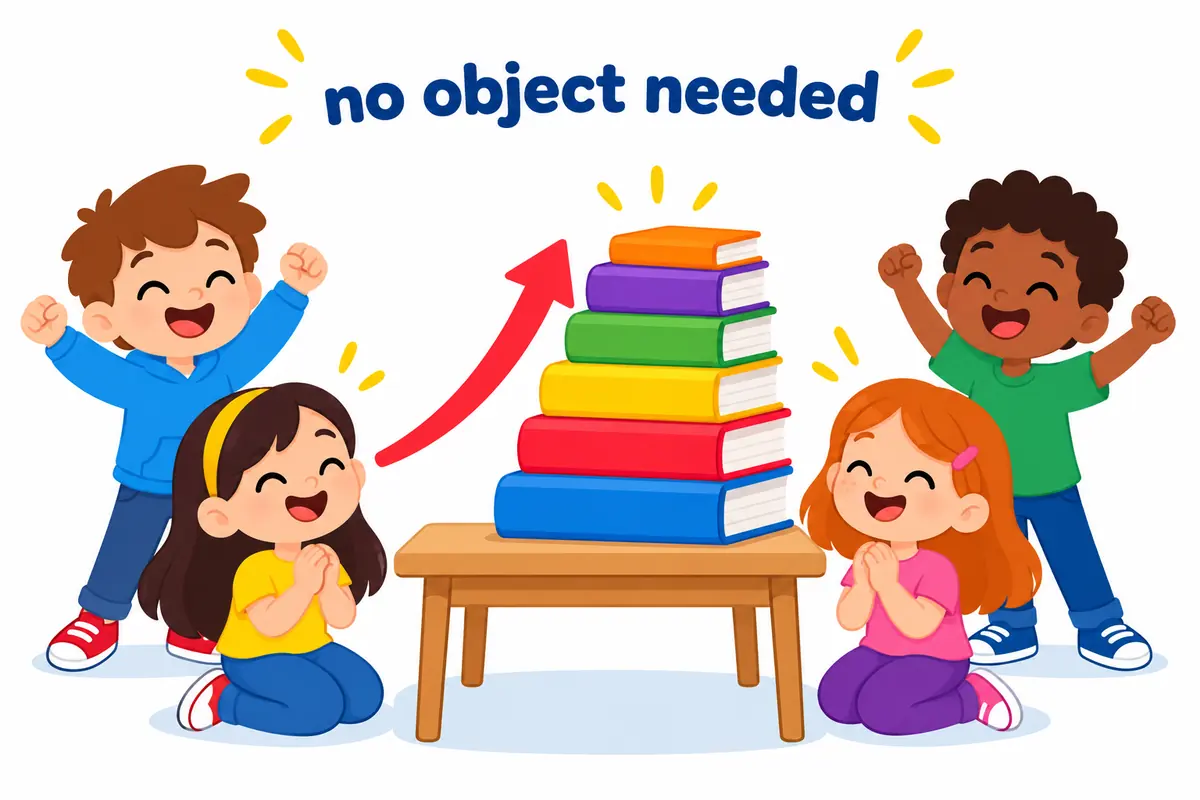
Stack up in a sentence: examples across contexts
Stack up shifts sense more than register, moving from a pile of paper to a comparison of two products to a doubtful story. Each sentence below shows which sense is active and why the wording fits.
| Context | Example sentence | Why this works |
|---|---|---|
| Home | The washing up stacked up while everyone was ill. | The intransitive accumulate sense with no object. |
| Classroom | Marking stacks up faster than anyone expects. | Uses the third person to describe steady accumulation. |
| Workplace email | Requests have stacked up since the launch. | The present perfect shows a pile built over time. |
| Product review | How does the new tablet stack up against its predecessor? | The against frame sets up a direct comparison. |
| News report | Evidence has stacked up against the original claim. | The comparison sense strengthens a case over time. |
| Detective fiction | The suspect’s alibi did not stack up. | The negated sense sense signals a story that fails. |
| Finance | Savings stack up slowly at such low interest. | The adverb describes the pace of accumulation. |
| Meeting | Let us stack the results up against last year’s figures. | The separable form with the object in the middle. |
| Sports report | The midfielder stacks up well against the best in the league. | Compares a player with a named standard. |
| Customer support | Complaints stacked up after the outage. | The intransitive sense in a short factual line. |
| Academic writing | Doubts about the method stack up once the data are checked. | Formal use of the accumulate sense. |
| Conversation | These jobs really stack up, do they not? | Informal comment on work piling up. |
| Warehouse | Staff stacked the pallets up against the wall. | The literal separable arrange sense. |
| Charity appeal | Small donations stack up into something serious. | Metaphor of many small parts forming a whole. |
| Health writing | Evidence stacks up against the supplement’s main claim. | The against frame in a scientific context. |
| Diary | Chores stacked up and I never caught up. | First-person accumulation in a personal voice. |
Stack up vs pile up
Stack up and pile up both describe growing heaps, so learners reach for the wrong one. Pile up is the plain, physical choice, while stack up adds the sense of comparison or logical coherence in its other uses.
| Attribute | stack up | pile up |
|---|---|---|
| Core meaning | Accumulate, compare or make sense | Accumulate into a heap |
| Extra senses | Compare and make sense | None; physical only |
| Typical subject | Bills, evidence, a product, a story | Snow, leaves, washing, traffic |
| Needs against? | For the comparison sense, yes | No |
| Register | Neutral to business | Neutral and everyday |
| Separable? | Only in the literal arrange sense | Yes, in the physical sense |
Verdict: use pile up for a simple physical heap, and stack up when you are comparing something with a standard or asking whether an account makes sense.
Word forms and grammar of stack up
Stack up is regular in form, and the two-word unit behaves differently in each sense. The table also lists neighbours that share the particle up and confuse learners.
| Form or relative | Part of speech | Example |
|---|---|---|
| stack up | phrasal verb, base form | The costs will stack up if we wait. |
| stacks up | phrasal verb, third person singular | It stacks up well against the older model. |
| stacked up | phrasal verb, past and participle | The letters had stacked up for weeks. |
| stacking up | phrasal verb, present participle | The evidence is stacking up against him. |
| add up | different phrasal verb | The figures do not add up either. |
| back up | different phrasal verb | Please back up your claim. |
The unit keeps its regular verb forms, but swapping the particle changes the meaning entirely, so stack up is learned as a whole rather than as stack plus up.
Common mistakes with stack up
- Incorrect:
The bills stacked the up.Correct: The bills stacked up. Rule: The accumulate sense is intransitive, so nothing may sit between stack and up. - Incorrect:
How does it stack up the old one?Correct: How does it stack up against the old one? Rule: The comparison sense needs against before its object. - Incorrect:
His story does not stack up against believable.Correct: His story does not stack up. Rule: The sense sense needs no complement; the doubt is already in the verb. - Incorrect:
The snow stacked up against the road.Correct: The snow piled up beside the road. Rule: For a plain physical heap, pile up is the natural verb. - Incorrect:
Stack up the chairs.Correct: Stack the chairs up. or Stack up the chairs. Rule: The literal arrange sense is separable, so either order is correct, but keep the parts close.
Practice using stack up
Work through the seven items, then read the reasoning rather than only the answers.
- Fill the gap: The unopened letters ______ on the hall table.
- Choose the better word: Snow (stacked up / piled up) beside the path.
- Correct the error: How does the phone stack up the cheaper model?
- Build a sentence: use stack up against about two laptops.
- Spot the register: which belongs in a detective story — the alibi did not stack up, or the alibi had no sense in it?
- Rewrite with the object in the middle: Stack up the crates. Use the separable order.
- Choose the sense: in evidence stacked up against the claim, does stack up mean accumulate or compare?
Answers
- stacked up — the letters are the subject and no object is needed in the accumulate sense.
- piled up — a simple physical heap takes pile up rather than the comparison verb.
- How does the phone stack up against the cheaper model? — the comparison sense needs against.
- Model answer: The new laptop stacks up well against the older one.
- The alibi did not stack up — the compact idiomatic verb fits a brisk detective voice.
- Stack the crates up — the literal arrange sense allows the object between the parts.
- accumulate — the against phrase describes a growing case rather than a direct comparison.
The bottom line
Use stack up in a sentence when things accumulate, when you compare something with a standard, or when you judge whether a story makes sense. The two details that decide most sentences are these: only the literal arrange sense may split, and the comparison sense always needs against. The phrase stack up against is what makes the verb measure two things fairly.
Frequently asked questions about stack up
Is stack up a phrasal verb?
Yes. Stack up is a phrasal verb because the particle up changes the meaning of stack, producing the senses accumulate, compare and make sense. The whole unit behaves differently from the plain verb stack, so it has to be memorised as a phrase.
Can you separate stack up?
Only in the literal arrange sense. You can say stack the chairs up or stack up the chairs when physically piling objects. In the accumulate, compare and make-sense senses the verb is inseparable, so the parts always stay together and nothing comes between them.
What does it mean if something does not stack up?
If something does not stack up, it fails to form a believable, consistent whole. The phrase is common for accounts, alibis and arguments that fall apart under inspection. It means the details do not add up, not that a physical pile has fallen over.
What does stack up against mean?
Stack up against means to be compared with something as a standard. Asking how a product stacks up against a rival measures the two side by side. The phrase is neutral and common in reviews, business writing and sports coverage, where one thing is judged against another.