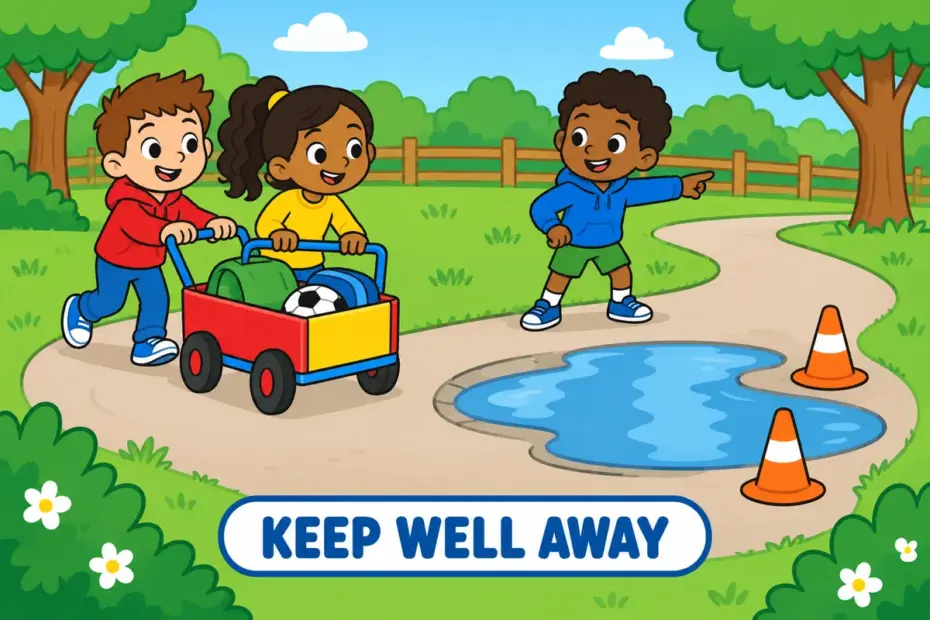
Steer clear of is a fixed expression meaning to avoid someone or something deliberately. To use steer clear of in a sentence, put the thing you avoid after of: “We steered clear of the flooded road.” Only the verb steer changes for tense, so the phrase stays steer clear of in every form.
Steer clear of at a glance
- Steer clear of is a verb phrase meaning to avoid something on purpose.
- The fixed part is clear of; the verb steer carries the tense and the subject.
- It takes a noun or a gerund after of: steer clear of debt, steer clear of lending.
- The phrase is informal and common in speech, journalism and advice writing.
- The commonest error is writing steer clear from instead of steer clear of.
What does steer clear of mean?
Steer clear of means to keep away from a person, place, thing or topic, usually as a deliberate choice. The Cambridge entry for steer clear of treats it as a single unit meaning avoid. The phrase keeps the picture of steering a vehicle, so it carries a hint of active navigation rather than mere absence: you steer clear because you have seen the obstacle and chosen to go around it.
| What is avoided | Plain meaning | Example sentence |
|---|---|---|
| A person | Keep away from someone | After the quarrel he steered clear of his old friend. |
| A place or hazard | Not go near something risky | Cyclists steer clear of the tram lines in the rain. |
| A topic | Avoid raising a subject | She steered clear of the question about the missing funds. |
One honest limitation belongs here. Steer clear of is informal, so a formal report usually prefers avoid the risk or refrain from. The phrase also implies a free choice, which makes it a poor fit when somebody had no real option, and it never means to forget or to ignore something by accident.
How do you use steer clear of in a sentence?
The phrase is fixed, so the only real decisions are what follows of and how much emphasis you add. Five patterns cover almost every natural sentence.
| Pattern | Example | What it signals |
|---|---|---|
| steer clear of + noun | Steer clear of that back road after dark. | The commonest shape; of introduces the thing avoided. |
| steer clear of + gerund | He steered clear of mentioning the debt. | The avoided action is named as an -ing verb. |
| steer well clear of | Keep well clear of the argument. | Well adds emphasis without changing the meaning. |
| steered / steering clear of | They are steering clear of new loans. | Tense lives on steer; the rest never changes. |
| steer clear of + person | She steers clear of the new manager. | Names a person rather than a thing or action. |
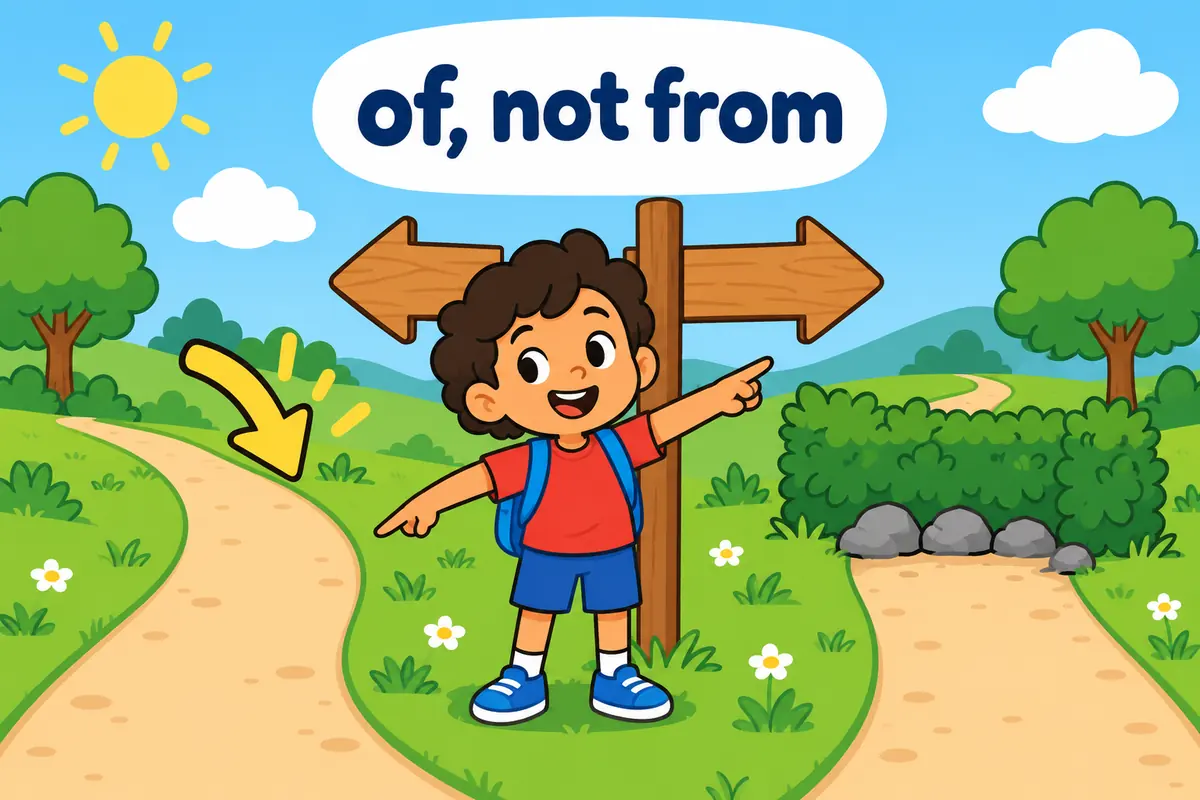
The preposition is not negotiable. Every natural sentence uses of, never from, which is why steer clear from is the single error that marks a learner most clearly in this phrase.
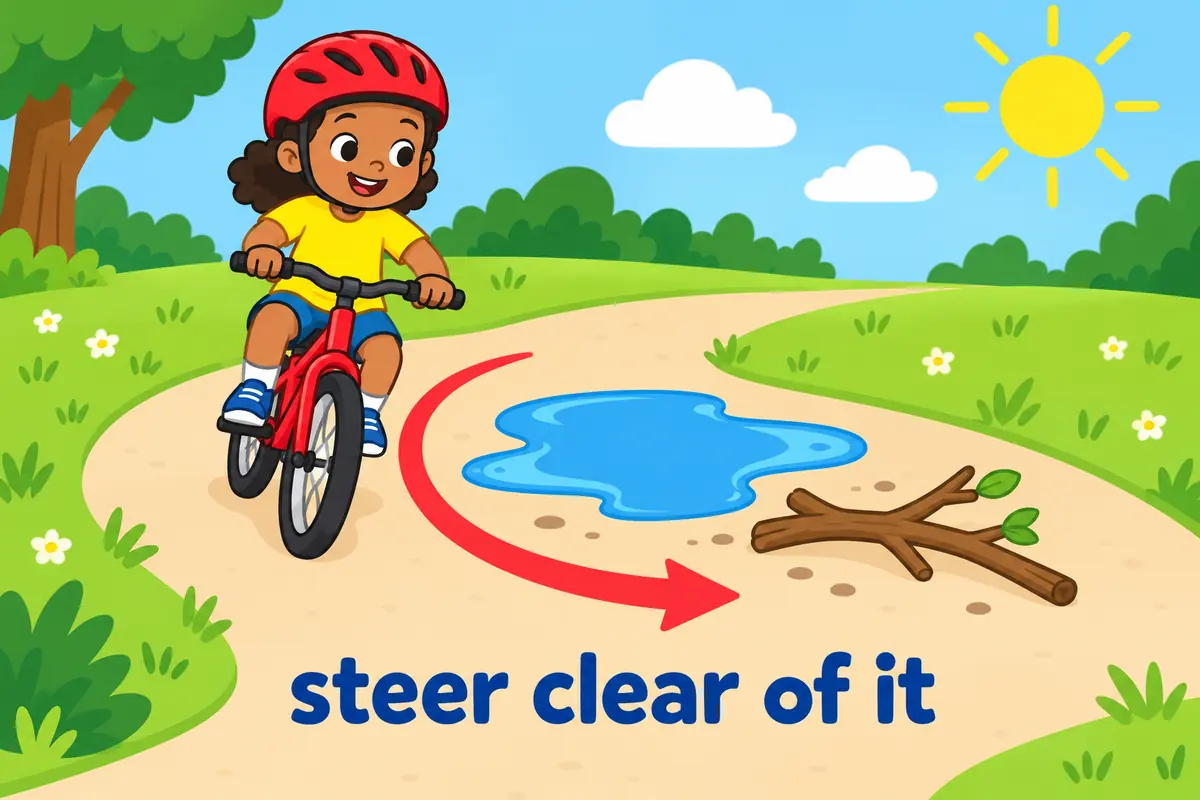
Steer clear of in a sentence: examples across contexts
The ten sentences below move from a playground to a financial column, and each one names the thing avoided directly after of.
| Context | Example sentence | Why this works |
|---|---|---|
| Classroom | Steer clear of the wet paint on the far wall. | A clear instruction names the hazard right after of. |
| Workplace email | We are steering clear of fixed-price contracts this year. | Present continuous fits an ongoing policy. |
| News report | Residents have steered clear of the market since the fire. | Perfect tense ties the avoidance to a past event. |
| Health advice | Steer clear of sugary drinks between meals. | A gerund-like plural noun names the habit to drop. |
| Finance writing | Prudent funds steer clear of untested products. | Formal setting still accepts the phrase in a headline. |
| Travel writing | Travellers steer clear of the coast road in storm season. | Names a place and a time in one compact line. |
| Sports report | The winger steered clear of the shoulder injury that ended others. | The verb form shows a lucky avoidance. |
| Conversation | I just steer clear of that whole topic with my uncle. | The casual register the phrase belongs to. |
| Legal note | The parties steered clear of any written admission. | Avoids a strictly legal commitment. |
| Editorial | The board steered clear of blame by staying silent. | Implies a deliberate choice to avoid notice. |
Because the phrase is conversational, it reads best where a plainspoken tone is welcome; a stiff report will often reach instead for dodge the question when the avoidance looks evasive rather than wise.
Steer clear of vs avoid
Steer clear of and avoid mean almost the same thing, and they part company on tone and emphasis. The table marks the differences that decide a sentence.
| Attribute | steer clear of | avoid |
|---|---|---|
| Core job | Keep away from something on purpose | Keep away from, prevent or refrain |
| Register | Informal and vivid | Neutral, usable anywhere |
| Grammatical shape | Fixed phrase, of required | One verb, takes a direct object |
| Implies a choice | Strongly; you navigate around it | Not always; avoidance may be forced |
| Senses beyond distance | None; always about staying away | Also means prevent, as in avoid a crash |
| Best in | Advice, speech, feature writing | Reports, policy and formal prose |
Verdict: choose steer clear of for a lively tone and a deliberate choice, and choose shun the topic or avoid when the writing should stay neutral or when the avoidance was not really a choice.
Word forms and grammar of steer clear of
Steer clear of is a fixed expression, so most of its grammar is about what may and may not change inside it. The verb carries every tense; the rest is frozen.
| Form | Part of speech | Example |
|---|---|---|
| steer clear of | base phrase | Steer clear of the open drain. |
| steers clear of | third person singular | He steers clear of rush hour. |
| steered clear of | past tense | We steered clear of the subject. |
| steering clear of | present participle | She is steering clear of new debt. |
| steer well clear of | emphatic variant | Keep well clear of the cliff edge. |
| steer clear from | non-standard | Not used; write steer clear of instead. |
Two words inside the phrase are locked: clear stays clear rather than clearly, and the preposition stays of. Adverbs such as well and wide may slide in before clear, but nothing else may, which is why evade the charge is a separate verb rather than a variant of this phrase.
Common mistakes with steer clear of
- Incorrect:
Steer clear from that alley.Correct: Steer clear of that alley. Rule: The fixed preposition is of, never from. - Incorrect:
Steer clearly of the traffic.Correct: Steer clear of the traffic. Rule: Clear stays an adjective inside the phrase; it never becomes clearly. - Incorrect:
The road steered clear of the accident.Correct: Drivers steered clear of the accident. Rule: A person or group steers; a route cannot. - Incorrect:
She steered clear the puddle.Correct: She steered clear of the puddle. Rule: The preposition of cannot be dropped. - Incorrect:
He steered clear to the argument.Correct: He steered clear of the argument. Rule: Of introduces the thing avoided; to signals a destination instead.
Practice using steer clear of
Work through the six items, then read the reasons rather than only the answers.
- Fill the gap: Please steer clear ______ the broken glass.
- Choose the better word: In the annual report, the firm (steered clear of / avoided) naming the supplier.
- Correct the error: They steered clear from the topic all evening.
- Build a sentence: use steer clear of about a busy road on the walk to school.
- Spot the register: which belongs in a formal memo — staff should steer clear of the north stairwell, or the policy eschews the north stairwell?
- Repair the verb: He is steer clear of the debate. Fix the tense.
Answers
- of — the fixed preposition in the phrase is of, not from.
- avoided — a formal report prefers the neutral verb to the conversational phrase.
- They steered clear of the topic all evening — from is never correct here.
- Model answer: We steer clear of the busy road on the walk to school.
- Staff should steer clear of the north stairwell — it is plainer and warmer for staff guidance than eschews.
- He is steering clear of the debate — the present participle needs -ing after is.
The bottom line
Use steer clear of in a sentence when you mean a deliberate, informal avoidance, and keep the fixed of after the phrase. The two facts that settle most sentences are these: only the verb steer changes for tense, and clear may take well before it but never becomes clearly. Where the tone must stay neutral, eschew the practice or avoid is the safer choice.
Frequently asked questions about steer clear of
What does steer clear of mean?
Steer clear of means to keep away from someone or something on purpose. It suggests an active choice, as though you have seen a hazard and guided yourself around it. You can steer clear of a person, a place, a topic or a habit, and the thing avoided goes directly after of.
Is steer clear of formal or informal?
The phrase is informal and vivid, so it suits speech, advice columns and feature writing. Formal reports usually prefer avoid or refrain from, which sound neutral and carry no hint of steering. In a business memo, avoid the risk reads more soberly than steer clear of the risk, though both are grammatical.
Do you say steer clear of or steer clear from?
Always steer clear of. The preposition is fixed as of, so steer clear from that alley is a common learner error. The reason is that of names the thing being avoided, while from would point to a starting place, as in depart from the station. Keep of in every sentence.
Can you say steer clear of someone?
Yes. The phrase works with people as well as things, as in she steered clear of her old colleague after the quarrel. When a person is the object, the meaning is social distance rather than physical danger. The grammar is unchanged: the person follows of, and steer still carries the tense.
“Steer clear of” is a commonly used idiom that advises avoiding a particular situation, person, or thing to prevent problems or complications. This phrase suggests keeping a safe distance to stay out of harm’s way.
By heeding the advice to “steer clear of,” individuals can sidestep potential difficulties and maintain a trouble-free path. Whether it be a risky investment, a toxic relationship, or a dangerous neighborhood, this expression conveys the importance of making wise choices to protect oneself from harm.
7 Examples Of Steer Clear Of Used In a Sentence For Kids
- Steer clear of touching hot objects.
- Steer clear of strangers offering you treats.
- Steer clear of running near the stairs.
- Steer clear of crossing the road without an adult.
- Steer clear of playing with sharp objects.
- Steer clear of touching electrical outlets.
- Steer clear of going near unfamiliar animals.
14 Sentences with Steer Clear Of Examples
- Steer clear of parties with underage drinking to avoid getting into trouble with the law.
- Make sure to steer clear of plagiarizing in your assignments to maintain academic integrity.
- Steer clear of taking on too many extracurricular activities to prevent burnout during the semester.
- It’s important to steer clear of procrastination when it comes to studying for exams.
- Steer clear of unhealthy fast food options on campus to maintain a balanced diet.
- Remember to steer clear of getting involved in campus drama that doesn’t concern you.
- It’s best to steer clear of skipping classes as it can affect your academic performance.
- Steer clear of engaging in academic dishonesty like cheating during exams.
- Always remember to steer clear of using your phone while driving on the busy streets outside campus.
- Don’t forget to steer clear of engaging in risky behavior during college parties.
- It’s crucial to steer clear of falling into debt by managing your finances wisely.
- Steer clear of negative influences that may hinder your personal growth and development.
- Remember to steer clear of submitting assignments past the deadline to avoid penalties.
- Make sure to steer clear of participating in activities that go against your values and beliefs.
How To Use Steer Clear Of in Sentences?
When using Steer Clear Of in a sentence, remember that this phrase means to avoid or stay away from something or someone. Here’s a simple guide on how to correctly use it:
-
The phrase Steer Clear Of is always followed by the thing or person you want to avoid. For example: “I need to steer clear of junk food to stay healthy.”
-
You can use Steer Clear Of to signify both physical and metaphorical avoidance. For instance: “He decided to steer clear of the dangerous neighborhood” or “She made sure to steer clear of any drama at work.”
-
Steer Clear Of is often used to warn someone about potential dangers or issues. For instance: “It’s best to steer clear of that group; they’re known for causing trouble.”
-
When using Steer Clear Of, make sure to place it at the beginning or in the middle of your sentence. It is not typically used at the end.
Remember, using Steer Clear Of can help you communicate your intention to avoid something clearly and effectively. Be sure to use it appropriately in your conversations or writing to convey your message accurately.
Conclusion
In conclusion, it is wise to heed the advice to “steer clear of” potentially risky or dangerous situations. By avoiding such circumstances, we can safeguard our well-being and prevent unwanted consequences. It is important to be mindful of the warning signs and take proactive measures to stay out of harm’s way.
Choosing to “steer clear of” negative influences, problematic behaviors, or hazardous environments empowers us to make better choices for our personal safety and overall peace of mind. By being vigilant and intentional in our decisions, we can navigate life with greater caution and avoid unnecessary pitfalls. Remember, it’s always better to err on the side of caution and “steer clear of” anything that may pose a threat to our welfare.


