
Suave is an adjective describing someone polished, confident and smoothly charming in social situations. To use suave in a sentence, apply it to a person, a manner or a voice: “The suave host greeted every guest by name.” The word can praise genuine charm or hint that the smoothness feels practised.
Suave at a glance
- Suave is an adjective; the adverb is suavely and the noun is suaveness or suavity.
- It describes people, manners, voices and smiles, never objects or places.
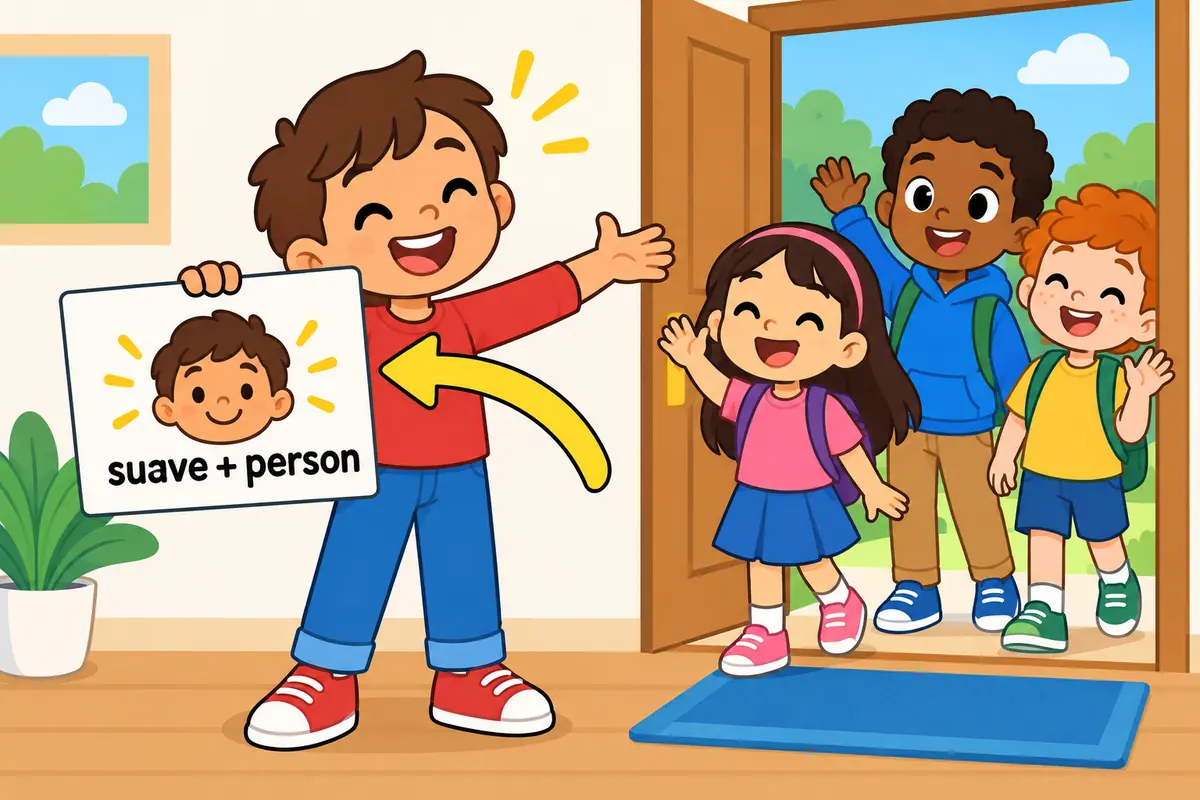
- The usual frame is suave + person noun, as in a suave salesman or a suave diplomat.
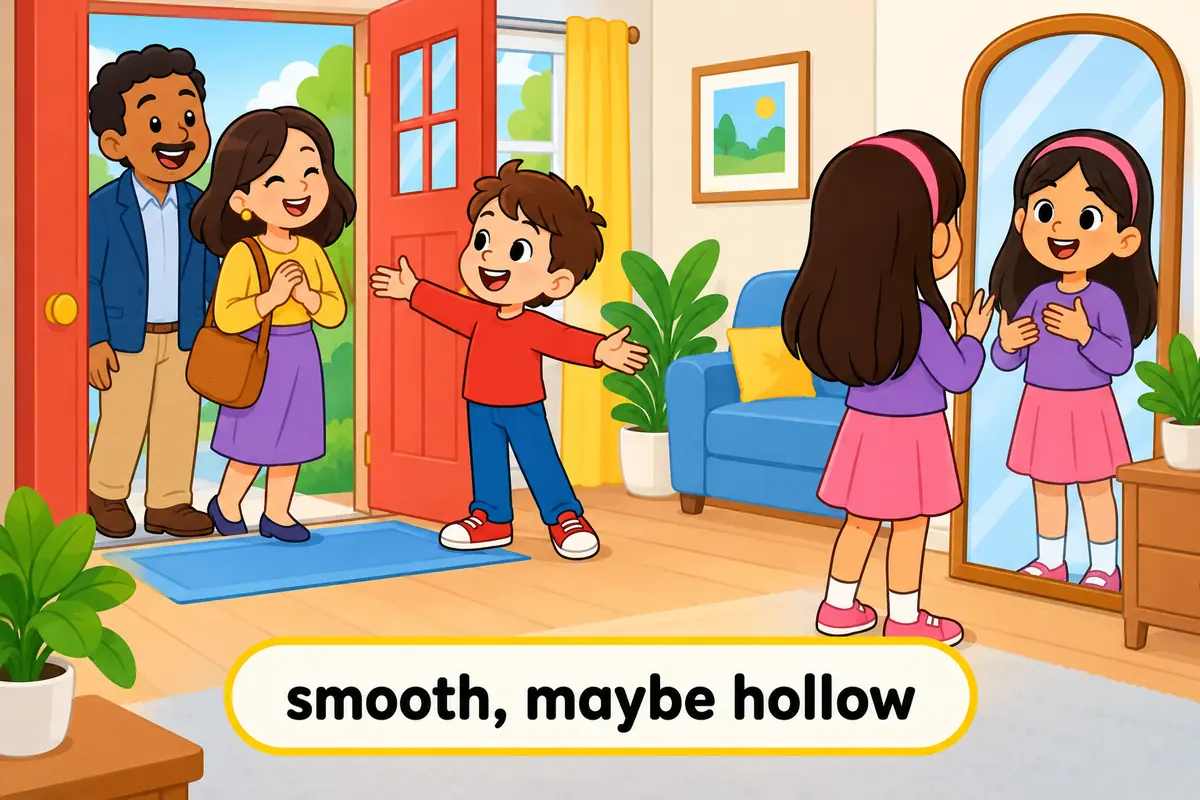
- Suave carries a double edge: it can mean genuinely charming or too smoothly practised.
- The commonest error is using suave for plain politeness, where courteous or kind is the honest word.
What does suave mean?
Suave is an adjective meaning smoothly confident and agreeable in social situations. The Cambridge entry for suave notes the word can suggest a charm that feels a little too practised. When the warmth is genuine, charming is the plainer compliment; suave adds a cool, worldly polish.
| Sense | Plain meaning | Example sentence |
|---|---|---|
| Genuinely polished | Confident and pleasant to be around | The suave waiter made every table feel welcome. |
| Practised to a fault | Smooth in a way that seems studied | His suave apology sounded rehearsed. |
| Worldly and stylish | Refined in manner, dress and speech | A suave figure stepped out of the taxi. |
One limitation matters. Suave is not the same as kind or sincere: it praises surface manner rather than character, so calling a deeply caring friend suave misses what you mean.
How do you use suave in a sentence?
Suave sits before the person noun it praises, or after a linking verb. Four patterns cover almost every natural use, and the choice of noun decides whether the tone is admiring or wary.
| Pattern | Example | What it signals |
|---|---|---|
| suave + person noun | a suave salesman | the person is polished and persuasive |
| suave + manner noun | a suave manner | the style is smooth and controlled |
| linking verb + suave | He was suave without trying. | predicative use, common in description |
| suave + in + activity | suave in conversation | states where the polish shows |
A useful constraint: suave rarely describes a group or an institution. It is a word for individuals, so a suave company sounds wrong where a polished company belongs.
Suave in a sentence: examples across contexts
The nine sentences below keep the same adjective while moving from a workplace to a film review, and each one names the person or manner described.
| Context | Example sentence | Why this works |
|---|---|---|
| Workplace | The suave negotiator settled the dispute over lunch. | Names a professional role where polish counts. |
| Social conversation | Her suave reply put everyone at ease. | Describes a manner rather than a person. |
| Media review | The actor plays a suave spy with quiet confidence. | Popular culture use of the word. |
| Fiction | A suave stranger offered them a ride in a gleaming car. | Literary, slightly mysterious tone. |
| Academic prose | The essay analyses the suave rhetoric of the advertisement. | Critical use with a hint of suspicion. |
| Sports report | The suave coach charmed the press after the defeat. | Contrasts style with the result. |
| Customer service | The suave receptionist calmed an angry guest in seconds. | Everyday hospitality register. |
| History essay | The suave envoy won the court over with flattery. | Formal, diplomatic context. |
| Travel writing | A suave concierge arranged everything without a sound. | Descriptive, admiring tone. |
Suave vs slick
| Attribute | Suave | Slick |
|---|---|---|
| Core idea | Smoothly charming and socially skilled | Smooth in a way that may be shallow |
| Tone | usually admiring, sometimes wary | usually critical |
| Usual nouns | person, manner, voice | salesman, advert, operation |
| What it implies | poise and warmth together | surface polish hiding little substance |
| Register | slightly literary | informal and journalistic |
Choose suave when the charm is real enough to admire, and slick when the smoothness feels thin. A debonair man is stylish and cheerful, while a suave one is cooler and more controlled. An urbane manner is polite and worldly, a polished performance is neat and finished, and a sophisticated taste is simply refined.
Word forms and grammar of suave
| Form | Part of speech | Example |
|---|---|---|
| suave | adjective | a suave greeting |
| suavely | adverb | He suavely changed the subject. |
| suaveness | noun | the suaveness of the young host |
| suavity | noun (formal) | the suavity of his reply |
Common mistakes with suave
- Incorrect:
a suave hotelCorrect: an elegant hotel Rule: suave describes people and manners, not buildings. - Incorrect:
She is suave and caring.Correct: She is gracious and caring. Rule: suave praises surface style, so it clashes with sincere warmth. - Incorrect:
He spoke suave.Correct: He spoke suavely. Rule: use the adverb to modify a verb. - Incorrect:
The very suave man was suave.Correct: The extremely suave man charmed the room. Rule: repeating suave adds nothing and sounds clumsy. - Incorrect:
a suave personality guaranteed trustCorrect: a warm personality inspired trust Rule: suave can imply insincerity, which undercuts trust.
Practice using suave
- Fill in the blank: The ________ waiter guided them to the best table.
- Choose the better word: The (suave / kind) nurse reassured the frightened child.
- Correct the error: He answered the question suave.
- Build a sentence: describe a television presenter using suave with a person noun.
- Spot the register: which sentence suits a film review, and which suits a condolence note?
- Fill in the blank: Her ________ manner made the interview feel easy.
Answers
- suave — the waiter shows smooth, practised social skill.
- kind — real warmth is at stake, not surface polish.
- He answered the question suavely. — the adverb, not the adjective, modifies the verb.
- The suave presenter kept the whole audience laughing. — the adjective sits before a person noun.
- The film review uses suave; the condolence note uses kind. — suave is a style word, unsuited to sincere grief.
- suave — a smooth manner is exactly what the adjective praises.
The bottom line
Suave describes smooth, confident charm in a person, a manner or a voice, and it sits before the noun it praises. The word carries a double edge: it can admire real poise or hint at practised insincerity. Use it for individuals rather than institutions, and choose warm or kind when sincerity is the point. Suave works best when style is genuinely the subject.
Frequently asked questions about suave
Is suave a compliment?
Usually, but not always. Suave praises smooth confidence and social skill, so it works as a compliment for a charming host or a poised speaker. It can also hint that the charm feels rehearsed, which turns the word slightly critical. Context and tone decide whether the speaker admires or distrusts the smoothness.
Can you describe a place as suave?
No. Suave describes people, manners, voices and smiles rather than places or objects. An elegant hotel, a stylish restaurant and a polished room are the natural choices. Using suave for a building sounds like a translation error, because the word belongs to human behaviour and social style.
What is the difference between suave and slick?
Both describe smoothness, but suave suggests genuine social grace and slick suggests shallow polish. A suave diplomat is poised and likeable; a slick salesman may be charming yet untrustworthy. Suave usually leans admiring, while slick usually leans critical. The two words are near neighbours with opposite emotional tones.
How do you use suave in a sentence?
Place suave directly before a person noun, as in a suave host, or after a linking verb, as in the reply was suave. For the adverb, write suavely to describe how someone speaks or moves. The word takes no object and never describes institutions, so keep it attached to people and social manner.
Have you ever heard someone describe a person as “suave”? This term is often used to portray someone as sophisticated, charming, and effortlessly smooth in their demeanor. Essentially, a suave individual possesses an air of confidence and sophistication that is appealing to others.
When someone is described as suave, it typically means they have a polished and debonair presence that exudes charm and class. This quality can be seen in the way they carry themselves, interact with others, and handle various situations with ease.
7 Examples Of Suave Used In a Sentence For Kids
- The suave cat walked gracefully across the room.
- The suave man wore a stylish suit to the party.
- The suave girl had a confident smile on her face.
- The suave dancer moved smoothly to the music.
- The suave peacock displayed its colorful feathers proudly.
- The suave lady greeted everyone with a polite nod.
- The suave prince rode on a majestic horse.
14 Sentences with Suave Examples
- The suave outfit he wore to the college party made quite an impression.
- She delivered a suave presentation that impressed all her classmates.
- His suave way of talking always helped him make friends easily in college.
- The professor’s suave teaching style kept the students engaged throughout the lecture.
- She always had a suave response ready during debates in college.
- The suave design of the new campus café became a popular hangout spot for students.
- His suave dance moves at the college festival left everyone in awe.
- The college fashion show featured some incredibly suave designs created by the students.
- The suave app developed by the computer science students received rave reviews.
- Her suave leadership skills led to the success of the college event.
- The suave marketing campaign for the college fundraiser attracted a large crowd.
- The suave phone case she designed became a hit among her classmates.
- His suave negotiation skills helped him secure a great internship opportunity.
- The suave manner in which he handled group projects earned him praise from his peers.
How To Use Suave in Sentences?
Suave is a versatile word that can be used in different contexts to convey a sense of smoothness, charm, or sophistication. When Suave is used in a sentence, it often describes someone who is charming, elegant, and confident in their demeanor. For example, “He was a Suave gentleman who effortlessly captivated everyone at the party with his wit and charisma.”
To use Suave in a sentence, simply place it before a noun or pronoun to describe a person or their actions in a smooth and sophisticated manner. Remember to pay attention to the context in which you are using the word to ensure it fits seamlessly into your sentence.
Here are a few examples to help you understand how to use Suave effectively in a sentence:
- “The Suave businessman closed the deal with a confident smile.”
- “She walked into the room with a Suave grace that caught everyone’s attention.”
- “His Suave manners and impeccable style made him the center of attention.”
By incorporating Suave into your vocabulary, you can add a touch of sophistication and elegance to your writing or speech. Practice using Suave in sentences to become more comfortable with this versatile word and enhance your communication skills.
Conclusion
In conclusion, incorporating suave sentences into your communication can enhance your ability to convey sophistication and charm. By crafting sentences with elegance and finesse, you can leave a lasting impression on your audience, whether in professional or social settings. These sentences can help you exude confidence and refinement, making you stand out as a polished and articulate individual.
From job interviews to casual conversations, the use of suave sentences can elevate your communication style and help you command attention. By mastering the art of crafting sentences with suave, you can cultivate a sense of sophistication and grace that will set you apart in various situations. Embracing the power of suave sentences can give you a competitive edge and leave a memorable mark on those you interact with.


