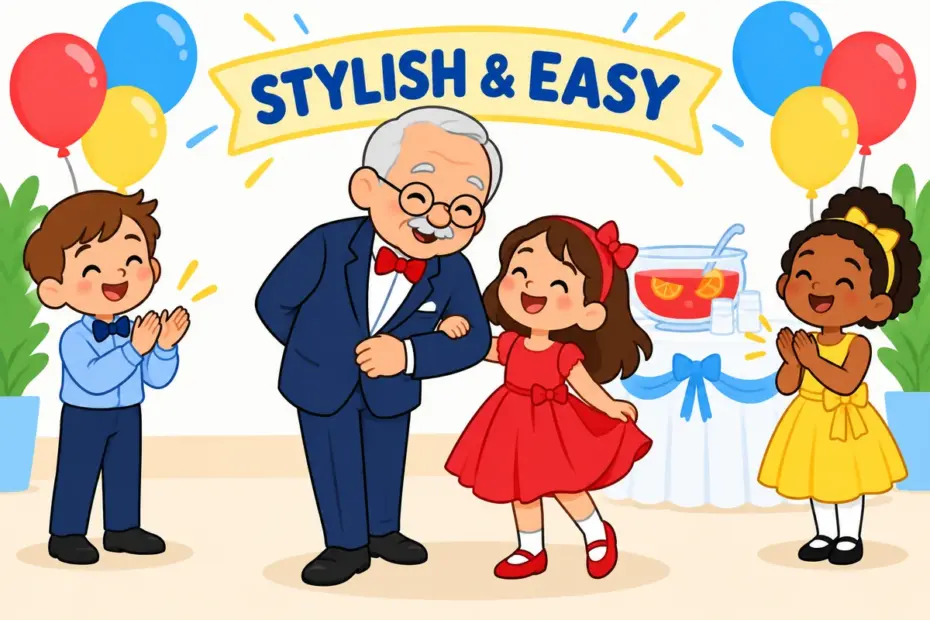
Debonair is an adjective describing a man who is stylish, confident and cheerfully charming, with an easy manner. To use debonair in a sentence, place it before a person or after a linking verb: “a debonair host” or “he looked debonair.” The word is almost always complimentary and almost always applied to men.
Debonair at a glance
- Debonair is an adjective describing a man who is stylish, confident and cheerfully charming.
- It has no verb form; the rare nouns are debonairness and, informally, debonair.
- It usually comes before a noun (a debonair host) or after a linking verb (he looked debonair).
- The word is almost always complimentary and is applied mainly to men.
- It sounds slightly old-fashioned, so it often carries a note of affection or quiet wit.
- The commonest error is spelling it debonaire, with a final e that English does not use.
What does debonair mean?
Debonair is an adjective meaning confident, stylish and cheerfully charming, with an ease that suggests the person is untroubled. The Cambridge entry for debonair records both the attractive, relaxed sense and the older sense of courteous. Where a writer only means pleasing, charming is warmer and plainer, while debonair adds a specific note of style, and a refined manner is cultivated whereas debonair is meant to look effortless.
| Sense | Plain meaning | Example sentence |
|---|---|---|
| Stylish and charming | Well dressed with an easy, confident manner | A debonair host greeted every guest by name. |
| Carefree and cheerful | Light-hearted and untroubled by worry | He gave a debonair shrug and changed the subject. |
| Courteous and refined, old use | Gentle and well mannered | The debonair knight bowed to the assembly. |
One limitation is worth stating. Debonair describes a manner and an appearance rather than an action, so a person is not debonair for doing something; they are debonair in how they carry themselves. The word is also mostly reserved for men, and applied to a woman it can sound dated or playful rather than neutral.
How do you use debonair in a sentence?
Debonair is a plain adjective, so it needs no preposition and no object: it either sits before a noun or follows a linking verb such as look, seem or be. Because it is long, comparison uses more and most rather than the -er ending, and the word rarely appears in the comparative at all.
| Pattern | Example | What it signals |
|---|---|---|
| debonair + noun | A debonair stranger offered his seat. | The attributive use, before the person described. |
| linking verb + debonair | The conductor looked debonair in white tie. | The predicative use, after seem, look or be. |
| more / most debonair | He grew more debonair each season. | Comparison, since the adjective has no short form. |
| debonair + noun for a thing | A debonair smile won the room. | Transferred to a style or detail, common in reviews. |
| rather / somehow debonair | Somehow he stayed debonair through the chaos. | A hedged use that adds gentle irony. |
The adjective transfers easily from a person to a style, which is why reviews call a smile or an outfit debonair. Note that it never becomes a verb, so no sentence says someone debonaired into a room; the manner is shown, not performed.
Debonair in a sentence: examples across contexts
Debonair keeps the same meaning as it moves from a wedding speech to a film review. A dashing figure can be bold rather than smooth, and a polished manner has been practised, which is closer to the word suave.
| Context | Example sentence | Why this works |
|---|---|---|
| Fashion writing | The debonair cut of his jacket drew every eye. | Applies the word to style rather than to a person. |
| Wedding speech | Her debonair uncle charmed the whole table. | A warm, affectionate use inside a family setting. |
| Novel | A debonair stranger stepped from the carriage. | The word places the scene in an older, elegant register. |
| Film review | The lead is debonair without ever seeming vain. | Notes the self-effacing side of the charm. |
| Workplace | Our debonair host made the client feel at ease. | Describes manner in a professional setting. |
| Sports column | The debonair captain answered every question lightly. | Applies the word to poise under pressure. |
| Travel feature | The debonair concierge knew every table in town. | Suggests effortless social ease. |
| Conversation | He was debonair at the party and silent in the taxi. | Contrasts a public manner with a private one. |
| Historical account | A debonair courtier moved through the hall. | Uses the older courteous sense in context. |
Debonair vs suave
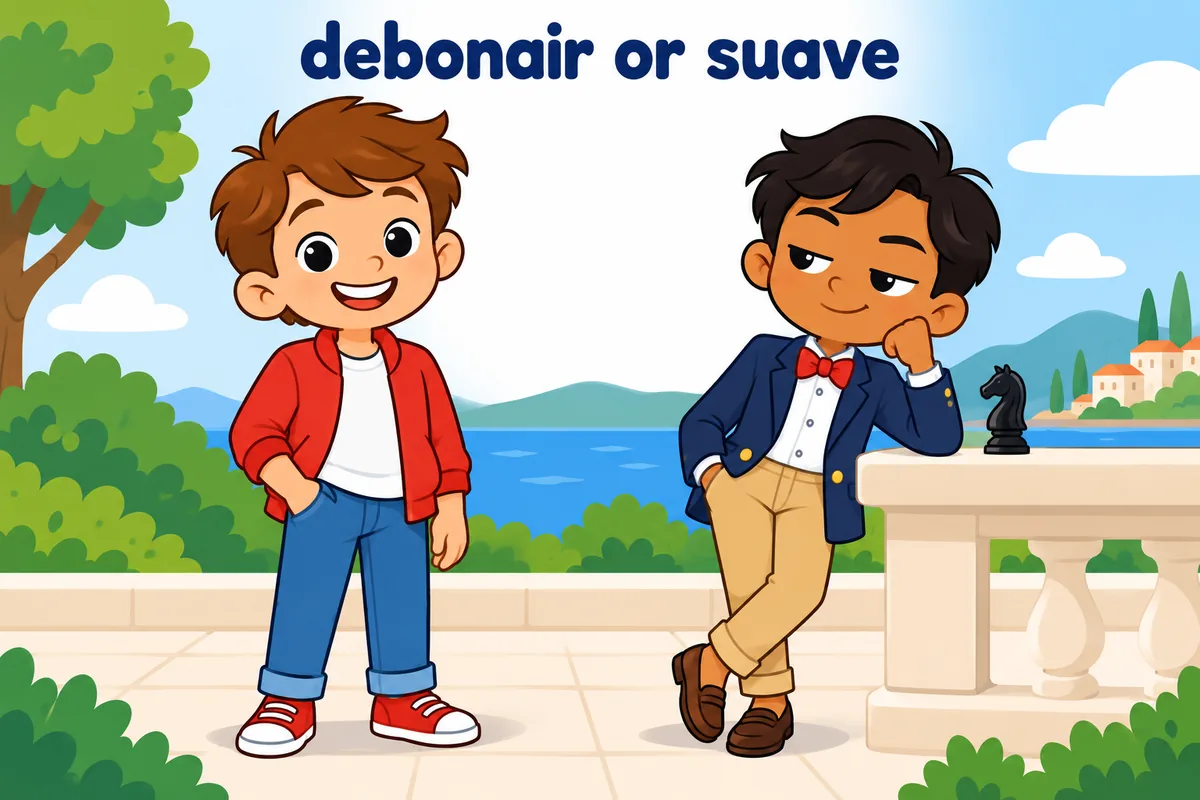
Debonair and suave both describe a charming man, so learners treat them as twins. Readers reach for suave when the smoothness itself is the point, and for urbane when the charm comes from sophisticated city manners rather than a relaxed ease.
| Attribute | debonair | suave |
|---|---|---|
| Core idea | Stylish and cheerfully at ease | Smooth and confidently polished |
| Emotional tone | Warm, light, slightly playful | Cool, controlled, sometimes calculating |
| Typical target | A host, a gentleman, an outfit | A negotiator, a manner, a voice |
| Register | Literary and affectionate | Neutral to slightly wary |
| What it implies | Charm without visible effort | Charm with practice behind it |
| Common risk | Can sound dated | Can sound insincere |
Verdict: choose debonair for warmth and visible style, and suave when the smoothness itself is the point, because debonair invites the reader in while suave keeps its distance.
Word forms and grammar of debonair
Debonair is a single adjective with almost no family: the adverb and the noun are rare, and the comparative uses more. The table keeps the real forms apart from the spelling that only looks French.
| Form | Part of speech | Example |
|---|---|---|
| debonair | adjective | He made a debonair entrance. |
| debonairly | adverb, rare | She was debonairly dressed. |
| debonairness | noun, rare | His debonairness charmed the room. |
| more debonair | comparative | The older brother was the more debonair of the two. |
| debonaire | non-standard spelling | Write debonair, without the final e. |
| undebonair | not a word | Use awkward or ungainly instead. |
Common mistakes with debonair
- Incorrect:
He is a debonaire young man.Correct: He is a debonair young man. Rule: The English adjective ends without a final e. - Incorrect:
Her debonair performance delighted the judges.Correct: Her elegant performance delighted the judges. Rule: Debonair usually describes a man’s manner, not a woman or a performance. - Incorrect:
She debonaired across the stage.Correct: She walked across the stage with style. Rule: Debonair is an adjective and has no verb form. - Incorrect:
He is very debonair to help.Correct: He is very debonair. Rule: Debonair describes a manner, so it cannot be followed by an infinitive of purpose. - Incorrect:
The plan was debonair and cheap.Correct: The plan was elegant and cheap. Rule: Debonair applies to people and their style, not to plans or objects in general.
Practice using debonair
Work through the six items, then check the reasoning rather than only the answer.
- Fill the gap: The ______ host welcomed every guest as if he had all evening.
- Choose the better word: Smooth and practised, the negotiator was (debonair / suave) in a slightly cold way.
- Correct the error: Her debonaire smile lit the photograph.
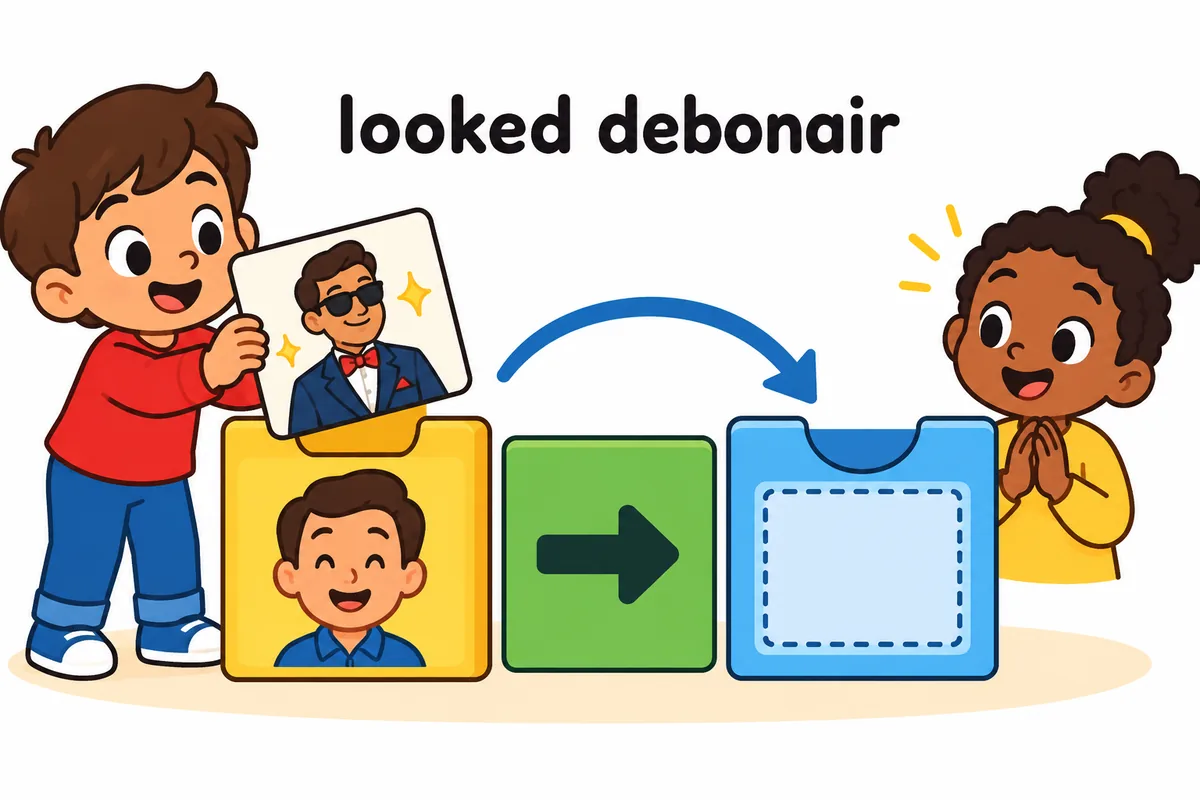
- Build a sentence: use looked debonair about a grandparent at a party.
- Spot the register: which fits a novel — A debonair stranger stepped from the carriage, or Some random guy got off the bus?
- Rewrite with the adverb: He was debonair as he answered. Use debonairly.
Answers
- debonair — the host is stylish and easy with the guests.
- suave — the smoothness is the point and carries a cool edge.
- Her debonair smile lit the photograph — the adjective has no final e.
- Model answer: Grandfather looked debonair in his old dinner jacket.
- A debonair stranger stepped from the carriage — the literary word suits a period novel.
- He answered debonairly — the rare adverb describes the manner of answering.
The bottom line
Use debonair in a sentence to praise a man who is stylish and at ease, and remember that it describes a manner rather than an action. The two nuances that decide most uses are the tone, which is warm and slightly nostalgic, and the spelling, which keeps no final e. Where the charm seems cool or calculated, suave is the sharper choice.
Frequently asked questions about debonair
Can debonair describe a woman?
It can, but the effect is unusual. Debonair is traditionally applied to men, so describing a woman as debonair sounds either deliberately old-fashioned or quietly playful. A modern writer who wants the same idea for anyone can use stylish, charming or elegant without raising the question of gender at all.
Is debonair a compliment?
Almost always, because it praises style and ease rather than appearance alone. It can carry a faint edge of irony when the charm seems studied, as in a debonair confidence that impressed nobody. Even then the word stays milder than suave, which more often hints at calculation.
Is debonair old-fashioned?
It is no longer everyday, but it is not obsolete. The word survives in fashion writing, film reviews and affectionate portraits, where it signals a relaxed, well-dressed charm. In plain conversation, stylish or charming does the same work, so debonair now carries a deliberate flavour of another era.
What is the opposite of debonair?
The clearest opposite is boorish, which describes rough, rude manners with no style at all. Awkward and ungainly describe the physical side, while crude covers behaviour rather than appearance. Each aims at the same fault: a complete absence of the ease that debonair praises.
Have you ever heard the word “debonair” and wondered what it meant? In a nutshell, being debonair means having a suave and sophisticated charm, often with a polished and fashionable demeanor.
This adjective is typically used to describe someone who carries themselves with a confident and stylish flair, exuding a sense of refinement and elegance in their appearance and mannerisms. So, next time you encounter the word “debonair,” you’ll know it refers to someone who embodies a graceful and charismatic attitude.
7 Examples Of Debonair Used In a Sentence For Kids
- The debonair cat walked gracefully across the room.
- He wore a debonair suit to the party.
- The prince looked very debonair in his royal attire.
- The debonair gentleman tipped his hat to the lady.
- The actor had a debonair smile on his face.
- She felt like a debonair princess in her fancy dress.
- The magician performed his tricks with a debonair flair.
14 Sentences with Debonair Examples
- College students often aspire to dress and carry themselves with a debonair style to make a good impression in social settings.
- Attending a job interview can be a great opportunity to showcase a debonair demeanor and professional attitude.
- Many college students strive to exude a debonair charm and charisma to enhance their social interactions.
- During campus events, it is common to see students dressed in debonair outfits to stand out among their peers.
- Joining a public speaking club can help students develop their debonair communication skills and confidence.
- A debonair look can make a college student feel more confident and self-assured during presentations and group discussions.
- Attending workshops on personal grooming can assist students in achieving a debonair appearance and enhancing their overall image.
- Participating in college fashion shows provides students with a platform to showcase their debonair sense of style and creativity.
- Engaging in debates and discussions encourages students to articulate their opinions with debonair eloquence and poise.
- Utilizing online resources and tutorials, students can learn how to achieve a debonair hairstyle and grooming routine.
- Collaborating on group projects allows students to demonstrate their debonair teamwork skills and leadership abilities.
- Attending cultural events and festivals provides students with the opportunity to appreciate diverse forms of art and showcase their debonair taste.
- Incorporating debonair accessories, such as a stylish watch or belt, can elevate a student’s overall look and fashion sense.
- Volunteering for community service projects enables students to showcase their debonair compassion and dedication to making a positive impact on society.
How To Use Debonair in Sentences?
Debonair is an adjective used to describe someone who is stylish, charming, and sophisticated in appearance or manner.
To use Debonair in a sentence, start by identifying a person who embodies these qualities. For example, “He looked debonair in his tailored suit and polished shoes.” This sentence conveys that the person is not only stylish but also carries themselves in a sophisticated and charming way.
Another way to use Debonair is in describing a character in a story or movie. For instance, “The debonair spy captivated the audience with his suave demeanor and impeccable fashion sense.” In this sentence, the word debonair helps paint a vivid picture of a character who is both stylish and charismatic.
Remember that debonair is a positive attribute, so it should be used to praise someone’s elegance and charm. Avoid using it in a negative context, as it is meant to highlight sophistication and style.
By incorporating Debonair into your vocabulary, you can add flair to your descriptions and elevate your language when complimenting someone’s appearance or demeanor.
Conclusion
In summary, the term “debonair” encapsulates a sense of charm, sophistication, and elegance. This adjective is commonly used to describe individuals who possess a suave and refined demeanor, often exuding a sense of style and confidence. For example, “His debonair appearance and smooth mannerisms captured the attention of everyone in the room.”
Overall, being described as debonair signifies a certain level of grace and polish that is admired and respected by others. It conveys a sense of effortless sophistication that can elevate one’s presence in social settings or professional environments. Embodying a debonair persona can help individuals leave a lasting impression and command attention with their refined and polished demeanor.