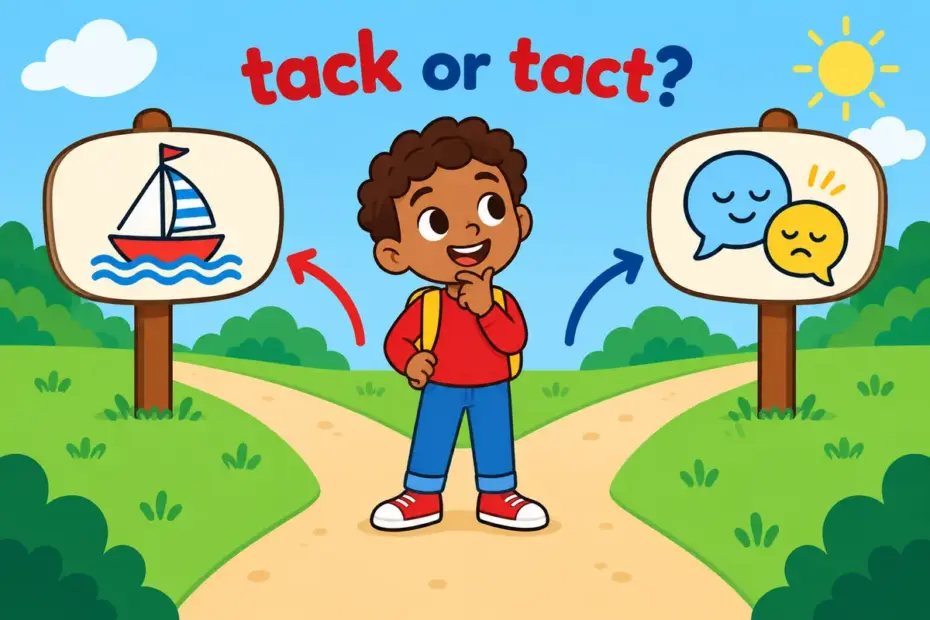
Tack vs tact is a choice between a course of action and a social skill: choose tack for a direction, approach or small nail, and choose tact for the sensitivity that keeps a hard message from wounding. The two words look alike but never overlap in meaning.
Tack vs tact at a glance
- Tack is a noun and a verb about direction, fastening or horse gear; tact is a noun about social sensitivity.
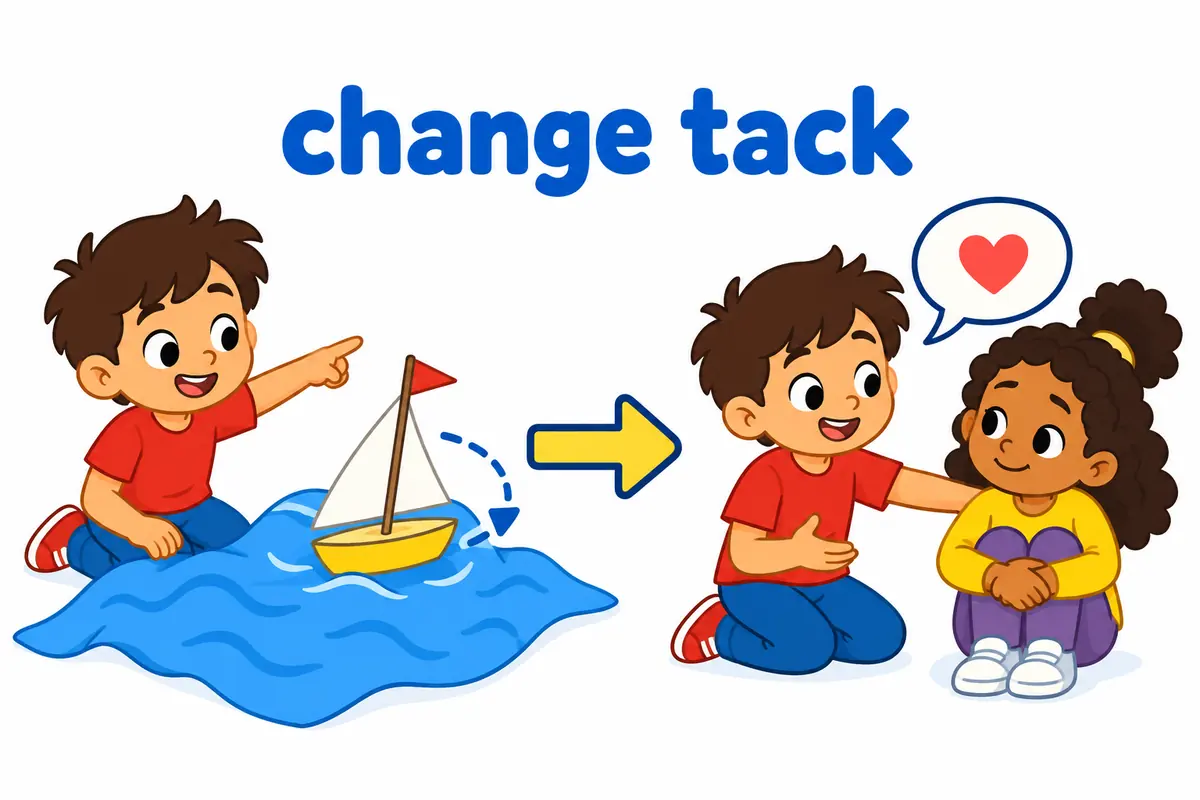
- Tack appears in change tack, tack a note to the board and tack up a pony.
- Tact appears in show tact, use tact and have the tact to stay silent.
- Tack is concrete and often technical, while tact is abstract and always about people.
- The commonest error is writing tact for a change of direction, or tack for sensitivity.
Tack vs tact: the core difference
Tack and tact share four letters and nothing else. Tack belongs to the physical and the strategic, naming a course, a small nail or a piece of horse gear. Tact belongs to the human and the delicate, naming the judgement that stops a true sentence from becoming a cruel one. When a plan stalls, a team may choose a different approach, which is a change of tack, not of tact. The table sets the two side by side on the qualities that decide a sentence.
| Attribute | tack | tact |
|---|---|---|
| Part of speech | Noun and verb | Noun only |
| Core meaning | A course, direction or small nail | Sensitivity in dealing with people |
| Horse sense | Riding gear such as saddle and bridle | None |
| Common phrases | change tack, tack on, tack up | show tact, a tactful reply |
| Typical setting | Sailing, sewing, planning, politics | Difficult talks, feedback, diplomacy |
| What it implies | A chosen line of action or a fastener | Care for another person’s feelings |
| Register | Neutral to technical | Neutral to formal, and always approving |
Verdict: if the sentence is about direction, method or a pin, the word is tack; if it is about handling people gently, the word is tact.
What does tack mean?
Tack is a noun and a verb with several linked senses, all built on the idea of a short, decisive movement or fastening. The Cambridge entry for tack records the course sense, the nail sense and the sailing sense. A team that changes tack is choosing a new line, and a sailor who tacks is turning the boat through the wind. Where the meaning is specifically a plan or method, set a new direction is the plainer phrase.
| Sense | Plain meaning | Example sentence |
|---|---|---|
| Direction or approach | A line of action or course | The mayor changed tack after the poll. |
| Small nail | A short, broad-headed pin | She pressed a tack into the noticeboard. |
| Horse gear | Riding equipment such as saddle and bridle | The groom cleaned the tack after the ride. |
| Fasten lightly | To pin something with tacks | He tacked the poster to the wall. |
| Sailing turn | To turn a boat into the wind | The crew tacked toward the harbour. |
One limitation is worth stating plainly. Tack never means sensitivity, so a sentence that praises someone’s tack has confused two different words. It is also a countable noun in most of its senses, which is why we say a different tack rather than different tack.
What does tact mean?
Tact is an uncountable noun meaning the ability to deal with people without causing offence, especially when the truth is unwelcome. The Cambridge entry for tact defines it as the ability to say difficult things without upsetting people. This is the noun tact that appears in job references and performance reviews, and it always describes judgement about people rather than about plans. Where the skill is practised between countries or institutions, quiet diplomacy is the nearest larger idea.
| Sense | Plain meaning | Example sentence |
|---|---|---|
| Social sensitivity | Care not to offend | She raised the pay cut with tact. |
| Skill with people | Diplomatic judgement | Good managers lead with tact. |
Tact is not flattery and not silence. A tactful person still delivers the difficult message; the talent lies in choosing the moment and the wording. That is why the quality is valued in feedback and difficult conversations, where plain honesty without care would do real damage.
How do you use tack and tact in a sentence?
Tack is mostly a noun in the direction sense and a verb in the sailing and fastening senses, while tact stays a noun. The patterns below show the phrases each word lives in, so the choice becomes automatic.
| Pattern | Example | What it signals |
|---|---|---|
| change tack | The team changed tack after the first loss. | A deliberate shift in approach. |
| tack on | The airline tacked on a baggage fee. | Attach something extra. |
| tack up | Please tack up the pony before the lesson. | Put riding gear on a horse. |
| show tact | He showed tact when he praised the draft. | Handle a person’s feelings carefully. |
| with tact | She refused with tact. | How a difficult message is delivered. |
| lack tact | The email lacked tact. | A blunt or hurtful choice of words. |
Tack and tact in a sentence: examples across contexts
The two words rarely meet, but a single sentence can hold both without confusion once the senses are kept apart. The nine examples below move from a sailing club to a boardroom and show which word belongs where.
| Context | Example sentence | Why this works |
|---|---|---|
| Workplace email | The manager changed tack and praised the team before the review. | Approach sense of tack in formal writing. |
| News report | The party changed tack on housing after the by-election. | Political direction, a standard use. |
| Classroom | Maya showed tact when she corrected her partner. | Social skill in a small setting. |
| Sport | The coach changed tack at half time and pressed higher. | Tactical shift, not sensitivity. |
| Sailing | The skipper tacked into the wind to reach the buoy. | Literal sailing sense of the verb. |
| Diplomacy | The envoy handled the dispute with tact. | High-stakes social skill. |
| Feedback | She gave the difficult feedback with tact. | Delivering hard news well. |
| Craft room | He tacked the fabric to the board before sewing. | Fastening sense of the verb. |
| Conversation | That remark lacked tact, even if it was true. | Bluntness judged against sensitivity. |
Only one sentence uses the verb tack in its literal sense, and it names fabric and a board. When the subject is a person’s feelings, the noun is tact; when the subject is a route or a method, the noun is tack.
Which should you use?
The decision is straightforward once the sentence names what is being adjusted. Use tack for anything a person or group steers, and tact for anything a person says or holds back. The table maps the situations that send readers to this page. Where a whole plan is being rebuilt, a new strategy is often the better phrase.
| Situation | Use | Why |
|---|---|---|
| Changing your approach to a problem | tack | Names a course of action. |
| Delivering bad news to a colleague | tact | Names sensitivity to feelings. |
| Attaching a note to a board | tack | Names the physical fastening. |
| Handling an angry customer | tact | Needs social skill, not a plan. |
| Turning a boat into the wind | tack | Technical sailing sense. |
Word forms and grammar of tack and tact
Tack inflects as a noun and a verb, while tact is an uncountable noun that grows into an adjective and an adverb. One lookalike adjective, tacky, belongs to a completely different meaning.
| Form | Part of speech | Example |
|---|---|---|
| tack | noun | The carpenter chose a different tack. |
| tack | verb, base form | Tack the fabric before sewing. |
| tacked | verb, past and past participle | She tacked the hem quickly. |
| tacking | verb, present participle | He is tacking the sail. |
| tact | noun, uncountable | She answered with tact. |
| tactful | adjective | A tactful email saved the deal. |
| tactless | adjective | His tactless joke upset the room. |
| tactfully | adverb | She tactfully changed the subject. |
Tact is uncountable, so it takes no plural: we say a great deal of tact rather than many tacts. Tack, by contrast, is countable in the direction and nail senses, as in two different tacks.
Common mistakes with tack and tact
- Incorrect:
He changed tact after the argument.Correct: He changed tack after the argument. Rule: Only tack means a course of action. - Incorrect:
She handled the complaint with tack.Correct: She handled the complaint with tact. Rule: Only tact means sensitivity. - Incorrect:
He tacked the difficult question.Correct: He handled the difficult question with tact. Rule: Tack is not a verb of social skill. - Incorrect:
Show more tack toward your colleagues.Correct: Show more tact toward your colleagues. Rule: Tact is the quality shown toward people. - Incorrect:
The tact of the ship changed.Correct: The tack of the ship changed. Rule: Sailing keeps the a spelling, tack.
Practice using tack and tact
Work through the six items, then read the reason beside each answer.
- Fill the gap: The committee changed ______ after the public backlash.
- Choose the better word: She broke the news with great (tack / tact).
- Correct the error: The sailor changed tact to catch the wind.
- Build a sentence: use change tack about a sports team altering its plan.
- Spot the register: which belongs on a job reference, she shows tact with clients or she changed tack quickly?
- Rewrite with the adjective: She handled the question gently. Use tactful.
Answers
- tack – the committee shifted its course of action.
- tact – sensitivity is what the sentence needs.
- The sailor changed tack to catch the wind – sailing keeps the a spelling.
- Model answer: The captain changed tack and defended deeper.
- She shows tact with clients – a reference praises social skill.
- She gave a tactful answer – the adjective is tactful.
The bottom line
Use tack in a sentence for a course, a method, a small nail or a sailing turn, and use tact for the sensitivity that protects another person’s feelings. The two details that decide almost every sentence are the topic, since plans take tack and people take tact, and the spelling, since a single letter separates change tack from the wrong change tact. When the focus is on reading people well, show sensitivity is the plainer phrase.
Frequently asked questions about tack vs tact
Is it change tack or change tact?
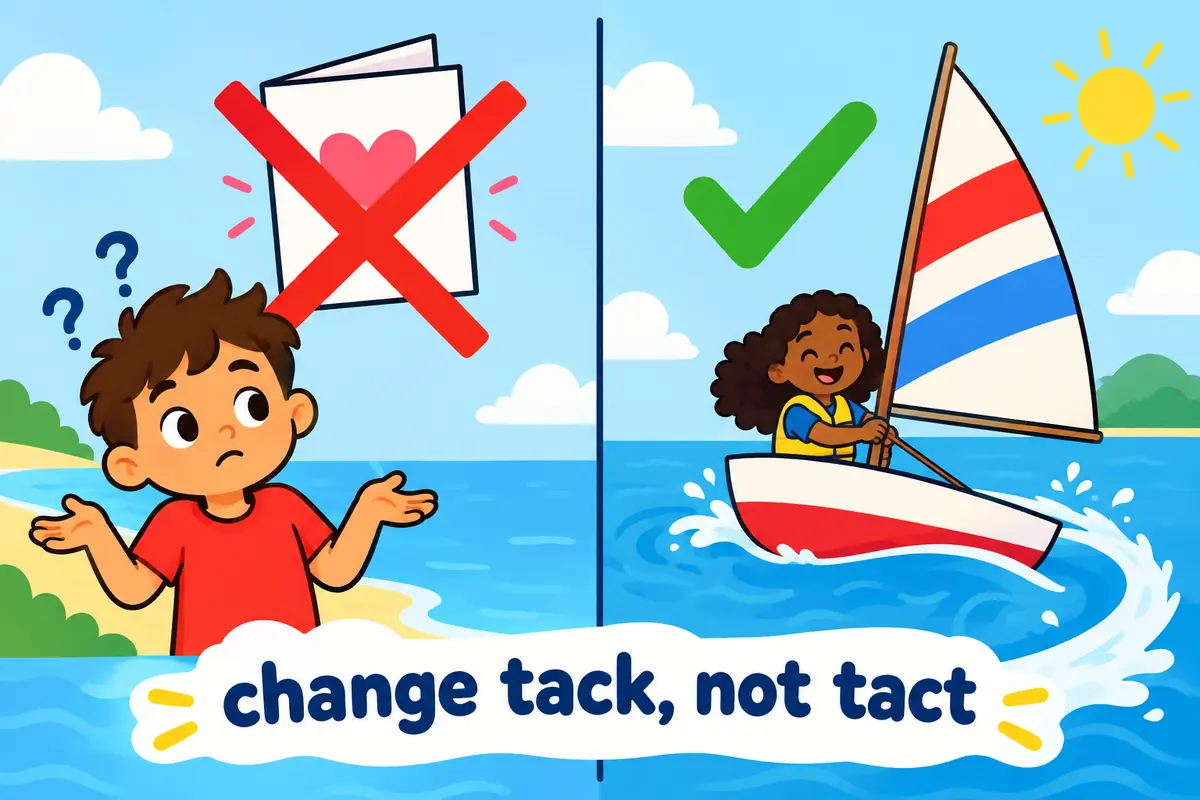
It is change tack. The phrase comes from sailing, where a boat tacks to catch a better wind, so a change of tack is a new direction. Change tact is a common misspelling that confuses the course word with the sensitivity word. Keep the a spelling whenever the meaning is a plan or approach.
What part of speech is each word?
Tack is both a noun and a verb, as in a different tack and tack up the pony. Tact is only a noun, and it is uncountable, so it never takes a plural. Its family includes the adjective tactful, the adjective tactless and the adverb tactfully, all built on the same root.
Can tack ever mean skill with people?
No. Tack never carries the sense of social sensitivity, even though tack and tact sit close on the page. If the sentence praises how someone handled a person or a delicate topic, the word is tact. If it describes a route, a method, a pin or a sailing turn, the word is tack.
What is a simple way to remember the difference?
Link each word to its setting. Tack belongs with boats, boards and plans, which are all things you steer, fasten or follow. Tact belongs with people and feelings, which you handle with care. If you can ask what is being steered, the answer is tack; if you can ask who might be hurt, the answer is tact.