Take back is a separable phrasal verb with several senses: retract words you have said, return an item, or regain something you lost. To use take back in a sentence, choose the sense first and place the object carefully: “She took back her complaint.” A pronoun always sits between the verb and back, as in take it back.
Take back at a glance
- Take back is a separable phrasal verb meaning to retract, return or regain.
- Its forms are take, takes, took, taken and taking, all followed by back.
- The particle back follows a noun object but precedes a pronoun object.
- The phrase is neutral and common in speech, retail, law and journalism.
- The commonest error is the word order take back it instead of take it back.
What does take back mean?
Take back has four live senses, and the sentence must make clear which one is meant. The Cambridge entry for take back groups them under retracting and returning. The retract sense concerns words, the return sense concerns objects, the regain sense concerns control, and a fourth sense concerns memory, as when a song takes you back to a place.
| Sense | Plain meaning | Example sentence |
|---|---|---|
| Retract words | Withdraw something you said | He took back the insult at once. |
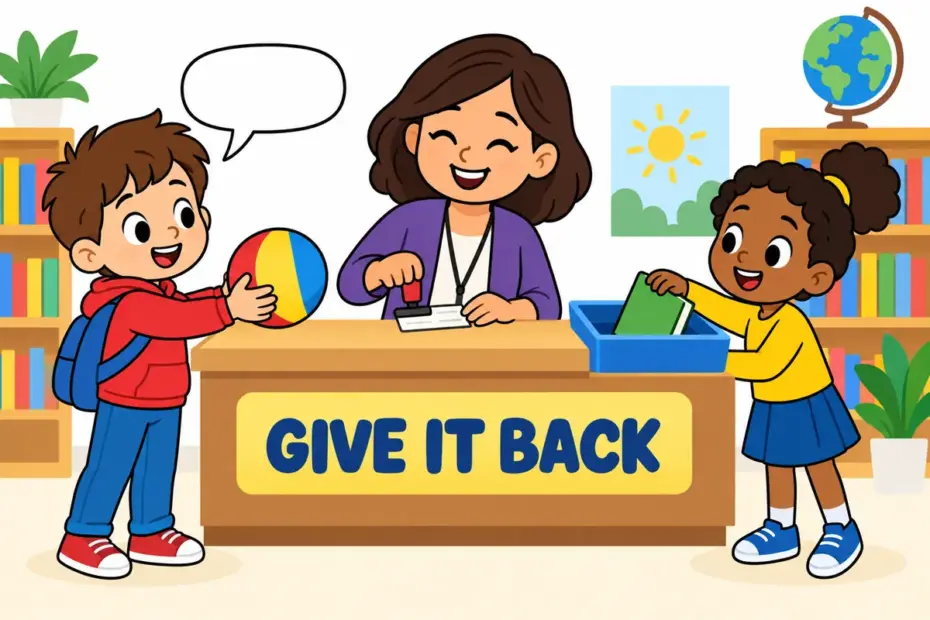
| Return an item | Give something back to its owner or shop | I took the faulty kettle back. |
| Regain control | Win back power, a lead or lost ground | The home side took back the lead. |
| Recall a time | Remind someone of the past | That old song takes me back to school. |
One honest limitation belongs here. Formal writing often prefers a single verb to take back, so a legal notice will revoke the order rather than take it back. The phrase also cannot mean keep: to take something back is always to move it the other way, and the retract sense needs something actually said, not merely thought.
How do you use take back in a sentence?
Take back is transitive and separable. A noun object may sit after the particle or before it, but a pronoun must come between the verb and back, and the particle can strand at the end of the clause. Six patterns cover the sentences you will meet.
| Pattern | Example | What it signals |
|---|---|---|
| take back + noun | She took back her promise. | The standard order with a noun object. |
| take + noun + back | She took her promise back. | Separated order; the particle strands at the end. |
| take + pronoun + back | She took it back. | The only correct order for a pronoun. |
| take back + what-clause | I take back what I said. | Common with the retract sense. |
| take back + the lead/control | They took back control of the club. | The regain sense, usually with an abstract object. |
| take + person + back | The firm took her back after the break. | Rehire or welcome someone again. |
The pronoun rule is the test of separability: take it back is right, and take back it is wrong. With a noun, both take back the shirt and take the shirt back are natural, and writers usually put the longer object after the particle to keep the rhythm smooth.
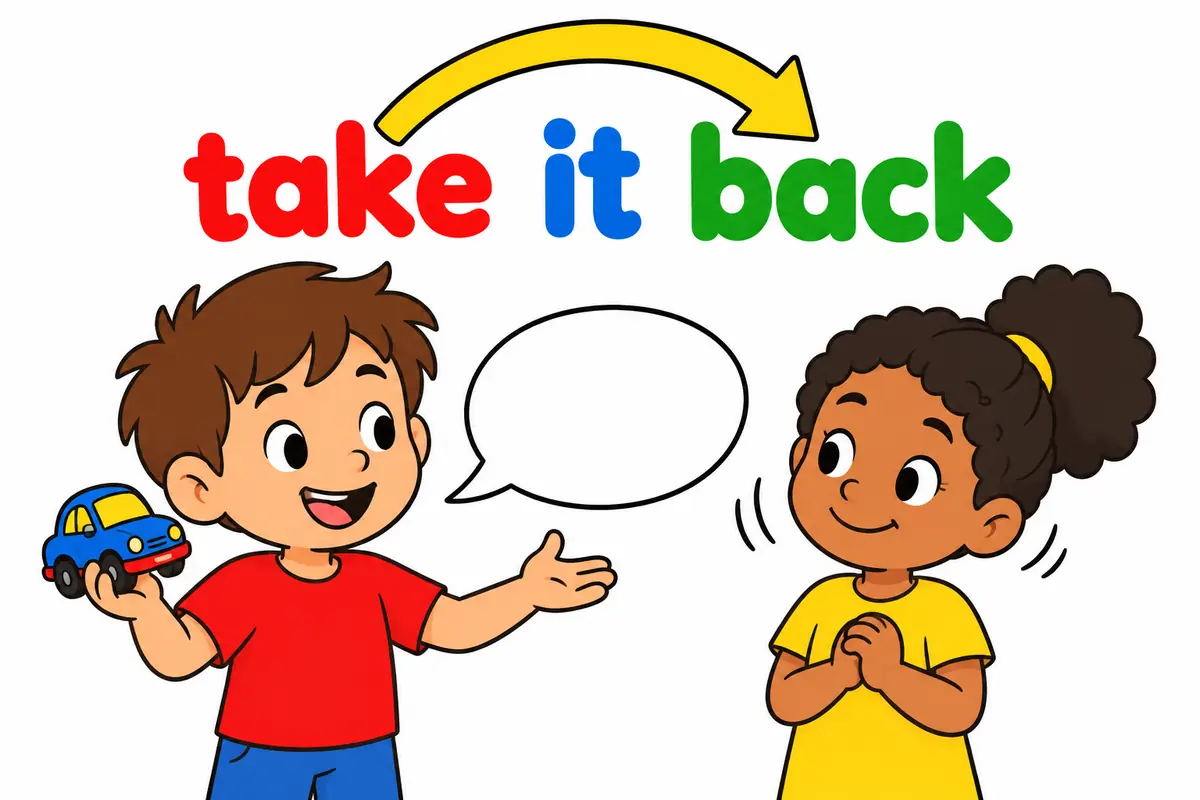
Take back in a sentence: examples across contexts
The twelve sentences below move from a playground to a retail desk and a news report, and each one makes its sense clear from the object alone.
| Context | Example sentence | Why this works |
|---|---|---|
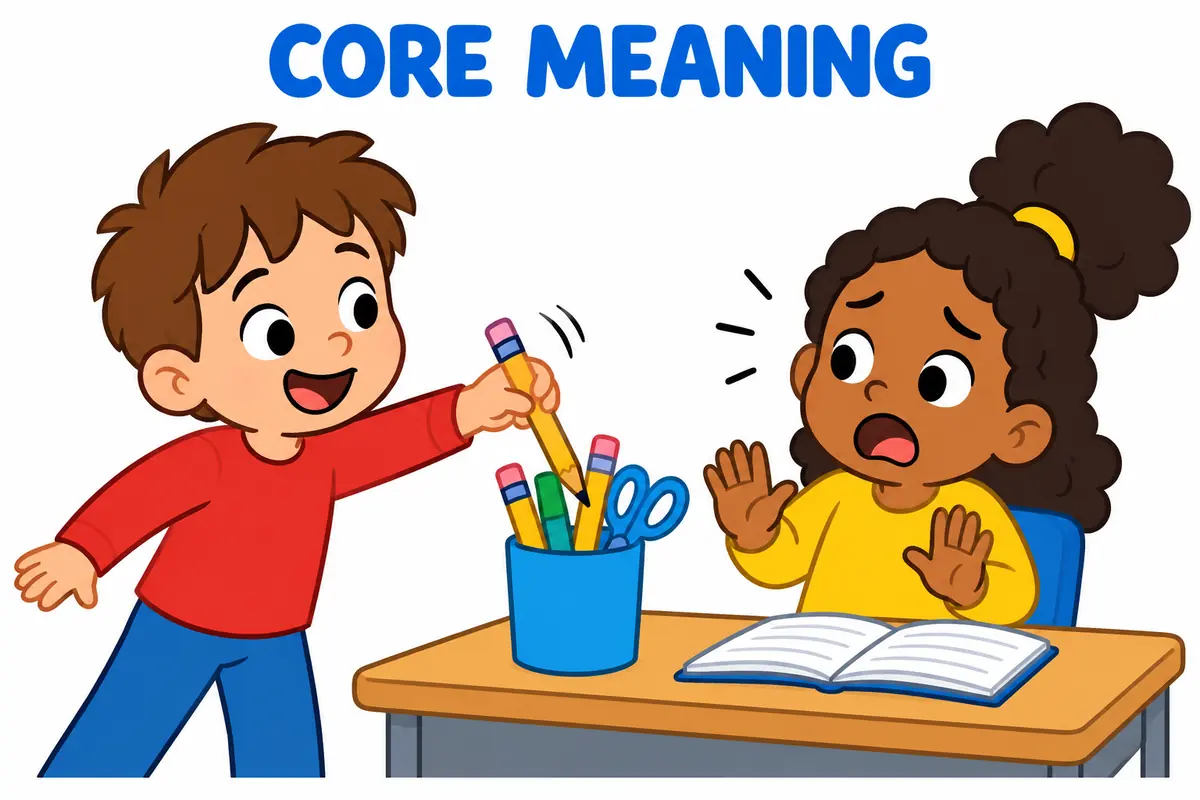
| Classroom | He took back the unkind word before the bell rang. | The retract sense with a noun object. |
| Retail | She took the shoes back the next morning. | The separated order fits a spoken account. |
| Workplace email | I take back my earlier estimate of the cost. | Present tense retracts a written claim politely. |
| News report | The minister took back the remark within hours. | Names a public retraction in formal style. |
| Sports report | The visitors took back the lead before half time. | The regain sense with an abstract object. |
| Legal writing | The supplier agreed to take the goods back. | Contracted return of defective goods. |
| Conversation | Take that back right now. | An imperative retraction of an insult. |
| Relationship talk | She said she would never take him back. | The welcome-someone-again sense. |
| Music review | The opening chord takes me back to my first gig. | The memory sense with a direct object clause. |
| Business report | The chain took back market share last quarter. | The regain sense in a commercial context. |
| Customer service | We will take back any item within thirty days. | A policy statement using the plain noun order. |
| Everyday plan | I took the library books back on the way home. | The separated order with a long noun object. |
Sentences that recover after a setback often suit a different particle, which is why a team that regains form bounces back rather than takes back; that contrast is a good check on which phrase you actually need.
Take back vs retract and return
Take back overlaps with two verbs that split its senses. The table separates them on the points that decide a sentence.
| Attribute | take back | retract | return |
|---|---|---|---|
| Core job | Retract, regain or retrieve | Withdraw a statement formally | Give something back |
| Typical object | Words, an item, a lead | A claim, an accusation, an offer | An item, a favour |
| Register | Neutral and spoken | Formal and official | Neutral |
| Tone | Direct and personal | Measured and public | Practical |
| Covers regaining | Yes, take back the lead | No | No |
| Covers memory | Yes, it takes me back | No | No |
Verdict: choose take back for everyday retractions, returns and regained leads, choose retract the claim when a formal statement is withdrawn, and choose return the item when an object simply goes back to its owner.
Word forms and grammar of take back
Take back takes the strong verb take, so its past is took and its participle is taken. The table also contrasts the phrase with other take combinations that share the same verb.
| Form | Part of speech | Example |
|---|---|---|
| take back | base phrase | Please take back that remark. |
| takes back | third person singular | He takes back nothing he said. |
| took back | past tense | They took back the offer. |
| taken back | past participle | The parcel was taken back by hand. |
| taking back | present participle | She is taking back her old room. |
| take away | different particle | They took away the damaged sign. |
| take over | different particle | The new team took over the shop. |
The particle carries the meaning, so take away removes, take over assumes control, and take back reverses. Keeping the four senses in one table is the surest way to avoid confusing a retraction with a removal.
Common mistakes with take back
- Incorrect:
Please take back it to the shop.Correct: Please take it back to the shop. Rule: A pronoun must sit between the verb and the particle. - Incorrect:
She tooked back her words.Correct: She took back her words. Rule: Take is a strong verb; the past is took. - Incorrect:
He took back to the office.Correct: He took the file back to the office. Rule: Take back is transitive and needs an object. - Incorrect:
I take back that I never liked it.Correct: I take back what I said about the design. Rule: The retract sense needs something actually said, often a what-clause. - Incorrect:
The team took back from the loss.Correct: The team bounced back from the loss. Rule: Recovering after a defeat uses bounce back, not take back. - Incorrect:
They took back the company by buying shares.Correct: They took over the company by buying shares. Rule: Assuming control of a business is take over.
Practice using take back
Work through the seven items, then read the reasons rather than only the answers.
- Fill the gap: She was so sorry that she ______ back every word.
- Choose the better word: The court (took back / revoked) the licence after the appeal.
- Correct the error: He took back it to the library.
- Build a sentence: use take back about an unkind comment a classmate regrets.
- Spot the register: which suits a legal notice — the company revokes the offer, or the company takes back the offer?
- Fix the object: The visitors took back before full time. Add the missing noun.
- Rewrite with a pronoun: I returned the faulty lamp. Use take back with it.
Answers
- took — the past of take is took, and back stays in place.
- revoked — a formal withdrawal of a licence prefers the single official verb.
- He took it back to the library — the pronoun goes between take and back.
- Model answer: Sam took back the comment as soon as he saw her face.
- The company revokes the offer — the formal verb suits a legal notice.
- The visitors took back the lead before full time — the regain sense needs its object.
- I took it back — the pronoun must sit between the verb and the particle.
The bottom line
Use take back in a sentence when words are retracted, an item is returned, or something lost is regained, and keep a pronoun between the verb and the particle. The two facts that settle most sentences are these: the past form is took, and the particle always follows a pronoun but may follow or precede a noun. For a formal public withdrawal, recant the statement is often the sharper choice.
Frequently asked questions about take back
What does take back mean?
Take back has four main senses: to retract something you said, as in take back an insult; to return an item to a shop or owner; to regain something such as a lead or control; and to remind someone of the past, as in that song takes me back. The object usually makes the sense clear.
Is take back a separable phrasal verb?
Yes. A noun object may go after the particle or between the verb and the particle, so both take back the shirt and take the shirt back are correct. A pronoun, however, must sit between them: take it back, never take back it. This pronoun rule is the simplest test of separability.
What is the difference between take back and return?
Return is narrower and more formal: it means give something back to its owner or place. Take back covers that sense but adds retracting words and regaining a lead. In a shop, either works, though a returns policy usually says return. In speech, take back sounds more casual and personal.
Can you say take back what you said?
Yes. The what-clause is the standard shape for the retract sense, as in I take back what I said. The clause stands in for the actual words, so the sentence needs no quotation. A noun works too, as in take back that remark, but a thought you never spoke cannot be taken back.