Take to means to begin to like someone or something, or to start a habit, and the particle to can never move away from the verb. To use take to in a sentence, follow it with a noun or an -ing verb: she took to the new puppy. It is inseparable, so took it to is a different meaning.
Take to at a glance
- Take to is a phrasal verb; its forms are takes to, took to, taken to and taking to.
- It is inseparable, so the object never splits take and to.
- The dominant pattern is take to + noun or take to + -ing verb.
- Its senses include begin to like, begin a habit, and go to for shelter.
- The commonest error is writing take to + a bare infinitive, as in took to swim.
What does take to mean?
Take to is a phrasal verb with three connected senses: to begin to like someone or something, to begin doing something as a habit, and to go to a place for shelter or escape. The Cambridge entry for take to lists the senses together because the particle to stays fixed. Where the sense is simply adjusting to a new place, adapt to is the more exact phrase.
| Sense | Plain meaning | Example sentence |
|---|---|---|
| Begin to like | Form a liking for someone or something | The baby took to her new childminder straight away. |
| Begin a habit | Start doing something regularly | He took to running before breakfast. |
| Seek shelter | Go to a place for safety or escape | The hikers took to the hills when the storm broke. |
One limitation matters here. The liking does not have to last, and the habit does not have to be planned. Take to only reports that something started, so it cannot mean enjoy forever or master. For a settled fondness, like or love is the sturdier verb, and for deliberate practice, take up fits better.
How do you use take to in a sentence?
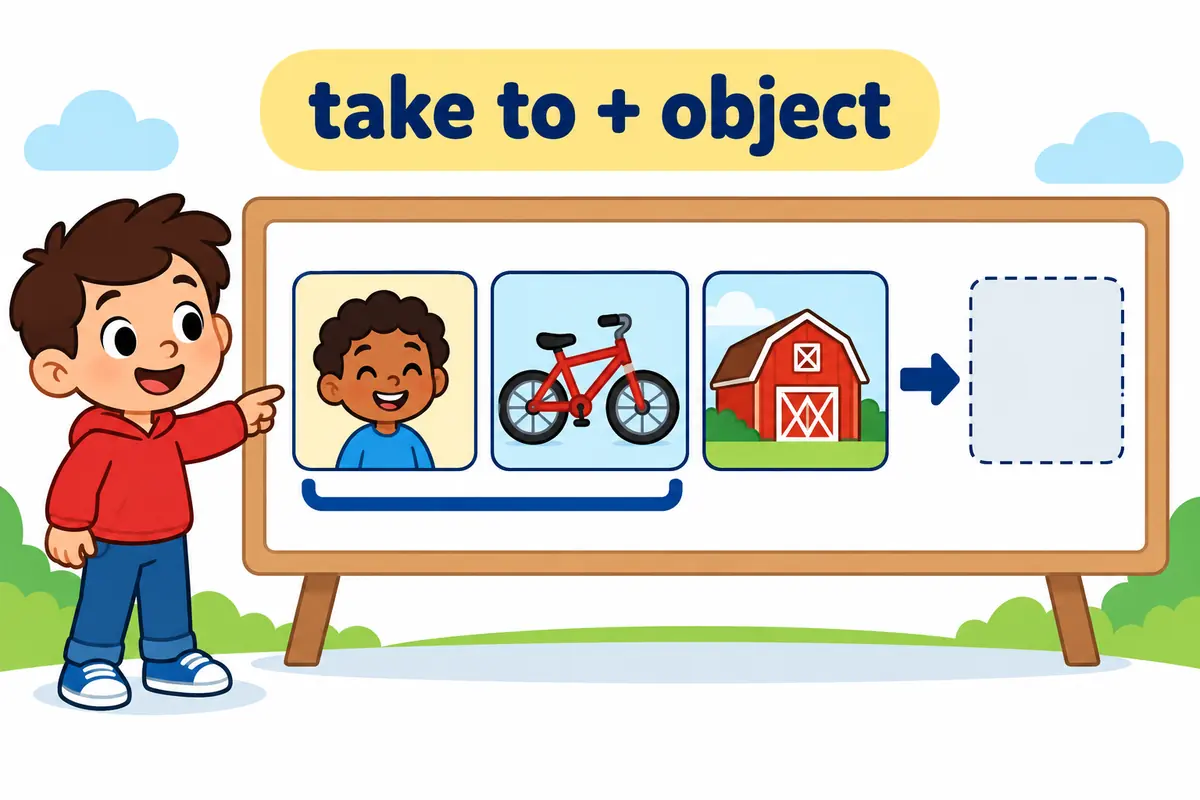
Take to is transitive and inseparable: the particle to sticks to the verb, so the object always follows the whole phrase. It never strands and it never splits, which is what separates it from phrasal verbs such as take off or take out. After the verb come either a noun or an -ing form, never a bare infinitive.
| Pattern | Example | What it signals |
|---|---|---|
| take to + person | She took to the new teacher at once. | The liking forms quickly and naturally. |
| take to + thing | They took to the old house immediately. | Comfort or fondness for a place or object. |
| take to + -ing verb | He took to cycling to work. | A new routine begins and continues. |
| take to + place for shelter | We took to the barn during the hail. | Movement to safety, often quickly. |
| be taken with | She was taken with the idea. | A related passive meaning of being charmed. |
Because the phrase is inseparable, a pronoun object must also follow the whole verb: the class took to her, never took her to in the liking sense. That is the rule learners break most often.
Take to in a sentence: examples across contexts
Take to keeps its particle fixed everywhere, but the register shifts with the object. The eight sentences below move from a playground to a news report, and each one shows which sense is in play.
| Context | Example sentence | Why this works |
|---|---|---|
| Classroom | The pupils took to the new reading corner quickly. | The liking sense, with a concrete object. |
| Workplace email | The team has taken to the shorter meetings. | A habit that began and is now routine. |
| News report | Residents took to the community hall after the floods. | The shelter sense, in formal reporting. |
| Parenting column | Some babies take to solid food slowly. | Reports the start of a new habit neutrally. |
| Travel writing | We soon took to the slower pace of the island. | The liking sense applied to a way of life. |
| Sports report | The crowd took to the young goalkeeper at once. | Links a group feeling to a specific player. |
| Nature note | The foxes took to the thicket at dusk. | The shelter sense, used descriptively. |
| Conversation | I took to her the moment we met. | The plain person pattern in speech. |
Take to vs take up
Take to and take up both describe starting something, and they part on intention. Take to reports a liking or habit that develops by itself; take up reports a deliberate decision to begin an activity. The object also differs.
| Attribute | take to | take up |
|---|---|---|
| Core meaning | Begin to like, or fall into a habit | Deliberately start an activity |
| Typical object | A person, a place, an activity in -ing form | An activity or hobby as a noun |
| Intention | Spontaneous or gradual | Chosen and planned |
| Separable | No, always inseparable | Yes: take up a hobby, take it up |
| Register | Neutral, common in speech | Neutral |
Verdict: choose take to when the liking or habit arrives on its own, and take up when the person decides to begin. A runner who enjoys the sport took up running and then took to it, and a settled fondness is later described with like.
Word forms and grammar of take to
The verb takes the ordinary forms of take, and the particle never changes. The table also contrasts one same-base particle verb to show how the fixed to behaves.
| Form | Part of speech | Example |
|---|---|---|
| take to | phrasal verb, base form | Children take to rhythm games fast. |
| takes to | third person singular | She takes to every new skill easily. |
| took to | past simple | They took to the idea at once. |
| taken to | past participle | He has taken to walking to work. |
| taking to | present participle | She is taking to the job well. |
| take off | a different phrasal verb, separable | The plane took off on time. |
Same base verb, different grammar: take off and take out are separable, while take to is not, and lead to fixes the same particle for an entirely different sense.
Common mistakes with take to
- Incorrect:
She took to swim in the sea.Correct: She took to swimming in the sea. Rule: Take to takes a noun or an -ing verb, never a bare infinitive. - Incorrect:
She took it to immediately.Correct: She took to it immediately. Rule: Take to is inseparable, so the pronoun object follows the whole phrase. - Incorrect:
He took to a hobby this year.Correct: He took up a hobby this year. Rule: Take up begins a chosen activity; take to reports a liking or habit. - Incorrect:
They took to dance lessons and loved them.Correct: They took up dance lessons and loved them. Rule: A named class or course is the object of take up, not take to. - Incorrect:
The class took to she at once.Correct: The class took to her at once. Rule: The object after to is in the objective case, so her, not she.
Practice using take to
Work through the six items, then read the reasons rather than only the answers.
- Fill the gap: The kitten ______ to the new family straight away.
- Choose the better word: Last spring he (took to / took up) chess.
- Correct the error: She took to read before bed.
- Build a sentence: use take to + person about a new classmate.
- Spot the register: which belongs in a news report, residents took to the hall, or they all took to it big time?
- Rewrite with the correct word order: He took the puppy to at once.
Answers
- took — the past simple matches the finished event and the particle to stays fixed.
- took up — chess is a chosen activity, so the separable take up is correct.
- She took to reading before bed — take to needs an -ing verb, not a bare infinitive.
- Model answer: The whole class took to the new boy at once.
- Residents took to the hall — a news report avoids the informal phrase big time.
- He took to the puppy at once — the inseparable verb keeps to before the object.
The bottom line
Use take to in a sentence when someone begins to like a person or thing, starts a habit, or heads for shelter, and keep the particle to fixed after the verb. Two nuances decide most uses. Take to is inseparable and takes a noun or an -ing verb, never a bare infinitive, and it is not the same as take up, which begins a chosen activity. Where the sense is deliberate, take up reads better.
Frequently asked questions about take to
Is take to separable?
No. Take to is inseparable, so the particle to stays attached to the verb and the object always follows the whole phrase. You say she took to it, never she took it to in the sense of liking. This separates take to from separable phrasal verbs such as take off and take out.
What is the difference between take to and take up?
Take to means to begin to like something or fall into a habit, often without planning it. Take up means to deliberately start an activity, as in take up chess. A person takes up a sport by choice and may then take to it quickly, which is why the two often appear in the same story.
Can take to be followed by an infinitive?
No. Take to is followed by a noun or an -ing verb, never a bare infinitive, so the correct forms are take to swimming and take to the new teacher. A sentence such as took to swim is a common learner error. The -ing form presents the activity as a continuing habit.
What does took to the hills mean?
Took to the hills uses the shelter sense of take to, meaning the people went to the hills to escape danger or weather. The phrase is idiomatic and often appears in news reports and stories. It shares the fixed particle to with the liking sense, so the context decides which meaning is active.
Have you ever come across the phrase “take to” in a sentence and wondered what it means? Put simply, when someone “takes to” something, they begin to develop a liking or habit for it. It’s a common expression used to describe someone growing fond of a particular activity, interest, or even a person.
In everyday conversations and writing, you may encounter sentences where individuals “take to” a new hobby, a change in lifestyle, a pet, or even a new skill. It signifies a shift in their behavior or preferences towards something that resonates with them on a personal level.
7 Examples Of Take To Used In a Sentence For Kids
- I will take to the park to play with my friends.
- In the evening, we can take to dancing and have fun.
- Let’s take to the library to read some interesting books.
- During break time, we can take to the playground and play games.
- Tomorrow, we can take to painting and make beautiful artwork.
- On weekends, we can take to swimming and enjoy in the pool.
- I want to take to singing and practice my favorite songs.
14 Sentences with Take To Examples
- Take to regularly attending lectures and participating in discussions.
- Make sure to take to reading textbooks and reference materials for better understanding.
- Take to maintaining a study schedule to stay organized and on track with assignments.
- It’s important to take to seeking help from professors or tutors whenever needed.
- Don’t forget to take to practicing problem-solving for subjects like mathematics or computer science.
- Take to discussing ideas and concepts with classmates for a fresh perspective.
- Take to attending workshops, seminars, and webinars to enhance your knowledge.
- Always take to revising regularly to retain information for exams.
- Take to using online platforms and resources for additional study material.
- Take to collaborating on group projects for a diverse set of ideas and inputs.
- Remember to take to time management techniques to balance academics with extracurricular activities.
- Take to exploring internship opportunities to gain real-world experience in your field.
- Take to networking with professionals and alumni for future career prospects.
- Take to maintaining a healthy work-life balance to avoid burnout during hectic college schedules.
How To Use Take To in Sentences?
To use “Take To” in a sentence, you simply have to follow a few easy steps.
-
Identify the context: Determine when “Take To” is appropriate to use in the sentence. It usually indicates a liking or habit towards something or someone.
-
Choose the right subject: Select the person or thing that is the focus of the sentence. This could be yourself, someone else, or an object.
-
Construct the sentence: Start by placing the subject at the beginning of the sentence, followed by the main verb “Take To” and then the object that the subject has developed a liking for.
-
Example sentences:
- I have taken to painting as a hobby.
- She has taken to the new employee; they get along really well.
- They have taken to going for a walk every morning.
Remember to conjugate the verb “Take” according to the subject in the sentence. In the present tense, it will usually be “Take” for the first and second persons, and “Takes” for the third person. For past tense, it will be “Took” for all persons.
Practice using “Take To” in sentences to get more comfortable with its usage. With time and effort, you will be able to incorporate this phrase seamlessly in your everyday conversations.
Conclusion
In conclusion, the variety of sentences shown with the keyword “take to” demonstrate its flexibility and usage in different contexts. From expressing personal preferences like “I take to swimming” to indicating a liking or aptitude for something like “Sarah takes to playing the guitar,” this phrase can convey a range of meanings related to embracing or adopting activities or habits.
The examples provided illustrate how “take to” can be utilized in everyday language to convey a fondness or willingness for a particular activity or interest. Whether describing a newfound passion or long-standing enjoyment, “take to” serves as a simple yet versatile way to express affinity towards various pursuits.


