Tare vs tear comes down to meaning: use tare for the weight of an empty container and tear for ripping something or for a drop from the eye. To write it correctly, ask whether the sentence is weighing or damaging. Tare is a noun of trade; tear is a verb or noun with two senses that sound different.
Tare vs tear at a glance
- Tare is usually a noun for the weight of an empty container, deducted to give a net weight.
- Tear is either a verb meaning to rip, with past tore and participle torn, or a noun meaning a drop from the eye.
- Tare and tear meaning rip are homophones, while tear meaning a drop is not.
- The weighing sense of tare belongs to trade, shipping, kitchens and laboratories.
- Spelling alone cannot decide the word; only the meaning of the sentence can.
Tare vs tear: the decision table
Read the six criteria left to right and the choice resolves almost every time; the only hard case is the homophone, because tare and the ripping sense of tear sound identical.
| Criterion | tare | tear |
|---|---|---|
| Core meaning | Weight of an empty container | A rip, or a drop from the eye |
| Part of speech | Noun, with a rare verb use | Verb or noun |
| Typical subject | A scale, a truck, a crate | Hands, paper, cloth, or eyes |
| What follows it | of plus a container, or a compound such as tare weight | An object for the verb, or nothing for the noun |
| Sound | Rhymes with air | Rhymes with air when ripping, but with ear when crying |
| Where it appears | Trade, shipping, food and science writing | Everyday, craft, and medical or emotional prose |
What does tare mean? What does tear mean?
Tare is a noun meaning the weight of an empty container, or the deduction made for it. In a kitchen or a laboratory, to tare a scale is to set it back to zero with the empty container on the pan. The word also names a plant, a vetch that grows among crops. Tear is a verb meaning to pull something apart, and a noun meaning a drop of fluid from the eye. The Cambridge entry for tare and the Cambridge entry for tear keep the two meanings apart.
| Word | Sense | Example sentence |
|---|---|---|
| tare | Container weight | The tare of the crate is two kilograms. |
| tare | Calibrate a scale | Tare the scale before adding the flour. |
| tare | A vetch or weed | Tares grew among the young wheat. |
| tear | Rip apart | Tear the wrapping along the fold. |
| tear | A drop from the eye | A tear rolled down her cheek. |
One limitation matters in trade writing. Tare is not a mistake for a short weight, and it is not fraud. It is the expected deduction for the packaging, and a recorded tare lets a buyer make an honest deduction for packaging. Where two tares disagree, the gain is a discrepancy to settle, not a word to swap.
How do you use tare and tear in a sentence?
Each word keeps to a small set of frames. Tare sits in weighing sentences, while tear splits between the physical act and the eye. The table gives the shapes that sound native.
| Pattern | Example | What it signals |
|---|---|---|
| the tare of + container | The tare of the barrel is written on the lid. | Names the empty weight of one object. |
| tare weight | Subtract the tare weight from the gross figure. | The compound used in shipping documents. |
| tare the scale | Tare the scale, then pour the grain. | The verb use in kitchens and labs. |
| a tear, in tears | She was in tears at the gate. | The eye sense, usually in fixed phrases. |
Saying the word aloud does not help, because tare and the ripping sense of tear both rhyme with air; only meaning separates them, while the eye sense rhymes with ear.
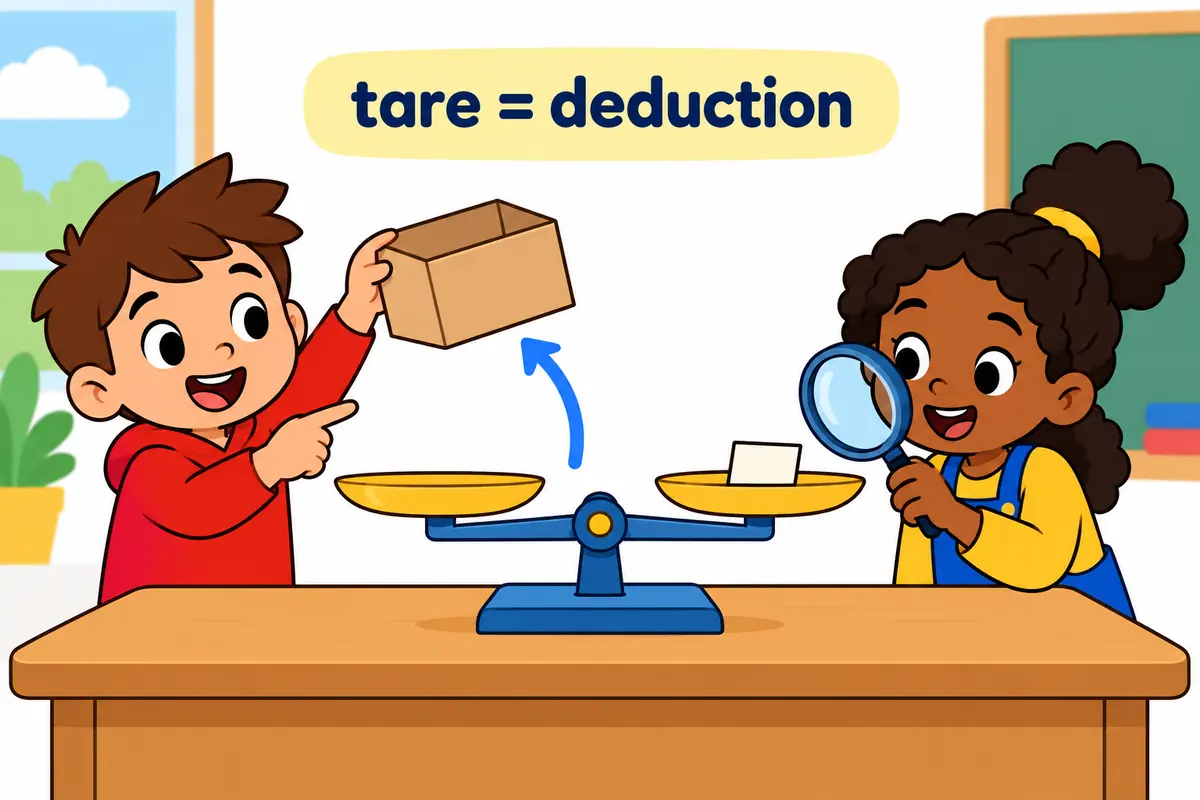
Tare and tear in a sentence: examples across contexts
The two words belong to different worlds, and moving through the contexts below shows how little they overlap once the sentence makes its meaning clear.
| Context | Example sentence | Why this works |
|---|---|---|
| Shipping desk | Record the tare before the truck leaves the yard. | A logistics context makes the weighing sense unmistakable. |
| Kitchen | Tare the bowl, then add the butter. | The verb use is standard in recipes and labs. |
| Market report | The rules allow a tare of one percent for the sacks. | States the deduction as a policy figure. |
| Classroom | Do not tear the page when you turn it. | A plain instruction shows the ripping verb. |
| News report | Storm winds tore the awning from the shopfront. | The past tense tore signals real damage. |
| Medical prose | A tear in the muscle needs rest, not more training. | The noun means a rip in tissue, not weeping. |
| Emotional writing | A tear appeared when she read the last line. | The article and the eye sense fix the meaning. |
When a draft seems ambiguous, name the container for tare or name what is damaged for tear, and the sentence becomes clear.
Which should you use?
Map the reader’s situation onto one firm recommendation.
| Situation | Use | Reason |
|---|---|---|
| You are quoting a net weight for goods. | tare | The empty container is being deducted. |
| You are describing paper coming apart. | tear, as a verb | A physical rip always takes the verb tear. |
| You are writing about crying. | tear, as a noun | The drop from the eye is the other tear sense. |
| You are unsure which homophone you typed. | check the meaning | Sound cannot separate tare from rip-tear. |
| You want a synonym for ripping. | rip or shred | They avoid the tear ambiguity entirely. |
If the sentence is about the strength of a material or a relationship, rip a seam is often the plainer choice, and it never collides with tare. Where the idea is a small fault rather than a clean split, a blemish in the cloth keeps the image lighter.
Word forms and grammar of tare and tear
Tare is a countable noun and occasional verb; tear is irregular as a verb, and its two noun senses share a spelling but not a sound.
| Form | Part of speech | Example |
|---|---|---|
| tare | noun, singular | The tare is printed beside the batch number. |
| tares | noun, plural | Weights and tares fill the ledger. |
| tared, taring | verb forms | She tared the pan and taring took one second. |
| tear | verb, base form | Do not tear the ticket. |
| tears, tore, torn, tearing | verb inflections | He tore it once; it is now torn. |
| tear, tears | noun, eye sense | A tear, then more tears, followed. |
Note that the plural tears can belong to either noun sense, so the verb or the context must carry the difference; tears filled the room can only mean the eye sense.
Common mistakes with tare vs tear
- Incorrect:
Please tear the empty pallet before weighing the goods.Correct: Please tare the empty pallet before weighing the goods. Rule: Setting a scale to zero uses tare, not tear. - Incorrect:
The tear of the barrel is twenty kilograms.Correct: The tare of the barrel is twenty kilograms. Rule: The container weight is tare; tear means a rip. - Incorrect:
She had a tare in her eye.Correct: She had a tear in her eye. Rule: The drop is tear, spelled with ea, and it rhymes with ear. - Incorrect:
He tared the letter in half.Correct: He tore the letter in half. Rule: Ripping uses the irregular verb tear, whose past is tore. - Incorrect:
The wind tares at the flag.Correct: The wind tears at the flag. Rule: The verb is tear; tares is only a plural noun for container weights or weeds.
Practice using tare and tear
Choose the spelling that fits the meaning, not the sound, and check the reasoning afterwards.
- Fill the gap: The ______ of the glass jar is stamped on the base.
- Choose the better word: Do not (tare / tear) the label off the parcel.
- Correct the error: A single tare ran down her face.
- Build a sentence: use tare weight about a delivery of apples.
- Spot the register: which belongs in a shipping form: net weight equals gross minus tare, or I got a bit tearful at the depot?
- Rewrite with a synonym: The hikers tore their jackets on the fence. Use rip.
Answers
- tare, because the empty container is being weighed.
- tear, because the label is being ripped off.
- A single tear ran down her face, because the drop from the eye is tear.
- Model answer: Subtract the tare weight of the crate from the gross weight of the apples.
- Net weight equals gross minus tare, because a form states the deduction and avoids the first person.
- The hikers ripped their jackets on the fence, because rip names the same damage without the homophone trap.
The bottom line
For tare vs tear, let meaning lead: tare is the weight of an empty container, and tear is a rip or a drop from the eye. The two nuances that decide most sentences are these: tare and the ripping sense of tear are homophones, so sound never separates them, and tear is irregular, so its past is tore and its participle is torn. When the sentence is really about crying, the eye sense rhymes with ear and is easy to hear.
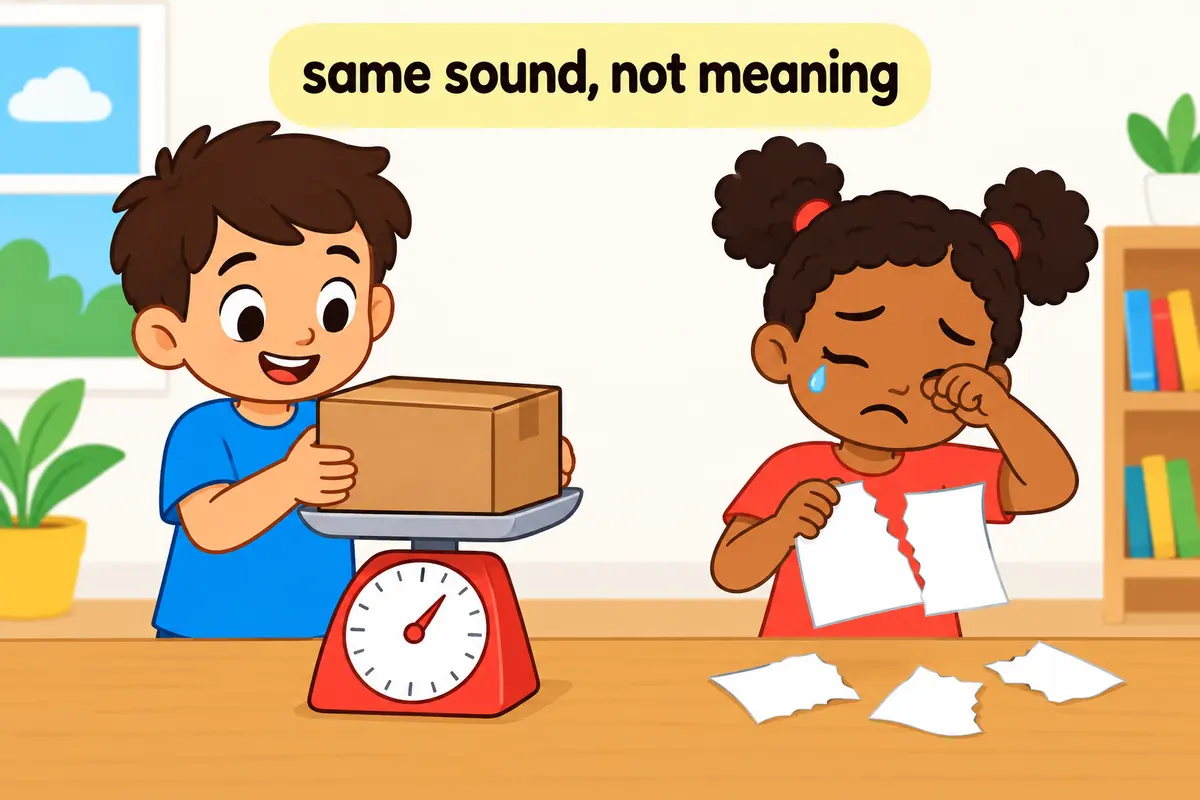
Frequently asked questions about tare vs tear
Is tare spelled the same as tear?
No, the spellings differ, though tare and the ripping sense of tear sound identical. Tare has an a and names a container weight. Tear has ea and, depending on meaning, rhymes with air when it means rip or with ear when it means a drop from the eye.
What does tare weight mean on a label?
Tare weight is the weight of the empty packaging, listed so a buyer can subtract it from the gross weight and reach the net weight. A crate stamped tare ten kilograms tells the shipper that ten of the total kilograms are the box, not the goods inside it.
Why does tear have two pronunciations?
Tear is two different words that share a spelling. The verb meaning to rip comes from one source and rhymes with air; the noun meaning a drop from the eye comes from another and rhymes with ear. Context, not spelling, tells a reader which pronunciation is meant.
Can I use rip instead of tear?
Often you can, and it is the safer choice when the homophone with tare might confuse a reader. Rip works for paper, fabric and seams, but it does not cover the crying sense. For a drop from the eye, tear remains the only word that fits.
Tare can mean the weight of an empty container or adjusting a scale to exclude that weight. Tear can mean rip or a drop of fluid from the eye, with different pronunciations. In tare vs tear, choose the weighing term for a container and identify whether the other word concerns ripping or crying.
Key facts at a glance
- tare means empty-container weight or an adjustment excluding it.
- tear means rip or a rip in material.
- tear means a drop of fluid from the eye.
- Tare forms tared and taring as a verb. The ripping verb tear forms tore, torn, and tearing. Tears is also the plural noun for eye fluid.
Which spelling fits the meaning?
| Word | Meaning | Example |
|---|---|---|
| tare | empty-container weight or an adjustment excluding it | The cook set the tare before weighing the flour. |
| tear | rip or a rip in material | The fabric had a small tear. |
| tear | a drop of fluid from the eye | A tear ran down her cheek. |

How does the context decide your choice?
In weighing, tare distinguishes a container’s weight from the contents. A tared scale can show the added contents relative to the selected zero. The word also has a plant-related sense, so weighing context matters.
Tear is not pronounced identically in its two familiar senses. The ripping word can rhyme with care, while the eye-fluid word can rhyme with near. Do not call every tare and tear pairing an identical-sound pair without specifying the sense.
What are useful example sentences?
- The cook set the tare before weighing the flour.
- The fabric had a small tear.
- A tear ran down her cheek.
Read the example with the table definition in mind. The surrounding noun, action, or setting provides the clue; similar pronunciation does not make the meanings interchangeable.
Which forms and grammar patterns matter?
Tare forms tared and taring as a verb. The ripping verb tear forms tore, torn, and tearing. Tears is also the plural noun for eye fluid.
Connect tare with a container on a scale and separate tear’s ripping sense from its eye-fluid sense. The spelling of tear stays the same even when pronunciation changes.
How can you check tare vs tear?
- Identify the intended person, thing, quality, or action.
- Substitute the relevant definition for the doubtful word.
- Check whether the grammatical role fits the sentence.
- Use the dictionary for a specialized sense or unfamiliar proper name.
Merriam-Webster Dictionary: tare and Merriam-Webster Dictionary: tear document the vocabulary distinctions. The sample sentences here are original usage examples.

Frequently asked questions
Can these words be substituted for each other?
No. Tare concerns weighing or a specialized plant sense; tear can concern ripping or eye fluid. Its pronunciation depends on the intended meaning. Read the whole sentence before changing the spelling. The intended meaning and grammatical role provide stronger evidence than sound alone, especially when a word also has a specialized or less common sense.
What is the quickest proofreading test?
Check for an empty-container weight or scale adjustment. If tear is intended, identify whether the sentence concerns a rip or eye fluid before reading it aloud. Read the whole sentence before changing the spelling. The intended meaning and grammatical role provide stronger evidence than sound alone, especially when a word also has a specialized or less common sense.
Does similar pronunciation prove the spelling?
No. Tear has more than one pronunciation, so a single sound comparison can mislead. The weighing, ripping, or eye-fluid meaning must come first. Read the whole sentence before changing the spelling. The intended meaning and grammatical role provide stronger evidence than sound alone, especially when a word also has a specialized or less common sense.
How can a learner practice the distinction?
Write a sentence about taring a scale, one about a fabric tear, and one about a tear on a cheek. Read the two tear senses differently. Read the whole sentence before changing the spelling. The intended meaning and grammatical role provide stronger evidence than sound alone, especially when a word also has a specialized or less common sense.
Have you ever found yourself confused between the words “tare” and “tear”? I know I have. These two words may sound similar, but they have completely different meanings and uses. In this text, I’ll guide you through the proper usage of “tare” and “tear” and help you avoid any embarrassing mix-ups. We’ll explore the definitions of both words, provide examples to illustrate their correct usage, and offer some tips to remember the difference between them. By the end of this article, you’ll have a clear understanding of when to use “tare” and when to use “tear.” So let’s immerse and unravel the mystery of these two tricky words.
Key Takeaways
- The words “tare” and “tear” may sound similar but have completely different meanings and uses.
- “Tare” has different definitions in cooking, chemistry, and commerce, where it refers to deducting the weight of containers or packaging materials to accurately measure the content or determine the net weight.
- “Tear” can be used as a noun to describe the drop of liquid that comes from your eye when you cry, or as a verb meaning to rip or pull apart forcefully.
- Understanding the definitions and contexts of these words is crucial for their appropriate usage.
- Examples of correct usage include using “tare” to measure ingredient weights in cooking, deducting the weight of containers in chemistry, or deducting the weight of packaging materials in commerce. Using “tear” correctly involves expressing emotions or describing actions of ripping or pulling apart forcefully.
- Tips for remembering the difference between “tare” and “tear” include understanding the definitions, paying attention to usage in context, focusing on their spellings, and using mnemonics to aid memory.
Definition of “tare” and “tear”
When it comes to the English language, there are plenty of words that can cause confusion, especially when they sound similar but have different meanings. Two such words are “tare” and “tear.” Although they may sound alike, they are used in completely different ways. In this section, I will provide clear definitions for both words to help you understand their meaning and usage.
Let’s start with “tare.” The word “tare” has a specific meaning in various fields, such as cooking, chemistry, and commerce. Here are the definitions of “tare”:
- In cooking and baking, “tare” refers to the weight of an empty container or vessel that is deducted from the total weight to accurately measure the content. For example, when measuring flour, you would use the weight of the measuring cup as the tare weight to determine the weight of just the flour.
- In the field of chemistry, “tare” refers to the weight of a container or vessel, often a weighing dish, that is subtracted from the total weight to obtain the weight of the substance being measured.
- In commerce, “tare” is used to describe the weight of the packaging materials, such as pallets, crates, or containers, that hold goods. The tare weight is deducted from the gross weight to determine the net weight of the goods.
On the other hand, “tear” has a completely different meaning and usage. Here’s what it means:
- As a noun, a “tear” refers to the drop of liquid that comes from your eye when you cry.
- As a verb, “tear” means to rip or pull apart forcefully.
Now that we have a clear understanding of the definitions of “tare” and “tear,” we can move on to exploring the differences between these two words and their usage in different contexts.
Remember, understanding the difference between these words is crucial to using them appropriately in your writing and conversations.
Differences between “tare” and “tear”
Let’s dive deeper into the differences between the words “tare” and “tear” to understand their distinct meanings and usage.
Definition of “Tare”
- In Cooking: When it comes to cooking, “tare” refers to the weight of an empty container that is deducted from the total weight to accurately measure the content. For example, a chef may use a scale to measure the ingredients, subtracting the weight of the container (the tare) to get the precise weight of the ingredients.
- In Chemistry: In the area of chemistry, “tare” refers to the weight of a container that is subtracted from the total weight to obtain the weight of the substance being measured. This is essential in determining the exact mass of a chemical compound or element.
- In Commerce: In the world of commerce, “tare” is used to describe the weight of packaging materials that are deducted from the gross weight to determine the net weight of goods. This is particularly important when it comes to accurately labeling and pricing products.
- As a Noun: When we refer to “tear” as a noun, we are describing the drop of liquid that comes from our eyes when we cry. Tears are a natural physiological response to emotions, both happy and sad.
- As a Verb: On the other hand, when we use “tear” as a verb, it means to rip or pull something apart forcefully. Whether it’s tearing paper, fabric, or even a relationship, this action involves separating something into two or more pieces with great strength.
By understanding the differences between “tare” and “tear,” we can ensure their appropriate usage in both written and spoken language. Whether you’re discussing culinary measurements, chemical calculations, commerce practices, or emotions and physical actions, using these words correctly can significantly improve your communication skills.
Examples of using “tare” and “tear” correctly
When it comes to writing, understanding the difference between “tare” and “tear” is essential. Let me provide you with some examples of how these words are used correctly in different contexts:
- Cooking: In the culinary world, “tare” refers to the weight of an empty container deducted from the total weight to accurately measure the content. For instance, when preparing a dish that requires precise measurements, I always ensure to tare the scale before adding the ingredients. By zeroing out the weight of the container, I can obtain an accurate measurement of the actual ingredients without the added weight of the container itself.
- Chemistry: In chemistry, “tare” is used to describe the weight of a container subtracted from the total weight to obtain the weight of the substance being measured. For example, when conducting experiments in the lab, I need to tare the weighing boat to obtain the precise weight of the chemicals I’m working with. This ensures accurate calculations and precise results.
- Commerce: In the world of commerce, “tare” is the weight of packaging materials deducted from the gross weight to determine the net weight of goods. As a business owner, when shipping products to customers, I always take into account the tare weight of the packaging. This way, I can accurately calculate the net weight of the actual products and ensure that my customers receive the correct merchandise.
Let’s take a look at how “tear” is used correctly:
- Emotions: As a noun, “tear” refers to the drop of liquid that comes from your eye when you cry. For instance, when I watched the touching movie, I couldn’t help but shed tears of joy. Here, “tear” describes the physical expression of my emotions.
- Actions: As a verb, “tear” means to rip or pull apart forcefully. For example, when I accidentally caught my shirt on a nail, it tore. I had to mend it to fix the tear. In this context, “tear” describes the action of ripping the fabric.
Understanding the proper usage of these words is crucial for effective communication. By using “tare” and “tear” correctly, you can ensure that your message is clear and precise.
Tips to remember the difference between “tare” and “tear”
As someone who has encountered their fair share of confusion between words throughout my writing journey, I understand the need to clarify the difference between “tare” and “tear.” Let’s jump into some key tips that will help you grasp and remember the distinctions between these commonly confused words.
1. Understand the Definitions:
It’s important to start by understanding the definitions of both words. “Tare” has multiple meanings depending on the context, but it often refers to deducting the weight of an empty container to accurately measure the content. On the other hand, “tear” can be used as a noun representing a drop of liquid from your eye when you cry, and as a verb meaning to rip or pull apart forcefully.
2. Pay Attention to Usage in Context:
Pay close attention to the context in which these words are used. “Tare” is commonly associated with cooking, chemistry, and commerce, where it is used to deduct the weight of a container or packaging materials to determine net weight or substance weight accurately. On the other hand, “tear” is usually associated with emotions, physical actions, or damage to objects.
3. Remember the Spellings:
One way to differentiate between the two words is to focus on their spellings. “Tare” has just one ‘a’ and follows the -are word pattern, while “tear” has the double ‘e’ and follows the -ear word pattern. By familiarizing yourself with their distinct spellings, you’ll have a visual cue to help you use them appropriately.
4. Make Use of Mnemonics:
If you’re finding it difficult to remember the differences, try creating mnemonic devices to aid your memory. For example, you can associate “tare” with “take away” since it involves deducting weight in various contexts. Conversely, you can associate “tear” with “rip and tear” to remind yourself of its meaning related to physical actions.
Conclusion: Mastering the usage of “tare” and “tear”
Understanding the difference between “tare” and “tear” can be challenging, but with a few helpful tips, you can confidently use these words in the appropriate context. By familiarizing yourself with their definitions and paying attention to how they are used, you can avoid common mistakes.
One effective strategy is to remember the spellings of these words. “Tare” is spelled with an “a” and is often associated with “take away,” while “tear” is spelled with an “e” and is connected to the action of “ripping and tearing.”
Another useful technique is to employ mnemonic devices. Associating “tare” with “take away” and “tear” with “rip and tear” can help solidify their meanings in your mind.
By implementing these strategies, you can confidently navigate the usage of “tare” and “tear” in your writing and conversations. Remember, practice makes perfect, so keep applying these tips until they become second nature to you.
Frequently Asked Questions
Q: What is the difference between “tare” and “tear”?
A: “Tare” refers to the weight of a container that is deducted from the total weight, while “tear” means to rip or pull apart.
Q: How can I remember the difference between “tare” and “tear”?
A: Understanding the definitions of both words and paying attention to their usage in context is crucial. Additionally, remembering the spellings and using mnemonic devices like associating “tare” with “take away” and “tear” with “rip and tear” can help differentiate between them.


