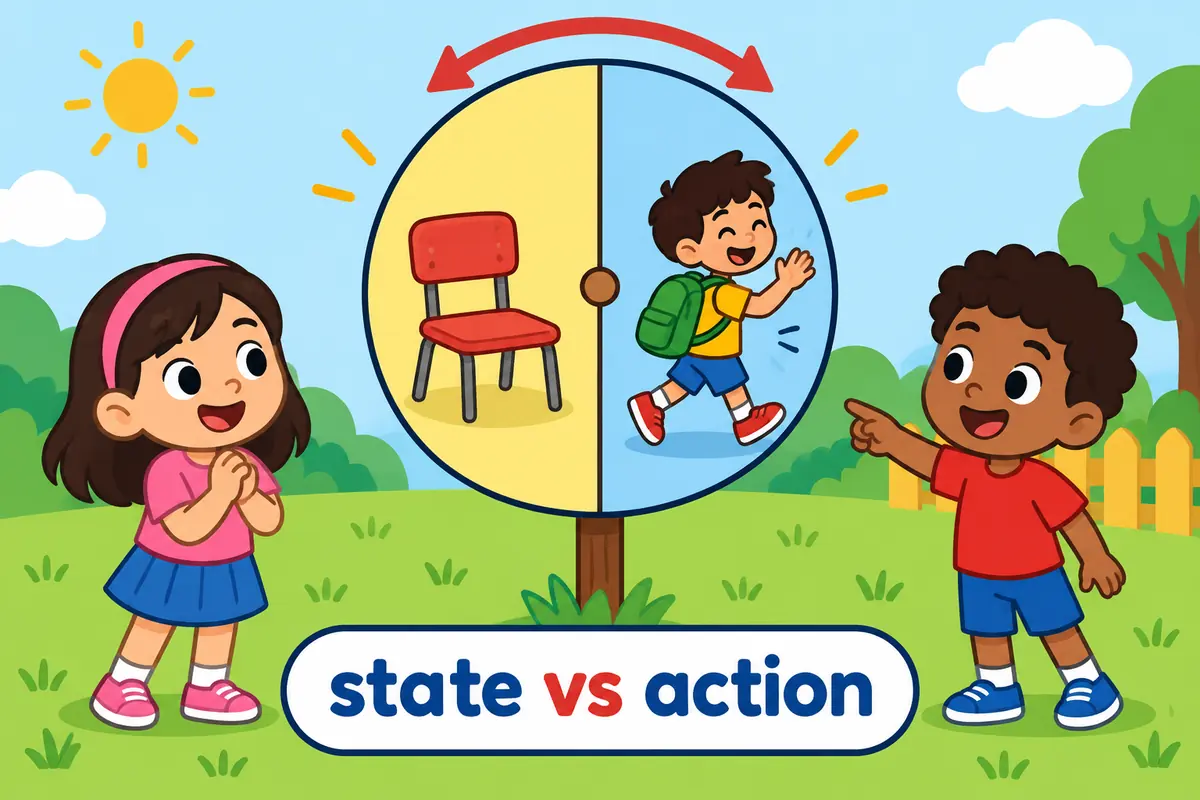
Vacant vs vacate separates a state from an action: vacant is the adjective for a place or post that is empty, and vacate is the verb for leaving it. Use vacant to describe the room or the job, and vacate when someone empties it. A former tenant vacated the flat; it is now vacant.
Vacant vs vacate at a glance
- Vacant is an adjective; vacate is a verb.
- Vacant describes a place, seat, post or blank look; vacate describes an act of leaving or giving up.
- Vacant links to the verb be; vacate takes a place or post as its object.
- Both words are formal and common in property, law and human resources.
- The commonest error is using vacant as a verb, as in the tenants vacant the flat.
Vacant vs vacate compared
The comparison is easiest to hold in one table, because the two words divide the same situation into a state and an action. Read each row as a decision: if you are describing what something is, choose vacant; if you are describing what someone does, choose vacate.
| Criterion | vacant | vacate |
|---|---|---|
| Word class | Adjective | Verb |
| What it names | A state of being empty or unfilled | An action of leaving or giving up |
| Typical noun | room, seat, post, flat | premises, seat, office, post |
| Needs an object | No | Yes, usually a place or post |
| Verb used with it | be, remain, fall | must, agree to, be forced to |
| Core example | The corner office is vacant. | The manager will vacate the corner office. |
| Typical register | Property listings, notices, HR | Leases, law, official notices |
| Usual opposite | Occupied or filled | Occupy, take up, fill |
What do vacant and vacate mean?
Vacant is an adjective meaning empty of occupants or unfilled, and vacate is a verb meaning to leave a place or give up a post. The Cambridge entry for vacant and the Cambridge entry for vacate agree on the property and post senses, and the two words share a Latin root in the idea of being empty. The details worth holding apart are that vacant can also describe a blank, unthinking look, and that vacate has a legal sense of setting a judgment aside.
Two related words are worth fixing in place. The entries for vacant and vacate each cover one side of this page. Beyond them, empty is the everyday word for a space with nothing in it, unoccupied says only that nobody is there, leave a post is the plain verb for what vacate says formally, and evacuate means to move people out for safety, a more urgent act.
| Word | Sense | Plain meaning | Example sentence |
|---|---|---|---|
| vacant | Empty of occupants | A place with nobody in it | The flat above the shop has been vacant for a year. |
| vacant | Unfilled | A post or seat that nobody holds | The treasurer’s post is still vacant. |
| vacant | Blank | A look showing no thought or interest | He gave a vacant stare at the question. |
| vacate | Leave a place | To move out so the space is free | Tenants must vacate the premises by noon. |
| vacate | Give up a post | To resign or step down from a position | The mayor will vacate the chair in May. |
| vacate | Set aside in law | To cancel a ruling or conviction | The court vacated the earlier judgment. |
One limitation is worth stating plainly. Vacant does not always mean available: a vacant post may be frozen and open to nobody, and a vacant lot is merely bare land. Vacate, for its part, does not mean demolish or destroy, because a vacated building is left standing and intact. Nor is vacate the natural word for leaving a party or a friend, where leave on its own is far better.
How do you use vacant and vacate in a sentence?
The grammar follows the word class. Vacant behaves like any adjective and links to a place or post through the verb be; vacate behaves like a transitive verb and needs an object. The patterns below cover ordinary use.
| Pattern | Example | What it signals |
|---|---|---|
| a vacant + place or post | They advertised a vacant seat on the committee. | The adjective sits before the noun it describes. |
| be or remain vacant | The office remained vacant through the winter. | States that the emptiness continues. |
| fall vacant | The position fell vacant when she retired. | A fixed phrase for a post becoming free. |
| vacate + a place | The tenants vacated the flat on Friday. | The verb takes the place as its object. |
| vacate + a post | He vacated the chair after two terms. | The object is the office being given up. |
| be vacated | The building was vacated last month. | Passive form, common in reports and notices. |
The test that separates them is a question. Ask whether your sentence describes what something is, and use vacant with the verb be; ask whether it describes what someone does, and use vacate with a place or post as the object.
Vacant vs vacate in a sentence: examples across contexts
The pair moves easily between a property listing and a courtroom, and each sentence below keeps the state or the action clear. Notice how often the two appear in the same passage, one explaining the other.
| Context | Example sentence | Why this works |
|---|---|---|
| Property listing | The second-floor flat is vacant and ready to view. | Uses the adjective to describe a state. |
| Lease notice | Tenants must vacate the premises within thirty days. | Uses the verb to state an obligation. |
| Human resources | Three posts are vacant after the restructure. | Applies the adjective to unfilled jobs. |
| Resignation letter | I will vacate my position at the end of the quarter. | Uses the formal verb for giving up a post. |
| Legal writing | The appellate court vacated the conviction. | Uses the technical sense of setting a ruling aside. |
| News report | Residents vacated the building before the storm arrived. | Names the action and the place together. |
| Office email | Please confirm the meeting room is vacant at two. | Uses the adjective to check availability. |
| Academic prose | When the throne fell vacant, two claimants stepped forward. | Uses fall vacant as a fixed historical phrase. |
| Everyday talk | We vacated the flat and left it clean and empty. | Pairs the verb with the adjective for clarity. |
| Captions and notes | A vacant look crossed her face in the photograph. | Shows the blank-expression sense of the adjective. |
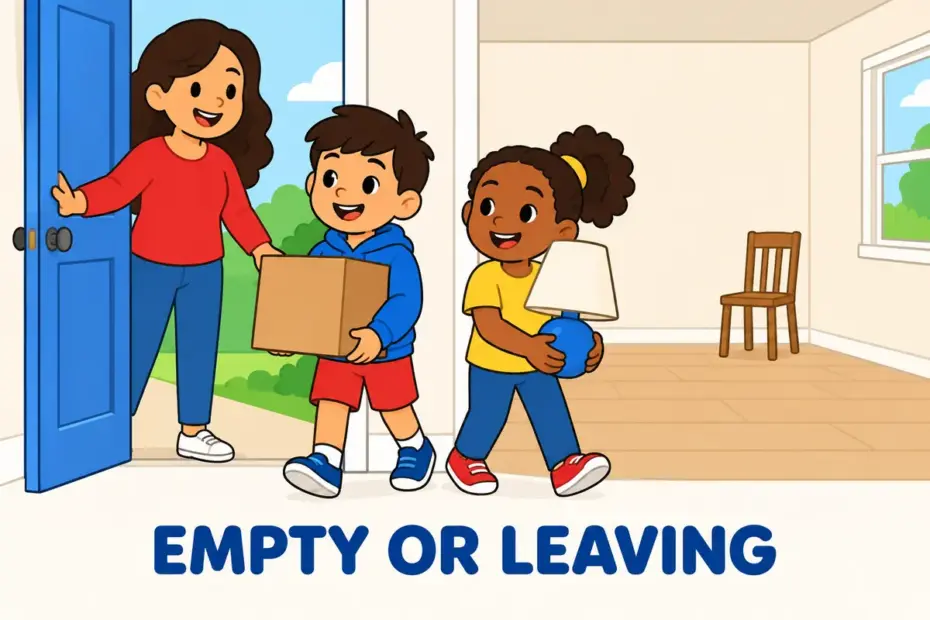
Where the meaning is about property, the same paragraph can use both words to good effect, first the act and then the result: the family vacated the house, leaving it vacant.
Which should you use?
Match the word to the job the sentence is doing, and the choice becomes simple. The situations below cover most of the cases writers hesitate over.
- Describing an empty room or building in a listing or notice: use vacant, as in the flat is vacant from June.
- Saying that a person or tenant leaves a property: use vacate, as in they vacated the premises.
- Talking about an unfilled job: describe the post as vacant; use vacate only for the moment a worker gives the old post up.
- In American legal writing, setting a conviction or order aside: use vacate, as in the court vacated the order.
- Describing a blank, uninterested expression: use vacant, as in a vacant look.
The two words rarely compete for the same slot. One describes a thing and the other describes a deed, so a sentence that feels wrong with one will usually be right with the other.
Word forms and grammar of vacant and vacate
Vacant has a small family of related forms, and vacate a regular set of inflections. The adverb vacantly belongs to the blank-look sense rather than to empty property, and the noun vacancy is the common one for both a free room and a free job.
| Form | Part of speech | Example |
|---|---|---|
| vacant | adjective | The seat beside the window is vacant. |
| vacancy | noun | The hotel has one vacancy tonight. |
| vacantly | adverb | She stared vacantly at the empty page. |
| vacate | verb, base | We must vacate the hall by ten. |
| vacated | verb, past and participle | They vacated the office in June. |
| vacating | verb, present participle | Tenants are vacating the building this week. |
| vacation | noun, legal or dated | The vacation of the judgment surprised both parties. |
Common mistakes with vacant and vacate
- Incorrect:
The apartment is vacate.Correct: The apartment is vacant. Rule: Vacant is the adjective; vacate is a verb and cannot follow is. - Incorrect:
The tenants vacant the flat last week.Correct: The tenants vacated the flat last week. Rule: The action needs the verb, not the adjective. - Incorrect:
They vacated.Correct: They vacated the house. Rule: Use vacate with an object such as the place or post that is left. - Incorrect:
He gave me a vacate look.Correct: He gave me a vacant look. Rule: The blank expression is the adjective sense of vacant. - Incorrect:
The vacant post was available to anyone.Correct: The post was advertised, though vacant posts are not always open. Rule: available means free to be taken, which vacant alone does not.
Practice using vacant and vacate
Work through the six items, then read the reasoning rather than only the answer.
- Fill the gap: The lease says we must ______ the flat before the end of the month.
- Choose the better word: After the staff moved out, the whole floor was (vacant / vacate).
- Correct the error: The board hoped the manager would vacant the post quietly.
- Build a sentence: use vacant about a seat in a lecture hall.
- Spot the register: which belongs in a legal notice – the court vacated the order, or the court emptied the order?
- Rewrite in plain English: The tenants vacated the premises. Replace vacate with a commoner verb.
Answers
- vacate – the sentence describes an action with a place as its object.
- vacant – the sentence describes the state of the floor after the move.
- The board hoped the manager would vacate the post quietly – the verb, not the adjective, is needed.
- Model answer: The front seat was vacant, so I sat down.
- The court vacated the order – vacate has a technical legal sense that a plain verb cannot carry.
- The tenants left the premises – leave is the everyday verb for the same action.
The bottom line
Use vacant vs vacate by asking whether the sentence describes a thing or a deed. Vacant names the empty place or unfilled post, and vacate names the act of leaving or giving up. The two nuances that decide most sentences are these: vacant links to the verb be while vacate takes an object, and vacant can also mean a blank look, a sense that vacate never shares. When a lease turns on the difference, it often uses both forms together: once the tenant has vacated, the property is vacant.
Frequently asked questions about vacant vs vacate
Is vacate a verb or a noun?
Vacate is a verb and normally takes an object such as the premises, the seat or the post. Its noun forms are rarer: vacation appears in legal writing for the act of setting an order aside, and the everyday sense of vacation as a holiday is a separate word. The adjective of the pair is vacant.
Can vacant describe a person?
Vacant does not describe a person’s character, but it can describe a person’s expression. A vacant look or a vacant stare shows that the mind is elsewhere and the face carries no interest. The word never means that a whole human being is empty, so a vacant teacher would be a mistake for an absent-minded one.
What does it mean to vacate a conviction?
In American legal usage, to vacate a conviction or an order is to cancel it and set it aside, so that it no longer has legal force. A higher court may vacate a lower court’s ruling, or a prosecutor may ask for a conviction to be vacated. This technical sense is common in law and rare outside it.
What is the noun form of vacant?
The noun is vacancy, and it covers both a free room and a free job, as in the hotel has one vacancy or there is a vacancy on the board. The adverb vacantly belongs to the blank-look sense, as in she stared vacantly. There is no common verb from vacant; to say that a place is emptied, English uses vacate.