
Vigilant is an adjective meaning watchful and alert for possible danger. To use vigilant in a sentence, describe the person who keeps watch and name what they watch for: “The lifeguard stayed vigilant all afternoon.” The word stresses steady attention over time, not a single moment of noticing.
Vigilant at a glance
- Vigilant is an adjective; its adverb is vigilantly and its noun is vigilance.
- The dominant patterns are be vigilant about and remain vigilant against.
- Vigilant belongs to formal, safety and official writing.
- Common collocations are remain vigilant, stay vigilant and a vigilant watch.
- The commonest error is using vigilant for a single act of noticing.
What does vigilant mean?
Vigilant is an adjective meaning watchful and alert, especially to a danger that may come. The Cambridge entry for vigilant records that sense. In practice the word marks sustained attention: a vigilant guard does not relax after one check, and a vigilant parent watches the whole pool rather than one splash. It reports a disposition to keep looking, so it suits duty, safety and risk. A reader who senses a specific threat may prefer wary, which points at the danger rather than the discipline.
| Use | Plain meaning | Example sentence |
|---|---|---|
| Watchful for danger | Keeping alert so trouble does not surprise you | Staff were vigilant for any sign of fire. |
| Unofficial guardian | Protecting someone by watching closely | Neighbours stayed vigilant for the elderly couple. |
| Careful in duty | Treating a routine task with full attention | The inspector was vigilant about every seal. |
One limitation is worth stating. Vigilant is not the same as suspicious or hostile: it describes guarding against a risk, not assuming the worst about people. Nor does it mean physically strong. The word is about attention, so a vigilant observer may never act at all.
How do you use vigilant in a sentence?
Vigilant follows a linking verb and usually takes about or against, with remain as its most common partner. The table shows five patterns that cover nearly every real use.
| Pattern | Example | What it signals |
|---|---|---|
| be + vigilant + about + noun | Keep the team vigilant about phishing emails. | Names the ongoing risk to watch. |
| remain + vigilant | Residents remain vigilant after the break-ins. | Shows watchfulness continued over time. |
| stay + vigilant + against + noun | Drivers must stay vigilant against icy patches. | Against marks the thing being guarded against. |
| a vigilant + noun | A vigilant teacher spotted the empty seat at once. | Uses vigilant before a person or watch. |
| adverb + vigilant | Nurses were constantly vigilant during the night shift. | An adverb stresses the unbroken nature of the watch. |

Vigilant in a sentence: examples across contexts
Vigilant keeps its meaning while the duty changes. The nine sentences below move from a school playground to a security briefing, and each names what the watch is protecting.
| Context | Example sentence | Why this works |
|---|---|---|
| Classroom | The teacher stayed vigilant while the children used the sharp scissors. | A concrete hazard justifies the continuing watch. |
| Workplace email | Please remain vigilant about strange attachments in unexpected messages. | Remain plus about is the standard security phrasing. |
| News report | Coastguards were vigilant through the storm overnight. | Shows a long watch under difficult conditions. |
| Safety notice | Drivers should stay vigilant for cyclists at every junction. | The official register expects the formal adjective. |
| Medical writing | Staff must be vigilant for early signs of infection. | Names the symptom the attention is aimed at. |
| Academic prose | Historians must be vigilant against reading modern ideas into old texts. | Against fits a methodological danger. |
| Conversation | I try to be vigilant about backing up my photos. | The everyday use survives with the about pattern. |
| Sports report | The keeper was vigilant for the whole second half. | Full length of the watch is stated plainly. |
| Security briefing | Officers were vigilant for anything out of place on the platform. | Uses the for pattern to name the target. |
Vigilant vs alert
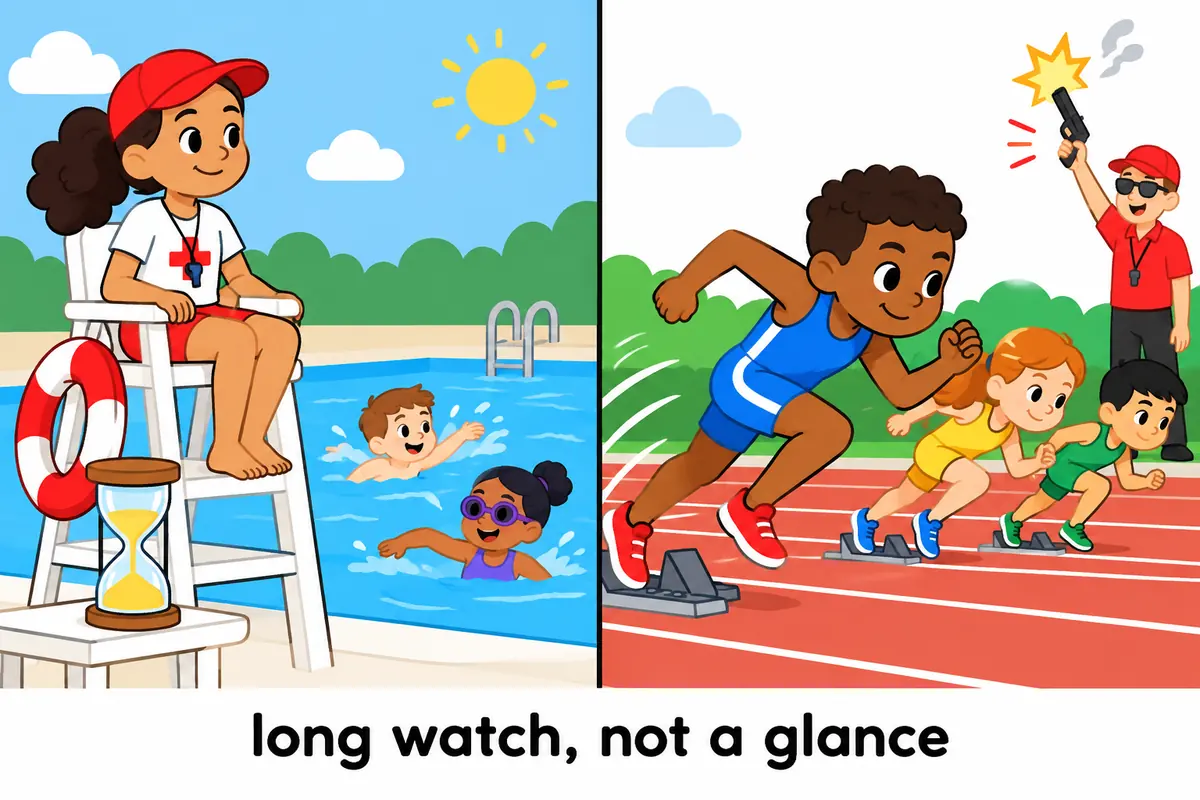
Vigilant and alert both describe readiness, and they differ in duration. Alert is the state of being ready right now; vigilant is the habit of staying ready. The related watchful is softer and more literary, and alert is the word a quick reaction usually needs.
| Attribute | vigilant | alert |
|---|---|---|
| Duration | Sustained over time | Readiness in the present moment |
| Focus | Watching for a coming danger | Reacting quickly to anything |
| Typical frame | remain vigilant, vigilant about | stay alert, alert to |
| Tone | Formal, duty-bound | Neutral and brisk |
| What it implies | Discipline and patience | Sharp senses and speed |
Verdict: choose vigilant for an unbroken watch against a known risk, and alert for a quick, present-moment readiness.
Word forms and grammar of vigilant
Vigilant has an adverb, vigilantly, and a noun, vigilance, that appears often in official writing. The table also lists the adjective diligent, which shares the sense of careful effort but not the sense of danger.
| Form | Part of speech | Example |
|---|---|---|
| vigilant | adjective | The guard was vigilant all night. |
| more vigilant | comparative adjective | Staff grew more vigilant after the warning. |
| most vigilant | superlative adjective | She was the most vigilant of the monitors. |
| vigilantly | adverb | He watched the gate vigilantly. |
| vigilance | noun | Vigilance kept the site safe for a decade. |
Common mistakes with vigilant
- Incorrect:
He was vigilant when he saw the smoke.Correct: He was alert when he saw the smoke. Rule: Vigilant describes a sustained watch, not a single reaction. - Incorrect:
Keep vigilant of the loose railing.Correct: Keep vigilant about the loose railing. Rule: The usual prepositions are about and against, not of. - Incorrect:
She was very vigilant careful.Correct: She was very vigilant. Rule: Vigilant is an adjective and cannot stack before another adjective. - Incorrect:
The vigilant of the staff impressed us.Correct: The vigilance of the staff impressed us. Rule: The noun is vigilance; vigilant is only the adjective. - Incorrect:
Drivers must vigilant the road.Correct: Drivers must be vigilant on the road. Rule: Vigilant needs a linking verb such as be or remain.
Practice using vigilant
Work through the six items, then check the reasoning rather than only the answer.
- Fill the gap: After the theft, the whole street remained ______ for a week.
- Choose the better word: The goalie was (alert / vigilant) and made a reflex save.
- Correct the error: Staff must stay vigilant of fake emails.
- Build a sentence: use remain vigilant about watching a cake in the oven.
- Spot the register: which belongs in a security memo — Remain vigilant against tailgating, or just keep an eye out?
- Rewrite with the noun: The guards watched vigilantly all night. Use vigilance instead.
Answers
- vigilant — remain vigilant names a watch sustained across the whole week.
- alert — a reflex save is a single present-moment reaction, not a long watch.
- Staff must stay vigilant about fake emails — the standard preposition is about.
- Model answer: We must remain vigilant about the cake so it does not burn.
- Remain vigilant against tailgating — an official memo keeps the formal adjective and preposition.
- The guards’ vigilance kept the building safe all night — the noun replaces the adverb cleanly.
The bottom line
Use vigilant in a sentence for an unbroken watch against a risk, and keep the pair remain vigilant as your default. The two details that decide most sentences are the prepositions about and against, which name what is being watched, and the contrast with alert, which covers a single present moment. Where the caution responds to one specific threat rather than a sustained duty, cautious or observant may be more precise.
Frequently asked questions about vigilant
What part of speech is vigilant?
Vigilant is an adjective, so it describes a person, a watch or a habit. Its adverb is vigilantly and its noun is vigilance. The adjective follows linking verbs such as be, stay and remain, which is why remain vigilant is the phrase most official writing uses.
What is a good synonym for vigilant?
Watchful is the closest everyday synonym, and alert covers the short-term sense. Diligent is a good substitute when the emphasis falls on careful effort rather than danger. Each loses something: watchful is less formal, alert is briefer, and diligent drops the idea of risk entirely.
Is vigilant positive or negative?
It is almost always positive or neutral, because it praises attention to duty. Even in warnings such as remain vigilant against fraud, the word credits the reader with care rather than accusing anyone. It only turns negative in rare irony, where a vigilant person is watching too closely.
Can vigilant describe an animal?
Yes. A vigilant sheepdog, a vigilant hawk and a vigilant cat are all natural phrases, because the word only requires a creature that watches. It suits animals that guard or hunt by attention, which is why writers use it more for herders and birds of prey than for pets.
Being vigilant means staying alert and watchful in order to notice any potential dangers or threats. It involves paying close attention to your surroundings and being ready to respond quickly if needed.
Whether it’s staying vigilant while walking alone at night, watching out for signs of danger in a crowded area, or simply being cautious with personal information online, practicing vigilance is essential for maintaining one’s safety and security.
7 Examples Of Vigilant Used In a Sentence For Kids
- Vigilant means being aware and paying close attention.
- We need to be vigilant when crossing the road.
- It’s important to be vigilant while playing near water.
- Parents are always vigilant about their children’s safety.
- Police officers are always vigilant in protecting our homes.
- We should be vigilant of strangers and not talk to them.
- Remember to stay vigilant while walking alone.
14 Sentences with Vigilant Examples
- Vigilant students are more likely to spot errors in their academic work before submitting it.
- It is important to be vigilant while attending college events to ensure your safety and security.
- Being vigilant about deadlines will help you stay on track with your assignments and projects.
- As a college student, it is crucial to be vigilant about your online privacy and security.
- Always remain vigilant when sharing personal information with unknown sources or websites.
- It is wise to be vigilant about your surroundings when traveling alone on campus or in public spaces.
- Staying vigilant during exams can help you avoid any potential cheating or academic misconduct.
- College students must be vigilant about their mental health and seek help if they are feeling overwhelmed.
- Being vigilant about your budget can help you manage your finances effectively during college.
- Stay vigilant about your diet and exercise routine to maintain a healthy lifestyle while studying.
- It is important to remain vigilant about campus policies and regulations to avoid any disciplinary actions.
- College students should be vigilant about participating in activities that promote a positive learning environment.
- Stay vigilant about your academic progress and seek help from professors or tutors if needed.
- Being vigilant about opportunities for internships or job placements can help enhance your career prospects after college.
How To Use Vigilant in Sentences?
Vigilant is used when describing someone who is watchful, alert, and attentive to potential dangers or threats. Vigilant is an adjective that can be used to portray a sense of caution or awareness.
Here is an example of how to use vigilant in a sentence:
- “The security guard remained vigilant throughout the night to ensure the safety of the building.”
When using vigilant in a sentence, it is important to consider the context and ensure that it accurately reflects someone’s attentive nature. You can use vigilant to describe someone’s behavior, actions, or state of mind when they are actively looking out for potential risks.
Remember to use vigilant in situations where being watchful and alert is crucial. Whether it’s describing a security guard, a parent watching over their child, or someone staying on guard in a dangerous situation, vigilant is the perfect word to convey a sense of careful attentiveness.
Practice using vigilant in different sentences to become more comfortable with incorporating it into your vocabulary. As you become more familiar with the word, you’ll find various ways to use it effectively in your writing or daily conversations.
Conclusion
In conclusion, being vigilant means staying watchful, alert, and attentive to spot any potential dangers or problems. By using sentences with vigilant, such as “The night security guard was vigilant throughout his shift,” or “Parents need to be vigilant about their children’s online activities,” we can emphasize the importance of being mindful and proactive in various situations. Whether it’s ensuring safety, maintaining security, or simply staying aware of one’s surroundings, being vigilant is a valuable attribute that can help prevent mishaps and protect ourselves and others. Stay vigilant and stay safe.


