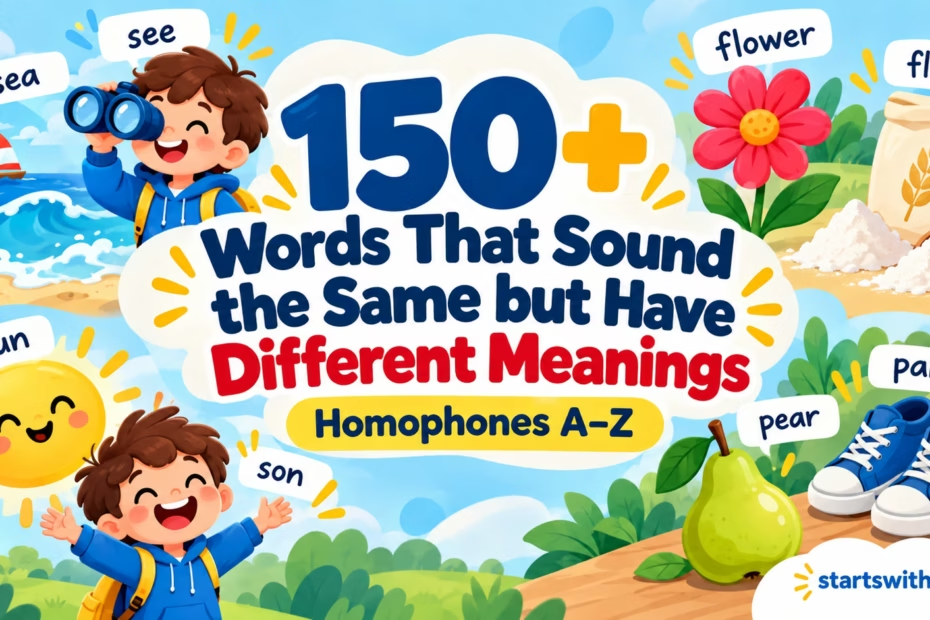
Words that sound the same but have different meanings are called homophones. Sea/see, flour/flower, and right/write are clear examples. Some homophone pairs also share their spelling, and pronunciation differences among English accents mean that not every proposed pair sounds identical to every speaker.
Key facts
- Homophones share pronunciation in a particular variety of English.
- Different spellings can represent the same spoken sound.
- Meaning and grammar determine which word belongs in a sentence.
- Homographs share spelling and may have different pronunciations.
Homophones A–D
Ail—trouble; ale—beer. Air—gaseous mixture; heir—person entitled to inherit. Aisle—passage; isle—island. All—entire amount; awl—pointed tool. Allowed—permitted; aloud—audibly. Altar—religious structure; alter—change. Ate—past of eat; eight—number 8. Bald—without hair; bawled—cried loudly. Ball—round object; bawl—cry loudly. Bare—uncovered; bear—animal or carry. Be—verb; bee—insect. Beach—shore; beech—tree. Beat—strike; beet—root vegetable. Blue—color; blew—past of blow. Board—flat material; bored—uninterested. Brake—slowing device; break—damage. Buy—purchase; by—near or through an agent; bye—farewell. Cell—unit; sell—exchange for payment. Cent—monetary unit; scent—smell; sent—past of send. Cereal—grain-based food; serial—in sequence. Chord—musical note combination; cord—rope. Cite—refer to a source; sight—vision; site—place. Coarse—rough; course—route or class. Dear—beloved; deer—animal. Dew—surface moisture; due—expected. Die—cease living; dye—change color.
Homophones E–H
Eye—organ of sight; I—pronoun. Fair—just; fare—travel charge. Feat—achievement; feet—plural of foot. Flea—insect; flee—escape. Flew—past of fly; flu—illness; flue—chimney passage. Flour—powdered ingredient; flower—plant structure. For—preposition; four—number 4; fore—in front. Forth—forward; fourth—fourth in sequence. Genes—heredity units; jeans—denim trousers. Grate—shred; great—excellent. Hair—body growth; hare—rabbit-like animal. Hall—large room; haul—transport by pulling. Heal—become healthy; heel—back of foot. Hear—perceive sound; here—this place. Heard—past of hear; herd—animal group. Hi—greeting; high—elevated. Hole—opening; whole—complete. Hour—60 minutes; our—belonging to us. Hymn—religious song; him—pronoun.
Homophones I–M
Idle—inactive; idol—admired figure. In—preposition; inn—lodging. Its—possessive; it’s—it is or it has. Knew—past of know; new—recent. Knight—historic warrior or title; night—dark period. Knot—tangle; not—negation. Know—understand; no—negative. Leek—vegetable; leak—unintended escape. Lessen—reduce; lesson—instruction. Links—connections; lynx—wild cat. Loan—something lent; lone—solitary. Made—past of make; maid—domestic worker. Mail—letters; male—sex category. Main—principal; mane—animal hair. Maize—corn; maze—network of paths. Meat—animal flesh as food; meet—come together. Medal—award; meddle—interfere. Might—possibility or power; mite—small arachnid. Miner—person who extracts minerals; minor—lesser or legally underage. Morning—early day; mourning—expression of grief (accent-dependent homophones).
Homophones N–R
None—not any; nun—religious-community member. Nose—organ of smell; knows—understands. One—number 1; won—past of win. Pair—two items; pear—fruit; pare—trim. Pain—unpleasant sensation; pane—sheet of glass. Pale—light in color; pail—bucket. Passed—past of pass; past—earlier time. Peace—absence of conflict; piece—portion. Peak—summit; peek—look briefly; pique—stimulate interest or resentment. Plain—simple or broad flat land; plane—aircraft. Principal—main or school leader; principle—fundamental rule. Profit—financial gain; prophet—religious messenger. Rain—precipitation; reign—period of rule; rein—strap controlling an animal. Raise—lift; rays—beams of light; raze—demolish. Read—interpret written words; reed—tall grass or musical-instrument part. Right—correct; rite—ceremony; write—form written words; wright—maker or builder. Road—route; rode—past of ride. Role—function; roll—rotate or bread roll. Root—plant structure; route—path (accent-dependent homophones).
Homophones S–Z
Sail—boat fabric or travel; sale—act of selling. Scene—part of an event; seen—past participle of see. Sea—saltwater body; see—perceive visually. Seam—joined line; seem—appear. Sew—stitch; so—adverb or conjunction; sow—scatter seeds. Sole—bottom of foot or only; soul—spiritual essence. Some—unspecified amount; sum—total. Son—male child; sun—our star. Stair—step; stare—look fixedly. Stake—post or something risked; steak—meat cut. Stationary—not moving; stationery—writing materials. Steel—metal alloy; steal—take without permission. Tail—animal appendage; tale—story. Tea—drink; tee—golf-ball support. Their—possessive; there—place; they’re—they are. Threw—past of throw; through—passing from one side to another. Thyme—herb; time—duration. To—preposition; too—also; two—number 2. Toe—foot digit; tow—pull. Vain—excessively proud; vane—directional device; vein—blood vessel. Wait—remain until something happens; weight—heaviness. Waist—part of body; waste—discarded material or use carelessly. Weak—lacking strength; week—seven days. Weather—atmospheric conditions; whether—introduces uncertainty. Which—choice; witch—person associated with magical practice. Wood—tree material; would—modal verb. Yew—tree; you—pronoun; ewe—female sheep. Your—possessive; you’re—you are.
Homophones versus homographs
Sea and see are homophones with different spellings. Lead (metal) and lead (guide) are homographs with different pronunciations. Bat (animal) and bat (sporting equipment) share both spelling and pronunciation but differ in meaning. Dictionary definitions of homonym can vary, so describe the exact spelling and sound relationship when teaching.
Practice activities
Choose correctly: “I can (sea/see) the mountain”; “(Their/There/They’re) playing”; “Please (write/right) your name.” Draw one picture for each meaning in sun/son. Write a complete sentence using both words from a pair. Build a personal notebook with spelling, meaning, and context.
Frequently asked questions
Can three words be homophones?
Yes. Their/there/they’re and buy/by/bye contain three words that share pronunciation.
Are all pairs homophones in all English accents?
No. Pronunciation differences mean root/route and morning/mourning, for example, may be different for some speakers.
Why does spelling practice matter for homophones?
Sound alone may not distinguish them; context and grammatical role determine the intended written form.
Conclusion
Words that sound the same but have different meanings are easier to master when students link each spelling to a distinct definition and practice that meaning in complete sentences.