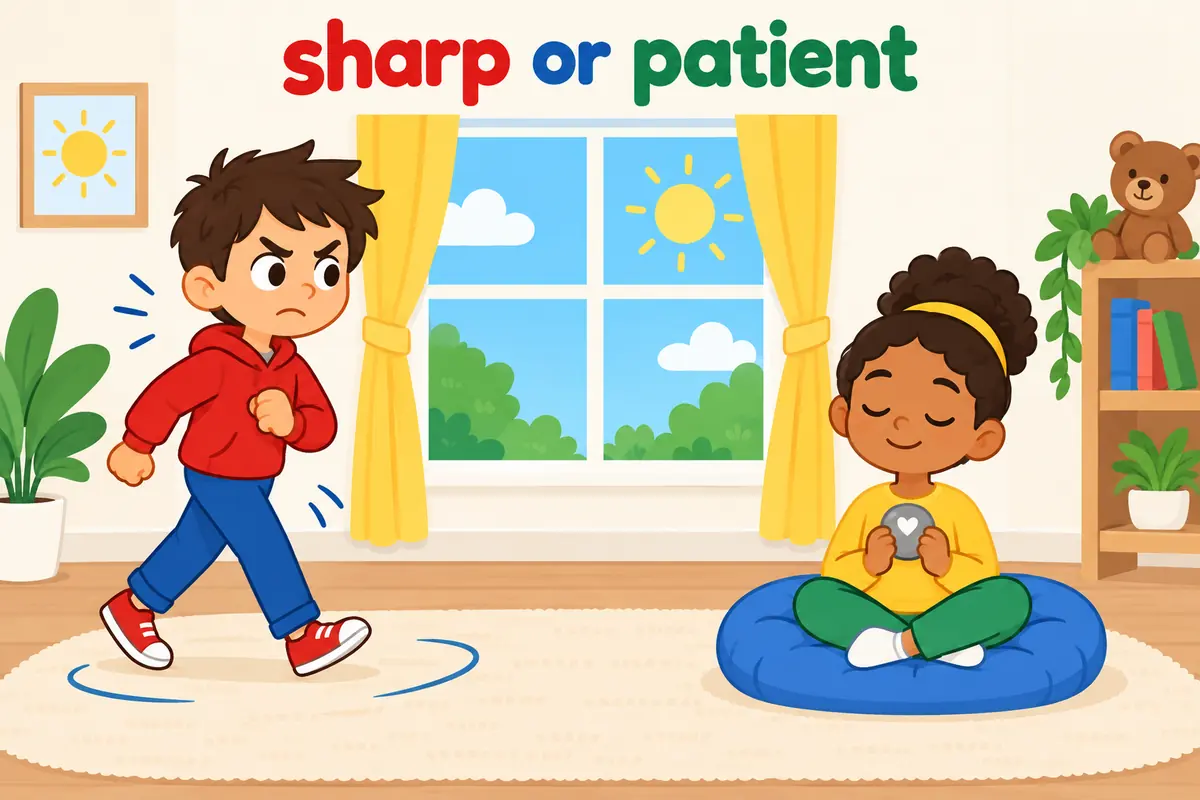
Yearning vs longing is a choice between an intense, restless desire and a quieter, steadier one, so use yearning for a sharp ache that will not settle and longing for a deep, patient wish that lingers. A sailor yearns for home; a grandmother longs for the summers of her childhood. Both are literary words for something absent.
Yearning vs longing at a glance
- Yearning is a noun and an adjective for an intense, often restless desire.
- Longing is a noun and an adjective for a deep, sustained and often sad desire.
- Yearning suggests a sharper ache; longing suggests a calmer, longer sadness.
- Both can follow a possessive, as in her yearning or his longing.
- The commonest error is treating yearning as a verb; the verb is yearn.
Yearning vs longing: the quick comparison
The two words are close enough to be swapped in many sentences, so the distinction is one of intensity and texture rather than of meaning. The table weighs the criteria that separate them in careful writing.
| Criterion | yearning | longing |
|---|---|---|
| Intensity | Sharp and urgent | Deep but gentler |
| Duration | Comes in waves or pangs | Persists quietly for years |
| Typical trigger | A sudden reminder of what is missing | Distance, time or loss |
| Feeling in the body | A restless ache | A heavy, tender sadness |
| Register | Poetic and emotional | Literary but slightly more common |
| Common frame | a yearning for home | a longing to return |
| Memory hook | Yearning pulls at you | Longing settles in you |
What does yearning mean?
Yearning is a noun meaning an intense and often restless desire for something or someone absent. The Cambridge Dictionary entry for yearning defines it as a strong feeling of wanting something, and the word keeps that edge of urgency. As an adjective it describes a look or a tone, as in a yearning glance.
| Sense | Plain meaning | Example sentence |
|---|---|---|
| A sharp desire | An urgent wish for something missing | Her yearning for the coast grew stronger each winter. |
| A restless ache | A feeling that will not settle or be satisfied | He could not quiet the yearning that kept him awake. |
| As an adjective | Showing that desire openly | She gave the closed door one yearning look. |
What does longing mean?
Longing is a noun meaning a strong, persistent desire, usually for something distant, lost or hard to reach. The Cambridge Dictionary entry for longing describes it as a feeling of wanting something or someone very much, and the tone is gentler than yearning. As an adjective it describes a wistful look, as in a longing gaze.
| Sense | Plain meaning | Example sentence |
|---|---|---|
| A deep wish | A strong, steady desire for something absent | His longing for the old house never faded. |
| An ache of absence | Sadness mixed with desire over time | A quiet longing filled the empty kitchen. |
| As an adjective | Showing a wistful, tender desire | He gave the photograph a longing look. |
One honest limitation applies to both. Neither word is neutral. Calling an ordinary preference a yearning exaggerates it, because the word implies a desire strong enough to hurt. If you simply want something, use want, wish or hope, and keep yearning and longing for emotion that the reader can feel.
How do you use yearning and longing in a sentence?
Both words work as nouns, adjectives and gerunds, which lets them slot into the same frames. The patterns below keep the two side by side so the parallel stays visible.
| Pattern | Example | What it signals |
|---|---|---|
| a yearning / a longing + for | She felt a yearning for the old town. | Names the object of desire. |
| a longing / a yearning + to + verb | They shared a longing to travel again. | Points to an action that is wished for. |
| yearning / longing as adjective | He gave her a longing look across the platform. | Describes a face or tone full of desire. |
| yearn / long as verbs | They yearn for news and long for the spring. | Shows the verbs behind both nouns. |
| possessive + yearning / longing | Her longing was plain to everyone at the table. | Turns the feeling into a named thing. |
Yearning and longing in a sentence: examples across contexts
The two words share the same subject matter, so the register and the intensity decide which one the sentence needs. Each row below fixes the context and explains why the choice works.
| Context | Example sentence | Why this works |
|---|---|---|
| Classroom | The poem opens with a child’s yearning for the sea. | Yearning suits the sharp, restless mood of a poem. |
| Workplace email | There is a real longing here for a quieter schedule. | Longing fits a steady, shared wish. |
| News report | Villagers spoke of a longing to return home. | Longing reads as sincere rather than overwrought. |
| Literary novel | A yearning ache followed her through every city. | The adjective intensifies the noun. |
| Memoir | He wrote about his longing for the smell of rain on dry earth. | Longing carries nostalgia without urgency. |
| Film criticism | The camera holds on one yearning face for a full minute. | Yearning describes the visible emotion on screen. |
| Song lyrics | I have a longing that will not let me sleep. | Longing sustains a mood across a whole song. |
| Conversation | You could hear the yearning in her voice. | Yearning names a sudden, audible intensity. |
| Travel writing | Every traveller knows the longing for a familiar street. | Longing generalises a common, quiet feeling. |
| Academic writing | The study links exile to a chronic longing for place. | Longing suits a sustained condition. |
| Letter | My yearning to see you has not eased. | Yearning fits a private, urgent emotion. |
| Sports profile | Retirement left a quiet longing for the roar of the crowd. | Longing works for wistful, backward-looking wishes. |
Which should you use?
The choice comes down to a single question: how much urgency does the feeling carry? Five situations below map the decision to a firm word.
| Situation | Choose | Example |
|---|---|---|
| A sudden, sharp ache for someone far away | yearning | A yearning for home kept him awake. |
| A steady, lifelong wish for the past | longing | A longing for childhood summers stayed with her. |
| A look fixed on something out of reach | yearning | He gave the letter a yearning look. |
| A patient wish held quietly for years | longing | Her longing to teach never faded. |
| A deep sadness mixed with hope | longing | A soft longing filled the empty room. |
Where the desire is overwhelming and restless, yearning carries the stronger charge. Where it is deep, patient and touched with sadness, longing is the more accurate word. Both are stronger than a plain desire, which can sound neutral or even clinical.
Word forms and grammar of yearning and longing
Each word began as the -ing form of a verb, and each now works independently as a noun and an adjective. The table also records the forms learners build by mistake.
| Form | Part of speech | Example |
|---|---|---|
| yearn | verb, base form | They yearn for the mountains in summer. |
| yearns / yearned | verb, present and past | She yearned for news all winter. |
| yearning | noun, adjective or gerund | A yearning silence filled the hall. |
| long | verb, base form | I long to see the coast again. |
| longs / longed | verb, present and past | He longed for a quieter life. |
| longing | noun, adjective or gerund | She gave the map a longing glance. |
| longingly | adverb | He looked longingly at the closed gate. |
| yearning (verb) | non-standard, avoid | Use yearn for the verb and yearning for the noun. |
The adverb longingly belongs only to long, because there is no standard adverb from yearn. A related phrase, pining for someone, adds the idea of wasting away with desire, and it is even stronger than yearning. Longing for childhood is close to nostalgia, though nostalgia looks back with fondness.
Common mistakes with yearning and longing
- Incorrect:
I am yearning to see you.Correct: I yearn to see you, or I am yearning to see you as a participle. Rule: Yearning is not a finite verb; the verb is yearn. - Incorrect:
He has a longing of his old school.Correct: He has a longing for his old school. Rule: The noun takes for, not of, before its object. - Incorrect:
She spoke of her yearing for the sea.Correct: She spoke of her yearning for the sea. Rule: Yearning keeps the e after the n, unlike words such as learning. - Incorrect:
I longing for the holidays.Correct: I long for the holidays. Rule: Longing is a noun or participle, not a present-tense verb. - Incorrect:
He felt a mild yearning for a cup of tea.Correct: He felt like a cup of tea. Rule: Yearning is intense, so it clashes with mild. - Incorrect:
She has a longing to the past.Correct: She has a longing for the past. Rule: Use for before a noun and to before a verb, as in a longing to return.
Practice using yearning and longing
- Fill in the blank: After months at sea, he felt a sharp ______ for dry land.
- Choose the better word: Her (yearning / longing) for the old village never faded over fifty years.
- Correct the error: She is yearning to visit her sister.
- Build a sentence: use a longing to about returning to a childhood home.
- Spot the register: which suits a quiet memoir – a yearning ache, or a mild yearning?
- Fix the preposition: They have a longing of peace.
- Choose the word: The crowd gave the departing champion one (longing / longingly) look.
Answers
- yearning — a sharp, sudden desire calls for the stronger word.
- longing — the wish is deep and patient, which is the quieter word.
- She yearns to visit her sister — use the finite verb yearn, not the participle.
- Model answer: She felt a longing to walk the lanes of her childhood again.
- A yearning ache — the memoir keeps the intense form and drops the contradictory mild.
- They have a longing for peace — the noun takes for, not of.
- longing — an adjective stands before the noun look; longingly is the adverb.
The bottom line
The choice of yearning vs longing turns on intensity rather than meaning: use yearning for a sharp, restless ache that comes in waves, and longing for a deep, patient wish that settles and lasts. The two facts that decide most sentences are that both words are nouns and adjectives while the verbs are yearn and long, and that neither suits an ordinary preference. Where you simply want something, want, wish or hope is the honest word.
Frequently asked questions about yearning vs longing
Which word is stronger, yearning or longing?
Yearning is usually the stronger and more restless word, because it suggests an ache that comes in sudden waves. Longing is deep but gentler, and it tends to describe a steady sadness held over time. A writer who wants urgency chooses yearning, and a writer who wants quiet persistence chooses longing.
Are yearning and longing verbs?
No. The verbs are yearn and long, as in they yearn for home and they long for spring. Yearning and longing are the -ing forms, and both work as nouns, adjectives or gerunds. Saying I am yearning is fine as a participle, but I yearning is not a sentence.
What preposition follows yearning and longing?
Both nouns take for before a thing or a person, as in a yearning for home and a longing for peace. Before an action they take to plus a verb, as in a longing to return. The preposition rarely changes, so of and to before a noun are the commonest slips.
Can longing ever mean something happy?
It can be bittersweet rather than purely sad, because longing often mixes affection with loss. A longing look at a wedding photograph can hold tenderness as much as grief. Still, the word always implies that something is absent, so it is never a plain word for present contentment.