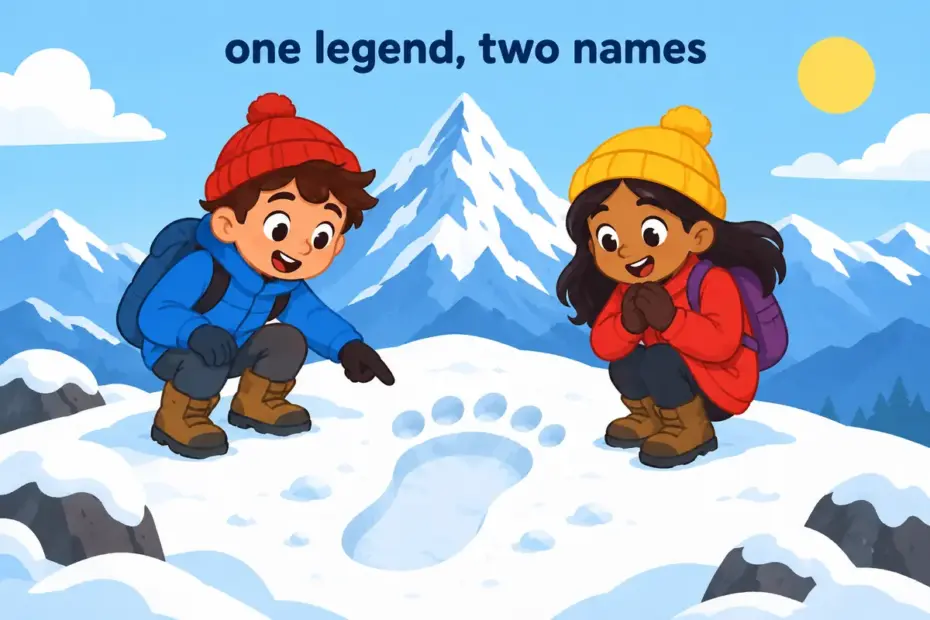
Yeti vs abominable snowman is mostly a question of register: use yeti for clear, current writing and keep abominable snowman for historical colour. The two are names for the same legendary creature said to live in the Himalayas, and neither is a confirmed animal. Choose yeti by default and explain the older nickname once.
Yeti vs abominable snowman at a glance
- Yeti and abominable snowman are two names for the same legendary creature of the Himalayas.
- Yeti is the shorter, more current name; abominable snowman is an older English nickname.
- Both are common nouns, so they are written in lower case unless they begin a sentence.
- Neither name is a confirmed animal; all reports of the creature remain anecdotal.
- The commonest error is treating the yeti as Bigfoot, which belongs to a different continent.
Yeti vs abominable snowman: the main differences
The two names describe one legend, so the choice rests on tone, length and period rather than meaning. The table below sets out the criteria that decide a sentence.
| Criterion | yeti | abominable snowman |
|---|---|---|
| Origin of the name | Borrowed from the Himalayan region | An English nickname |
| Literal flavour | The local name | A snowman that is abominable |
| Register | Neutral and current | Informal and dated |
| Length | One short word | A three-word phrase |
| Connotation | Respectful of local tradition | Sensational and slightly comic |
| Typical use | News, travel and science writing | Older books, headlines and casual talk |
| Best for | Clear, modern writing | Historical colour and explanation |
| Formality | Neutral | Marked, even playful |
What do yeti and abominable snowman mean?
Yeti and abominable snowman both name a legendary creature said to live in the snowy Himalayas. The Cambridge entry for yeti records the name as the Himalayan term for the creature, while the entry for abominable snowman treats it as another name for the same being. The older phrase is really a translation and a nickname, which is why it sounds more dramatic than the plain local word.
| Name | Meaning | Example |
|---|---|---|
| yeti | A legendary creature said to live in the Himalayas | Stories of the yeti have circulated for generations. |
| abominable snowman | The older English nickname for the same creature | Early expeditions were blamed on the abominable snowman. |
One limitation is worth stating plainly. Neither name can be used as though the creature were proven, so a sentence such as the yeti lives above the tree line states a belief, not a fact. In serious science writing these words belong to folklore and reported belief, and the neutral phrase reported sightings is safer than a claim.
How do you use yeti and abominable snowman in a sentence?
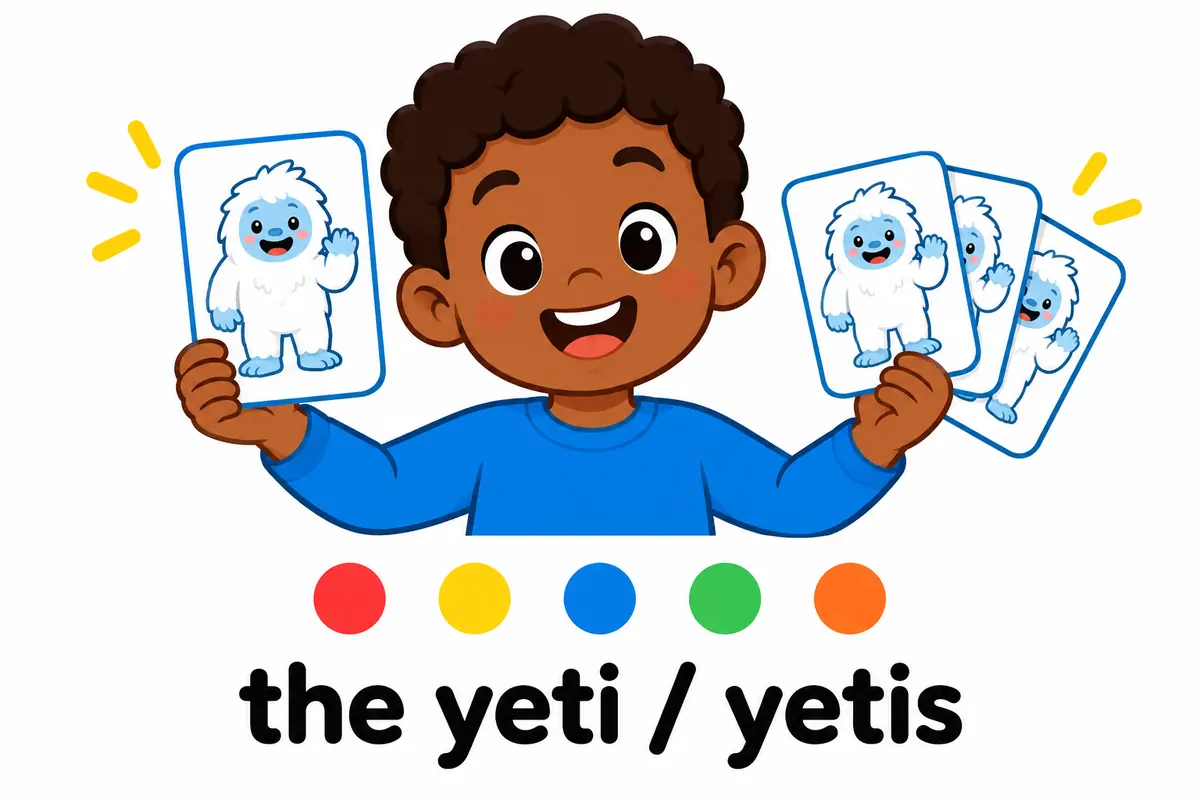
Both names are common nouns, so neither takes a capital letter in the middle of a sentence. The yeti is normally treated as a single legendary figure, while yetis can describe several reported creatures. Five patterns cover almost every real use.
| Pattern | Example | What it signals |
|---|---|---|
| the yeti + singular verb | The yeti is said to live above the snow line. | Treats the creature as one stock figure. |
| yetis + plural verb | Villagers told stories about yetis. | Plural, as if reporting a species. |
| the abominable snowman + singular verb | The abominable snowman has never been caught. | The full phrase working as one noun. |
| the + yeti / the abominable snowman | The yeti appears in local folklore. | The definite article marks the well-known figure. |
| yeti + noun | They measured a yeti footprint in the snow. | Attributive use, always singular. |
The adjective hiding inside the longer name is worth knowing, because it explains the tone. The same root appears in abomination, which names something hateful, and that is why the nickname sounds harsher than yeti.
Yeti and abominable snowman in a sentence: examples across contexts
Context decides which name fits, because one word is current and the other carries period colour. Each example below shows the setting that makes the choice natural.
| Context | Example sentence | Why this works |
|---|---|---|
| News feature | Expeditions have searched for the yeti for a century. | The current, neutral name suits reporting. |
| Travel blog | Locals told us the yeti keeps to the high ridges. | First-person travel writing with a respectful tone. |
| Museum label | The abominable snowman appeared in early expedition accounts. | The historical nickname fits a dated source. |
| Children’s book | The abominable snowman left giant footprints in the snow. | The longer name sounds playful and story-like. |
| Science communication | DNA studies of claimed yeti samples found common animals. | Yeti is the clear term in a factual sentence. |
| Documentary script | Cameras followed a team hunting the yeti in the mountains. | The short name keeps narration brisk. |
| Headline | Yeti fever grips a mountain village. | One word fits tight space and stays neutral. |
| Encyclopaedia entry | The abominable snowman is an English nickname for the yeti. | Uses both names to define and cross-reference. |
| Casual conversation | They joked about the abominable snowman at the ski lodge. | The dated phrase carries a comic edge in speech. |
| Tour guide talk | Some climbers still claim to have seen the yeti at dusk. | Names the belief without endorsing it. |
| School project | Our poster compared the yeti with the abominable snowman. | Shows young writers linking the two names. |
Which should you use?
For most sentences the answer is yeti, because it is short, current and neutral. The nickname earns its place only when the older wording is the point. The table turns that rule into a recommendation for five situations.
| Situation | Recommendation | Why |
|---|---|---|
| News or travel writing | yeti | Short, current and free of comic overtones. |
| Explaining the nickname | abominable snowman | Names the older phrase so readers connect it. |
| Formal report on folklore | yeti, with the nickname in brackets | Clear first, historical second. |
| Children’s story | whichever you choose, keep it consistent | Switching names confuses young readers. |
| Headline with tight space | yeti | One word fits where three would not. |
A useful comparison for readers is the North American legend of Bigfoot, which names a different creature in a different place, so the two should never be treated as the same story. When in doubt, introduce the shorter name first and add the nickname in brackets, which keeps the sentence clear for readers who know only one of the two words.
Word forms and grammar of yeti and abominable snowman
Yeti pluralises like an ordinary noun, and the longer name changes only its final word. Both stay in lower case in running text, which is the point learners miss most often.
| Form | Type | Example |
|---|---|---|
| yeti | noun, singular | The yeti is a Himalayan legend. |
| yetis | noun, plural | Reports described several yetis. |
| abominable snowman | noun phrase, singular | The abominable snowman entered English newspapers. |
| abominable snowmen | noun phrase, plural | Posters showed two abominable snowmen. |
| abominable | adjective | The word abominable means hateful or dreadful. |
Common mistakes with yeti and abominable snowman
- Incorrect:
The yeti are said to roam the peaks.Correct: The yeti is said to roam the peaks. Rule: The yeti is treated as a single figure and takes a singular verb. - Incorrect:
The abominable snowman is the same as Bigfoot.Correct: The abominable snowman belongs to Himalayan folklore, while Bigfoot is a North American legend. Rule: The two names belong to different regions and stories. - Incorrect:
Scientists proved that the yeti exists.Correct: No confirmed evidence has established that the yeti exists. Rule: These are legends, so do not state them as proven facts. - Incorrect:
We read about the Abominable Snowman in a serious report.Correct: We read about the abominable snowman in a serious report. Rule: It is a common noun and stays in lower case. - Incorrect:
Yetis footprints dotted the slope.Correct: Yeti footprints dotted the slope. Rule: An attributive noun stays singular before another noun.
Practice using yeti and abominable snowman
Work through the seven items, then read the reasoning rather than only the answer.
- Fill the gap: The ______ is a legendary creature of the Himalayas.
- Choose the better word: An old travel book blamed the missing climbers on the (yeti / abominable snowman).
- Correct the error: The yeti have never been photographed.
- Build a sentence: use the abominable snowman in a sentence about an old newspaper.
- Spot the register: which belongs in a science article — DNA tests found no yeti evidence, or the Abominable Snowman totally fooled everyone?
- Rewrite for a modern audience: The abominable snowman is popular in the mountains. Replace the older name.
- Correct the error: Tourists hoped to spot Bigfoot in the Himalayas.
Answers
- yeti — the short, current name suits an unmarked definition.
- abominable snowman — the dated source and the playful tone both call for the older phrase.
- The yeti has never been photographed — the figure takes a singular verb.
- Model answer: The abominable snowman filled the pages of an old newspaper that week.
- DNA tests found no yeti evidence — a science article avoids the slang intensifier and keeps lower case.
- The yeti is popular in the mountains — the current name reads better for a wide audience.
- Tourists hoped to spot the yeti in the Himalayas — Bigfoot belongs to North America.
The bottom line
Yeti vs abominable snowman is a choice of tone, since both names point to the same Himalayan legend. Use yeti for clear, current writing and abominable snowman only for historical colour or when explaining the nickname. The two details that settle most sentences are these: neither name proves the creature exists, and neither takes a capital letter in ordinary text.
Frequently asked questions about yeti and abominable snowman
Is a yeti the same as Bigfoot?
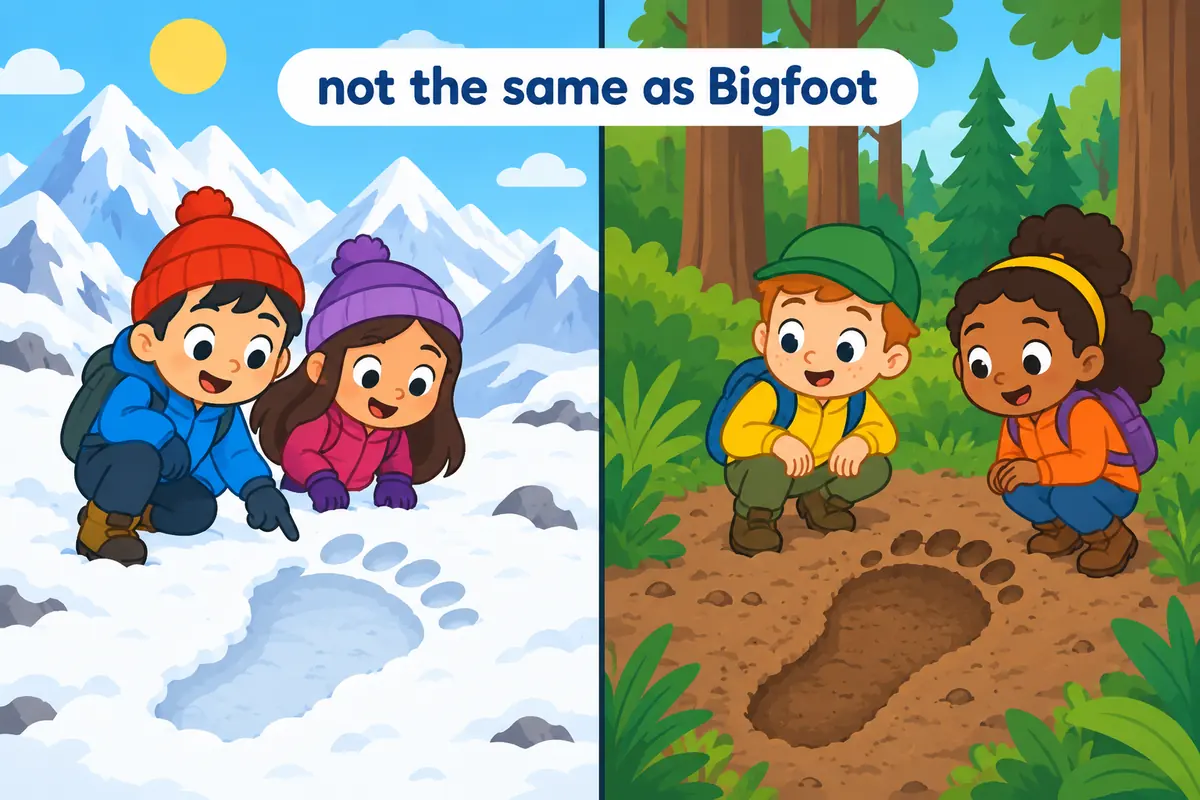
No. The yeti belongs to Himalayan folklore, while Bigfoot belongs to North American legend, and the two stories come from different places and traditions. They share the idea of a large, elusive humanlike creature, which is why they are often mentioned together, but they are separate legends with separate names.
Why is it called the abominable snowman?
The phrase is an English nickname rather than a translation of the creature’s local name. It grew popular because the word abominable, meaning hateful or dreadful, made the story sound dramatic, and because a snowman is easy to picture. That dramatic flavour is exactly why modern writers prefer yeti.
Has a yeti ever been confirmed to exist?
No confirmed evidence has established the yeti as a real animal. Tested samples said to come from the creature have turned out to be ordinary animals such as bears. The name therefore belongs to folklore and reported sightings, and a careful sentence says that people believe in the yeti rather than that the yeti exists.
Is yeti capitalized?
Yeti is a common noun, so it stays in lower case in the middle of a sentence, as in stories about the yeti. The same is true of abominable snowman. Only the first letter of a sentence, or a title, takes a capital, so writing the Yeti in ordinary prose looks old-fashioned and inconsistent.