Skip to content

Understanding the Difference between “idle” and “idol”: Mastering Appropriate Usage

    Hey there! Have you ever found yourself confused between the words “idle” and “idol”? Don’t worry, you’re not alone. In this text, I’ll guide you through the proper usage of these two words and help you avoid any embarrassing mix-ups.
    When it comes to the word “idle,” it refers to something that is not active or in use. We often use it to describe a person who is not doing anything or a machine th
    Understanding the Difference Between Main and Mane: Tips for Appropriate Usage

      Key Takeaways Understanding the Difference One commonly confused pair of words in English is “main” and “mane.” Both words sound similar but have distinct meanings. Let’s explore the difference between them. Definition of “Main” The word “main” is an adjective that means primary or principal. It refers to something that is central or most important… Read More »Understanding the Difference Between Main and Mane: Tips for Appropriate Usage

      Bail vs Bale: Understanding and Properly Using the Difference

        Have you ever found yourself confused between “bail” and “bale”? Don’t worry, you’re not alone. These two words may sound similar, but they have completely different meanings. As an expert in language and grammar, I’ll guide you through the proper usage of “bail” and “bale”, helping you avoid embarrassing mistakes and improve your writing skills.
        In this text, I’ll provide a clear distinction betw

        Mastering the Differences: Properly Using “Ceil” vs “Seal” vs “Seel”

          Key Takeaways Understanding ceil, floor, and round As a blogger with years of experience, I understand the importance of using words accurately and appropriately. In this section, we’ll explore three commonly confused words: ceil, floor, and round. By understanding their definitions and differences, students can improve their English usage. Let’s immerse! Definition of Ceil, Floor,… Read More »Mastering the Differences: Properly Using “Ceil” vs “Seal” vs “Seel”

          Master the Art of Proper Usage: Liar vs Lier vs Lyre – Avoid Confusion and Communicate Clearly

            Ever wondered about the difference between “liar,” “lier,” and “lyre?” As a language enthusiast, I’ve often come across these three words that sound so similar but have distinct meanings. In this text, I’ll be diving deep into the correct usage of these words, helping you avoid embarrassing mistakes and enhance your communication skills. So, whether you’re a writer, a student, or simply someone wh

            Mastering the Difference: Appropriate Usage of “Entrance” vs “Entrants”

              As a seasoned writer, I’ve come across a common confusion that many people have: the difference between “entrance” and “entrants.” In this text, I’ll jump into the nuances of these two words and provide you with a clear understanding of how to use them appropriately. Whether you’re a student, a professional, or simply someone who wants to improve their language skills, this guide will help you nav

              Using “ad” vs “add” Appropriately: Strategies for Crafting Engaging Campaigns

                Have you ever found yourself confused between “ad” and “add”? Don’t worry, you’re not alone. As a writer and language enthusiast, I’ve encountered this dilemma countless times. In this text, I’ll shed light on the key differences between these two words and help you use them appropriately in your writing.
                When it comes to “ad” and “add,” the distinction lies in their meanings and usage. “Ad” is sh

                Understanding the Difference: Height vs Hight and How to Use Them Appropriately

                  Have you ever found yourself confused about when to use “height” and when to use “hight”? As an expert writer, I’ve encountered this common dilemma many times. In this text, I’ll provide you with a clear understanding of the appropriate usage of these two words. Understanding the difference between “height” and “hight” is crucial for effective communication, whether you’re writing an essay, an ema

                  Understanding the Difference Between Seam and Seem: How to Use Them Appropriately in Writing

                    Have you ever found yourself confused between the words “seam” and “seem”? Don’t worry, you’re not alone. In this text, I’ll be shedding light on the proper usage of these two words and how to avoid common mistakes.
                    Seam, spelled S-E-A-M, refers to the line where two pieces of fabric are sewn together. On the other hand, seem, spelled S-E-E-M, is a verb that indicates an appearance or impression.

                    Filets vs Fillets: Choosing and Using Appropriately in Your Culinary Adventures

                      As a culinary enthusiast, I’ve come across the ongoing debate between filets and fillets. With these two terms often used interchangeably, it’s crucial to understand their differences and how they should be used appropriately. In this text, I’ll investigate into the nuances of filets versus fillets, shedding light on their definitions, origins, and culinary applications. Whether you’re a home cook

                      The Art of PVSing vs Pouring: Knowing When to Use Each Method Appropriately

                        Are you tired of guessing whether to PV or pour? Well, worry no more! In this text, I’ll guide you through the art of pvsing vs pouring and help you understand when to use each method appropriately. Whether you’re a seasoned mixologist or just starting out, knowing the right technique can make all the difference in creating the perfect drink.
                        We’ll jump into the benefits and drawbacks of pvsing an

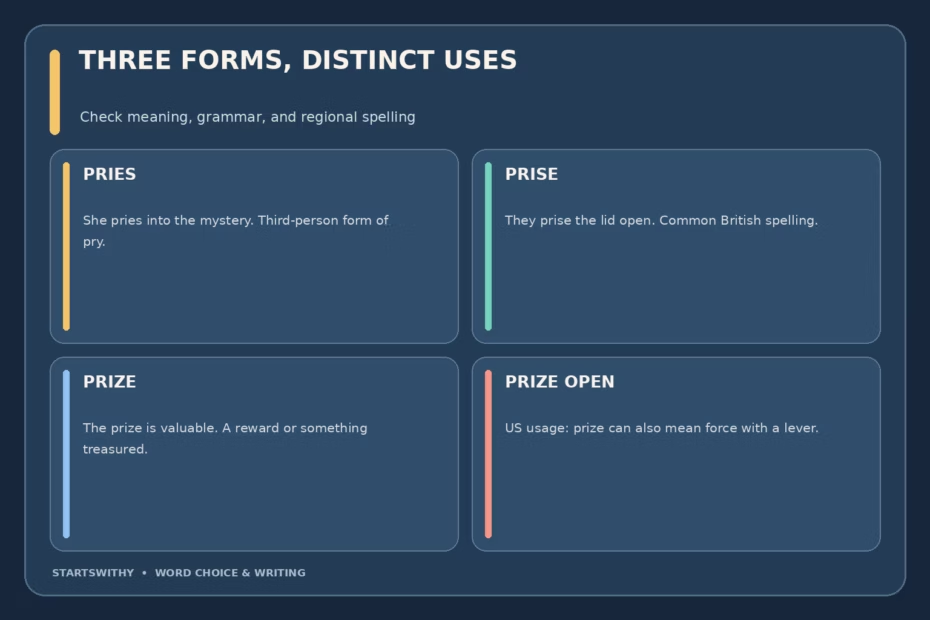
                        Comparison of pries, prise, and prize: pries means snoops or investigates; prise is a mainly British spelling for forcing something open; prize is a reward or something valued.

                        Pries vs Prise vs Prize: How to Use Them Appropriately in Writing

                          Have you ever found yourself confused about when to use “pries,” “prise,” or “prize”? Well, you’re not alone. In this text, I’ll guide you through the appropriate usage of these three words, so you can confidently navigate your way through the English language.
                          Firstly, let’s address “pries.” This word is the present tense of the verb “pry,” meaning to inquire or meddle. It’s commonly used when ta

                          Foul vs Fowl: Understanding and Using Appropriately in English Language

                            When it comes to the English language, there are often words that sound alike but have completely different meanings. One such pair that often causes confusion is “foul” and “fowl.” As an expert in language and communication, I have encountered countless instances where these words are used interchangeably, leading to misunderstandings and misinterpretations. In this text, I’ll investigate into th

                            Understanding the Difference: Prophecy vs Prophesy and How to Use Them Appropriately

                              Have you ever found yourself confused between the words “prophecy” and “prophesy”? I’ll admit, it can be a bit tricky to keep them straight. But fear not, because in this text, I’ll shed some light on the differences and help you use them appropriately.
                              Firstly, let’s clarify the distinction between “prophecy” and “prophesy.” “Prophecy” refers to a prediction or a statement about the future, often