Skip to content

Tare vs Tear: Mastering the Art of Appropriate Usage

    Have you ever found yourself confused between the words “tare” and “tear”? I know I have. These two words may sound similar, but they have completely different meanings and uses. In this text, I’ll guide you through the proper usage of “tare” and “tear” and help you avoid any embarrassing mix-ups. We’ll explore the definitions of both words, provide examples to illustrate their correct usage, and

    3D educational illustration showing WHINED, WIND, WINED, and WYND with a complaining character, wind, a coiled ribbon, an adult dinner host, and a Scottish lane.

    Whined vs. Wind vs. Wined vs. Wynd: Meaning and Usage

      Have you ever found yourself confused between words that sound similar but have different meanings? Well, I certainly have. In this text, I’ll be diving into the often mixed-up words: whined, wind, wined, and wynd. Understanding the appropriate usage of these words can make a significant difference in your writing and communication skills.
      We’ll start by unraveling the distinction between “whined”

      Understanding the Difference: Boarder vs Bvsder and How to Use Them Appropriately

        Are you confused about when to use “boarder” and “bvsder” in your writing? Well, I’m here to clear up the confusion and help you use these terms appropriately. As an expert writer, I’ve come across many instances where these words are misused or misunderstood. In this text, I’ll provide you with a comprehensive guide on when and how to use “boarder” and “bvsder” correctly. By the end of this artic

        Understanding the Difference: Proper Usage of Penitence vs Penitents

          Have you ever wondered about the difference between penitence and penitents? In this text, I’ll investigate into the nuances of these two terms and explore how they should be used appropriately. Understanding the distinction between penitence and penitents is crucial for effective communication and writing. So, let’s immerse and unravel the mysteries behind these words.
          Penitence, derived from the

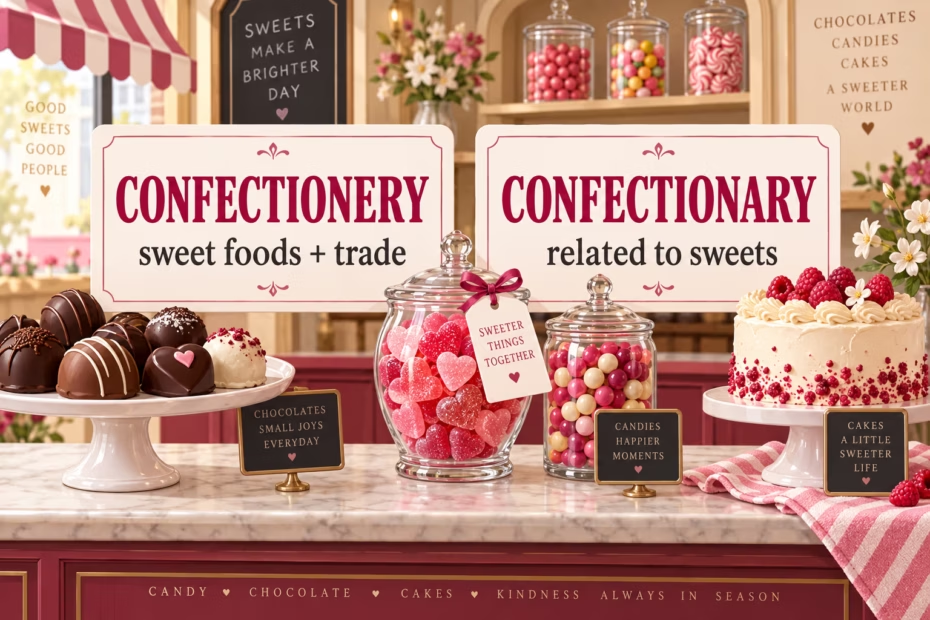
          Sweets and a cake sit beneath labels explaining confectionery as sweet foods and the trade, and confectionary as related to sweets.

          Confectionary vs. Confectionery: Meaning, Spelling & Examples

            Have you ever found yourself confused about the difference between “confectionary” and “confectionery”? As a confectionery expert, I’ll clear up the confusion for you. In this text, I’ll explain the proper usage of these two terms and provide examples to help you use them appropriately. Whether you’re a food enthusiast, a writer, or simply someone who wants to expand their vocabulary, understandin

            Understanding the Difference: Berth vs Birth and Correct Usage Guidelines

              Have you ever found yourself confused between the words “berth” and “birth”? Don’t worry, you’re not alone. These two words may sound similar, but they have completely different meanings. In this text, I’ll help you understand the correct usage of “berth” and “birth” and avoid any embarrassing mix-ups.
              First, let’s talk about “berth.” It refers to a designated space or place, especially on a ship

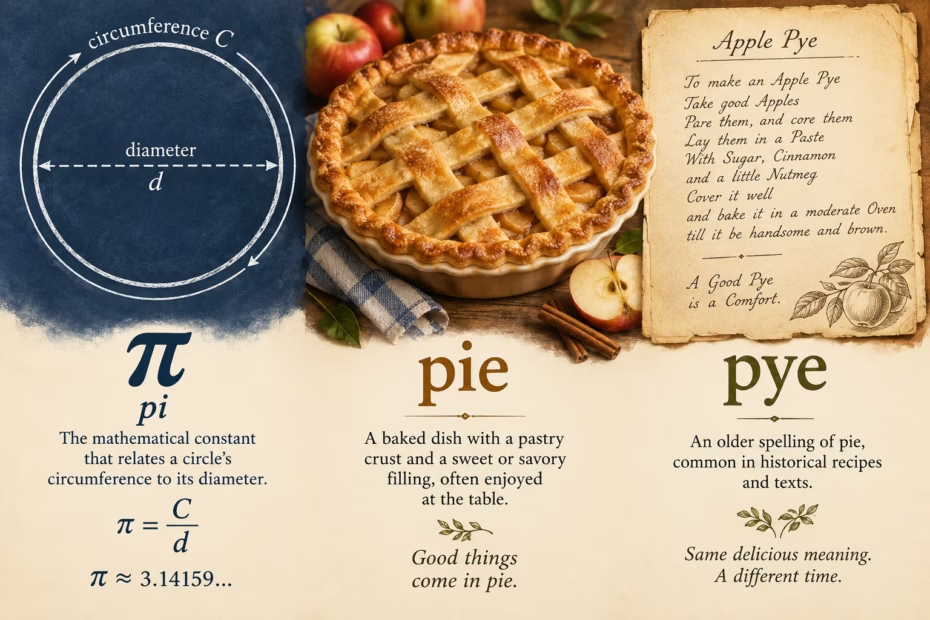
              Pi, pie, and pye compared through mathematics, pastry, and historical writing

              Pi vs. Pie vs. Pye: Meaning, Spelling & Examples

                Have you ever found yourself confused about when to use “pi,” “pie,” or “pye”? Well, fear not, because I’m here to shed some light on this delightful trio of words. In this text, I’ll guide you through the proper usage of “pi,” “pie,” and “pye,” so you can confidently wield them in your writing.
                First, let’s start with “pi.” Derived from the Greek letter π, “pi” is a mathematical constant represen

                Mastering the Usage of “Ho,” “Hoe,” and “Whoa” for Effective Communication

                  Whoa! Are you confused about when to use “ho,” “hoe,” or “whoa”? Don’t worry, I’ve got you covered. As an expert in language and communication, I’ll guide you through the proper usage of these words. In this text, we’ll explore the subtle differences between “ho,” “hoe,” and “whoa,” and how to use them appropriately in different contexts. Whether you’re a language enthusiast or simply want to avoi

                  Mastering the Art of Properly Using ‘Know’ vs ‘No’: Your Ultimate Guide

                    Have you ever found yourself confused between “know” and “no”? It’s a common dilemma, but fear not, because in this text, I’ll guide you on how to use these words appropriately. Knowing the difference between “know” and “no” is crucial for effective communication, both in writing and speaking. So, let’s immerse and unravel the mysteries of these two words!
                    In this text, I’ll explain the meanings a

                    Understanding the Difference: Mare vs Mayvs and How to Use Them Appropriately

                      Are you ever confused about when to use “mare” and “mayvs” in your writing? Well, you’re not alone. As a professional writer, I’ve encountered this dilemma countless times. In this text, I’ll provide you with a clear understanding of when to use each word appropriately. By the end of this piece, you’ll have the confidence to use “mare” and “mayvs” correctly in your writing, ensuring that your mess

                      Mastering the Difference: Using “Taught” and “Taut” Appropriately

                        Have you ever found yourself confused between the words “taught” and “taut”? You’re not alone. These two words may sound similar, but they have distinct meanings and uses. In this text, I’ll clarify the difference between “taught” and “taut” and provide you with some helpful tips on how to use them appropriately in your writing. Understanding the nuances of these words is essential for effective c

                        Understanding the Difference between Brake and Break: How to Use them Appropriately

                          Have you ever found yourself confused between “brake” and “break”? Don’t worry, you’re not alone. These two words may sound similar, but they have completely different meanings and uses. In this text, I’ll guide you through the proper usage of “brake” and “break” to help you avoid any embarrassing mistakes. Whether you’re a native English speaker or learning the language, understanding the differe

                          Avoiding Common Mistakes: Understanding and Using “stade,” “staid,” and “stayed” Appropriately

                            Key Takeaways Stade vs Staid vs Stayed: Using Appropriately When it comes to the English language, there are many words that can easily be confused with one another. This is especially true for words that sound similar or have similar spellings. Three such words that often cause confusion are “stade,” “staid,” and “stayed.” In this… Read More »Avoiding Common Mistakes: Understanding and Using “stade,” “staid,” and “stayed” Appropriately

                            Navigating the Difference Between “Stile” and “Style” to Enhance Communication Appropriately

                              Key Takeaways Understanding the Difference When it comes to writing, using the right words is crucial for conveying a clear and accurate message. But, some words in the English language can be easily confused, causing confusion and miscommunication. Two such words that often trip people up are “stile” and “style.” In this section, I’ll help… Read More »Navigating the Difference Between “Stile” and “Style” to Enhance Communication Appropriately

                              Mastering the Difference: Properly Utilizing “Lacks” vs. “Lax” for Effective Communication

                                Key Takeaways Understanding the Difference between “lacks” and “lax” As an expert blogger with years of experience in writing high-quality articles, it’s important to focus on enhancing the understanding and usage of commonly confused and misused words in English. In this section, I’ll walk you through the difference between “lacks” and “lax” to help you… Read More »Mastering the Difference: Properly Utilizing “Lacks” vs. “Lax” for Effective Communication