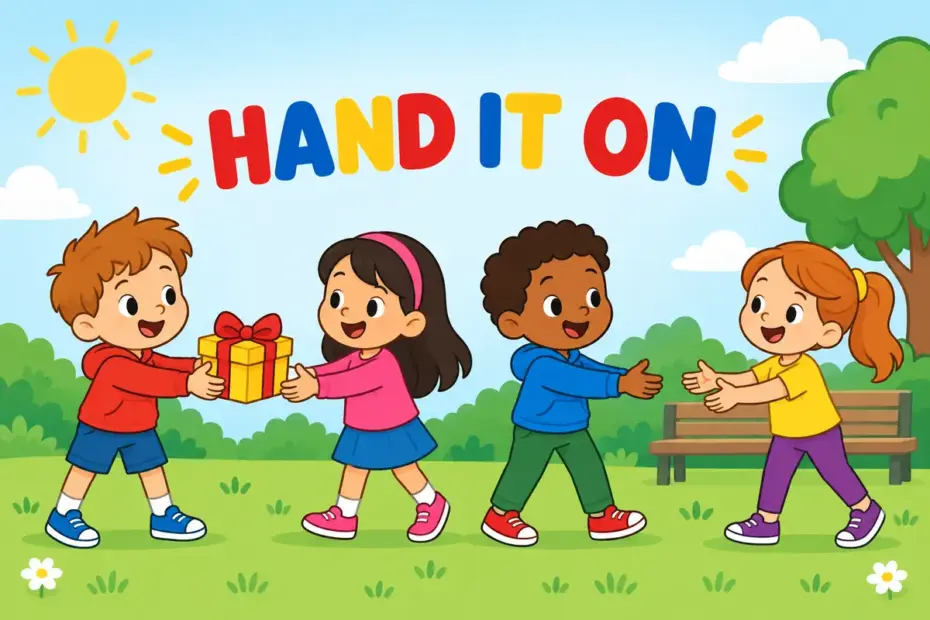
Pass on means to hand something to the next person, to politely refuse an offer, or, gently, to die. The phrasal verb pass on is separable when it means transmit, so you can pass a message on or pass on a message. Consider “Please pass on my thanks to the team.”
Pass on at a glance
- Pass on is a phrasal verb with three main senses: transmit, decline and die.
- It is separable in the transmit sense: pass the news on or pass on the news.
- With a pronoun object the particle must follow it: pass it on.
- Typical objects are a message, a gift, a cold, a chance, an offer and a cost.
- The register is neutral, so pass on suits speech and email alike.
- The commonest error is confusing pass on with pass away when the meaning is die.
What does pass on mean?
Pass on is a phrasal verb that carries three distinct senses, and only the surrounding words tell them apart. The Cambridge entry for pass on records the transmit sense, in which someone hands information or an object to the next person. The second sense is a polite refusal, and the third is a gentle way of saying that someone has died. Because the senses are unrelated, a sense table is the only safe way to keep them apart.
| Sense | Plain meaning | Example sentence |
|---|---|---|
| Transmit | Give something to the next person | Please pass on the message. |
| Decline | Politely refuse an offer | I will pass on the dessert. |
| Die | A gentle euphemism for death | Her grandfather passed on last spring. |
For a message, convey is a more formal alternative, and in email forward is the everyday verb for sending a file onward. For a refusal, decline is the formal choice, and for property left to heirs, bequeath is exact where pass on is vague. The word is never wrong in itself, but its three senses mean a bare pass on can puzzle a reader who lacks context.
How do you use pass on in a sentence?
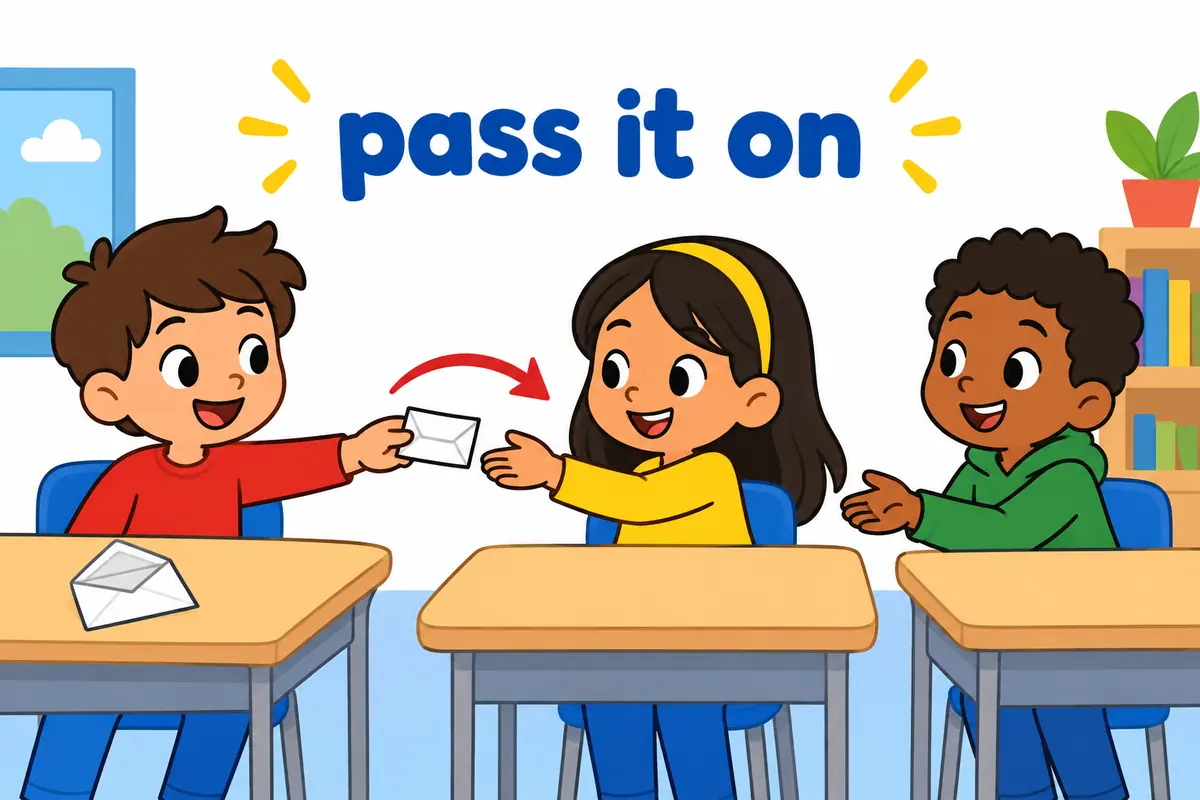
Pass on is separable in its transmit sense, which means the particle on may sit either after the verb or after the object: pass on the news or pass the news on. When the object is a pronoun, the particle must follow the pronoun, giving pass it on. In the transmit and decline senses the verb is transitive and needs an object, while in the die sense it is intransitive and stands alone. The table sets out the shapes you will meet.
| Pattern | Example | What it signals |
|---|---|---|
| pass on + object | Please pass on the message. | Transmit; the object follows on |
| pass + object + on | Please pass the message on. | Same meaning, particle after the object |
| pass + pronoun + on | Pass it on. | A pronoun must come before the particle |
| pass on + object (decline) | I will pass on the offer. | A polite refusal |
| pass on (no object) | Her grandfather passed on last spring. | A euphemism for death |
| pass on + object + to + person | Pass on the news to the team. | Names the recipient |
Two rules keep the verb clear. First, never place a pronoun after the particle, so pass on it is wrong and pass it on is right. Second, if a sentence could be read as either transmit or die, add a word that settles it, because the particle alone cannot carry that much meaning.
Pass on in a sentence: examples across contexts
Pass on appears in everyday talk, office email, family history and public health writing, and each setting leans on a different sense. The table gives ten registers with the reason each sentence works.
| Context | Example sentence | Why this works |
|---|---|---|
| Everyday speech | Pass it on when you have finished reading. | The pronoun sits before the particle, as required. |
| Workplace email | I will pass on your comments to the design team. | Transmit sense with the recipient named. |
| Family history | The recipe was passed on through four generations. | Passive shows an object handed down over time. |
| Dining conversation | Thanks, but I will pass on the coffee. | Decline sense, softened by a word of thanks. |
| Obituary | He passed on peacefully at home. | Die sense in its gentlest, most formal form. |
| Public health | Colds are easily passed on in crowded rooms. | Passive transmits a disease from person to person. |
| Business report | Firms pass on higher costs to customers. | Transmit sense applied to money and prices. |
| School notice | Please pass on this letter to your parents. | A direct instruction with a named recipient. |
| Sports commentary | She passed on the chance to shoot. | Decline sense in a fast, informal register. |
| Charity appeal | Your gift will be passed on to families in need. | Passive keeps the donor and the recipient in view. |
Pass on vs pass away
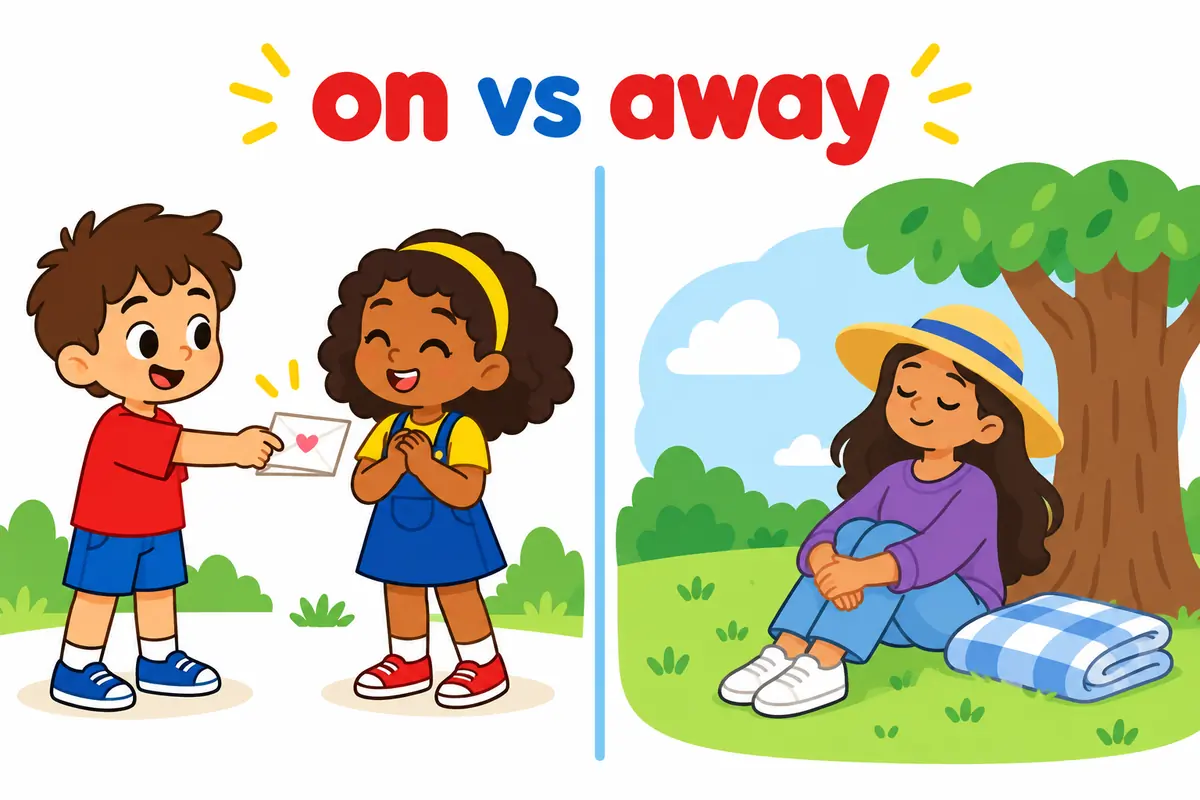
The expression readers most often mix with pass on is pass away, because both can describe death. The overlap is real but narrow, and the two phrasal verbs separate cleanly once their usual jobs are clear.
| Attribute | Pass on | Pass away |
|---|---|---|
| Core meaning | Transmit, decline or die | Die, and only die |
| Typical object | A message, offer, gift or cost | None; it is intransitive |
| Register | Neutral, used everywhere | Gentle and formal |
| Emotional tone | Practical | Sympathetic and subdued |
| Ambiguity | High without context | None |
| Best use | Handing things on or refusing | Announcing a death |
Choose pass on for handing something on or politely refusing, and reserve pass away for death. When you do mean death, pass away removes all doubt, whereas pass on asks the reader to infer it from context.
Word forms and grammar of pass on
The verb pass is regular, and its forms combine freely with the particle on. The one trap is the spelling of the past tense, where passed is often confused with the unrelated word past.
| Form | Part of speech | Example |
|---|---|---|
| pass on | Base phrasal verb | They pass on the news. |
| passes on | Third-person singular | She passes on every invitation. |
| passed on | Past tense and past participle | He passed on the message. |
| passing on | Present participle | They are passing on the savings. |
| past on | Non-standard spelling | Avoid; the verb is passed on. |
| pass on it | Non-standard word order | Avoid; write pass it on. |
The spelling rule is the same one that applies to every use of the verb pass: the past tense ends in -ed, so passed on is always correct. Past is a preposition, adverb or noun, never a verb, so it can never be the past tense of pass.
Common mistakes with pass on
- Incorrect: He past on the message. Correct: He passed on the message. Rule: the past tense of pass is passed, never past.
- Incorrect: Please pass on it when you are done. Correct: Please pass it on when you are done. Rule: a pronoun object comes before the particle.
- Incorrect: The old tree passed on last winter. Correct: The old tree died last winter. Rule: pass on and pass away describe living beings.
- Incorrect: She passed on to the group. Correct: She passed the news on to the group. Rule: the transmit sense needs an object for the thing handed on.
- Incorrect: He was passed on for promotion. Correct: He was passed over for promotion. Rule: pass over means skip a person; pass on means transmit or decline.
- Incorrect: Please pass on me the salt. Correct: Please pass me the salt. Rule: pass on means send something onward, while pass alone means hand it to someone nearby.
Practice using pass on
- Fill in the blank: Please ______ the invitation on to your neighbours.
- Choose the better word: She quietly ______ last week after a long illness. (passed on / passed over)
- Correct the error: He past on my regards to the manager.
- Build a sentence: use pass + a pronoun + on to tell someone to hand on a book.
- Spot the register: which sentence belongs in a formal notice? (a) Give this to your folks. (b) Please pass on this letter to your parents.
- Fill in the blank: Higher fuel costs were ______ on to passengers.
- Correct the error: Please pass on it to the next person.
- Fill in the blank: I will ______ on the second helping, thank you.
Answers
- pass — the base verb follows please in a direct instruction.
- passed on — the gentle euphemism for death fits; passed over means skipped.
- He passed on my regards to the manager. — the past tense is passed, not past.
- Model: Pass it on when you finish. — the pronoun comes before the particle.
- (b) Please pass on this letter to your parents. — the polite verb suits a formal notice.
- passed — the passive needs the past participle passed.
- Please pass it on to the next person. — a pronoun object precedes the particle.
- pass — the decline sense uses the base form after will.
The bottom line
Pass on is a three-sense phrasal verb for handing something on, politely refusing, or gently saying that someone has died, and it is separable in its transmit sense. Keep the particle after a pronoun, so pass it on is correct, and reach for pass away whenever death is the clear meaning. Pass on in a sentence is safest when the context or an object removes the ambiguity.
Frequently asked questions about pass on
Is pass on separable?
Yes, in its transmit sense pass on is separable, so both pass on the message and pass the message on are correct. When the object is a pronoun, however, the particle must follow it, giving pass it on. In the decline sense the particle usually stays next to the verb, as in pass on the offer.
What is the past tense of pass on?
The past tense is passed on, spelled p-a-s-s-e-d. Pass is a regular verb, so the -ed ending serves for both the past tense and the past participle. The unrelated word past is never a verb, so a sentence such as he past on the message is always an error.
Is pass on a polite way to say no?
Yes. To pass on an offer is a gentle refusal, softer than saying no outright. It works well for food, invitations and opportunities because it implies a choice rather than a dislike. In formal writing, decline is the more elevated alternative, and turn down is the more casual one.
What does it mean when someone has passed on?
When someone has passed on, it means that person has died. The phrase is a gentle euphemism, so it softens the news rather than stating it directly. If you need to be completely clear, passed away or died removes all doubt, because pass on also has the unrelated senses of transmitting and declining.