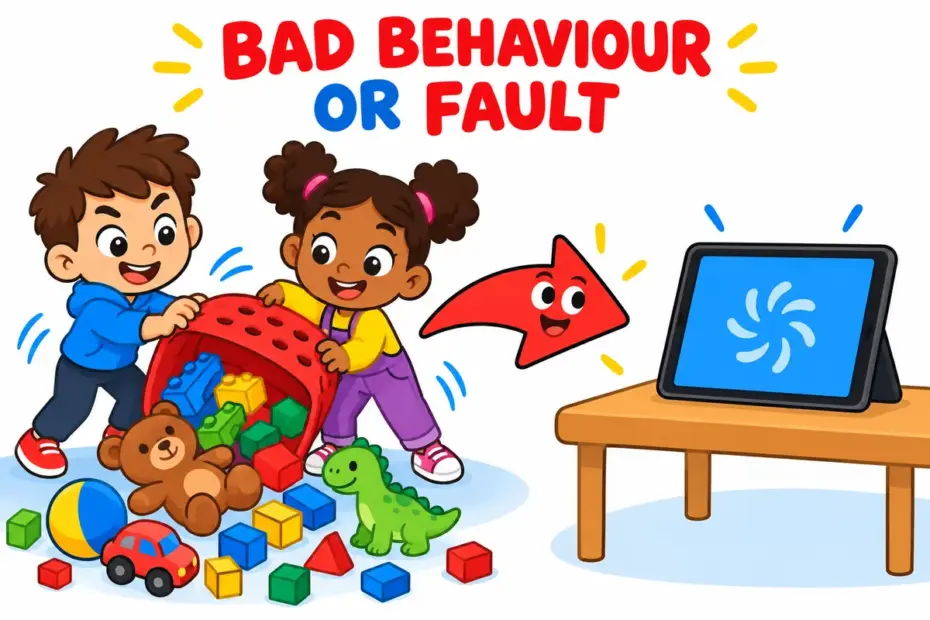
Act up is a phrasal verb meaning to behave badly or, of a machine or body part, to stop working properly. To use act up in a sentence, put the person or thing before the verb and add nothing after it: “The children acted up at bedtime.” The verb is intransitive, so it never takes an object.
Act up at a glance
- Act up is an intransitive phrasal verb; its forms are acts up, acted up and acting up.
- The two senses are misbehaving, for people, and malfunctioning, for machines and body parts.
- Typical subjects are children, a class, a printer, a car, a knee or a phone.
- Act up belongs to informal speech and light reporting rather than formal writing.
- The commonest error is treating it as transitive, as in act up the child.
- British speakers often say play up in the same two senses.
What does act up mean?
Act up is a phrasal verb meaning to behave badly, or for a thing to work erratically. The Cambridge entry for act up records the misbehaving sense for people and the malfunctioning sense for machines, and the subject alone tells you which one applies. Where a device stops completely, malfunction describes the failure more precisely, because act up usually suggests an intermittent fault.
| Sense | Plain meaning | Example sentence |
|---|---|---|
| Misbehave | Behave badly, of a person or group | The twins acted up when the sitter arrived. |
| Malfunction | Work badly or unpredictably, of a device | The printer acts up whenever the room is cold. |
| Recur | Flare up again, of a body part or old injury | His shoulder acts up in wet weather. |
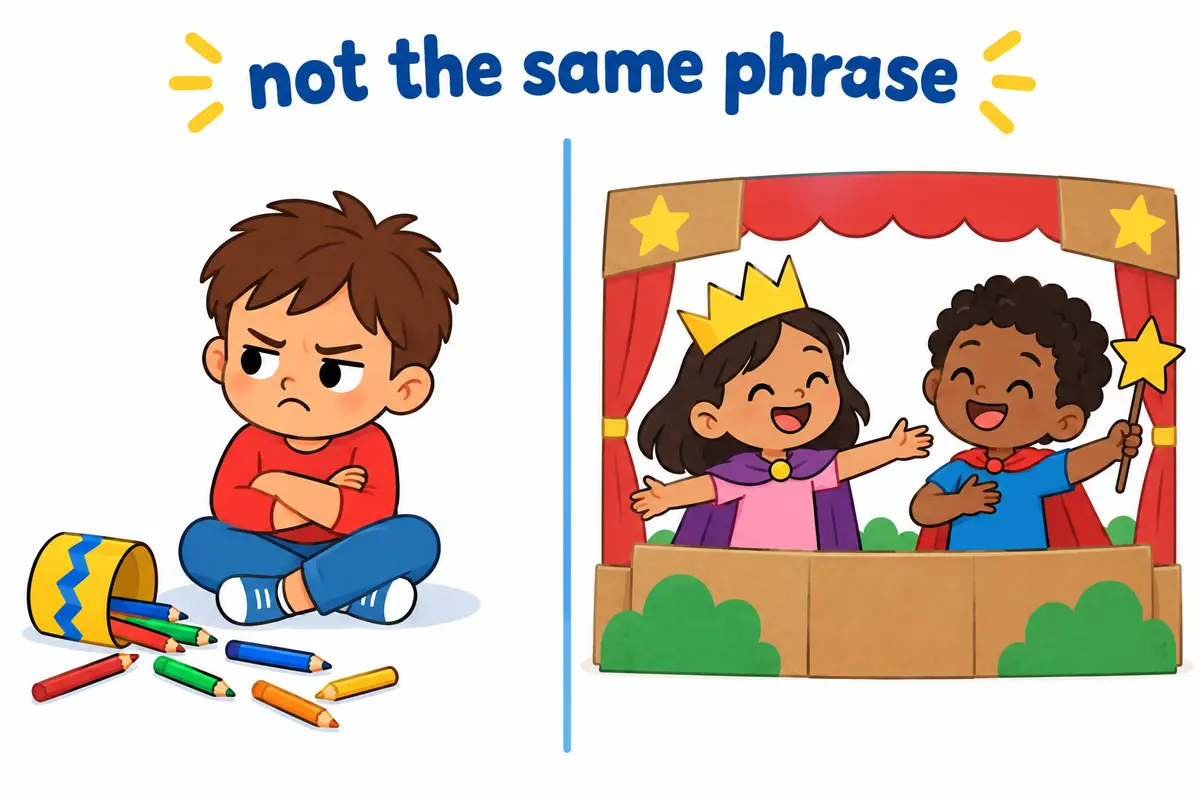
One limitation is worth stating plainly. Act up is not the same as act out, which means to express feelings through behaviour or to perform a scene. It also never means to perform on a stage, and it does not describe a person who is merely energetic; the word always carries a hint that something has gone wrong.
How do you use act up in a sentence?
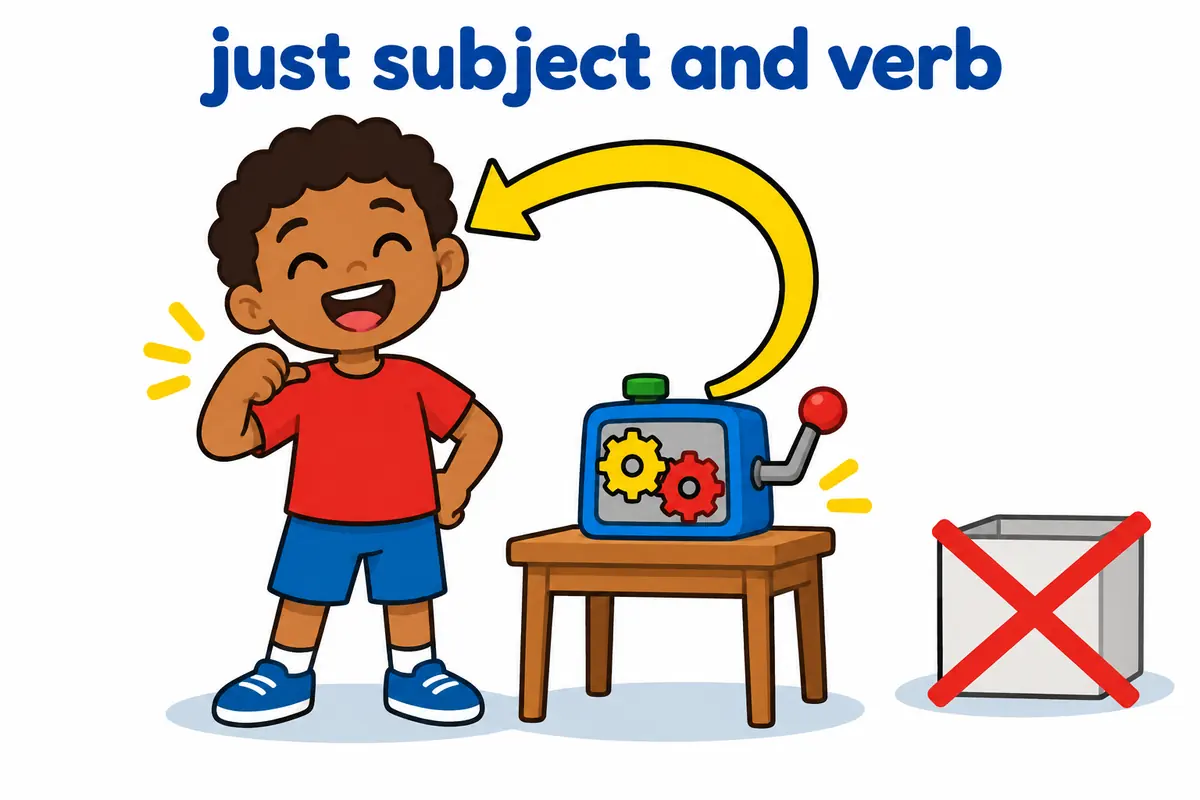
Act up is intransitive, so the sentence needs only a subject and the verb. Nothing can sit between act and up, no object may follow, and there is no passive form. The patterns below cover ordinary use, with the subject deciding whether the sentence is about behaviour or about a fault.
| Pattern | Example | What it signals |
|---|---|---|
| person + act up | The class acted up all afternoon. | Behaviour has slipped below the expected standard. |
| device + act up | The lift is acting up again. | An intermittent fault, not a total breakdown. |
| body part + act up | My knee acts up after long walks. | A recurring ache or injury, usually mild. |
| start + acting up | The engine started acting up on the motorway. | Marks the moment a problem first appears. |
| act up + on someone | The car acted up on me at midnight. | Adds a note of inconvenience or bad luck. |
The absence of an object is the test. If you can name what is being affected, the verb you want is probably affect, annoy or disrupt, because act up reports the subject’s own bad behaviour or fault and never reaches across to an object.
Act up in a sentence: examples across contexts
Act up moves between the playground and the repair shop while keeping its basic shape. The ten sentences below show the same intransitive verb doing two different jobs, with the subject doing all the work.
| Context | Example sentence | Why this works |
|---|---|---|
| Classroom | The younger group acted up as soon as the visitor left. | The subject is a group, which suits the misbehaving sense. |
| Home | The puppy acts up when nobody plays with her. | Ties the bad behaviour to a clear trigger. |
| Workplace email | The scheduling tool has been acting up since the update. | A device subject keeps the sentence office-appropriate. |
| Reported speech | A witness said the children acted up near the gate. | Neutral reporting frame softens an informal verb. |
| Sports report | The goalkeeper’s old wrist injury acted up in the warm-up. | The body-part sense explains an unexpected change. |
| News report | Travellers complained that the ticket machines kept acting up. | Plural device subject shows a repeated public fault. |
| Technical support | The router acts up only when the microwave runs. | Names a condition, which is typical of fault reports. |
| Diary or blog | My laptop is acting up, so this entry will be short. | The progressive form describes a current problem. |
| Conversation | The kids acted up on the last day of term. | Everyday subject and a set occasion mark informal speech. |
| Health note | Her ankle often acts up after a long flight. | Frequency adverb with the body-part sense is idiomatic. |
Only the device and body-part rows describe things rather than people, and those are exactly the rows where a formal synonym would sound clinical. Act up keeps a light, slightly resigned tone that a repair report does not want.
Act up vs misbehave and malfunction
Act up overlaps with two verbs and is less precise than either. Misbehave names bad conduct directly and works in formal settings; function describes normal operation, so its negative form is the precise label for a device that is failing.
| Attribute | act up | misbehave | malfunction |
|---|---|---|---|
| Core job | Report bad behaviour or a fault informally | Name bad conduct plainly | Report a technical failure |
| Typical subject | Children, a class, a printer, a knee | People, usually children or a group | Machines, systems, equipment |
| Register | Informal | Neutral to formal | Technical and formal |
| Implies a fault | Often, but not always | No, only conduct | Always |
| Can describe a body part | Yes: my knee acts up | No | Rarely, and only of a device |
| Fits a school report | Not usually | Yes | No |
Verdict: choose misbehave when a person’s conduct is the point, malfunction when a machine has failed, and act up when you want the light, everyday tone that covers either case.
Word forms and grammar of act up
Act up changes for tense and person like any verb, but it never separates and never passes to a passive. The table also lists the lookalikes that learners slip into the same slot, including the British synonym play up and the different phrasal verb act out.
| Form | Part of speech | Example |
|---|---|---|
| act up | phrasal verb, base form | The children act up when they are tired. |
| acts up | phrasal verb, third person singular | The doorbell acts up in damp weather. |
| acted up | phrasal verb, past and past participle | The engine acted up all week. |
| acting up | phrasal verb, present participle | My phone is acting up again. |
| play up | phrasal verb, British synonym | The car played up on the way home. |
| act out | phrasal verb, different meaning | The pupils acted out the scene. |
| act | verb, different meaning | She acted quickly. |
Particles cluster around this verb: plans can back up a claim and figures can add up to a total, yet act up never lets anything in between. Because it is intransitive, a sentence such as the engine was acted up is impossible.
Common mistakes with act up
- Incorrect:
The teacher could not act up the noisy class.Correct: The teacher could not control the noisy class. Rule: Act up is intransitive, so it cannot take an object that names the people affected. - Incorrect:
The printer was acted up by the new software.Correct: The printer acted up after the software update. Rule: The verb has no passive form, so the faulty thing must stay as the subject. - Incorrect:
My brother acted up the whole play.Correct: My brother acted out the whole play. Rule: Act out means to perform or express; act up means to misbehave. - Incorrect:
The project acted up and missed its deadline.Correct: The project ran into trouble and missed its deadline. Rule: The malfunction sense belongs to devices and body parts, not to abstract plans. - Incorrect:
Please act up quietly in the library.Correct: Please behave quietly in the library. Rule: Act up is negative, so it can never be a polite instruction.
Practice using act up
Work through the eight items, then read the answers for the reason each one is right.
- Fill the gap: The baby monitor ______ whenever the neighbours use their drill.
- Choose the better word: The class was warned not to (act up / malfunction) during the exam.
- Correct the error: My grandfather is acted up by his old knee injury.
- Build a sentence: use act up about a laptop that freezes during video calls.
- Spot the register: which belongs in a formal incident report — the lift acted up, or the lift malfunctioned?
- Rewrite as intransitive: The puppy annoyed the whole family. Use act up.
- Fix the particle error: The children acted the babysitter up.
- Choose the sense: in the sentence my back is acting up, does the verb describe bad conduct or a recurring ache?
Answers
- acts up — the monitor is a device, so the singular verb and the fault sense both fit.
- act up — the subject is a class of people, and malfunction belongs to machines.
- My grandfather’s old knee injury acts up — the verb has no passive and the injury is the subject.
- Model answer: My laptop acts up whenever I join a video call.
- The lift malfunctioned — a formal report needs the technical verb rather than the informal one.
- The puppy acted up all evening — the object disappears because the verb is intransitive.
- The children acted up for the babysitter — nothing can sit between act and up, so the object clause becomes an adverbial.
- A recurring ache — a body part as subject signals the malfunction sense, not conduct.
The bottom line
Use act up in a sentence when a person misbehaves informally or a device, body part or system starts to falter, and let the subject carry that meaning. The two details that decide most sentences are these: the verb is intransitive, so no object may follow, and it has no passive form, so the faulty thing must stay as the subject. Where the tone must be formal, disobey an instruction and malfunction are the safer choices.
Frequently asked questions about act up
Is act up one word or two?
Act up is two words and stays two words in every form: acts up, acted up and acting up. Learners sometimes write actup as one word, but no dictionary lists that spelling, and a spell-checker will flag it. The single-word forms that do exist are unrelated nouns such as backup and setup.
Can act up take an object?
No. Act up is intransitive, so it never takes a direct object. You can say the children acted up, but not the teacher acted up the children. If a sentence needs to name who was affected, switch to a transitive verb such as annoy, disrupt or unsettle, which can carry that object.
What is the difference between act up and act out?
Act up means to misbehave or to malfunction, so the subject is a person or a device behaving badly. Act out means to express feelings through behaviour or to perform a scene, so it often takes an object, as in acting out a story. Only act out can be transitive.
Why is it my back is acting up rather than acts up?
The progressive is acting up describes a problem happening now and probably passing, which suits a mild recurring ache. The simple present acts up describes a habit, as in my back acts up every winter. Both are correct; the tense chooses between a current episode and a regular pattern.