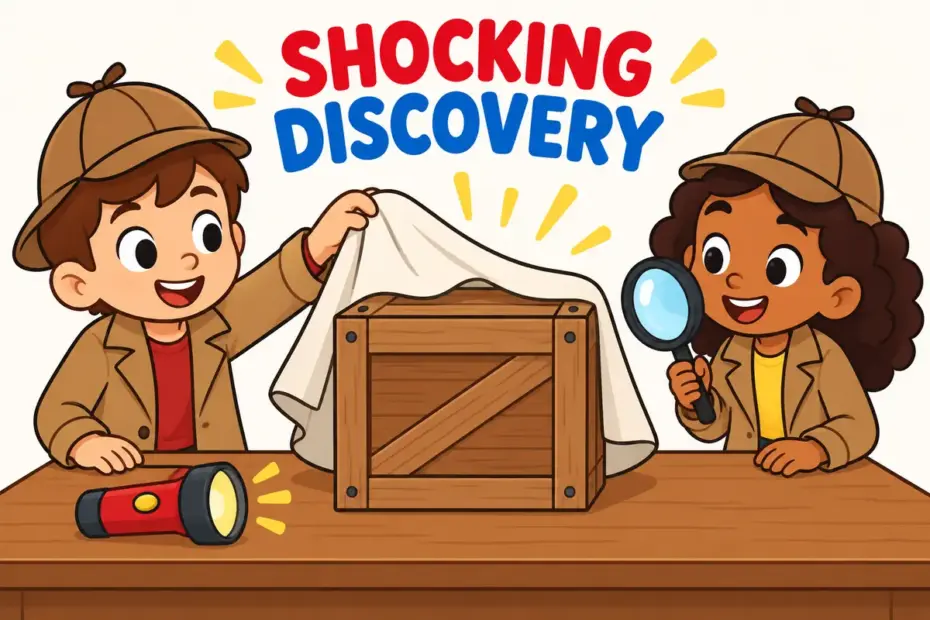
Grisly describes something that causes horror or disgust, especially a scene or discovery that is shockingly unpleasant. To use grisly in a sentence, place it before the noun it describes: The hikers made a grisly discovery. The adjective is stronger than unpleasant and weaker than horrific.
Grisly at a glance
- Grisly is an adjective; its forms are grislier and grisliest, with the noun grisliness.
- It means causing horror or disgust, not merely sad, difficult or annoying.
- It most often describes a discovery, a scene, a detail or a sight.
- Grisly belongs to news, fiction and true-crime writing rather than casual talk.
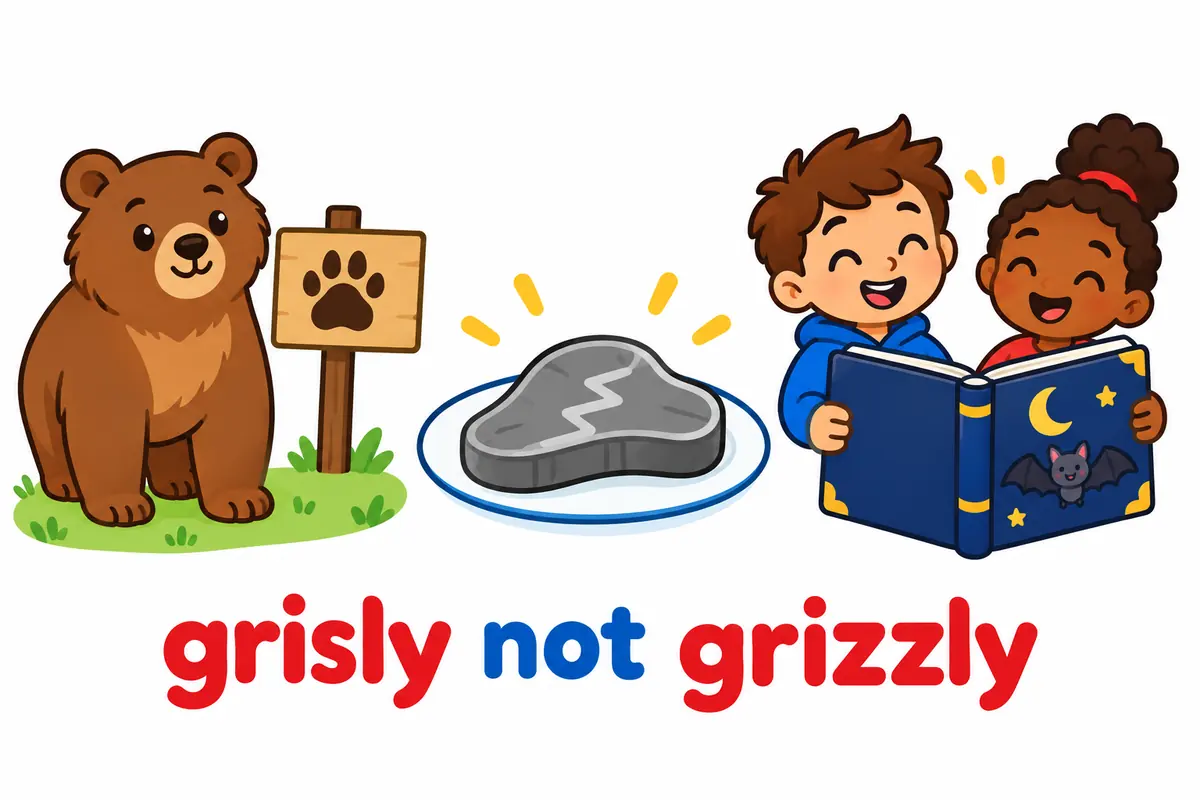
- The commonest error is confusing grisly with grizzly, a kind of bear, or gristly, full of gristle.
What does grisly mean?
Grisly is an adjective meaning causing horror or disgust, usually through something violent, shocking or sickening to look at. The Cambridge entry for grisly links it to unpleasant and shocking events. It usually describes what is found or seen rather than what is felt, so a grisly discovery and a grisly scene are far more common than a grisly mood. Where the horror softens into plain bleakness, a grim outcome is the milder and more common word.
| Sense | Plain meaning | Example sentence |
|---|---|---|
| Horrifying | Causing strong horror | The village remembered a grisly murder. |
| Disgusting | Causing revulsion | The abandoned kitchen hid a grisly mess. |
| Grimly vivid | Shockingly detailed | The report spared no grisly detail. |
One limitation matters for careful writers. Grisly is a strong word, so it should not be stretched over ordinary problems. A delayed train, a difficult exam and a dull meeting are all unpleasant in their own way, but none of them is grisly. Reserve the adjective for horror and disgust, and it keeps its force.
How do you use grisly in a sentence?
Grisly is a descriptive adjective, so it either sits before the noun it colours or follows a linking verb such as was. The patterns below cover news copy, fiction and reviews, and each one keeps the noun nearby so the horror stays concrete.
| Pattern | Example | What it signals |
|---|---|---|
| grisly + noun | Police described a grisly scene. | The adjective sits before the noun it colours. |
| a grisly + noun + of | It was a grisly tale of revenge. | Common in headlines and reviews. |
| find or make + a grisly + noun | They made a grisly discovery. | Names the act of meeting something horrible. |
| more or most + grisly | The second case was more grisly. | Comparative forms show degree. |
| the grisliest + noun | It was the grisliest detail of all. | Superlative marks the worst example. |
Grisly in a sentence: examples across contexts
Grisly appears in stories that need to name horror without dwelling on it. The nine sentences below keep the scenes gentle and implied, and each one shows how the adjective points at what was found rather than describing any violence. Where a writer wants a slower, more shivery tone, a macabre detail leans on the strange and the deathly rather than on disgust, and a ghastly sight mixes horror with shock.
| Context | Example sentence | Why this works |
|---|---|---|
| News report | Detectives described a grisly find in the empty warehouse. | Formal reporting keeps the detail vague. |
| Mystery novel | The old diary told a grisly tale of betrayal. | Fiction uses the word to raise tension. |
| True-crime podcast | The host warned listeners before the grisly part. | Signals a difficult passage without showing it. |
| Museum guide | A grisly legend clings to the old tower. | History writing uses it for atmosphere. |
| Courtroom | The photographs were too grisly to publish. | Notes that material must stay hidden. |
| History essay | The siege left a grisly trail of abandoned equipment. | Academic prose stays measured and indirect. |
| Conversation | We skipped the grisly bits when the children came in. | Everyday use signals content to avoid. |
| Film review | The film is grisly but never gratuitous. | Reviewers judge the tone, not the plot. |
| School writing | The class story ended with a grisly pretend curse. | Keeps a young audience in mind. |
| Travel feature | A grisly legend draws visitors to the ruined castle. | Ties the word to local folklore. |
| Business writing | Analysts called the collapse a grisly warning. | Figurative use for a shocking failure. |
| Obituary | The paper recalled a grisly accident from the same road. | Sets a sombre historical context. |
| Documentary | The narrator paused before the grisly chapter of the story. | Signals a difficult passage to follow. |
Notice how often the word appears beside find, scene, detail or tale. Those collocations carry most of the meaning, so a sentence that drops the noun and leans on grisly alone usually reads as vague.
Using grisly in news and fiction
Grisly does different work in a news report and in a story, and the difference lies in how much the writer shows. Reporters use it to signal that details exist without printing them, while novelists use it to build atmosphere around a character. The list below summarises the register choices that keep the word effective.
- News writing pairs grisly with discovery, scene or find and stops before the detail turns lurid.
- Fiction often places grisly before tale, legend or secret to hint at a past event.
- Reviews use grisly to judge tone, as in the film is grisly but never gratuitous.
- Academic prose keeps grisly rare and attributes it, as in witnesses described a grisly sight.
The shared rule is restraint. A single grisly detail lands harder than a paragraph of them, and the adjective is strongest when the reader supplies the rest. A feature that names one grisly discovery can return to the idea later, while a feature that lists five such details wears the word thin by the second paragraph.
Grisly vs gruesome
Gruesome and grisly both describe horror, and the difference is small enough to trip up careful writers. a gruesome sight leans on physical disgust, often blood or injury, while grisly adds a note of shock at the discovery itself. Where the horror turns ornate and strange, lurid accounts and a hideous crime sit nearby in meaning but carry a stronger hint of exaggeration.
| Attribute | grisly | gruesome | lurid |
|---|---|---|---|
| Core charge | Horror plus shock at a find | Physical disgust | Sensational and vivid |
| Typical object | A discovery, scene or detail | A sight, wound or death | An account, headline or colour |
| Intensity | Strong | Strong, flesh-focused | Strong, often overblown |
| Register | News, fiction, true crime | News, horror, medicine | Taboo, gossip, commentary |
| Connotation | Real and disturbing | Graphic and shuddering | Exaggerated and showy |
Verdict: choose grisly for a disturbing discovery that is best left half-described, gruesome when the physical horror is the point, and lurid when the telling itself is overdone.
Word forms and grammar of grisly
Grisly is a regular adjective that takes the endings -ier and -iest. Two lookalike words cause most of the trouble, and neither is related in meaning.
| Form | Part of speech | Example |
|---|---|---|
| grisly | adjective | The discovery was grisly. |
| grislier | adjective, comparative | The sequel was grislier than the first film. |
| grisliest | adjective, superlative | It was the grisliest chapter in the book. |
| grisliness | noun, rare | Critics noted the grisliness of the scene. |
| grizzly | noun or adjective, different word | A grizzly bear crossed the road. |
| gristly | adjective, different word | The cheap steak was gristly. |
Common mistakes with grisly
- Incorrect:
We watched a grisly bear at the reserve.Correct: We watched a grizzly bear at the reserve. Rule: Grisly means horrifying; grizzly is the name of the bear. - Incorrect:
The steak was grisly.Correct: The steak was gristly. Rule: Gristly means full of gristle, which is tough cartilage, and has nothing to do with horror. - Incorrect:
He cooked the fish on a grisly.Correct: He cooked the fish on a grill. Rule: The cooking surface is a grill; grisly is only an adjective. - Incorrect:
The traffic on the motorway was grisly.Correct: The traffic on the motorway was grim. Rule: Grisly needs horror or disgust, while grim covers what is merely bleak or unpleasant. - Incorrect:
The party was a grisly little gathering.Correct: The party was a miserable little gathering. Rule: Grisly cannot describe inconvenience or boredom, so keep it for genuine horror.
Practice using grisly
Work through the six items, then read the reason beside each answer.
- Fill the gap: The detectives described a ______ discovery at the old mill.
- Choose the better word: A bear in the woods is a (grisly / grizzly) bear.
- Correct the error: The pasta was grisly and hard to chew.
- Build a sentence: use grisly before a noun about a warning at the start of a film.
- Spot the register: which belongs in a news report, the scene was grisly or the scene was totally icky?
- Rewrite in the comparative: This case is horrific. Make it comparative with grisly.
Answers
- grisly – the discovery causes horror, which is what grisly describes.
- grizzly – the bear is grizzly, not grisly.
- The pasta was gristly and hard to chew – tough gristle, not horror.
- Model answer: The film opens with a grisly warning for younger viewers.
- The scene was grisly – a report stays formal and precise.
- This case is grislier than the last – the comparative is grislier.
The bottom line
Use grisly in a sentence to describe something that causes real horror or disgust, usually a discovery, scene, detail or tale. The two details that decide most sentences are the lookalikes, since grizzly is a bear and gristly is full of gristle, and the strength, since grisly should not be used for ordinary trouble. For a milder, more factual tone, a horrifying account or grim will often fit better.
Frequently asked questions about grisly
What is the difference between grisly and grizzly?
Grisly is an adjective meaning causing horror or disgust, as in a grisly discovery. Grizzly names a kind of bear, and it can also mean streaked with grey. The two sound almost identical, so check the sentence: a grizzly bear is an animal, while a grisly scene is horrifying.
Is grisly stronger than gruesome?
The two are close, and both are strong. Gruesome leans on physical disgust and often involves blood or injury, while grisly points at the shock of a discovery and tends to leave the worst detail unnamed. A writer who wants the reader to imagine the horror often reaches for grisly.
Can grisly describe something that is only sad?
No. Grisly needs horror or disgust, so it is too strong for sadness, inconvenience or boredom. A grim day and a miserable meeting do not qualify. If the scene is merely bleak, use grim; keep grisly for what is genuinely shocking and hard to look at.
Does grisly have comparative forms?
Yes. Grisly is a regular adjective, so its comparative is grislier and its superlative is grisliest, as in the sequel was grislier than the first film. Because the word is already strong, the comparative usually appears when two shocking things are being weighed against each other.